(855) 676-0881

Storm Door Not Latching in the Wind: Chain, Closer Pin, and Strike Calibration


Published: Nov 19, 2026

Few home maintenance issues are as frustrating as a storm door bouncing back or chattering in strong gusts. When high winds hit, many homeowners find their storm door won’t close or stops short of engaging the jamb. While quick fixes often focus solely on turning the pneumatic tension screw, wind-induced latch failures are typically a compound mechanical issue involving three interconnected hardware points: the wind crash chain, closer pin placement, and strike plate alignment.

Understanding how aerodynamic force and structural torque disrupt this mechanical balance helps you diagnose whether your system requires simple adjustments or replacement hardware.
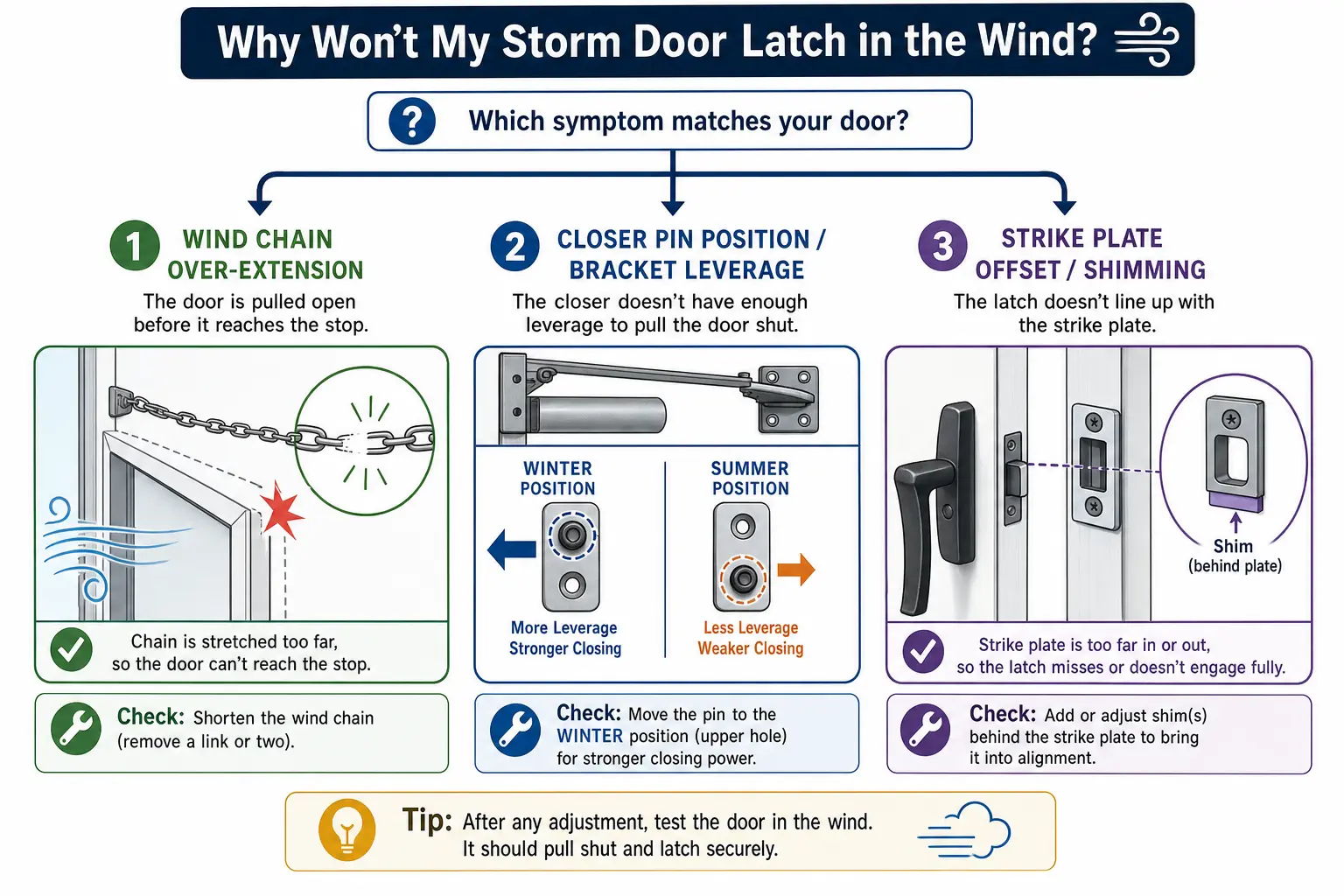
Quick Diagnostic Flowchart: Why Your Storm Door Bounces Back in the Wind


This flowchart helps homeowners quickly identify whether their storm door issues stem from wind chain tension, closer pin adjustment, or strike plate alignment, enabling precise troubleshooting.

To determine why your door is failing to latch completely, evaluate the specific physical symptom occurring during wind gusts:

  • Symptom 1: The door slams shut quickly but bounces back 1/2 inch before catching. Indicates an air cushion backpressure issue or incorrect closer bracket pin leverage.
  • Symptom 2: The latch bolt hits the frame above or below the strike plate opening. Indicates frame torque or hinge distortion caused by previous wind over-extension.
  • Symptom 3: Wind violently pulls the door open before it can complete its swing. Indicates a missing, loose, or broken wind chain allowing excessive travel.

Need a Quick Fix?

Tell us what’s wrong with your door — we’ll get it sorted.

Evaluating and Installing the Wind Crash Chain


A pneumatic closer is engineered to control closing speed, not to withstand sudden aerodynamic over-extension. Industry engineering data shows that wind gusts exceeding 25 mph exert over 100 pounds of leverage on an unprotected door panel. Without a heavy-duty spring-loaded wind crash chain, this violent leverage transfers directly into the mounting bracket. In fact, up to 65% of storm door closer failures in high-wind regions stem from torn jamb bracket screws caused by missing crash chains.

Furthermore, a hinge pin distortion as slight as 1/16 of an inch shifts the latch bolt off-center by up to 1/4 inch, rendering the strike plate useless. Installing a spring-loaded crash chain limits door opening to a maximum 90-degree angle, absorbing kinetic energy before it warps your frame. If structural damage has already occurred around the bracket, performing a proper front door frame repair using solid wood dowels or metal reinforcement plates is necessary before re-anchoring hardware.

Calibrating the Pneumatic Closer Pin & Speed Cylinder


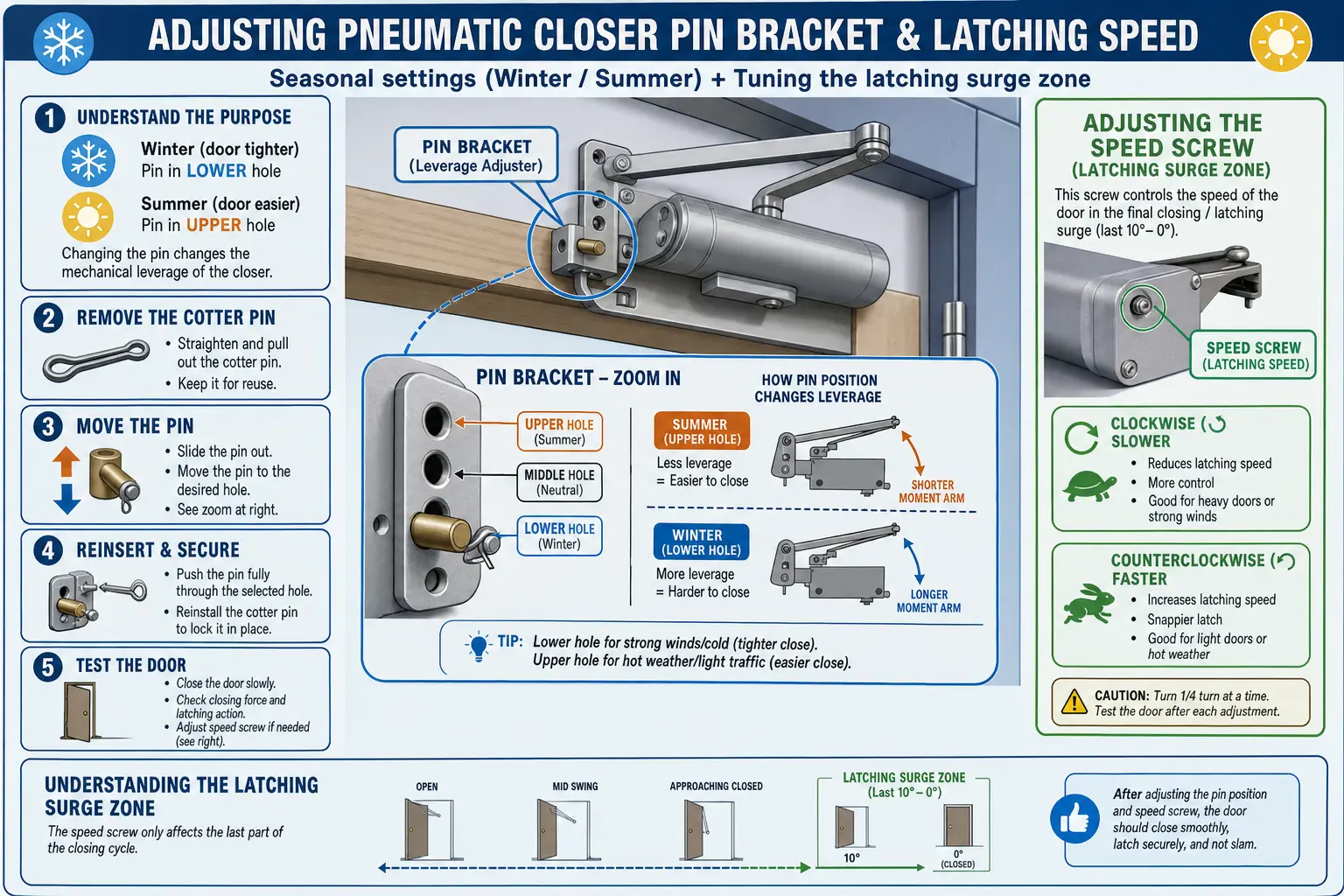
This guide visualizes the exact process of seasonal closer pin adjustments and pneumatic speed tuning, empowering users to optimize door latching strength against wind and temperature changes.

Once the door’s range of motion is secured, attention shifts to pneumatic cylinder calibration. Most closer jamb brackets feature two distinct pin mounting holes: a standard setting and a heavy-latching setting. Moving the connecting pin to the bracket hole closest to the door panel increases mechanical leverage during the final two inches of stroke. This seasonal pin adjustment is critical when addressing a door not latching in winter or during high-wind months.

Next, calibrate the pneumatic adjustment screw at the cylinder base:

  1. Turn the speed screw clockwise to slow the main sweep, preventing wind from catching the door panel mid-swing.
  2. Ensure the “latching surge zone”—the final 2 inches of stroke—has sufficient momentum to depress the latch bolt tongue.
  3. Check for hydraulic fluid or air pressure leakage. If you notice a door closer leaking oil, internal seals have degraded, reducing compression power and requiring cylinder replacement.

Aligning and Shimming the Latch Bolt and Strike Plate


Even with correct closing tension, misaligned lock components prevent secure engagement. Perform the simple “Lipstick Alignment Test”: apply masking tape along the strike plate frame and coat the tip of the latch bolt with lipstick or dry-erase marker. Close the door to leave an exact visual imprint showing where contact occurs.

  • Vertical Misalignment: Loosen the mounting screws and shift the height of the strike plate keeper slots.
  • Depth (Z-Axis) Gap: If the latch bolt extends fully but doesn’t seat into the recess, shim the strike plate outward using plastic shims.
  • Wind Rattle: Adjust the strike plate tab inward to eliminate excess play that allows wind to shake the door.

Over time, persistent binding leads to mechanical latch failure, making precise depth shimming essential for long-term smooth operation.

Overcoming Air Cushion Backpressure


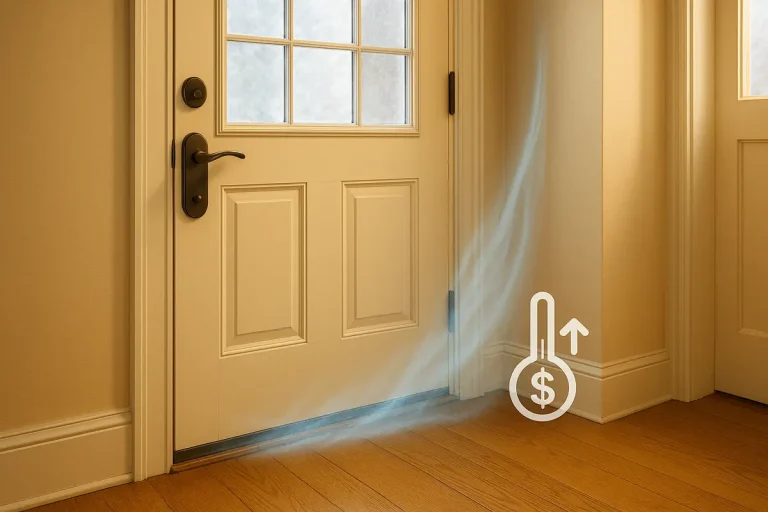
When the primary entry door is closed tightly, a closing storm door compresses air inside the small inter-door cavity. Architectural hardware specifications show this air boundary layer requires up to 30% more kinetic force during the final 2 inches of closing stroke. If dense exterior weatherstripping creates air compression, installing a dual-closer configuration (top and bottom) synchronizes closing force to overcome air resistance effortlessly.

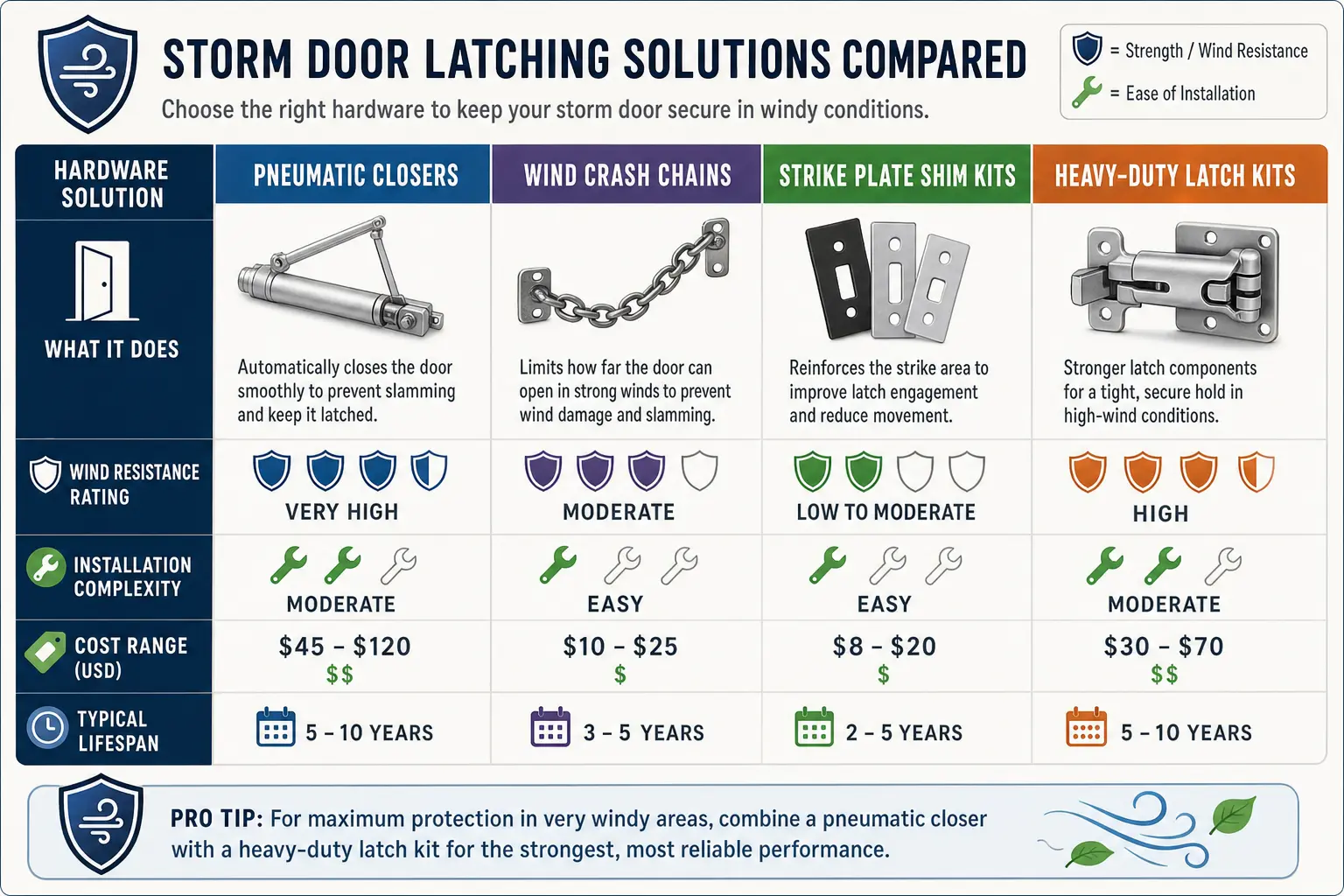
Comparison Guide: Repairing Hardware vs. Upgrading to Heavy-Duty Latch & Closer Kits


This infographic anchors key hardware options visually, helping homeowners recall differences and make informed decisions when repairing or upgrading storm door latching systems.

Deciding whether to adjust existing components or invest in heavy-duty replacement hardware depends on structural integrity:

  • Standard Pneumatic Closers: Ideal for moderate weather zones; easily tuned via adjustment screws and seasonal pin relocations.
  • Touch-N-Hold & Dual Closers: Best for high-wind areas experiencing air cushion backpressure; provides smooth, high-force closing without slamming.
  • Spring-Loaded Crash Chains: Essential insurance against torn jambs and bent hinges; required for exposed or wind-prone entryways.

Frequently Asked Questions


Why does my storm door latch fine when the main door is open, but not when it's closed?

Closing your primary entry door traps air between the two doors. This compressed air cushion creates pneumatic backpressure, requiring up to 30% more kinetic force for the storm door latch bolt to engage into the strike plate. Moving your closer pin to the heavy-latching bracket position or adding a bottom closer resolves this friction.

How do I fix torn-out closer bracket screw holes in wood jambs?

Torn screw holes occur when wind over-extends the door without a crash chain. Fix this by removing the bracket, drilling out stripped holes with a 3/8-inch bit, and gluing solid wooden dowels into the opening. Once dry, cut the dowels flush, drill pilot holes, and remount the bracket using 3-inch heavy-duty screws that anchor directly into the wall framing.

Can high wind spring aluminum door hinges?

Yes. Gusts exceeding 25 mph generate over 100 pounds of leverage on an open door panel. A hinge pin distortion as minor as 1/16 of an inch shifts the door alignment, causing the latch bolt to hit above or below the strike plate hole by up to 1/4 inch.

If seasonal adjustments and hardware shimming don’t resolve your storm door latching issues, structural frame distortion or hidden component fatigue may be to blame. Consulting professional door technicians ensures your entryway receives precision alignment and heavy-duty hardware engineered for year-round reliability.