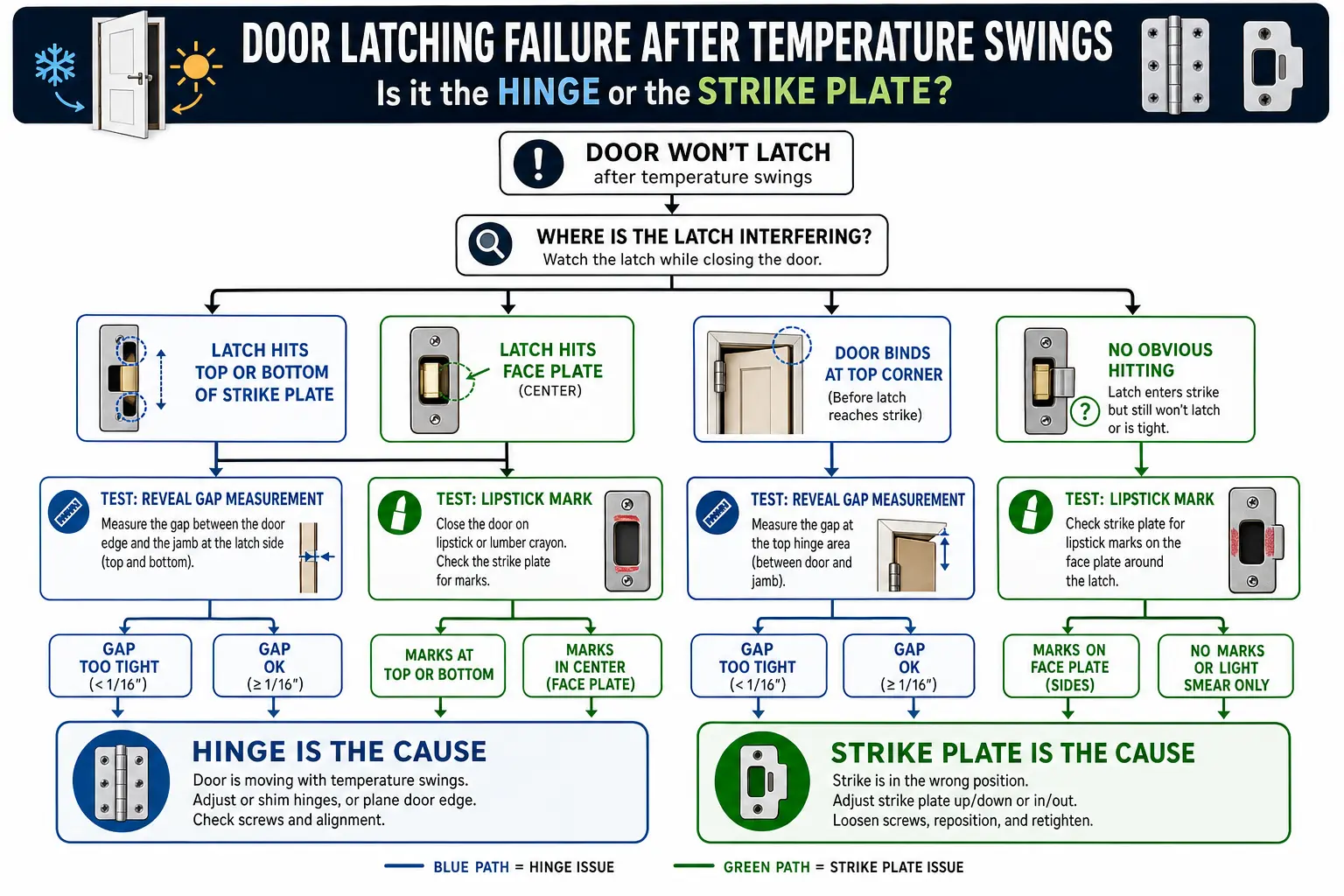
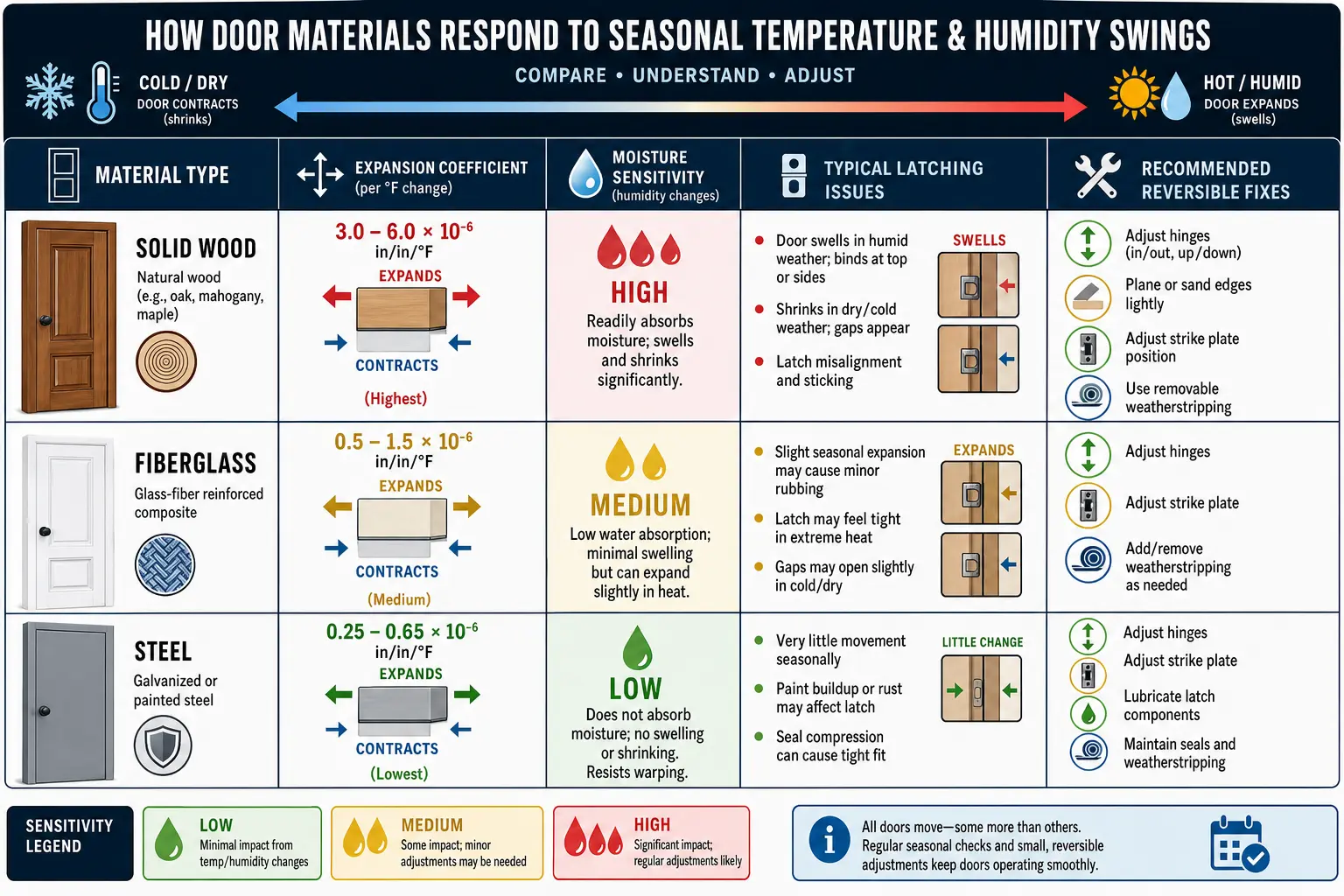
Differentiating between structural pivot failure and strike plate misalignment preserves your hardware’s integrity over multi-season cycles.
Analyzing Hinge Sag Dynamics
A standard 36-inch exterior door weighing 75 lbs exerts over 110 lbs of rotational tension force directly on the top hinge screws. During cold snaps, ambient humidity drops, causing wooden wall studs and jambs to contract. This contraction loosens short factory screws in the top hinge leaf, allowing the door to drop by as little as 1/16″ to 1/8″—sufficient to prevent the latch bolt from entering the strike throat.
Reversible Hinge Solutions:
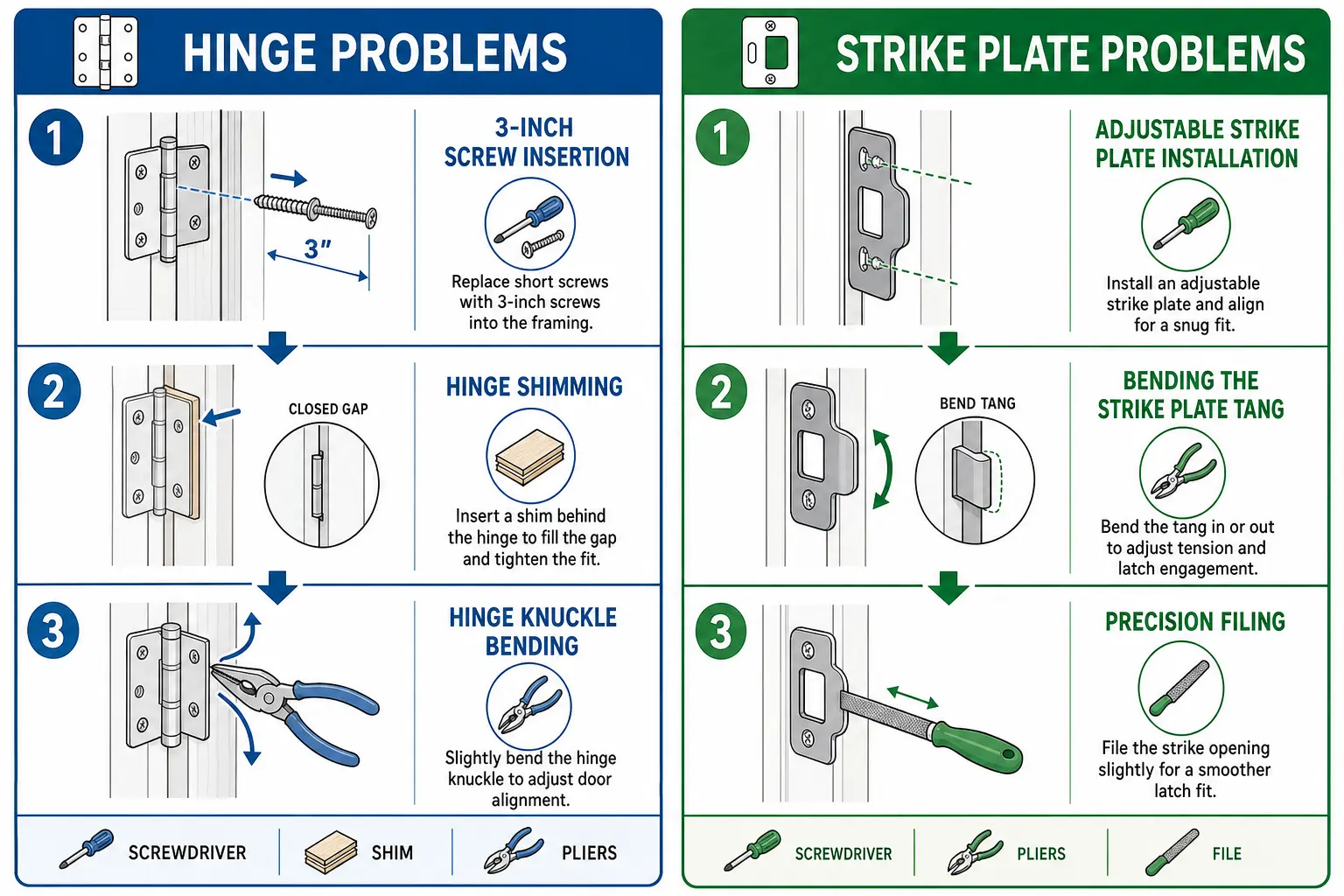
- The 3-Inch Framing Screw Strategy: Remove the center screw from the top hinge leaf on the jamb side. Drive a 3-inch #9 wood screw through the jamb directly into the rough wall framing. This pulls the top of the door back toward the hinge jamb, lifting the latch side back into alignment.
- Hinge Shims: Insert solid plastic hinge shims behind the bottom hinge leaf to tip the top latch corner upward without permanently altering the frame.
Correcting Strike-Side Misalignment
While hinges govern vertical trajectory, strike plate issues usually stem from transverse wall movements or material expansion. Understanding door latch failure mechanisms prevents misdiagnosing normal frame shifts as hardware defects.
When temperature drops, exterior jambs shrink while indoor heating creates differential air pressure, forcing the door leaf hard against the weatherstripping. If the latch cannot extend fully into the plate, inspect your latch assembly for common tubular latch problems explained before modifying any metal plates.
Reversible Strike Solutions:
- Adjustable Strike Plates: Install a dual-piece adjustable strike plate that permits 1/8-inch lateral tuning between winter and summer.
- Bending the Strike Tang: Insert a flathead screwdriver into the strike plate’s center tab (tang) and bend it slightly forward to catch the latch earlier without removing wood.
- Weatherstrip Optimization: Inspect installed types of kerf weatherstripping to confirm seasonal compression isn’t preventing the door leaf from flush seating.