(855) 676-0881

Master Guide to Storm Window Prep: Sash Tracks, Glazing, and Weep Holes


Published: Nov 6, 2026

Homeowners preparing for extreme seasonal shifts often face a dilemma: spend tens of thousands of dollars on full double-pane window replacements or restore their existing storm window assemblies. According to the U.S. Department of Energy (DOE), properly maintained storm windows reduce building air infiltration and cut heating and cooling bills by 10% to 30%, saving between $100 and $300 annually. Low-E storm retrofits deliver up to 80% of the energy savings of full window replacements at less than 25% of the initial investment cost.

Maximizing this return requires evaluating storm windows as an integrated tri-system balancing smooth sash track operation, airtight glazing seals, and free-flowing hydrostatic weep hole drainage.
The Physics of Storm Windows: Why Water in the Track is Intentional


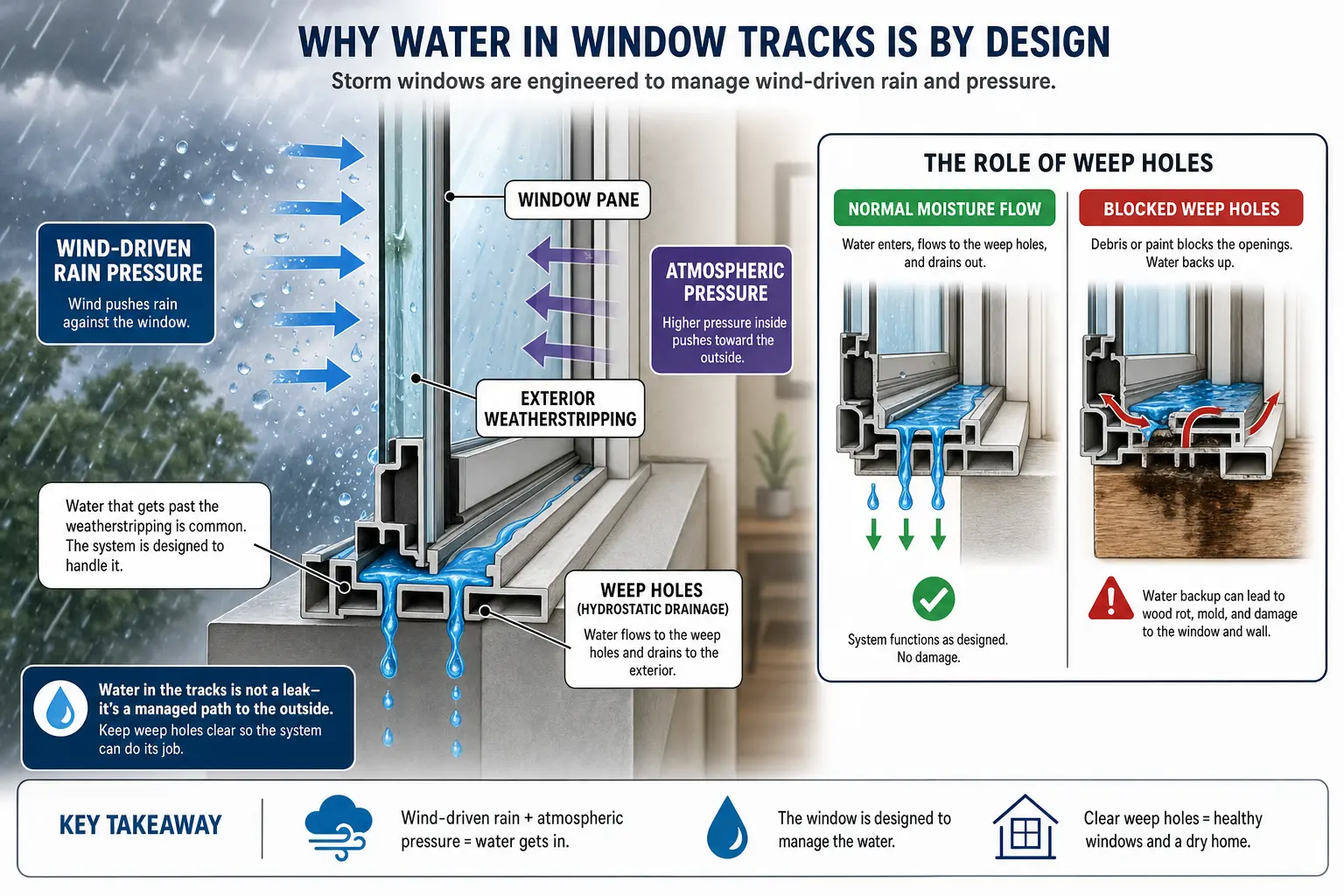
A common misconception is that a wet storm window track indicates unit failure. During rainstorms, wind-driven rain creates dynamic atmospheric pressures exceeding 50 Pascals against outer window frames. Water intentionally bypasses exterior frame edges and accumulates within the bottom track.

This diagram clarifies why water in storm window tracks during rainstorms is expected and necessary for proper drainage, preventing window frame damage. It visually explains hydrostatic pressure relief via weep holes and contrasts normal function with blockage risks.

Tracks act as temporary holding basins while weep holes serve as gravity-fed hydrostatic pressure relief valves. Water entering the channel is normal; water overflowing the interior leg onto wooden sills indicates severe drainage failure. Proper ongoing glass door maintenance and regular frame checks keep these channels performing safely.

Sash Track Maintenance and Friction Reduction


Storm window sashes must operate smoothly without distorting frame extrusions. Dust, insect debris, and oxidized aluminum gather in sash channels over time, increasing friction and tearing pile weatherstripping.

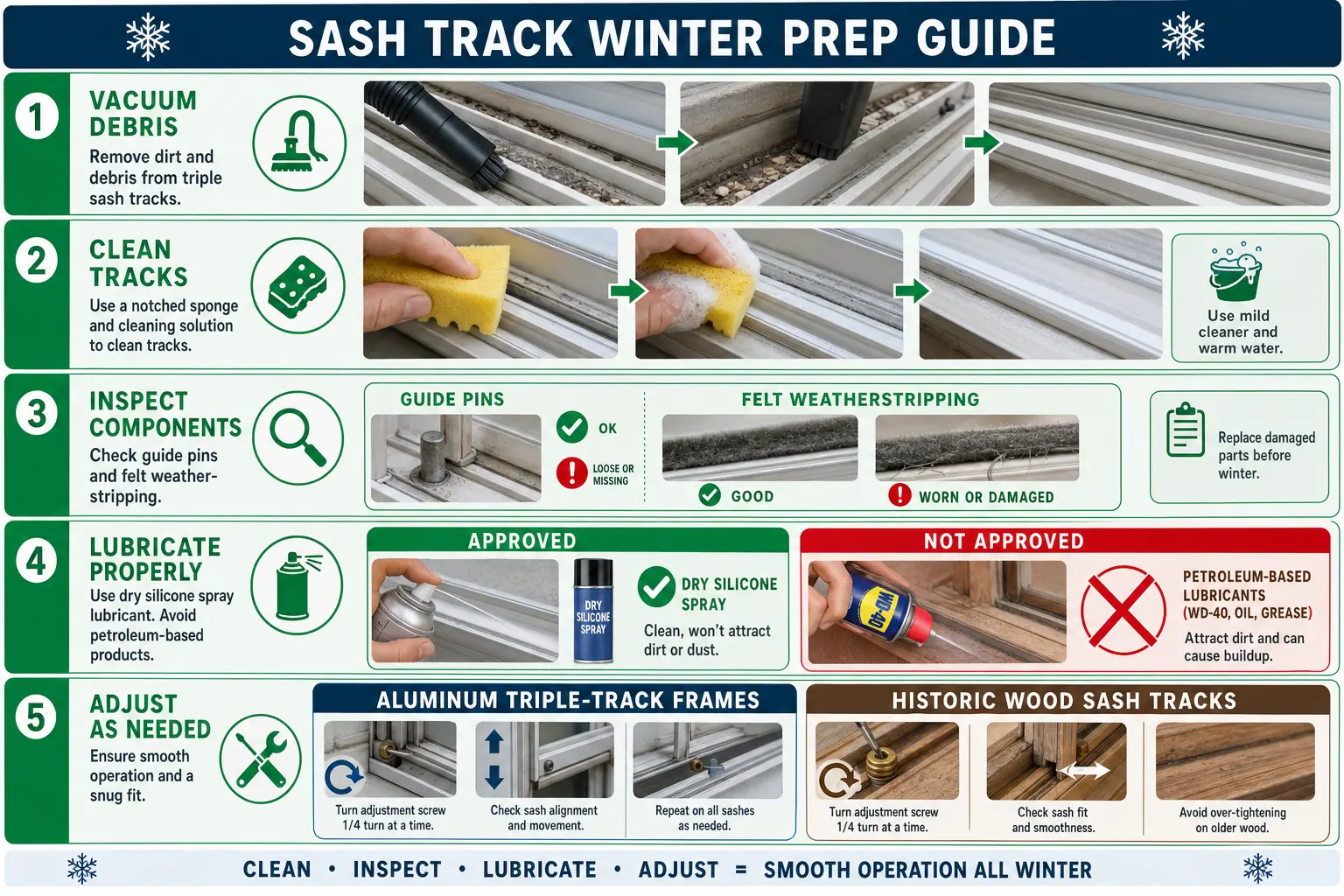
Follow this stepwise tutorial to prepare storm window sash tracks for winter: effective debris removal, safe cleaning, proper lubrication with dry silicone spray, and adjustment tips for various frame types.

Cleaning Protocol

Vacuum coarse dirt using a narrow crevice attachment. To lift caked-on oxidation without harsh abrasives, apply mild soapy water or a vinegar-and-baking-soda foam, scrubbing with a notched detail sponge.

Chemical Compatibility Warning

Never use petroleum-based lubricants or standard WD-40 on sash channels. Petroleum solvents dissolve synthetic weatherstripping felt and attract airborne dust. Within 3 to 6 months, this creates an abrasive slurry that ruins track guide pins. Always use a Dry Silicone or Dry PTFE spray, which leaves a clean, non-tacky film. Similar care is essential during sliding glass door track repair to ensure long-term mechanical reliability.

Glazing Inspection and Seal Restoration


Glazing secures glass panes within sash frames while establishing an airtight perimeter. Over time, UV exposure degrades compound seals, allowing cold air infiltration and rattling glass. Evaluating your overall system may require reviewing specialized door glazing types to match appropriate sealants.

  • Historic Wood Sashes: Require traditional linseed oil glazing putty. Prime bare wood first to prevent oil extraction.
  • Aluminum Triple-Track Sashes: Benefit from flexible butyl glazing tape or neutral-cure hybrid polymer sealants that accommodate metal thermal expansion.
  • Vinyl Frame Units: Rely on snap-in glazing beads; replace cracked splines to restore wind resistance.

If draft issues extend to nearby entryway points, evaluate whether installing energy-efficient units or updating ventilating storm doors is required to balance building envelope performance.

Weep Hole Unclogging and the Hydraulic Flush Test


Weep holes sit along the lower exterior bottom expander flange. Research indicates that 65% of interior window sill rot on homes with storm windows stems from painted-over weep slots or improper DIY caulking along the bottom expander frame.

Critical Rule: Never caulk the bottom exterior expander rim shut. Trapping runoff forces standing water directly into wooden sills and wall cavities.

To clear blocked channels, probe weep slots with a flexible zip tie or stiff brass wire probe. Once debris is clear, perform a quantitative Hydraulic Flush Test:

  1. Pour 1/2 cup of clean water directly into the inner bottom sash track.
  2. Observe exterior weep openings.
  3. The track should evacuate completely within 15 seconds.

If drainage is slow or backed up, check frame squareness or inspect for hidden sill sagging. When sills or framing components suffer structural rot, scheduling professional storm door replacement or full exterior opening restoration prevents compounding structural damage.

Frequently Asked Questions


Can I drill new weep holes if my storm window lacks them?

Yes, if your aluminum storm window frame lacks drainage slots or past painting sealed them permanently, you can drill new weep holes. Use a 3/16-inch drill bit angled slightly downward on the lowest exterior face of the bottom expander flange. Drill two to three evenly spaced holes, taking care not to puncture the interior primary sill.

What happens if I accidentally caulk over my weep holes?

Caulking weep holes traps rainwater and interior condensation inside the window track assembly. During severe weather, backed-up water rises above the inner track barrier, seeping directly into wood blind stops and subframing. This causes hidden wood rot, structural sill decay, and mold growth behind interior trim.

How do I keep bugs from crawling up inside window weep holes?

To block insects without impeding drainage, install mesh weep hole covers or baffled flappers. These retrofitted plastic or wire-mesh inserts snap directly into existing weep slots, permitting hydrostatic water release while preventing pests from nesting in your tracks.