

Automatic Door Maintenance and Safety Inspection
Automatic entrances wear in a predictable order — belts stretch, rollers flatten, seals harden, sensors drift and timing slips out of adjustment. Scheduled maintenance catches all of that before it becomes a door that stops working in the middle of a trading day. A1 Door Services maintains and inspects commercial automatic doors of every type and make across Texas, Connecticut and Alabama, on intervals set by how the door is actually used rather than by a single calendar applied to every building.
 (855) 676-0881
Get in touch with us
Call us 24/7: (855) 676-0881
Or Let Us Call You
Setting the Right Maintenance Interval
A grocery entrance running tens of thousands of cycles a month needs a different interval from a corridor operator in an office suite. High-traffic retail and healthcare entrances usually sit on a monthly or quarterly schedule; moderate-traffic entrances on a semi-annual one; low-traffic interior openings annually.
We set the interval after seeing what each door actually carries, then hold to it. Visits are planned around your operating hours — before opening, after closing or during a quiet window — and a site with several entrances is covered in a single visit rather than one appointment per door.
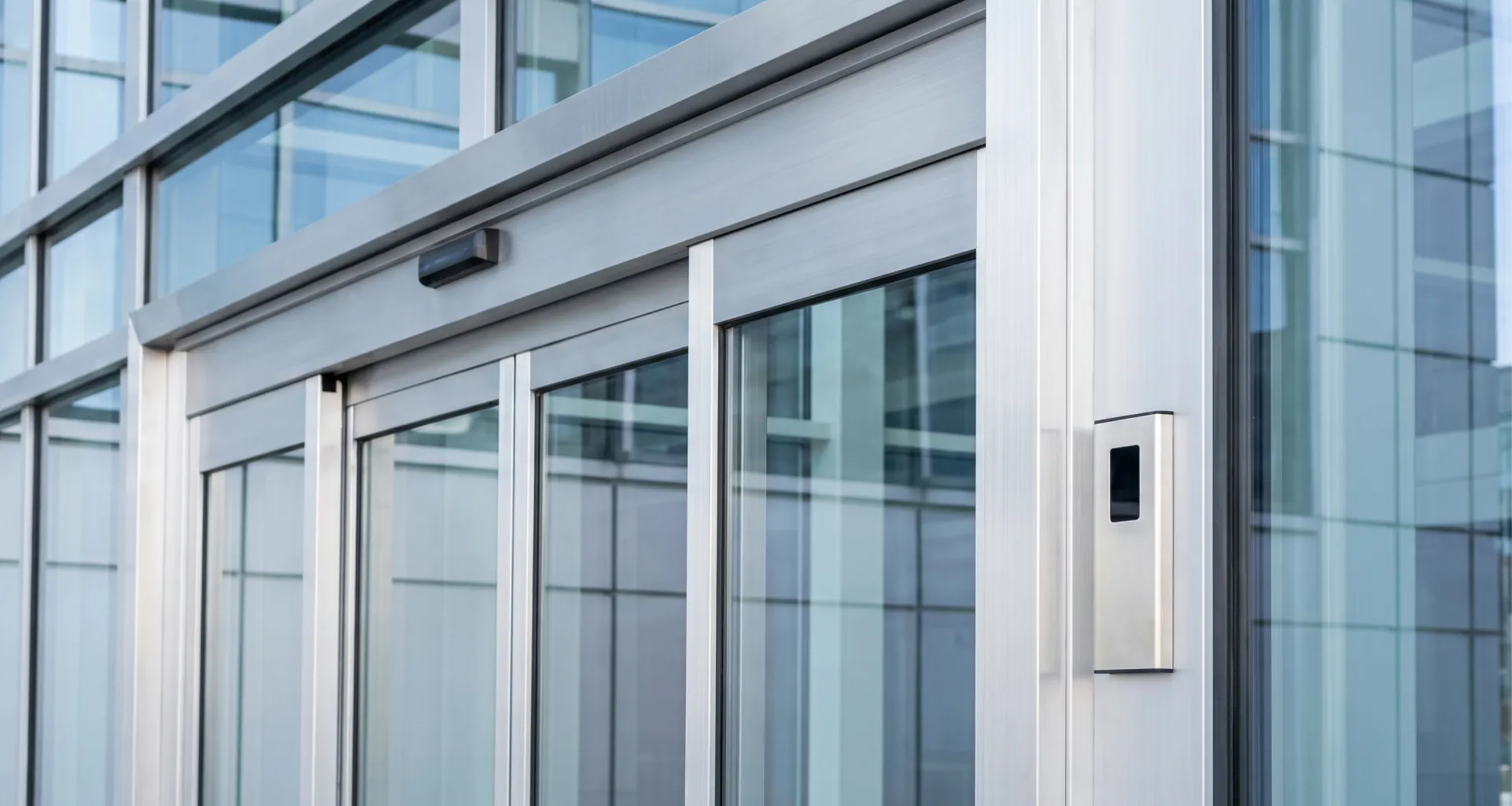
What a Maintenance Visit Covers
- Full operating cycle test on every door, in automatic and manual modes.
- Sensor testing, re-aiming and masking across the detection and safety zones.
- Activation device testing — push plates, wave sensors, key switches, wireless transmitters.
- Operator timing and force check and adjustment: opening speed, closing speed, hold-open, backcheck.
- Breakout and manual operation test on sliding and folding systems.
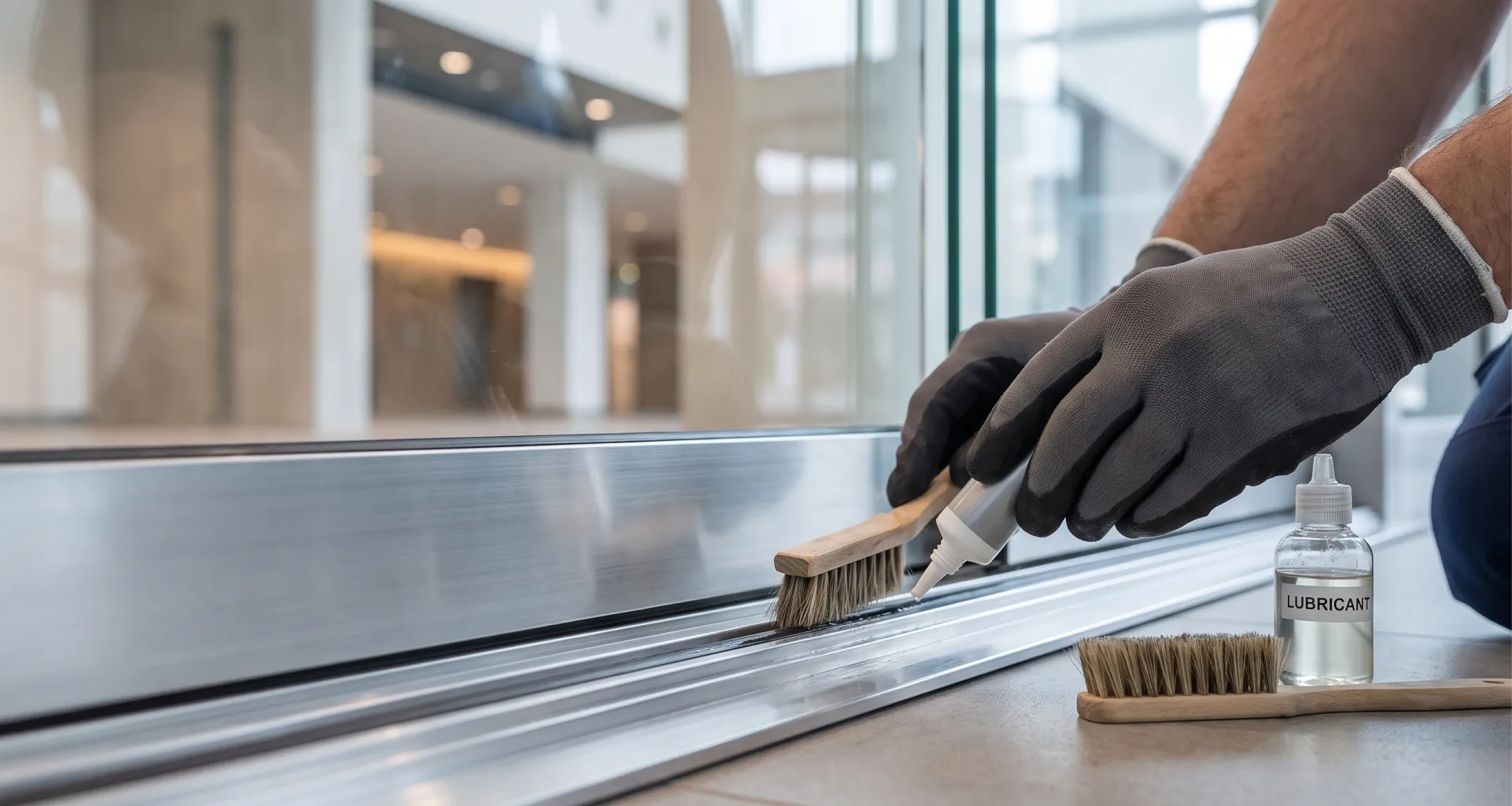
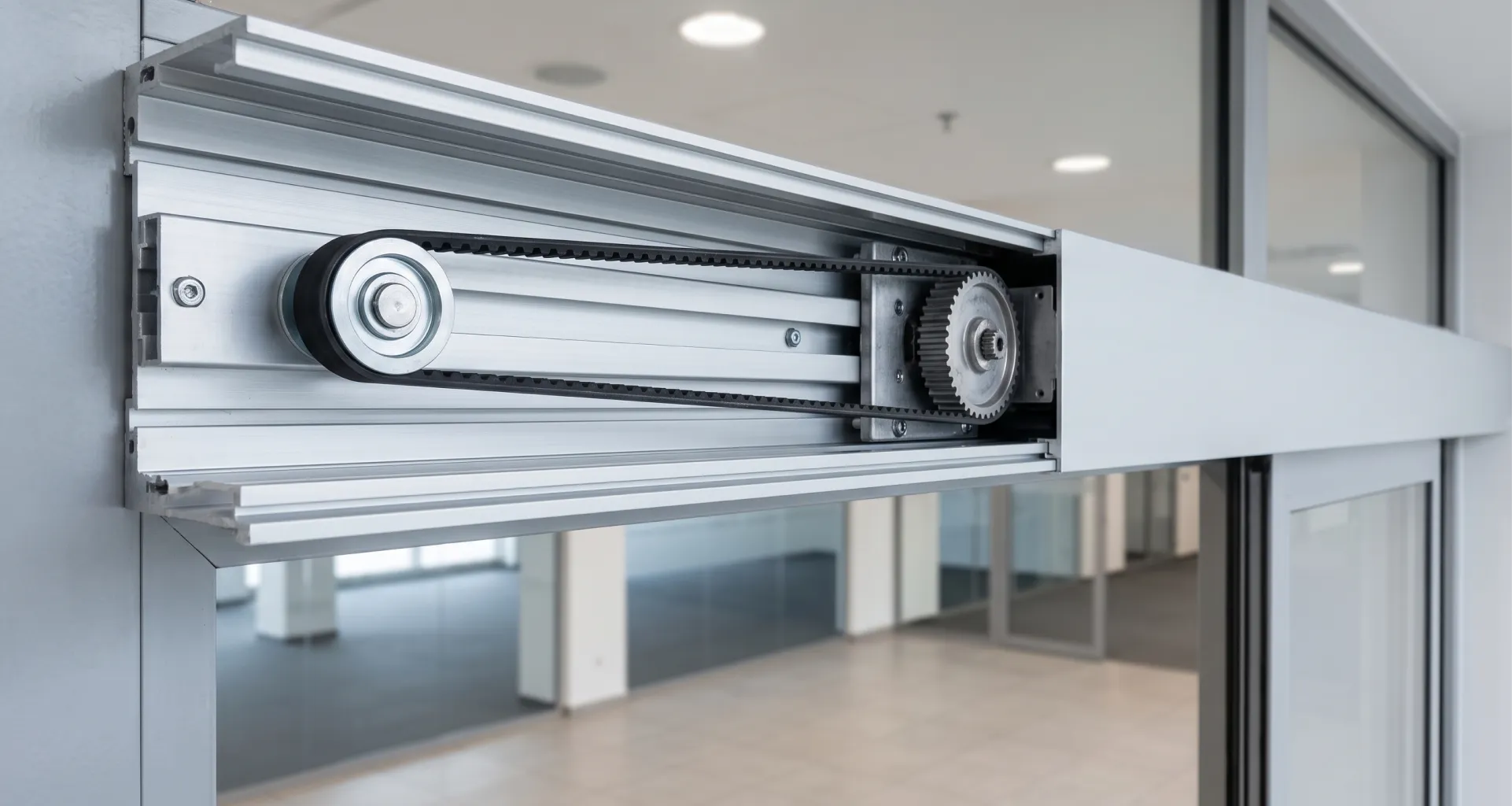
- Track, carrier, roller and belt inspection, cleaning, tensioning and lubrication.
- Header, panel, frame, threshold and seal inspection.
- Control board, wiring, power supply and fire alarm interface check.
- Access control interface and locking sequence check where the door is integrated.
- Adjustment of anything out of tolerance and replacement of worn parts carried on the truck.
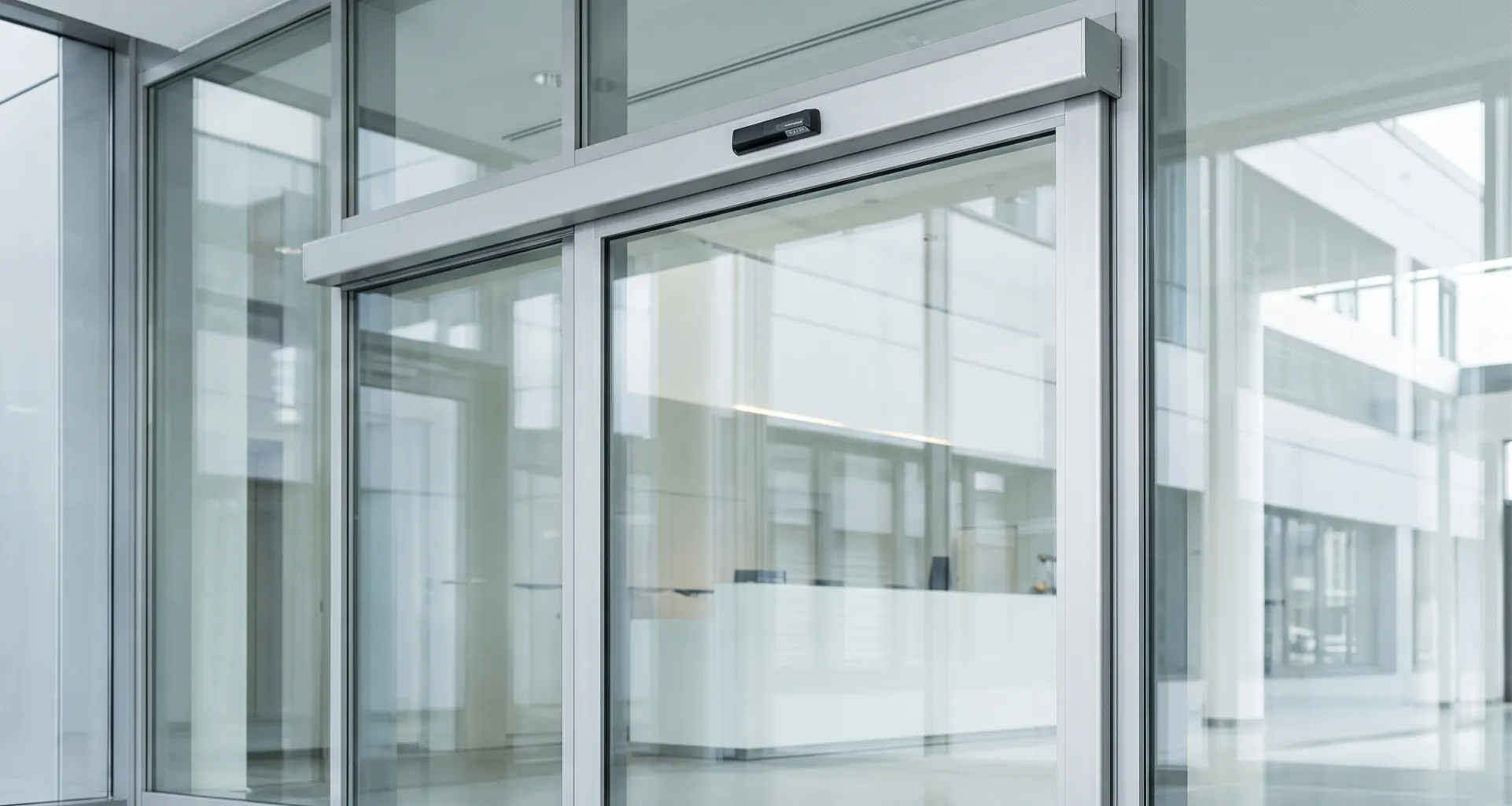
Annual Automatic Door Safety Inspection
Once a year every automatic entrance should be inspected in full against the standard that governs it — full-energy sliding and swing systems under ANSI/BHMA A156.10, low-energy swing systems under A156.19, low-energy sliding and folding systems under A156.38, and revolving doors under A156.27.
The inspection covers sensing zone coverage, safety device response, opening and closing speeds, hold-open time, force to open and to stop the door, breakout operation and force, manual operation with the power off, guide rails, signage and decals, and the mechanical condition of the operator, track and panels.
The result is a dated inspection record for each door and a written report listing anything that failed and what it needs. Where the fix is an adjustment or a part we carry, it is corrected during the same visit rather than booked as a return.
Sensor Testing and Adjustment
Sensors are the part of an automatic door that changes without anyone touching it. Detection patterns drift, presence sensors lose sensitivity as they age, and a moved display, a repositioned cart corral or a new floor finish can put a door outside the behaviour it was originally set up for.
Every maintenance visit re-tests the detection and safety zones against the door they serve, re-aims and re-masks where they have drifted, and replaces sensors that no longer hold their setting. The door is then walked through a full cycle from every approach direction before the technician moves on.
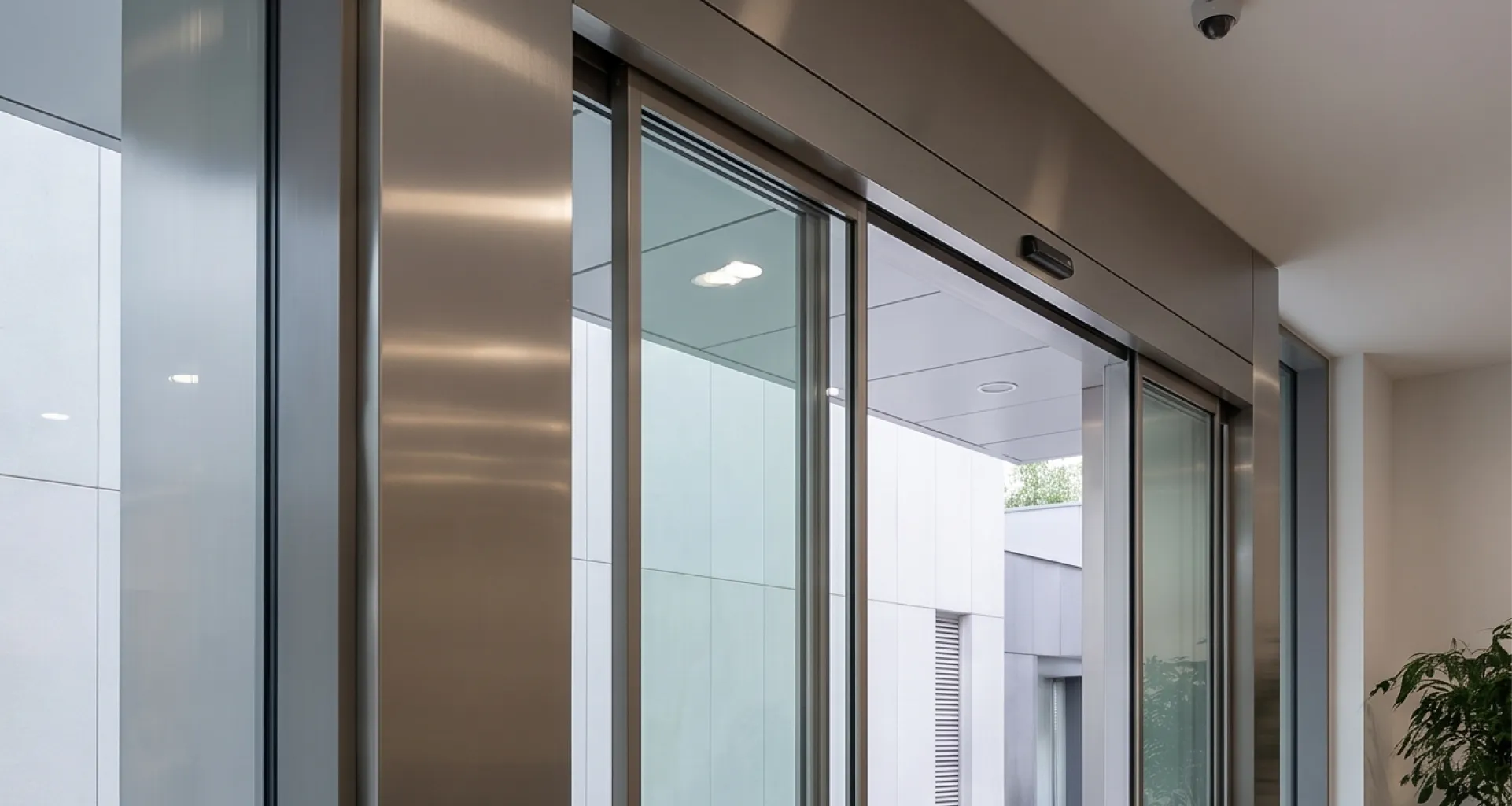
Operator Timing and Force Adjustment
Opening speed, closing speed, hold-open time and the force needed to stop or open the door all drift as an operator ages. On low-energy systems this is the single most common thing found out of tolerance in the field, and a door adjusted by eye is rarely inside range.
We measure with a gauge and a stopwatch and reset the operator to the figures its governing standard calls for — including the added activation delay required where an actuator sits well back from the door and someone pressing it needs longer to reach the opening.
Wear Parts Replaced During Service
Drive belts, carriers, hanger and anti-riser rollers, bottom guides, weather stripping and brush seals, sweeps and thresholds, arm and linkage bushings on swing systems, and gasketing on ICU and hermetic doors.
Trucks carry the common items, so most of this happens during the maintenance visit itself rather than becoming a separate repair call. Anything that needs a part on order is listed in the report and scheduled.
Maintenance by Door Type
Automatic sliding doors
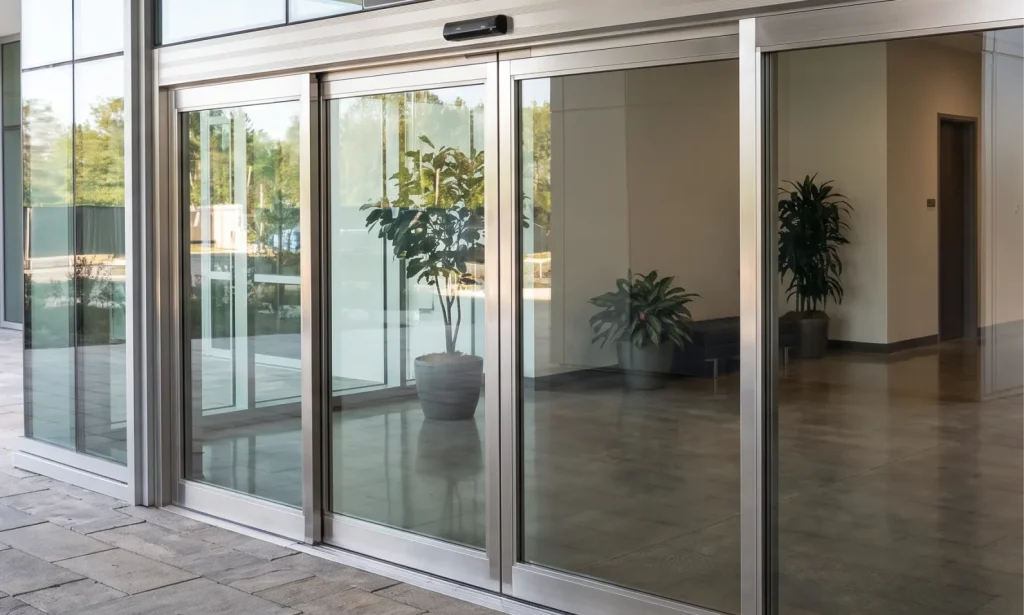
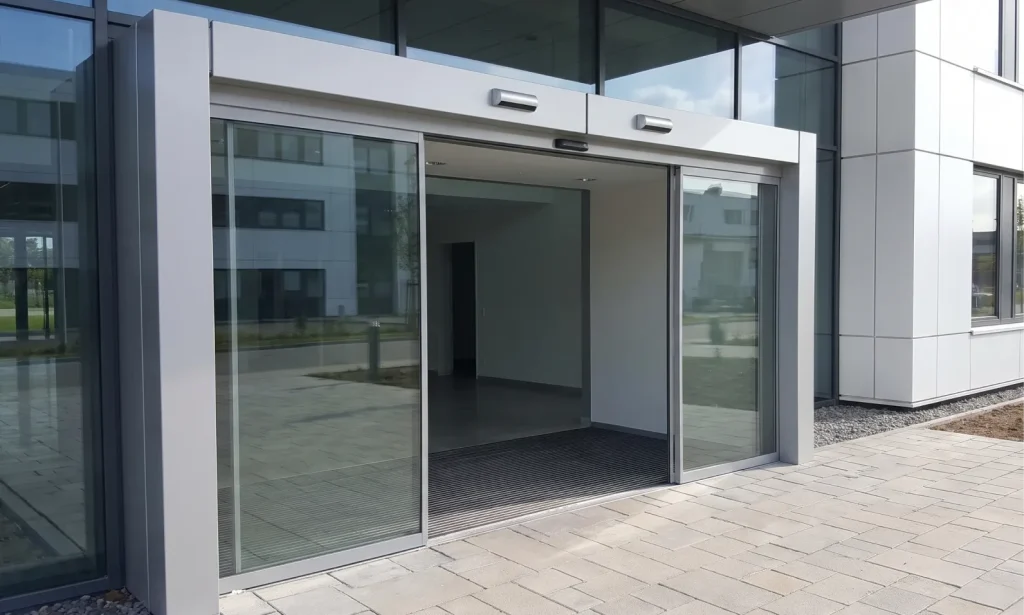
Belt tension, carriers and rollers, track condition and alignment, breakout operation and force, threshold and approach sensing zones, and the seals along the meeting stiles.
Automatic swing doors and operators
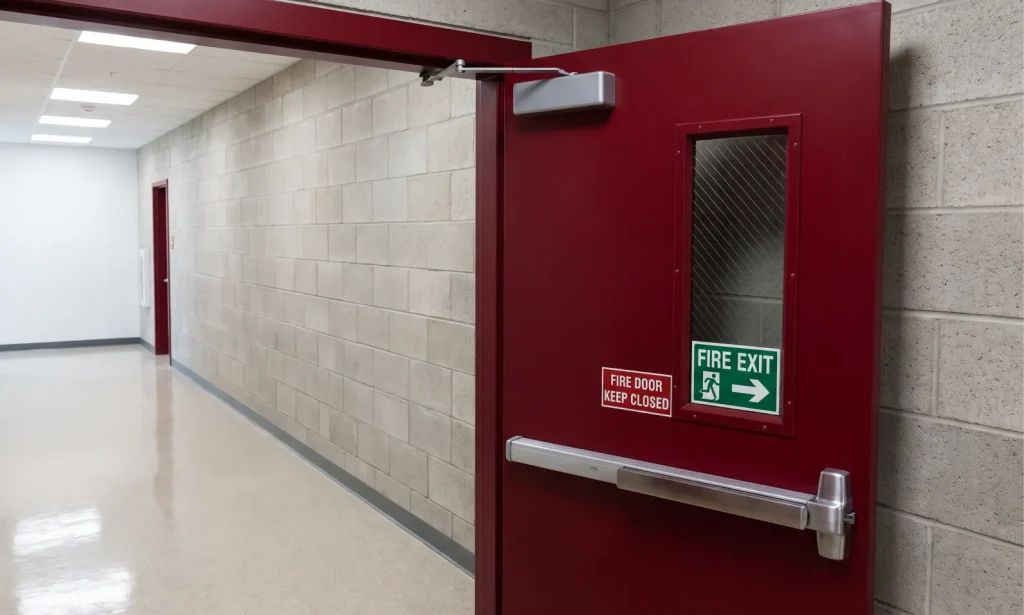
Opening and closing timing, force to open and to stop, hold-open, backcheck, arm and linkage wear, guide rails on full-energy systems, and the safety sensor covering the swing path.
ADA low-energy operators
Timing and force against the standard, actuator function and placement, hold-open time, and manual operation with the power off.
Automatic folding doors
Hinge and pivot wear, panel alignment, breakout operation, drive condition and speed settings.
Revolving doors
Rotation speed against door diameter, breakout force, the wing, end-wall, bottom-rail and entry-point sensor groups, canopy and ring drive condition, night lock and slow-speed function.
ICU and hermetic doors
Seal and gasket condition, breakaway leaf operation, drive and track condition, and touchless activation function, all carried out without disrupting the unit.
Multi-Door and Multi-Site Buildings
Most buildings we maintain have more than one automatic entrance, and most have more than one manufacturer across them. Both are normal and neither changes the schedule.
Portfolios — retail chains, campuses, hospital systems, managed property — are scheduled building by building with one point of contact, so the same technicians see the same doors each visit and the history stays with the site rather than being rebuilt from scratch every time.
What Regular Service Actually Prevents
Almost every automatic door failure is visible before it happens. A drive belt loses tension gradually. Carriers develop flats. Track fills with grit. Seals harden. Sensors drift a degree at a time. None of it fails overnight — it fails on the day the door finally cannot cope.
A maintenance visit catches those at the point where they are an adjustment or a small part rather than an out-of-hours call and a closed entrance. It also catches the compliance items that nobody notices day to day: a hold-open that has shortened, a closing cycle that has sped up, a breakout that has stiffened.
For buildings that have been running reactively, the first two or three visits usually find a backlog. After that, the pattern settles into adjustments and wear parts.
Records That Stay With the Door
Each visit produces a record per door: what was checked, what was adjusted, what was replaced, and what was flagged for the next visit. Over a year that turns a set of entrances into a maintained asset rather than a series of unrelated call-outs.
It also means the next technician on site starts from what the door has already done rather than from scratch, which is the difference between a fifteen-minute diagnosis and an hour of guessing.
Service Areas
Texas — Austin, Cedar Park, Cypress, Richardson, McKinney, Sherman, Paris. Connecticut — Hartford, New Haven, Danbury, Greenwich. Alabama — Birmingham.
Tell us how many doors you have and where they are, and we will build the maintenance schedule around them.
Our Services
Frequently Asked Questions
How often should commercial automatic doors be maintained?
It depends on cycles. High-traffic retail and healthcare entrances are usually served monthly or quarterly, moderate-traffic entrances semi-annually, low-traffic interior openings annually.
What is the difference between maintenance and the annual inspection?
A maintenance visit keeps the door running — cleaning, lubrication, tensioning, adjustment and wear parts. The annual inspection is a full documented check of every safety-related function against the standard for that door type, with a dated record and a written report.
Who performs the annual inspection?
The annual safety inspection is carried out by an AAADM-certified inspector working to the ANSI/BHMA standard that applies to the door — A156.10, A156.19, A156.27 or A156.38.
Do you maintain doors you did not install?
Yes. Most of the doors we maintain were installed by someone else, and mixed-brand sites are routine.
Can maintenance be done outside business hours?
Yes. Retail, hospitality and healthcare sites are usually served before opening, after closing or overnight.
What happens if a door fails a check?
Anything correctable by adjustment or with a part on the truck is fixed during the same visit. Anything needing a part on order is listed in the report and scheduled.
Can several doors on one site be covered in one visit?
Yes. Sites are serviced building by building, with every opening covered in a single scheduled visit rather than one appointment per door.