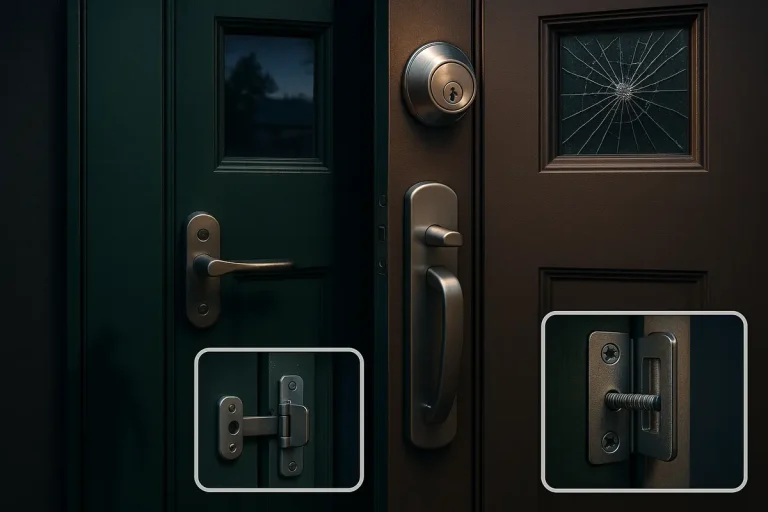
When evaluating door replacements or retrofits, property owners face a double-edged challenge: securing vulnerable entry points against forced entry while preventing costly energy loss. Rear sliding doors and wide glass entryways are prime targets for physical breaches and major contributors to thermal inefficiency. Deciding whether to apply aftermarket security film, replace insulated glass panels, or upgrade to impact-resistant door systems requires understanding the underlying physics of glass performance.
Blog Post
Published: Oct 14, 2026
Safety and Security Physics: Decoding Glass Resistance
Under federal mandates like CPSC 16 CFR 1201 (Category II) and ANSI Z97.1, all glass located within 24 inches of a door opening must be safety glazing to prevent severe lacerations upon human impact. However, safety from impact cuts does not automatically equal protection from forced entry.
Standard 1/8-inch tempered glass shatters instantly into blunt pebbles upon punch or hammer impact, offering only 1 to 2 seconds of forced-entry delay. In contrast, laminated safety glass integrates a tough Polyvinyl Butyral (PVB) interlayer (0.030″ to 0.090″ thick) bonded between glass sheets. Under ASTM F1233 testing, laminated glass withstands 3 to 5 minutes of continuous sledgehammer or crowbar attacks, maintaining structural integrity even after shattering.
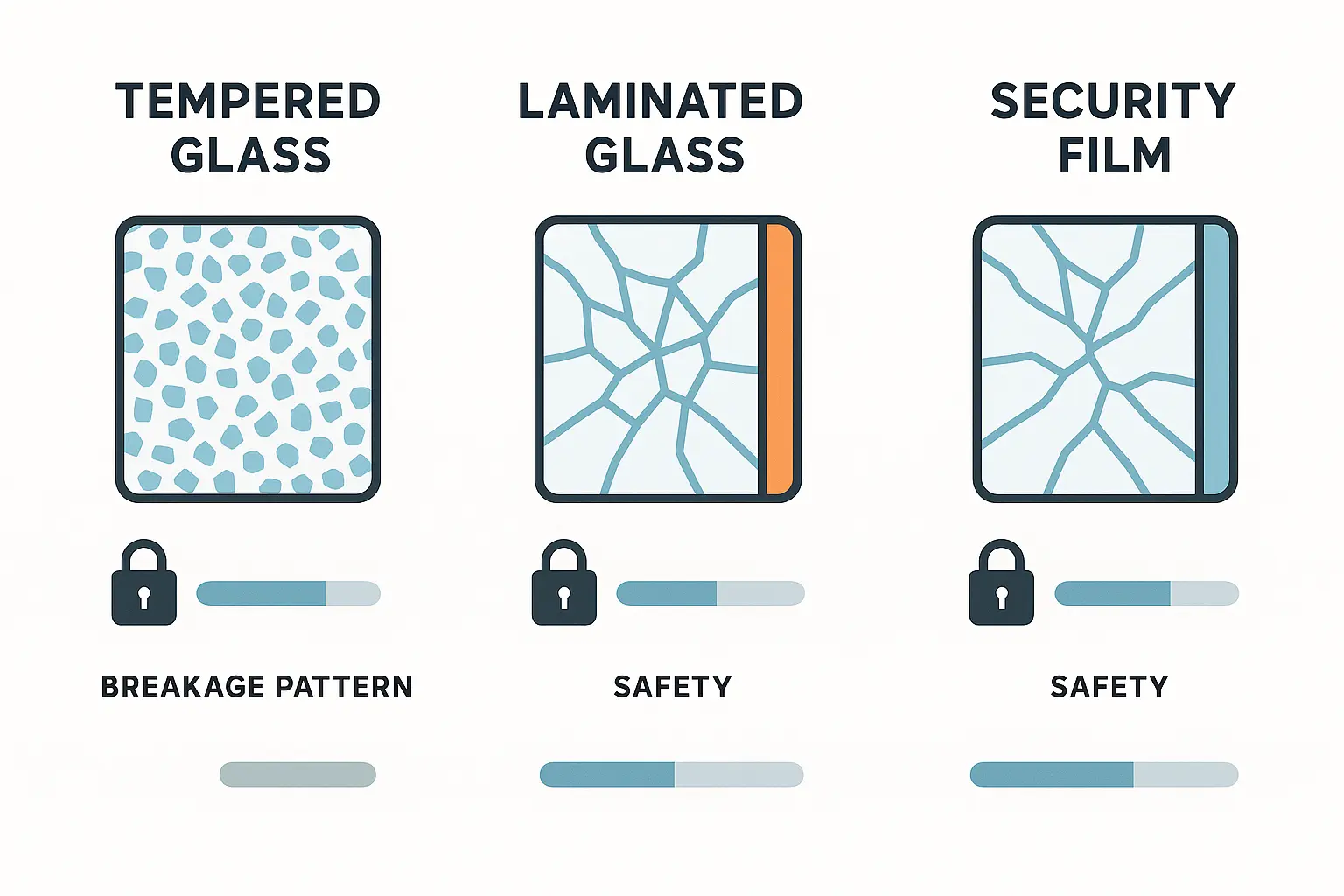
For retrofits, applying 8-mil to 14-mil shatterproof film offers an accessible middle ground, delaying entry by 30 to 90 seconds. Crucially, window film is ineffective unless paired with a wet glazing attachment system using Dow Corning 995 or 3M IPA structural silicone. Without anchoring the film directly to the door frame, a single hard blow can dislodge the entire glass pane inward. Ensure your structural framing is sound—if your door sags or sticks, address underlying track alignment with sliding door track repair before applying film.
Performance and Energy Efficiency: IGUs and Low-E Coatings
Thermal performance is governed by an Insulated Glass Unit’s (IGU) ability to limit radiant heat transfer. Upgrading from a single pane to a double-pane Low-E Argon-filled IGU reduces thermal conductivity by 30% to 50%, dropping the overall door u factor from 1.10 down to 0.22–0.28 BTU/h·ft²·°F.
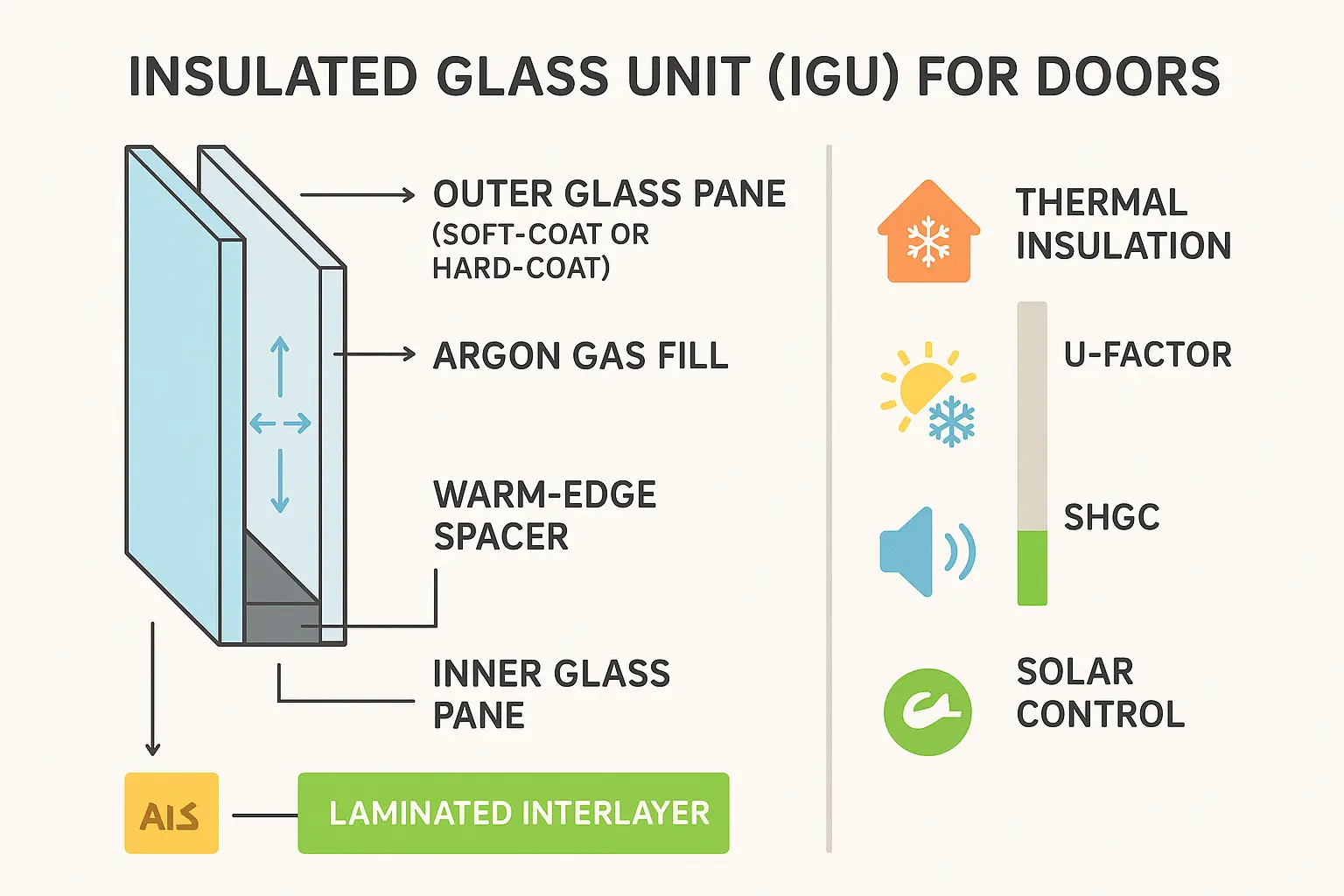
Low-E (low-emissivity) coatings utilize microscopically thin metallic layers to reflect infrared heat while letting daylight pass through. Solar control coatings control the Solar Heat Gain Coefficient (SHGC), maintaining lower indoor temperatures during summer heatwaves. When selecting energy efficient doors, avoid retrofitting dark tint films onto existing dual-pane Low-E glass without professional consultation, as trapped heat can cause thermal stress fractures and void seal warranties.
Acoustic and Environmental Protection
In addition to thermal control, high-performance door glass serves as an environmental shield. Laminated IGU door panels deliver an impressive Sound Transmission Class (STC) rating of 35 to 42, reducing exterior ambient noise by up to 75% compared to single-pane doors (STC 26–28). Furthermore, PVB interlayers block 99% of damaging UV radiation (290–380 nm), protecting indoor flooring and furnishings from fading. Commercial properties subject to high foot traffic and security codes can maintain safety and noise suppression via targeted commercial storefront door repair and glass upgrades.
Retrofit vs. Replacement Decision Matrix
Evaluating your options comes down to budget, existing door frame condition, and security priorities. Consult our exterior door guide when weighing these primary choices:
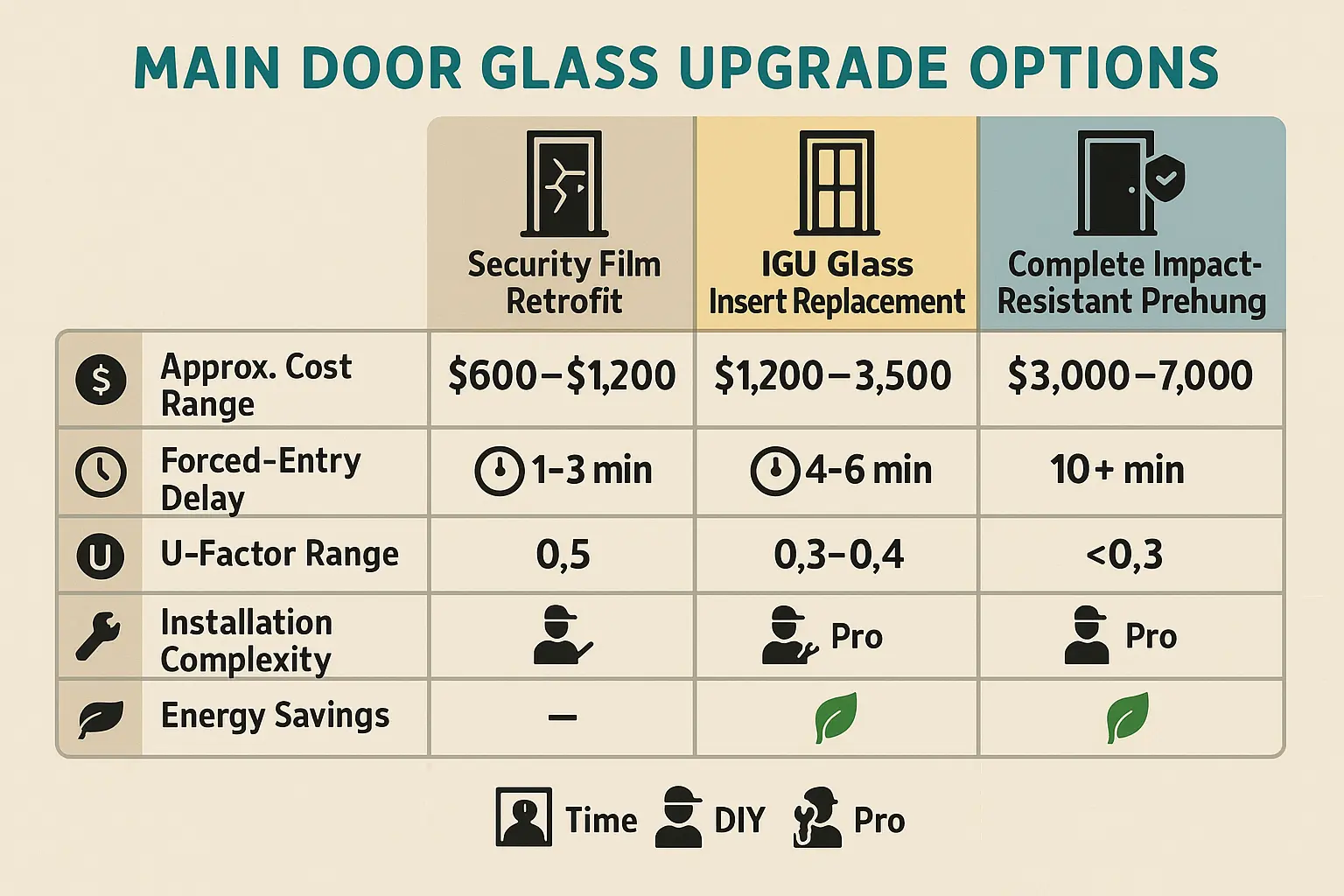
- DIY/Pro Security Film ($100–$250): Delays forced entry by 30–90 seconds when installed with structural silicone attachment. Minimal energy performance gains.
- IGU Glass Insert Replacement ($300–$900): Drastically improves U-factor and acoustics while providing tempered or laminated safety options. Ideal for solid, square frames.
- Complete Impact-Resistant Door Unit ($1,200–$4,500+): Provides maximum forced-entry delay (3–5+ mins), optimal thermal ratings, and full code compliance for severe weather zones. Recommended for major patio upgrades like a-1 sliding doors installations.
Frequently Asked Questions
Will applying security film stop a crowbar or sledgehammer attack?
Security film alone holds shattered glass together, but without a structural silicone wet glazing attachment bonding the film directly to the door frame, an attacker can push the entire pane inward. When anchored properly, an 8-mil film delays forced entry by 30 to 90 seconds.
What is the difference between tempered and laminated safety glass?
Tempered glass is heat-treated to crumble into dull pebbles upon fracture, protecting occupants from sharp cuts. Laminated glass bonds a clear PVB interlayer between glass sheets; when struck, it cracks in a spider-web pattern but stays glued together, preventing physical entry for several minutes.
Does installing security film over double-pane Low-E glass damage the door seal?
It can. Dark or solar-absorbing films reflect heat back into the airspace between glass panes, significantly increasing thermal stress. This elevated thermal expansion can cause dual-pane seal failures, clouding, or thermal shock glass fractures, which typically voids manufacturer warranties.