

Automatic Swing Doors and Door Operators
Swing door operators are the most widely fitted automatic hardware in a commercial building — on main entrances, vestibules, corridors, restrooms and suite doors. A1 Door Services installs, repairs, replaces and adjusts them across Texas, Connecticut and Alabama. Unlike a slider, a swing operator shares its opening with a closer, a latch, hinges and a frame, and most faults come from that relationship rather than from the operator on its own. An operator fighting a dropped frame or a mis-set closer will fail again however many times it is replaced.
 (855) 676-0881
Get in touch with us
Call us 24/7: (855) 676-0881
Or Let Us Call You
Swing Operator Types We Service
Which category a door falls into decides what safety equipment it needs and how fast it is allowed to move — and getting that classification wrong is one of the more common problems we correct.
Full-energy swing
Motion-activated systems that open under power at full speed. They require a complete safety sensor package and guide rails, and they are governed by ANSI/BHMA A156.10.
Low-energy swing
Opened by a knowing act — a push plate, key switch or wave sensor — at limited speed and force. Governed by A156.19, and by far the most common operator in commercial buildings.
Power-assist
The user pushes the door and the operator reduces the effort required. Useful where a full operator is unnecessary but the leaf is heavy.
Mounting types
Surface-mounted on the header, concealed in the transom, or set into the floor. The mounting decides what is possible on a given frame, header and finish.
Pairs and simultaneous pairs
Double doors where both leaves open together, and double-egress pairs in corridors, each needing its own sequencing and coordination.
Swing Door Operator Repair
The wear points inside a swing operator are the arm and linkage, the spindle and bearings, the motor and gearbox, and the control board. A door that slams, drifts, stalls part way or refuses to hold open is almost always one of those four.
We repair and replace all of them, and where the operator is obsolete or has been undersized for the leaf from the start, we replace the unit rather than rebuilding it. Control boards are cross-referenced to current equivalents where the original is no longer produced.
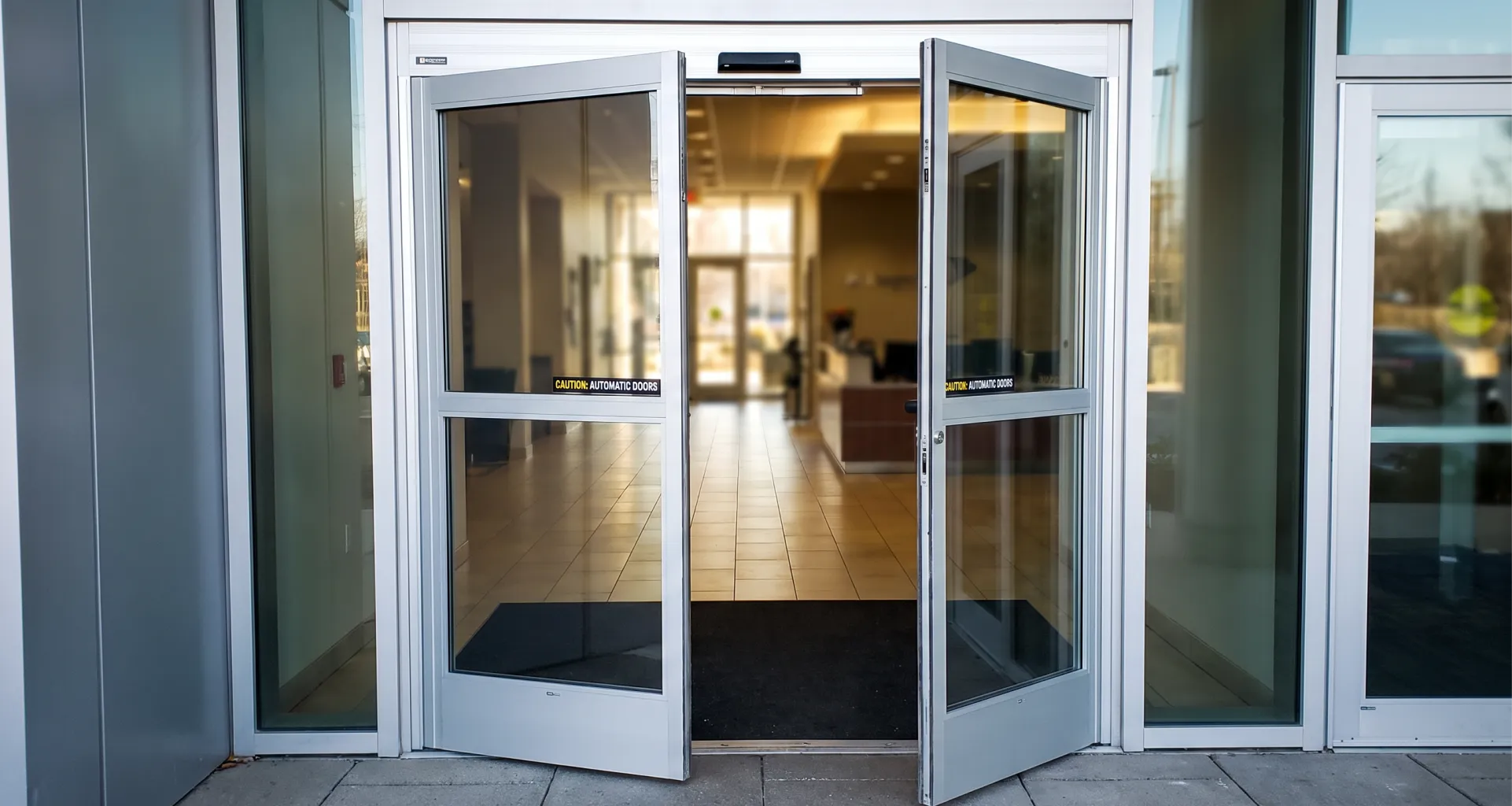
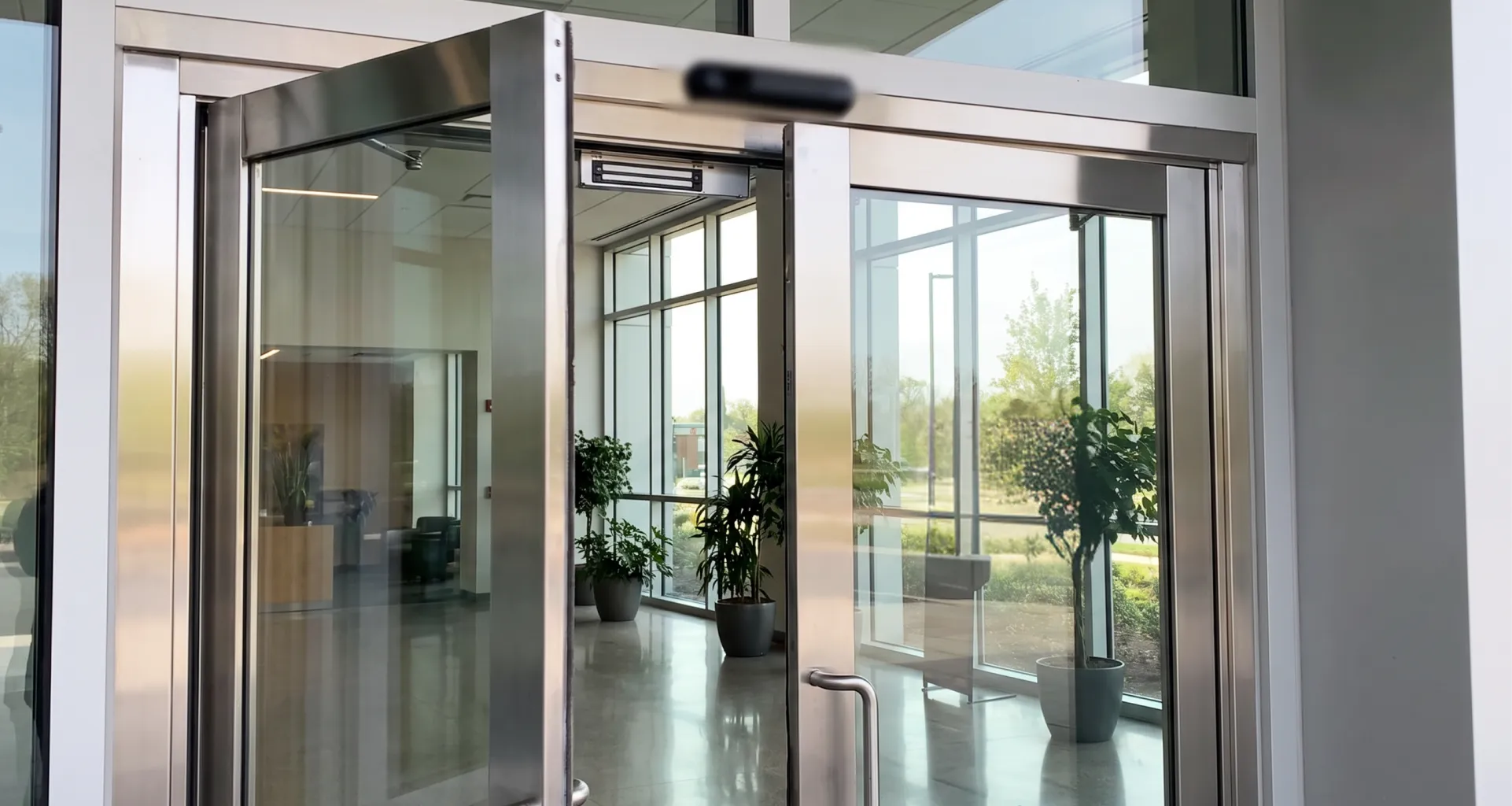
Arm, Linkage and Spindle Service
The arm assembly takes every bit of load the operator produces, and it is where wear shows first: play at the spindle, a loose or elongated linkage, worn bushings, or an arm that has been bent by someone forcing the door.
Worn linkage makes a door sloppy at the start of the cycle and hard at the end, and it is frequently mistaken for a control fault. We replace arms, linkage, spindles and bushings and reset the arm geometry so the operator drives the leaf through its full arc evenly.
Timing and Force Adjustment
Opening speed, closing speed, hold-open time, backcheck and the force needed to stop or open the door all drift as an operator ages. A door adjusted by feel is rarely inside tolerance, and on low-energy systems this is the single most common non-compliance found in the field.
We measure the values and reset the operator to the figures its governing standard calls for — including the added activation delay required where the actuator is mounted well back from the door and someone pressing it needs longer to reach the opening.
Manual opening force with the power off is checked as part of the same adjustment, since that is what people will be pushing against when the building loses power.
Guide Rails, Sensors and Signage
Full-energy swing doors need guide rails and a safety sensor package covering both the swing path and the approach side. Low-energy systems do not carry the same requirement, which is exactly why classifying the door correctly matters before anything is specified or removed.
We fit and service overhead presence sensors, door-mounted leading-edge sensors, approach-side detection and the decals the door type requires. Sensors are aimed and masked to the opening rather than left at factory defaults.
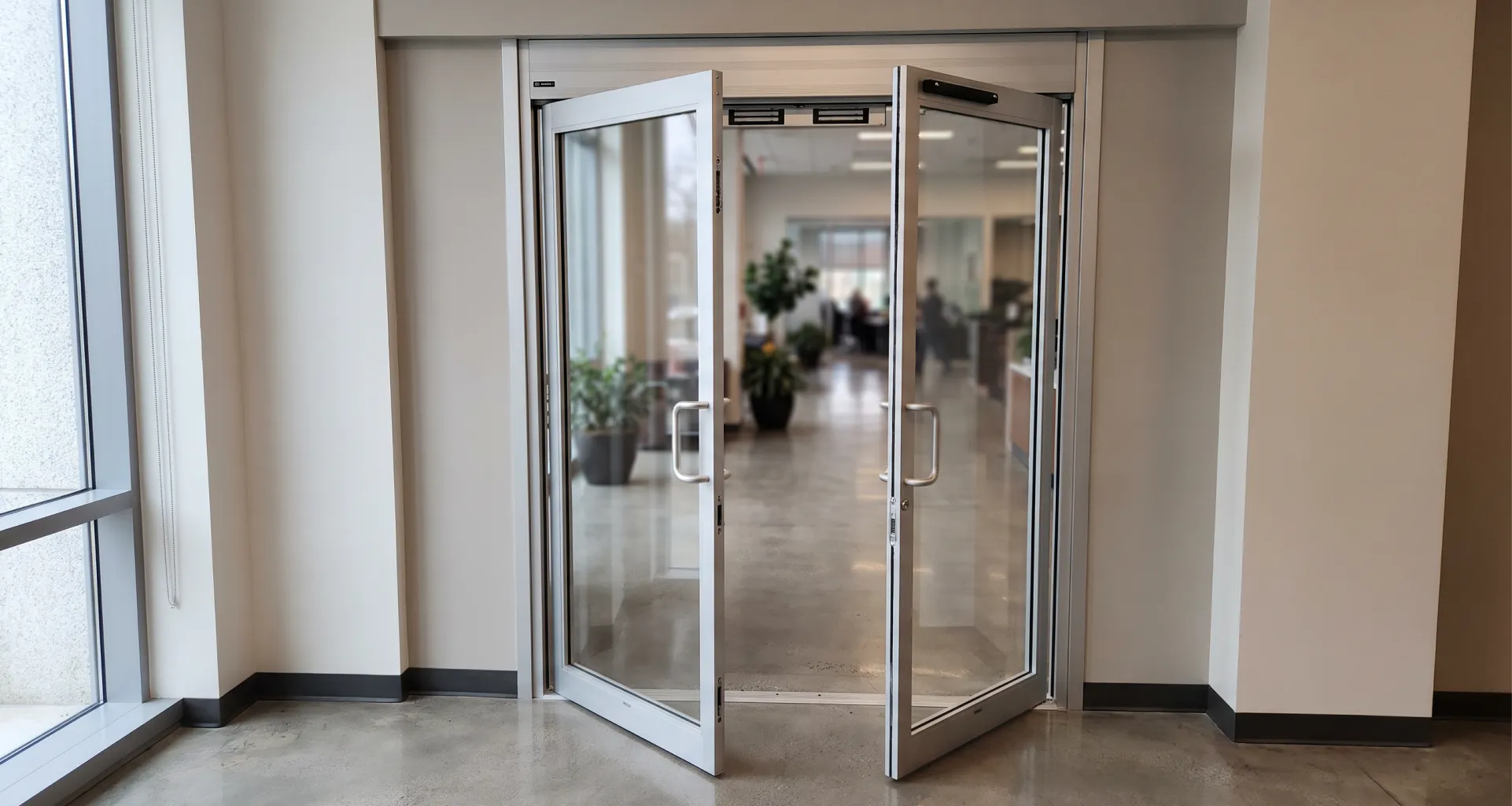
Frame, Hinge and Closer Faults Behind Operator Problems
A large share of swing operator call-outs are not operator faults at all. A racked or dropped frame, worn hinges or pivots, a latch that no longer aligns, or a closer still fighting the operator will all present as an operator that has failed.
We square frames, replace hinges and pivots, align latches and strikes, and remove or reset closers that are working against the operator — then set the operator. Done in the other order, the settings never hold.
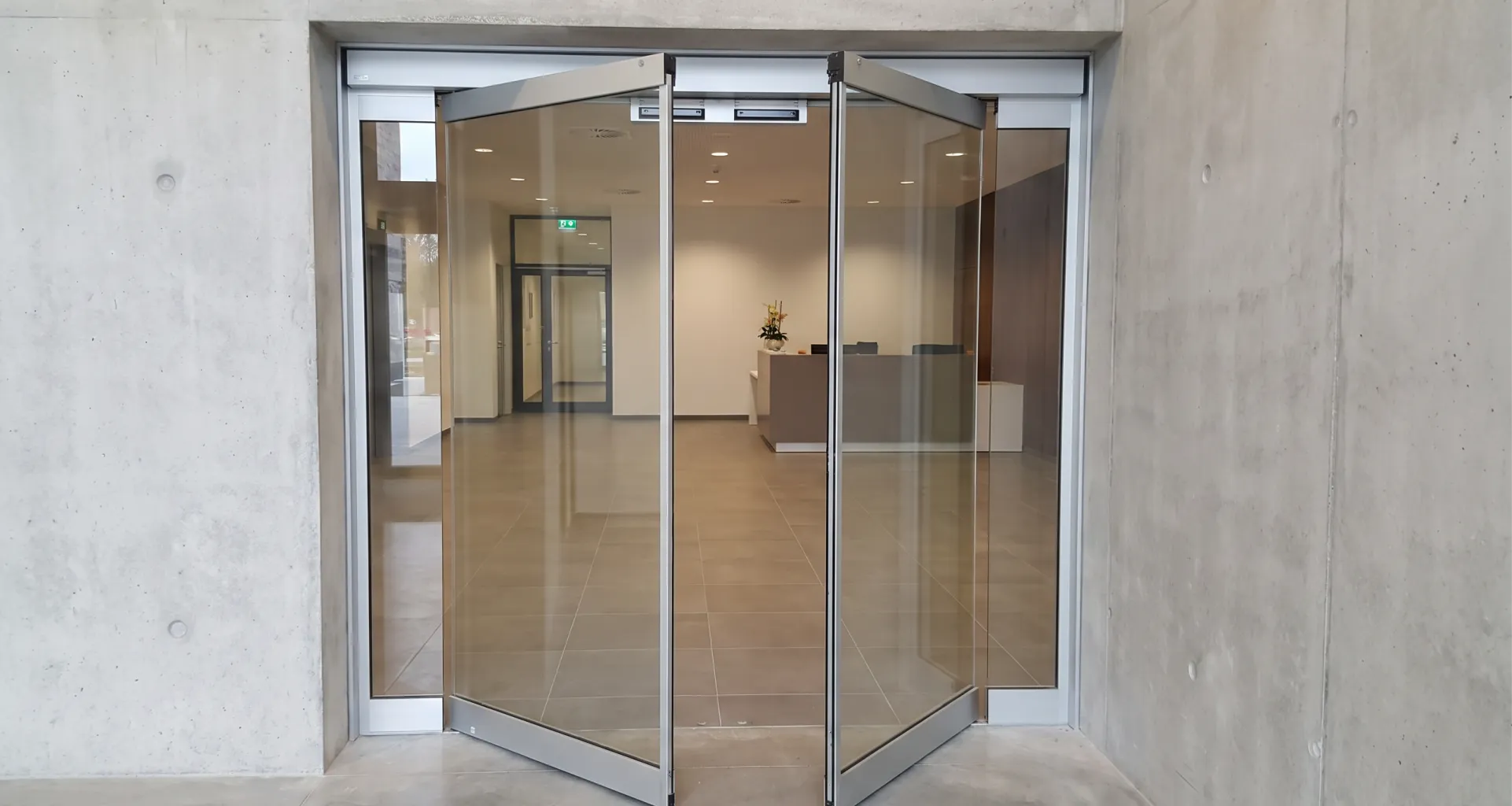
Swing Operator Installation and Replacement
New operators are sized to the door leaf weight, width and duty cycle rather than to whatever was on the opening before. Replacing an operator alone leaves the door, frame and finish untouched and is normally a single visit per opening.
We also add operators to doors that have never been automatic, convert legacy electro-hydraulic and pneumatic units to modern electromechanical drives, and change full-energy systems to low-energy or the reverse where the way the entrance is used has changed.
Keeping Swing Operators in Adjustment
Swing operators drift more than sliders because the hardware around them keeps moving — hinges settle, frames shift, closers lose their setting and latches wear. A door that was perfect at handover will not be a year later without attention.
Scheduled maintenance re-measures timing and force, re-tests the actuator and sensor package, checks arm and linkage wear, and corrects the frame and closer issues that would otherwise put the operator back out of range.
Actuators, Wiring and Activation Faults
A swing operator only does anything when something tells it to. Push plates, key switches, wave sensors and wireless transmitters take daily impact and eventually fail, and a door that responds on the second or third press is almost always an actuator problem rather than an operator problem.
We replace and rewire actuators, repair damaged low-voltage runs, replace batteries and receivers on wireless kits, and relocate plates that were mounted where people cannot reach them from the direction they approach the door.
On paired doors and vestibules the sequencing between actuators is checked as well, since two operators activated in the wrong order will fight each other every cycle.
Vestibule Pairs and Doors in Series
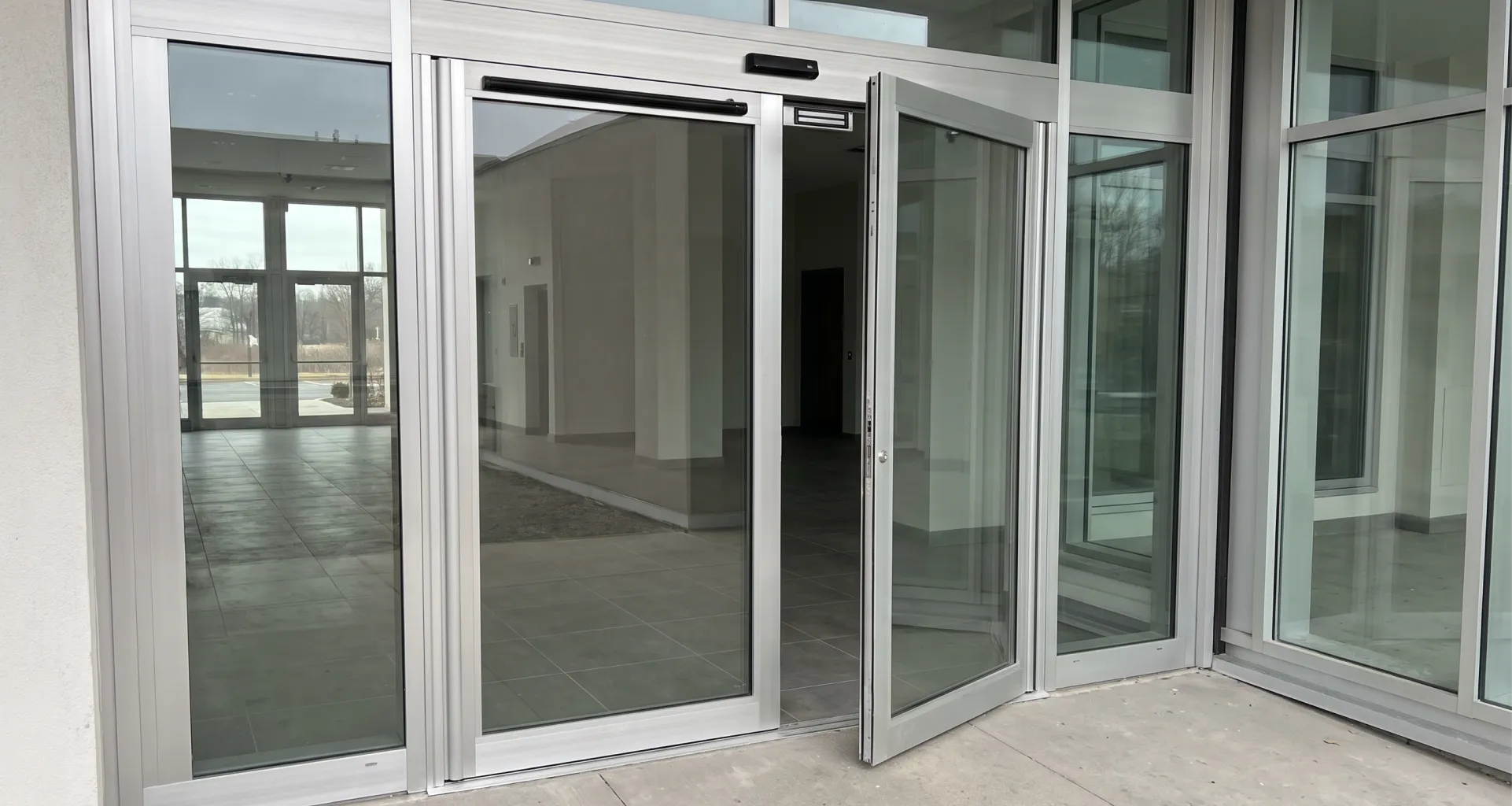
Two swing operators in a vestibule are not two independent doors. If both open at once the vestibule stops controlling air; if they sequence badly a person is held between two closed leaves.
We set and repair the sequencing between paired operators, adjust hold-open on each leaf so the transition through the vestibule is continuous, and check that the interlock behaves correctly when one operator is switched off or loses power. The same applies to double-egress corridor pairs, where the two leaves have to clear each other cleanly in both directions.
Service Areas
Texas — Austin, Cedar Park, Cypress, Richardson, McKinney, Sherman, Paris. Connecticut — Hartford, New Haven, Danbury, Greenwich. Alabama — Birmingham.
Tell us the door and what the operator is doing, and we will bring what that fault normally needs.
Our Services
Frequently Asked Questions
What is the difference between full-energy and low-energy?
A full-energy door opens under power at full speed and is normally motion-activated, which means it needs guide rails and a full safety sensor package. A low-energy door opens only when someone activates it deliberately, at limited speed and force.
Why does my swing door slam?
Usually a failing closer or a control board no longer regulating the closing cycle, sometimes a worn arm or spindle. The closing speed is measured and reset once the mechanical fault is corrected.
Why does the door open by itself?
On a full-energy door, a motion sensor detecting something it should ignore. On a low-energy door, a faulty actuator or a stuck relay in the control board.
Can an operator be fitted to a fire-rated door?
In many cases yes, using a unit listed for use on a fire door assembly and wired to release on alarm. Whether it works on a specific opening depends on the label, the frame and the hardware already fitted.
Does a low-energy operator need safety sensors?
It does not carry the same sensor and guide rail requirement as a full-energy door, but the opening still has to be safe. We assess each door on its layout, its traffic and what is behind it.
Can you fix the door if the frame has dropped?
Yes. A racked or dropped frame is usually why the operator is struggling. We square the opening and reset the hardware before touching the operator settings.
How much force should it take to open the door with the power off?
It should be openable manually without unusual effort. We measure it as part of every adjustment, because that is what people push against during a power outage.