(855) 676-0881

The Architectural Guide to Glass Door Hardware, Locks & Security Systems


Published: Oct 19, 2026

Selecting glass door hardware requires balancing structural safety, physical security, and accessibility codes. Unlike standard timber or hollow metal doors, glass assemblies demand precision engineering. A single miscalculation in hardware selection can lead to catastrophic glass failure, non-compliance fines, or compromised building security.

Whether you are evaluating hardware for commercial storefronts, modern office partitions, or residential entries, understanding how components interact with glass fabrication tolerances is vital.
Matching Lock Mechanics to Glass Door Configurations


Glass entrance systems rely on hardware engineered specifically for their movement dynamics and frame profiles.

  • Frameless Swing Doors: Frameless all-glass doors rely on corner patch fittings, hydraulic floor pivots, and bottom-rail deadbolts. Because there is no outer perimeter frame, patch locks secure directly to adjacent glass panels or floor keeps.
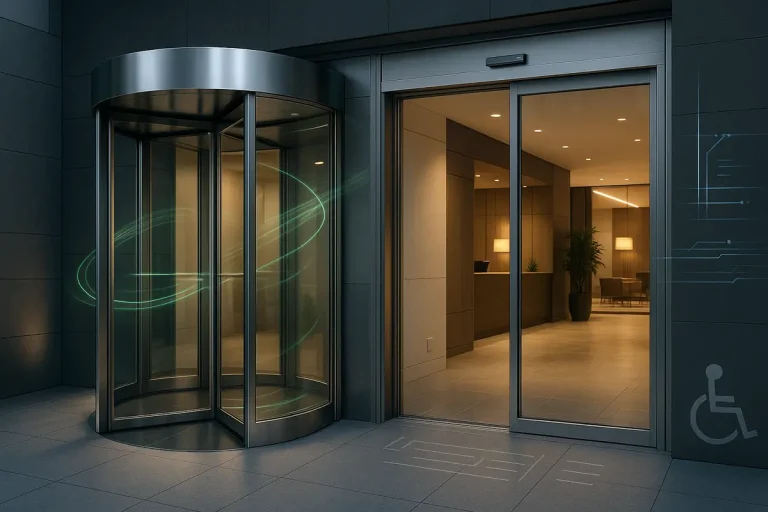
  • Sliding Glass & Storefront Systems: When installing sliding aluminum doors, standard push-pull latches are ineffective. Sliding glass assemblies require heavy-duty mortise hookbolts that throw a laminated hook into the strike plate, preventing forced horizontal or lateral prying.
  • Commercial Glass Entrances: Aluminum-framed storefronts subject to high foot traffic require specialized commercial storefront door repair strategies, incorporating surface-mounted panic exit devices, continuous hinges, and overhead concealed closers.

Technical Compatibility Matrix: Glass Thickness & Cutouts


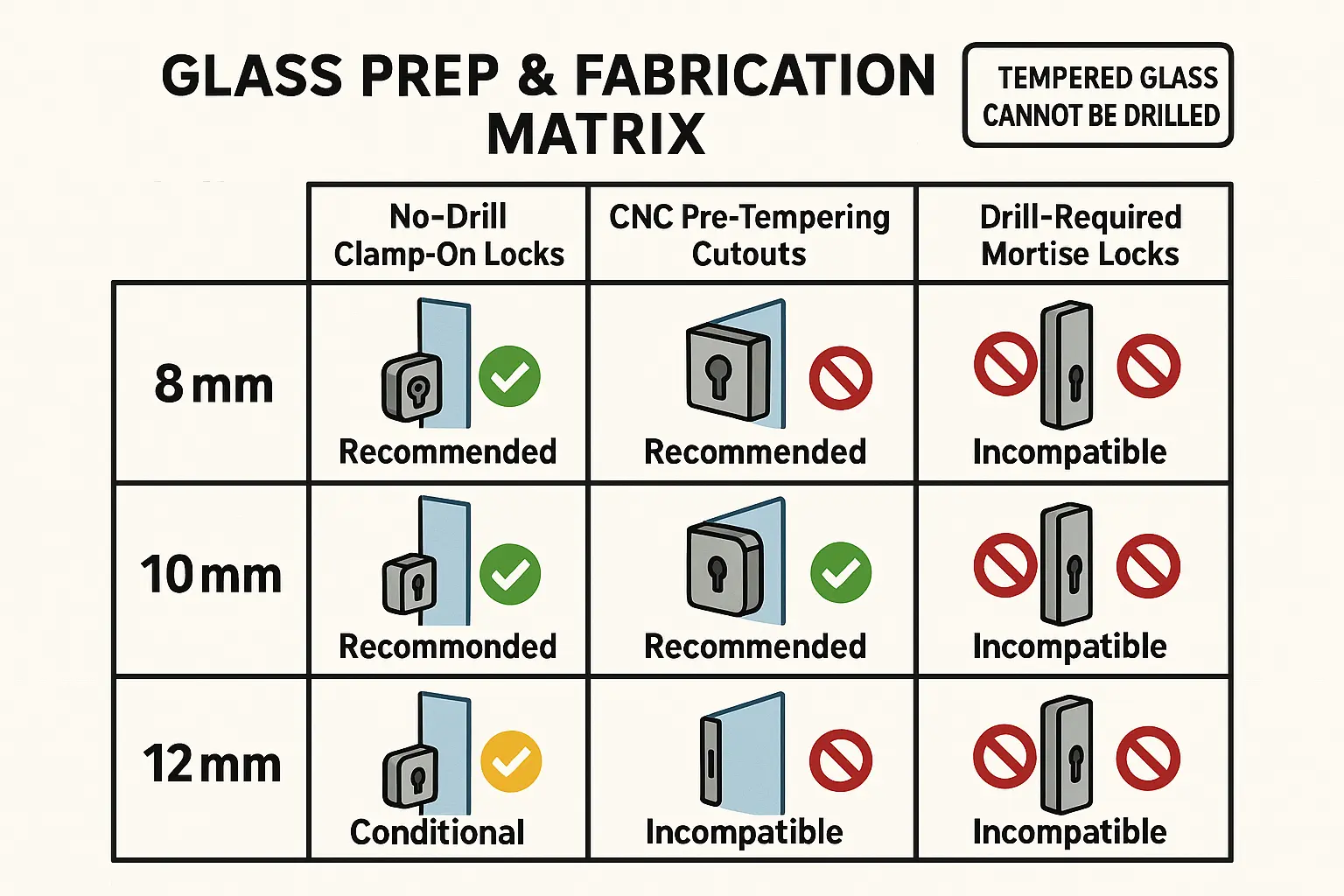
The golden rule of glass door hardware engineering is absolute: toughened and tempered glass cannot be drilled, notched, or cut after heat treatment. Any attempt to modify tempered glass on-site will cause the entire pane to shatter instantly.

Standard commercial frameless glass doors utilize 3/8″ (10mm) to 1/2″ (12mm) thick tempered glass. For light interior partitions, 1/4″ to 5/16″ (6mm to 8mm) glass is standard.

Hardware mounting falls into two major categories:

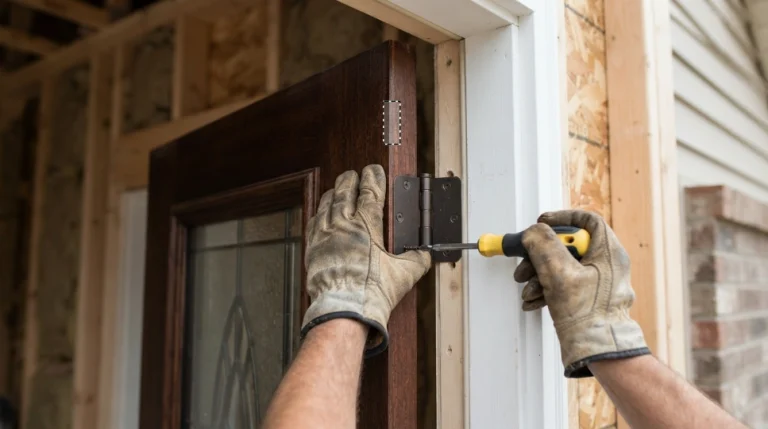
  1. Friction/Clamp-On Retrofits: Ideal for post-installation lock upgrades. These assemblies clamp onto the edge of 10mm–12mm glass using high-tensile rubber friction gaskets and set screws, requiring zero glass modification.
  2. Factory Notch & Corner Cutouts: Heavy-duty mortise patch locks and back-to-back locking pull handles require precision CNC factory cutouts before the glass enters the tempering furnace.

Glass prep & hardware compatibility matrix: Understand which glass thicknesses allow for no-drill clamp locks, require factory pre-tempering cutouts, or need drilling for mortise lock installations. Vital for safe and code-compliant glass door hardware selection.

Commercial Brand Benchmarking & Hardware Specification


When evaluating hardware manufacturers for commercial installations or maintenance, understanding cross-brand compatibility streamlines long-term facility management:

  • Dorma / Dormakaba: The benchmark for heavy-duty commercial hydraulic floor springs and BTS series concealed door closers. Essential when evaluating long-term door closer services for high-traffic entryways.
  • Ozone Glass Systems: Renowned for architectural D-handles featuring integrated key locking cylinders directly within the stainless steel tube, eliminating the need for floor-level bending.
  • C.R. Laurence (CRL): The North American glazier standard for patch fittings, indicator latches, rail systems, and sliding door mortise locksets.
  • Sugatsune: High-precision Japanese engineering featuring premium 304 and 316 marine-grade stainless steel hardware, dimple-key high-security display locks, and soft-closing glass door systems.

Smart Lock Integration for Frameless Glass Entryways


Transitioning glass doors to keyless access control presents unique mounting challenges. Traditional deadbolts require door frame cavities, which frameless glass lacks.

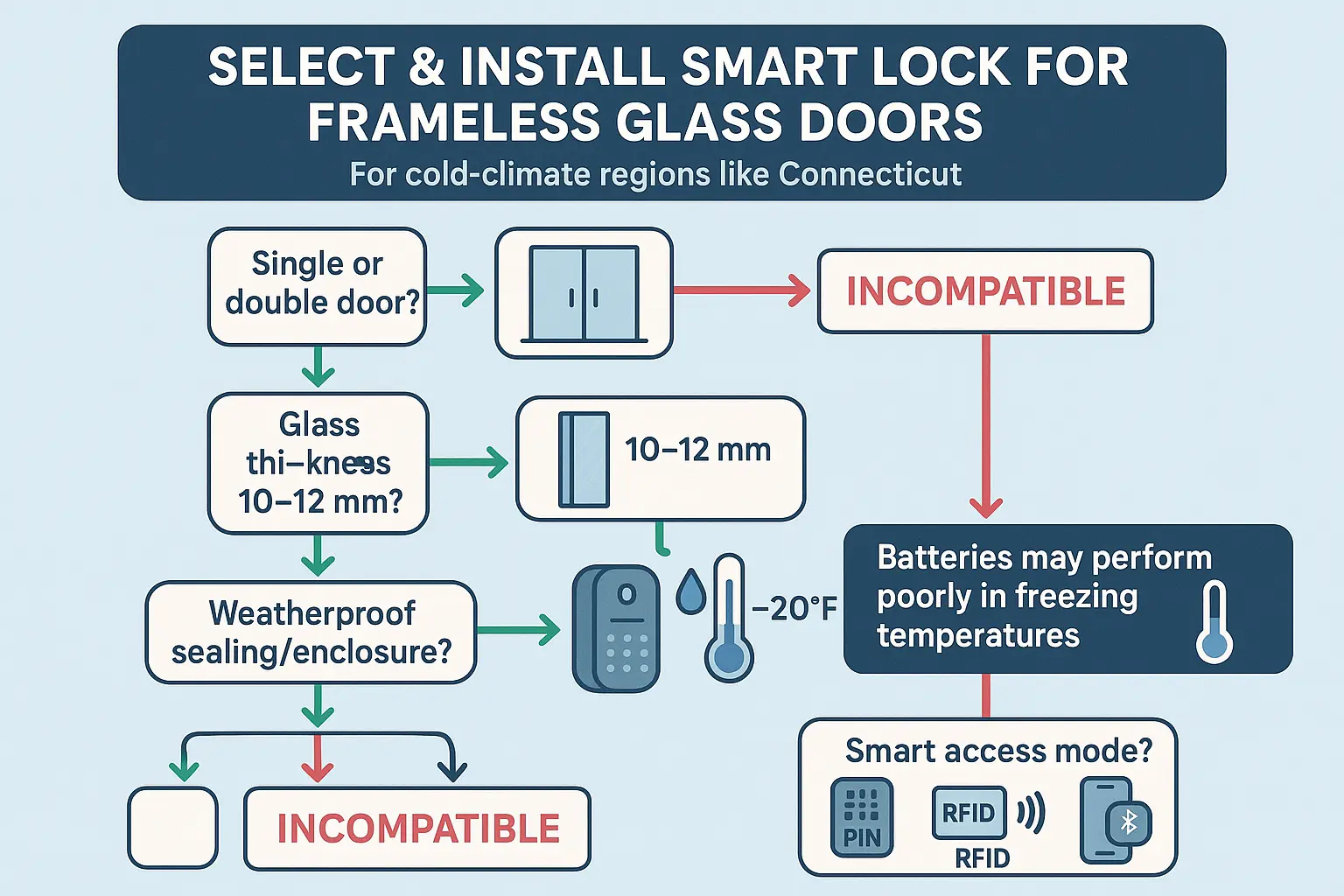
Modern keyless smart rim locks (such as Igloohome RG1 or Salto systems) utilize non-invasive clamp bodies designed for 10–12mm glass. They offer multi-modal access including PIN codes, RFID cards, Bluetooth, and offline algorithmic key generation.

Environmental factors are equally critical. Exterior smart lock electronics must maintain operational integrity across extreme local temperature fluctuations. Exterior smart lock batteries must operate reliably within a -4°F to 122°F (-20°C to 50°C) operating envelope, backed by external emergency 9V jump-start terminals to prevent lockout during harsh northern winters.

How to choose and install smart locks on frameless glass doors: A clear step-by-step guide covering door type, glass thickness, weatherproofing, and smart access options tailored for regions with cold winters like Connecticut.

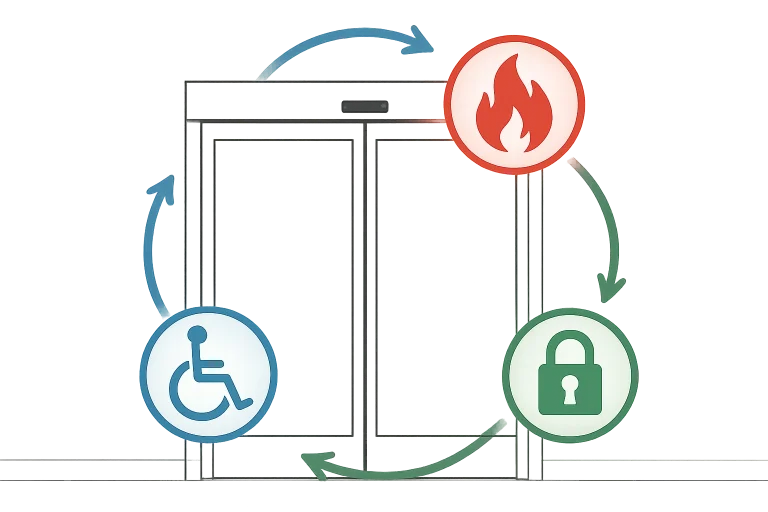
Code Compliance, Fire Rating & Accessibility Standards


Commercial glass hardware must comply with strict life safety codes:

  • ANSI/BHMA Cycle Grading: Hardware selection should reflect usage volume. Grade 1 hardware is tested to 1,000,000+ cycles for heavy commercial entryways; Grade 2 covers 400,000 cycles for interior office doors; Grade 3 (200,000 cycles) is restricted to light residential cabinetry.
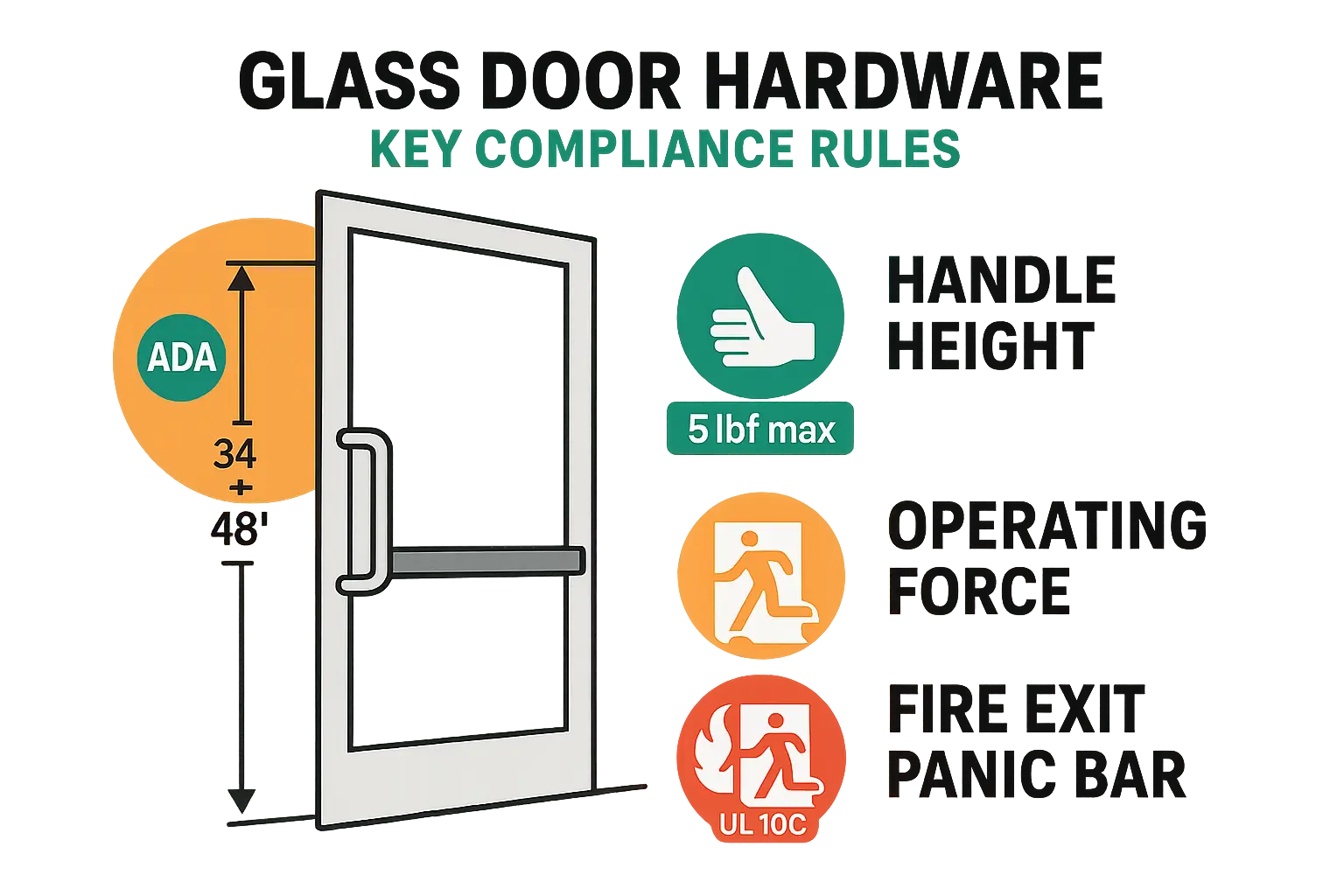
  • ADA Accessibility Requirements: Handles, pulls, and lock operating mechanisms must be mounted between 34 inches and 48 inches above the finished floor. Operation must require no more than 5 lbf (22.2 N) of force and operate without tight grasping, pinching, or wrist twisting. Consult certified ada door installers for automatic operator retrofits.
  • Life Safety & Panic Egress: Emergency glass exits require specialized push-bar hardware meeting UL 10C positive pressure mandates. Ensure your facility strictly adheres to commercial door panic bar code requirements to guarantee immediate single-motion egress during emergencies. For existing installations needing alignment or replacement, professional panic bar installation and repair preserves both security and code compliance.

Glass door hardware code compliance cheat sheet: Quickly recall ADA handle height limits (34"-48"), maximum force to open (5 lbf), and fire-rated panic bar essentials for safe, accessible glass door installations.

Confident Decision-Making for Your Glass Door Hardware


Selecting and installing the right glass door hardware requires balancing aesthetic appeal, structural safety, and absolute code compliance. If you are upgrading commercial entryways, integrating smart access systems, or requiring immediate emergency commercial door repair, working with experienced professionals ensures your glass investments remain secure and functional for years to come.

Frequently Asked Questions


Can you install a smart lock on an existing frameless glass door without drilling?

Yes. Modern smart glass door locks use high-tensile friction clamp brackets engineered specifically for 3/8″ to 1/2″ (10mm–12mm) toughened glass. They secure tightly using pressure plates and rubber gaskets without needing factory glass cutouts or site drilling.

What causes hydraulic glass door closers to slam or leak in winter weather?

Hydraulic fluid thickens when exposed to freezing winter temperatures, increasing internal seal pressure. If fluid viscosity drops or internal seals wear out under cold contraction, the closer loses control damping, leading to fluid leaks and slamming doors that risk shattering adjacent glass.

What is the difference between ANSI Grade 1 and Grade 2 glass door hardware?

ANSI Grade 1 hardware is built for extreme commercial use, certified to withstand over 1,000,000 operating cycles and heavy impact. Grade 2 hardware is certified for 400,000 cycles, making it suitable for medium-duty commercial office interiors and light storefront applications.