Your entryway does more than welcome guests—it acts as your home’s primary thermal and security barrier. When a front door begins to stick, drag, or fail to latch properly, it is easy to assume a costly replacement is the only path forward. However, most front door issues can be resolved with targeted, professional-grade repairs. If structural damage is severe, evaluating whether your door needs replacement or professional remediation will save you thousands of dollars while protecting your home’s envelope.
Complete Guide to Front Door Repair And Maintenance Solutions
Published: Sep 22, 2026
The Interactive Door Diagnostic Matrix
To choose the correct fix, you must first identify your door’s material and the structural failure point:
- Wood Entry Doors: Typically suffer from wood rot or stripped hinge holes. Best fixed with hardwood dowels or structural steel anchors.
- Hollow-Core Doors: Lack a solid wood backing. Standard toothpick tricks will fail; these require specialized toggle anchors or custom epoxy blocks.
- Metal & Fiberglass Doors: Suffer from stripped hinge screws in metal-jacketed frames. These require drilling, tapping, or installing steel rivet nuts (rivnuts).
- Sliding Glass Doors: Usually drag due to roller misalignments, track debris, or improper lubrication. True restoration costs under $25.
Deep Technical Breakdown — Fixing Loose Hinge Screws
When hinge screws spin without tightening, the internal wood fibers have failed. How you restore this connection determines how many pounds of pull-out force the door can withstand:
- The Toothpick Hack (Temporary): Best for lightweight interior doors. Filling the stripped hole with toothpicks and Titebond II/III wood glue yields ~150 lbs of pull-out resistance. Avoid expanding polyurethane glues, which foam and create alignment messes.
- The Hardwood Dowel Plug (Intermediate): Drill a clean 3/8-inch hole, glue in a maple dowel, and cut it flush. This yields ~450 lbs of resistance—ideal for standard wood repair.
- Engineered Steel Anchor Inserts (Professional): Products like ZZEM Screws use brass or steel threaded bushings driven deep into the framing, delivering over 1,000 lbs of pull-out resistance. This prevents future sagging and lowers long-term door jamb repair cost.
The 3-Inch Framing Screw Trick
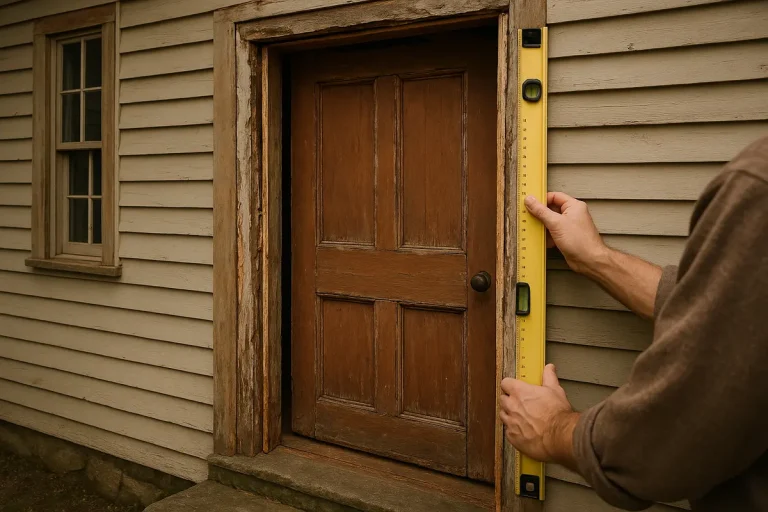
Over time, the massive weight of a solid exterior entryway pulls the soft wood jamb away from the wall framing. This causes the door to sag and rub against the latch-side jamb.
Before starting, perform simple door frame testing to ensure the underlying framing is dry and structurally intact. To correct the sag mechanically:
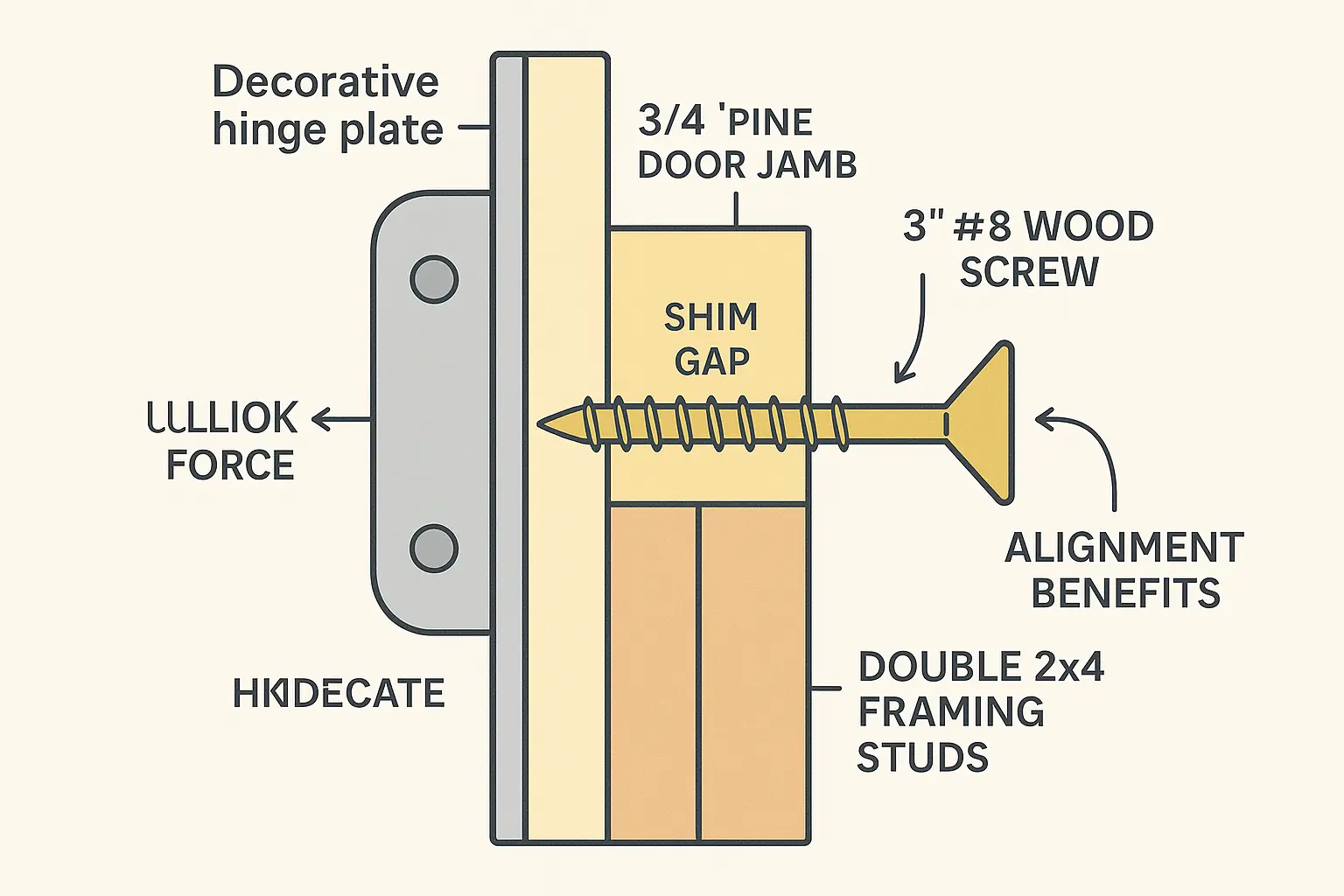
- Locate the top hinge and remove the single screw closest to the stop molding.
- Replace it with a 3-inch #8 wood screw.
- Drive the screw through the hinge, across the shim gap, and deep into the double 2×4 structural wall studs.
Tightening this screw pulls the entire jamb back into alignment, immediately lifting the door and improving kick-in resistance by over 300%.
Sliding Glass Door "Sticky Rescue" Guide
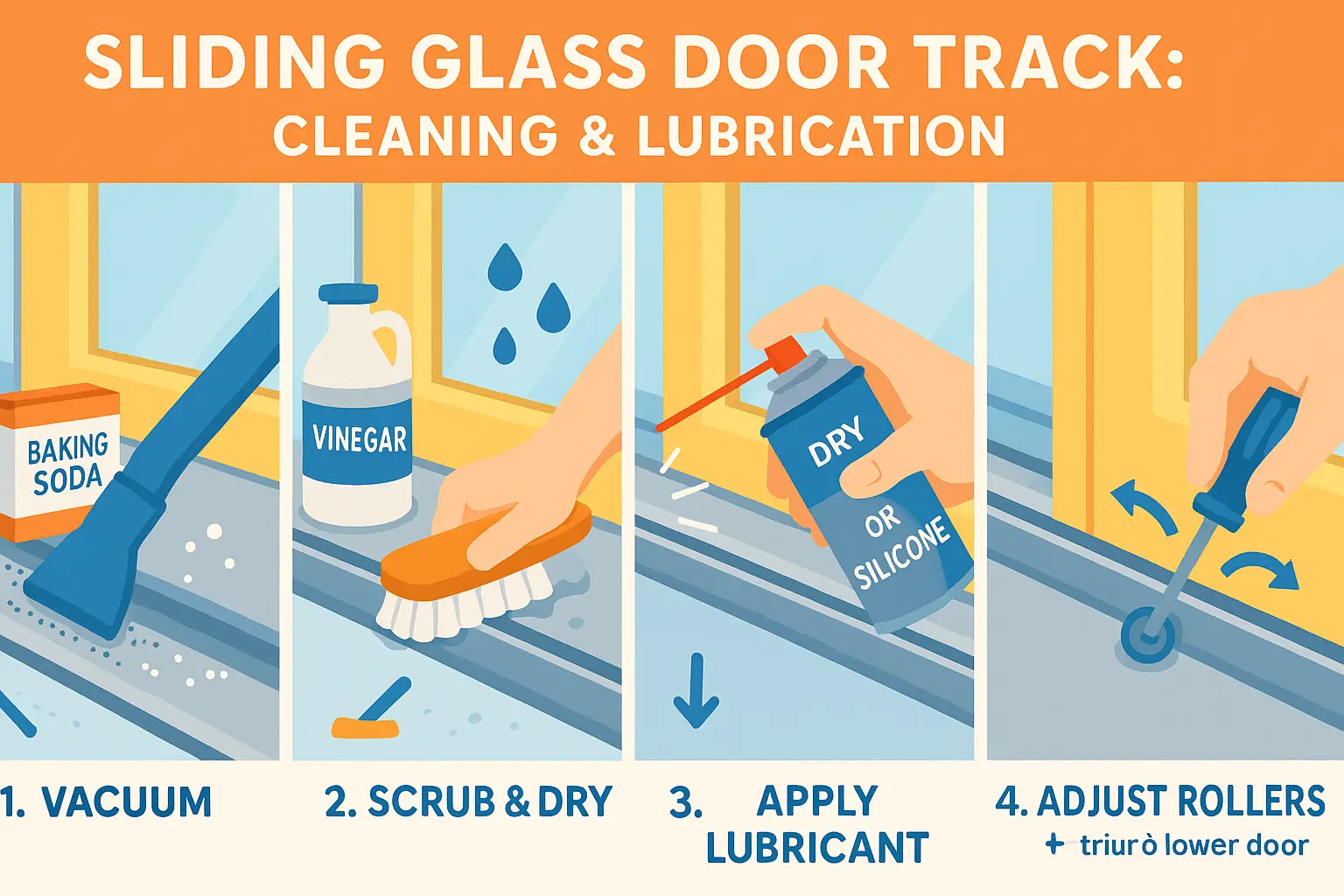
Most homeowners assume a sticking patio door requires complete replacement, costing upwards of $1,200 to $3,500. However, 85% of these doors can be saved for under $25 through simple track restoration.
The WD-40 Warning: Never use standard WD-40 on sliding tracks. It is a wet, solvent-based lubricant that attracts pet hair and dust, forming an abrasive grinding paste that destroys nylon and brass rollers.
Instead, follow this restoration process:
- Clean the Track: Vacuum the channel, scrub with baking soda and vinegar, and dry completely.
- Lubricate Correctly: Apply a high-quality dry PTFE (Teflon) or dry silicone spray.
- Adjust the Rollers: Locate the bottom adjustment ports and turn clockwise to raise the door panel, alignment-matching the latch side.
For doors with damaged structural hardware, scheduling professional a1 sliding door repair will restore smooth, finger-tip operation.
Frequently Asked Questions
Why is my front door rubbing against the top of the frame?
This is usually caused by door sag. Over time, the weight of the door pulls the top hinge away from the wooden jamb, or the jamb itself pulls away from the wall framing. Replacing a single top hinge screw with a 3-inch #8 wood screw can pull the frame back into alignment and resolve the issue.
Can I use the toothpick trick to fix a heavy exterior door?
No. The toothpick-and-glue hack only yields about 150 lbs of pull-out resistance, which is insufficient for heavy solid wood or fiberglass entry doors. For exterior doors, use a 3/8-inch hardwood dowel plug (450 lbs of resistance) or engineered steel anchor inserts like ZZEM Screws (over 1,000 lbs of resistance).
How do I know if my door frame has rot that requires professional repair?
If the wood around your hinges or threshold feels soft, crumbles when pressed with a screwdriver, or cannot hold any screw tension, it has structural rot. In these cases, superficial DIY fixes will fail, and a professional frame replacement is required to restore the home’s security and thermal envelope.