(855) 676-0881

Hairline Cracks Near Your Door Frame: Normal Settling or Structural Red Flag?


Published: Nov 12, 2026

Noticing a thin crack running diagonally or vertically from the top corner of your door frame can immediately spark homeownership anxiety. You are left weighing two extreme scenarios: is this just minor drywall settling, or is your home facing a multi-thousand-dollar foundation failure?

Search results often compound this stress. Generic blogs suggest slapping on joint compound without checking for underlying structural issues, while foundation contractors push expensive pier systems for minor hairline flaws. Understanding what your door frame is telling you empowers you to make an informed, cost-effective decision.
The Door Frame Diagnostic Matrix: Decoding Vector, Width, and Location


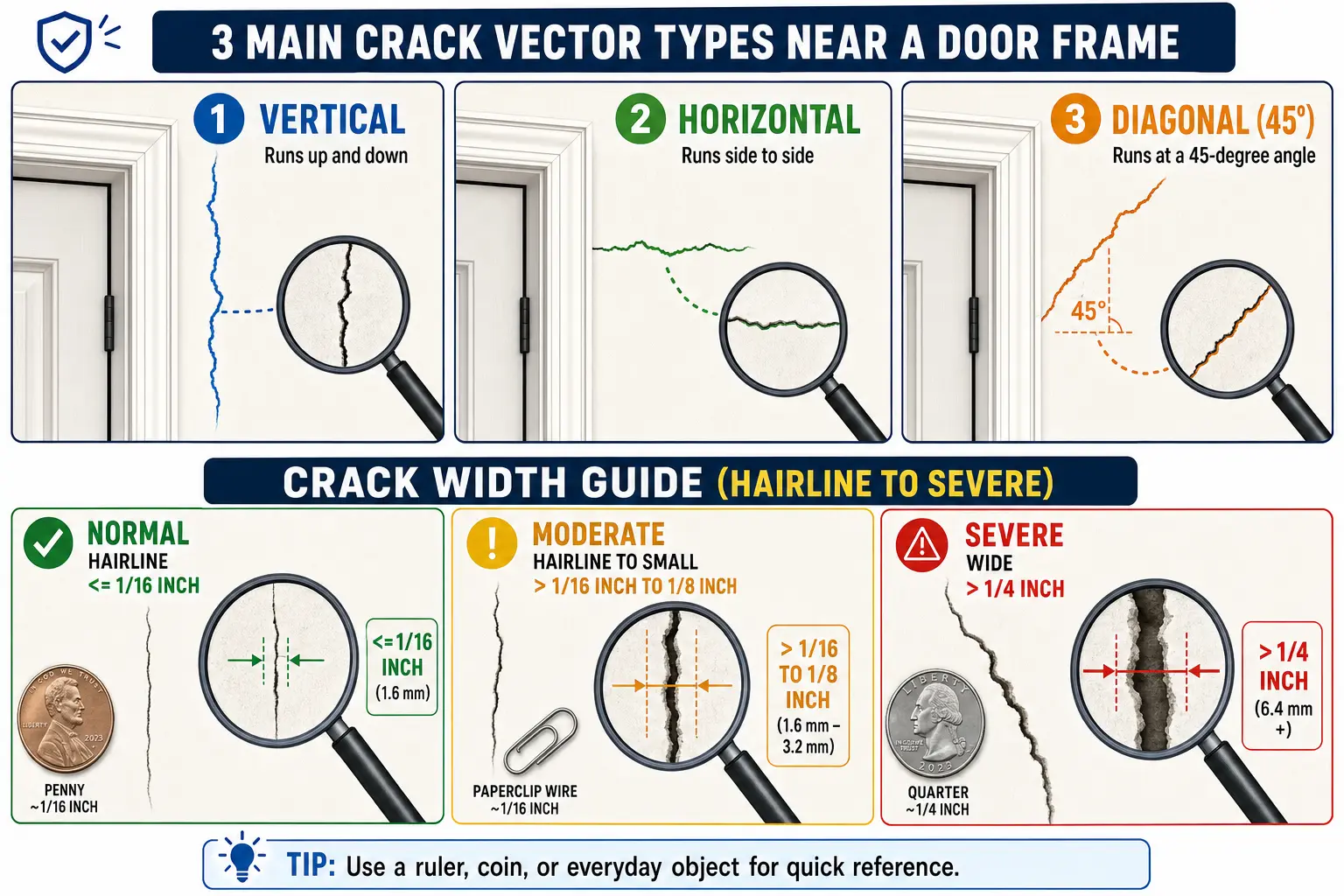
According to structural engineering standards (ASCE 7), hairline cracks measuring 1/16 inch (1.5 mm) or less above door openings are usually non-structural. They stem from material thermal expansion, normal building settling during the first 2 to 5 years, or interior moisture changes.

To evaluate your crack, examine three key physical indicators:

  1. Crack Vector (Direction): Vertical cracks often follow drywall seams where framing studs meet. Horizontal cracks point to header flex or humidity-driven drywall shear. However, 45-degree diagonal cracks originating directly from the upper frame corner signal differential settlement or rotational shear stress across the wall plane.
  2. Crack Width: Hairlines ($le 1/16″$) require basic monitoring. Moderate cracks ($1/16″ – 1/8″$) warrant closer evaluation. Cracks exceeding 1/8 to 1/4 inch suggest active movement.
  3. Separation Type: Differentiating between wood trim caulk shear and true wallboard separation helps pinpoint whether the issue is isolated frame flexing or deeper stress. Performing proper door frame testing ensures accurate structural assessment.

Diagram illustrating how the direction and width of cracks around a door frame signal either normal settling or potential structural issues.

The Sticking Door Test and Frame Alignment Indicators


Cracks rarely happen in isolation. Evaluating door operation provides essential context for diagnosing door frame damage.

Check the reveal—the gap between the top edge of the door slab and the head jamb. Is it uniform across the entire top? If the frame is racked (out of square), the door slab will stick against the upper latch side jamb. If you notice your door swelling in summer or sticking during wet months, environmental changes may be racking the frame temporarily.

Why Cracks Reappear: Drywall Seam Placement and Framing Stress


Over 65% of drywall cracks around door frames are not foundation failures. Instead, they result from framing layout errors. The Gypsum Association (GA-216 standards) explicitly prohibits placing vertical drywall seams directly over the corner of a door header, where king studs and jack studs concentrate movement.

When installers drop a seam right at the corner rather than routing drywall in a notched “C-shape,” standard framing flex causes recurrent hairline cracks. In these cases, straightforward residential door frame repair or proper door jamb replacement resolves the stress point without requiring foundation intervention.

Expansive Clay and Soil Moisture Cycles


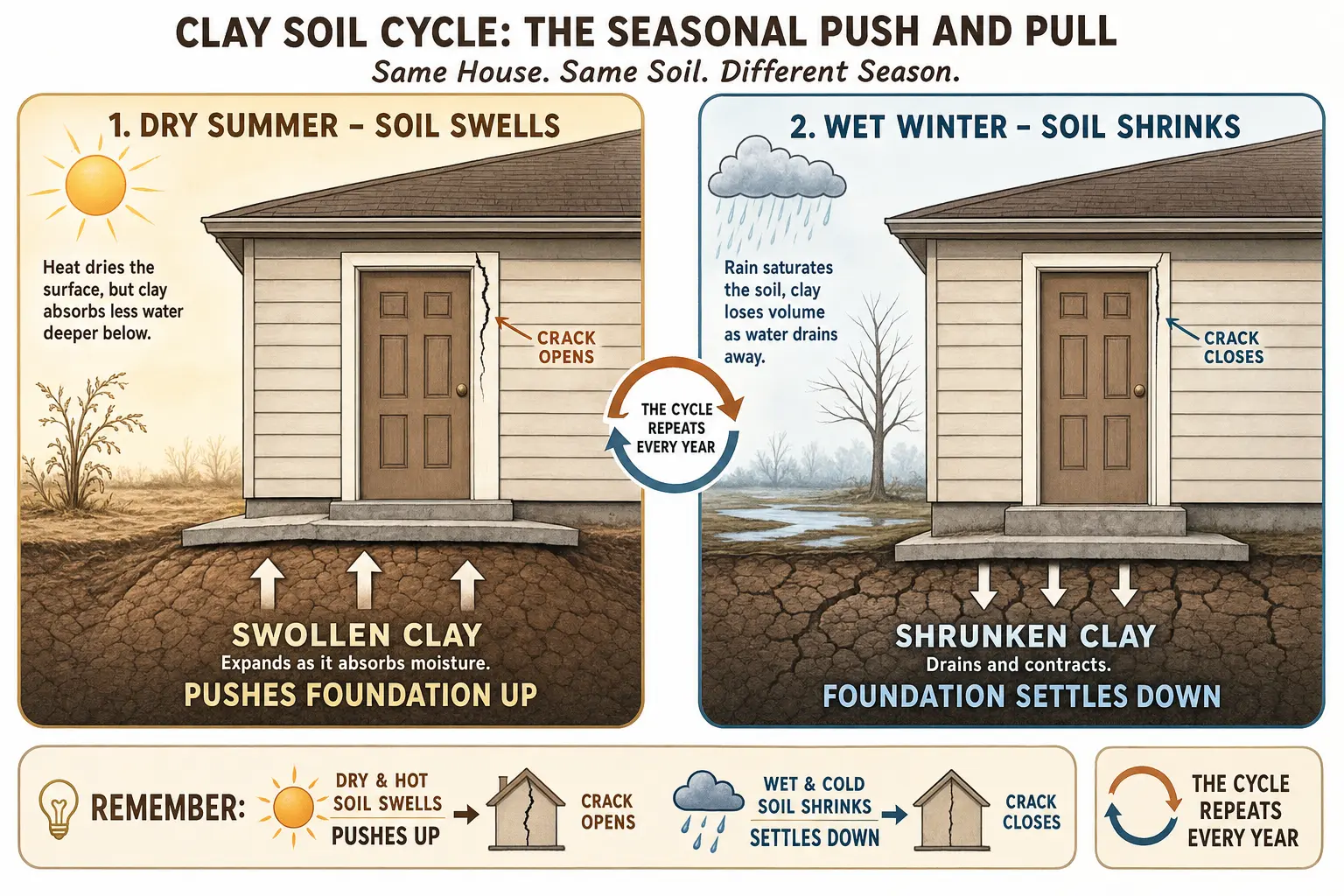
Soil dynamics heavily influence frame movement. In regions with high clay content, soil volume changes during seasonal cycles exert up to 10,000 lbs/sq.ft. of swelling pressure against foundations.

Visual mnemonic depicting how expansive clay soils swell in dry seasons and shrink in wet seasons, causing cyclical cracks in door frames.

Droughts shrink the soil, causing minor foundation dips that open frame cracks; winter moisture expands soil, closing them up. Tracking crack width over 60 to 90 days prevents jumping to expensive conclusions.

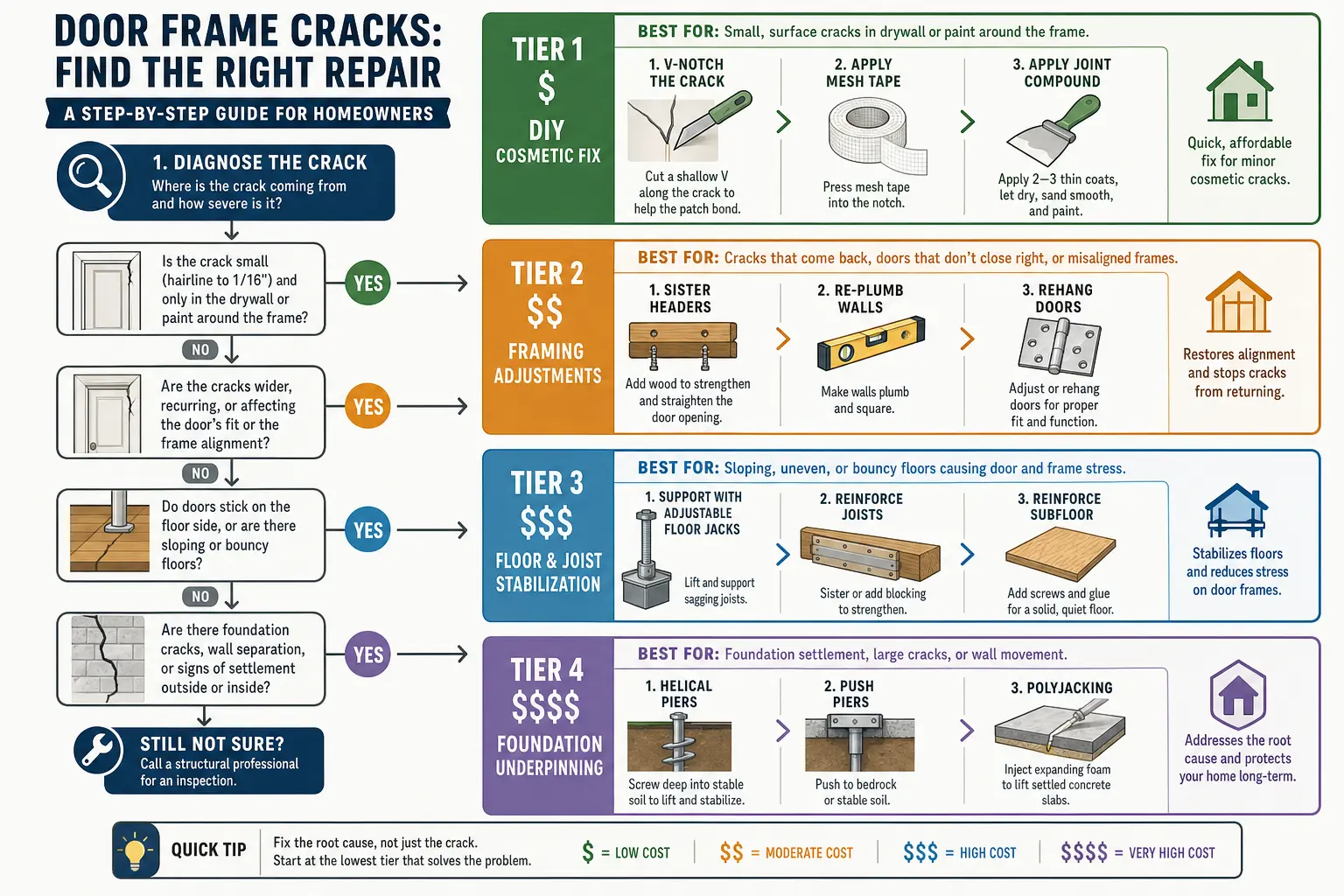
Comprehensive Repair Protocol: From DIY Fixes to Framing Adjustments


A clear repair decision flowchart helping homeowners select appropriate fixes for door frame cracks based on severity and underlying causes.

Frequently Asked Questions


Should I hire a structural engineer or a foundation contractor first?

Always hire an independent structural engineer first. Foundation contractors have an inherent incentive to sell piering systems, whereas an independent engineer provides an unbiased evaluation for a flat fee, often revealing that minor door frame cracking requires simple framing re-alignment rather than structural underpinning.

Can a hairline crack above a door frame be purely cosmetic?

Yes. Over 65% of drywall cracks around door frames stem from cosmetic drywall tape shear, minor thermal expansion, or improper drywall joint placement over the header stud. If the crack is under 1/16 inch wide and the door opens smoothly, it is almost certainly cosmetic.

How long should I monitor a door frame crack before repairing it?

It is best to monitor non-binding hairline cracks for 60 to 90 days across changing seasons. Mark the ends of the crack with a pencil and log its width using a fine gauge tool to determine whether movement is seasonal soil swelling or active settlement.


Taking a practical, measured approach keeps repair costs manageable while protecting your home’s equity. If frame movement is causing your doors to stick or drag, contact licensed specialists to evaluate your frame alignment before committing to major structural work.