(855) 676-0881

The Ultimate Screen Mesh Repair Guide: Patch, Rescreen, or Replace?


Published: Nov 2, 2026

A torn screen screen door or window can disrupt your home’s airflow, invite unwanted pests, and diminish your property’s curb appeal. When faced with mesh damage, homeowners and renters hit a common evaluation bottleneck: Should you quickly tape the tear, pull out the spline to rescreen it yourself, or invest in professional replacement?

Choosing the right approach depends on hole size, structural frame health, budget, and long-term expectations.

Evaluating Your Options: Repair vs. Rescreen vs. Replace


Before purchasing tools or supplies, evaluate the structural health of your screen. If your aluminum frame is straight and the corner keys are intact, damaged mesh can easily be serviced without replacing the entire assembly. However, if the frame is bent, rusted, or warped, new mesh won’t sit flush.
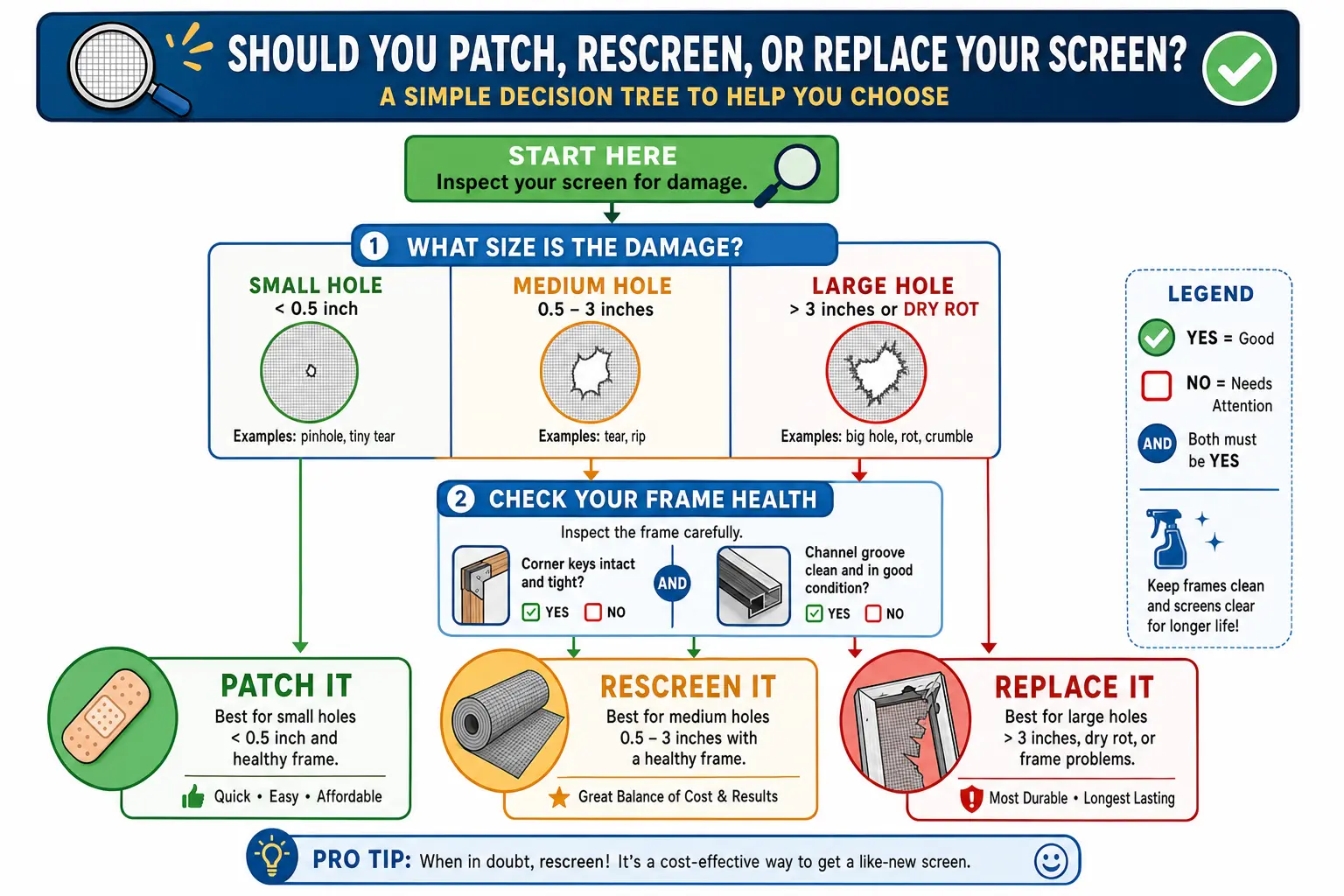
This decision tree helps beginners and DIYers understand at a glance when to patch small holes, rescreen medium damage, or replace the entire screen based on hole size and frame condition, eliminating guesswork and decision paralysis.

Here is how the main methods compare in cost, labor, and expected lifespan:

  • Adhesive Patch or Tape ($0.76 – $8.00): Takes 2 to 5 minutes. Best for holes under 2 inches, renters protecting security deposits, or quick temporary fixes. Lasts 6 to 24 months.
  • DIY Rescreening ($15.00 – $30.00): Takes 15 to 20 minutes per screen. Ideal for large tears, aging mesh, or sun-damaged fabric. Lasts 10 to 15 years.
  • Professional Rescreening ($30.00 – $55.00): Eliminates installation hassle and guarantees proper screen tension. Ideal for multiple screens or complex patio doors. Lasts 10 to 15 years.
  • Full Screen Frame Replacement ($50.00 – $120.00+): Required when aluminum frames are bowed, cracked, or corroded. Lasts 15+ years.

If you are wondering can you replace the screen on a screen door without buying a whole new door assembly, the answer is usually yes—provided the outer frame remains square.

Quick-Fix Patching Methods for Small Tears


For punctures under two inches, adhesive patches offer a functional quick fix. To maximize longevity:

  1. Clean the Area: Wipe the screen mesh surrounding the tear with 91% isopropyl alcohol to remove dust and oils.
  2. Trim Loose Strands: Snip any frayed fiberglass or aluminum wires so the surface sits flat.
  3. Apply the Sandwich Technique: For high-traffic screen doors, place identical adhesive patches on both the interior and exterior sides of the mesh, pressing them firmly together. This doubles structural strength and stops pets from peeling the edges.

While patches are economical, UV exposure eventually weakens acrylic adhesives over 6 to 24 months, making full rescreening the better choice for permanent aesthetic appeal.

Step-by-Step Full Screen Rescreening Guide


Rescreening an existing frame requires a continuous spline roller, a fresh roll of mesh, new vinyl spline, and a sharp utility knife.

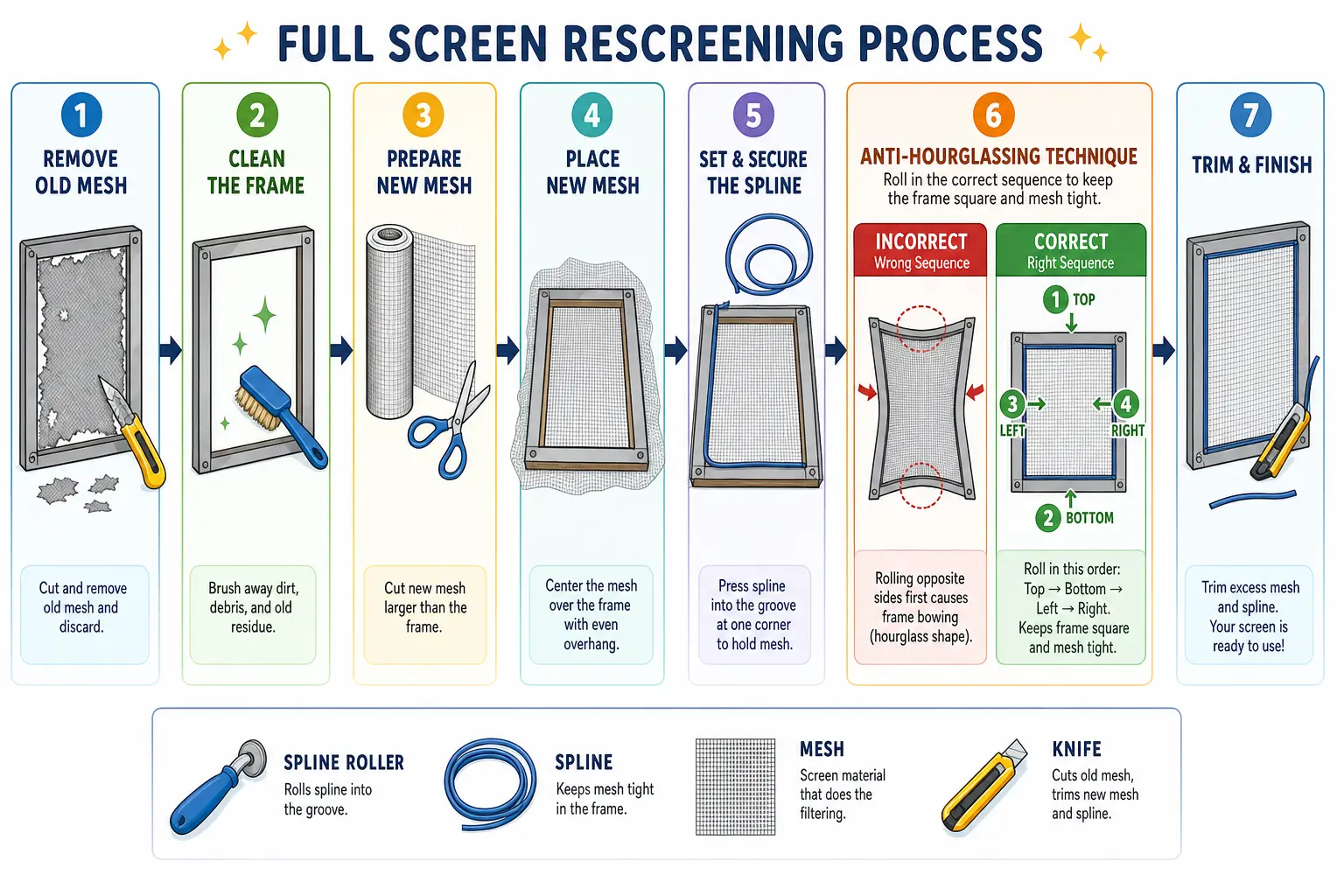
This stepwise guide visually breaks down the full rescreening process and demonstrates the critical anti-hourglass spline rolling sequence to help DIYers prevent frame warping mistakes.

To prevent the common “hourglassing” mistake—where screen tension pulls lightweight aluminum frames inward—follow this sequence:

  1. Strip Old Materials: Pull out the old vinyl spline using a flathead screwdriver and lift away the damaged mesh.
  2. Cut the New Mesh: Lay fresh screening over the frame, leaving 2 inches of overhang on all four sides.
  3. Roll Side 1 (Top Short Side): Use the convex wheel of your spline tool to push mesh into the groove, then roll the spline in with the concave wheel.
  4. Roll Side 2 (Bottom Short Side): Pull the mesh gently taut and secure the opposite short side next.
  5. Roll Sides 3 & 4 (Long Sides): Secure the remaining sides without over-stretching the material horizontally. Rolling opposite ends first balances lateral tension and keeps frame sides straight.
  6. Trim Excess: Angle your utility knife blade outward against the exterior frame lip to slice away extra mesh without cutting the new spline.

Spline Sizing and Mesh Material Selection Matrix


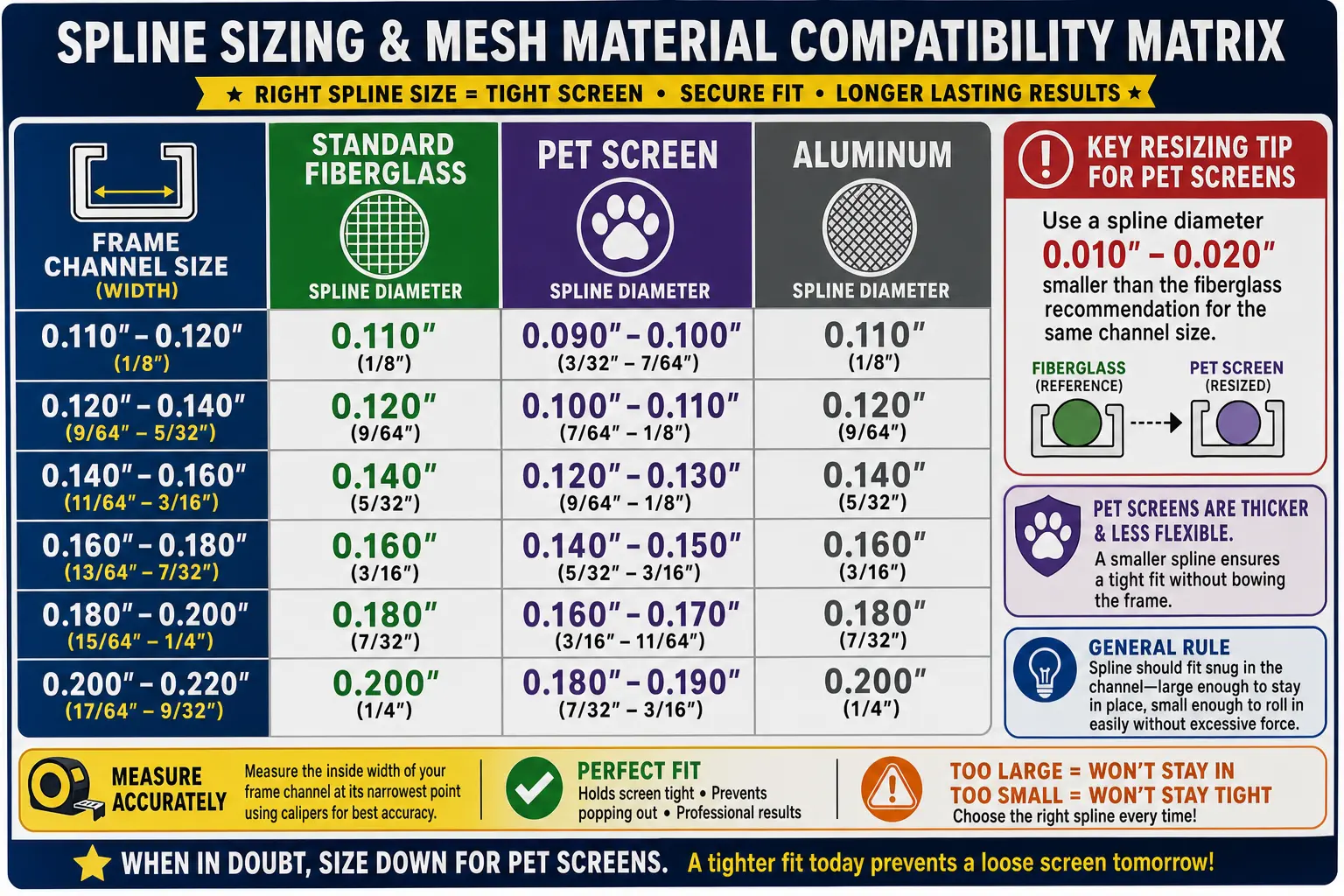
Matching spline gauge to frame groove width and material thickness is critical. Using a spline that is too thick will crack aluminum channels, while a spline that is too thin allows the mesh to sag and pop out under wind pressure.

This matrix acts as a memory anchor for DIYers, helping them instantly match their frame groove width and mesh type to the correct spline size, avoiding common installation errors.

Select the right material based on performance metrics:

  • Standard Fiberglass (18×16 weave): Highly flexible and easy to roll. Offers an average lifespan of 10 to 12 years before UV degrading.
  • Pet-Resistant Screen (Heavy Vinyl-Coated Polyester): Up to 7 times stronger than fiberglass. Key Technical Detail: Because pet mesh is significantly thicker, you must downsize spline diameter by 0.010″ to 0.020″ (e.g., step down from .160″ to .140″) or the spline will not fit into the channel.
  • Solar Screening: Blocks 70% to 90% of solar heat and UV rays, reducing indoor room temperatures by up to 15°F during summer months.
  • Aluminum Mesh: Rigid and rust-resistant, ideal for traditional wood frames or coastal climates.

Reviewing overall types of screen doors and choosing the top screen door types and materials based on durability helps ensure your selection handles daily wear. If your door combines glass and screen inserts, routine storm door repair preserves frame seals and structural performance.

Frequently Asked Questions


How do I know if my frame needs to be replaced instead of rescreened?

Inspect the frame’s four corners and side channels. If the aluminum tracks are cracked, badly bowed inward, or corroded, installing new mesh will fail because the spline groove won’t hold tension evenly.

Why did my screen frame bow inward when I rolled the new spline?

Bowing (hourglassing) happens when screen mesh is pulled too tightly sideways during installation. Secure the top and bottom short ends of the frame first before rolling the long sides to equalize tension across the structure.

What spline size do I need when switching to pet-resistant screening?

Because pet screen mesh is thicker than standard fiberglass, you must reduce your spline diameter by 0.010″ to 0.020″. If your frame normally takes a .160″ spline with standard mesh, use a .140″ spline for pet screen.