(855) 676-0881

Steel Entry Door Dents and Rust: Repair Options That Last


Published: Oct 26, 2026

A steel entry door is one of the toughest doors you can put on a home. It’s strong, energy efficient and hard to force open. Steel still has two weak spots: it dents, and once the paint or coating breaks, it can rust. A small dent from a moving dolly or a rust bubble along the bottom edge doesn’t mean the door is finished. But a quick cosmetic fix often fails within a season if the real cause isn’t addressed.

This guide explains what’s happening to your door, which repairs actually last, and how to tell when replacement is the better investment.

Why Steel Entry Doors Dent and Rust


Most residential steel doors aren’t solid metal. They’re a thin steel “skin,” usually 24- to 20-gauge (the lower the number, the thicker the steel), wrapped around an insulated foam core and a wood or composite frame. That design keeps the door light and well insulated, but it also explains the damage you see.

Dents happen because the skin is thin and bonded to foam. When something hits the door, the steel bends and the foam behind it crushes. Unlike a car panel, a dented door skin can’t be pushed back out from behind, because there’s no open space behind it. That’s why steel door dents are filled, not popped out.

Rust almost always starts where water sits, which is usually the bottom of the door. Common causes include:

  • A worn or missing door sweep that lets rain run under the door
  • A threshold that’s loose, low or sloped toward the house
  • Chipped paint from kicks, pets, boots or furniture
  • Road salt and ice melt tracked onto the stoop during winter (a real issue for our Connecticut customers)
  • Constant humidity and storm-driven rain (common across Texas, especially the Houston area)

Once moisture gets under the paint, rust spreads beneath the surface. You’ll often see bubbling paint before you see orange rust.

Repair Options for Dents That Actually Last


Small, shallow dents

For dents that are shallow, have no sharp crease and are smaller than your palm, a proper filler repair holds up well for years. A lasting repair includes:

  1. Sanding the dent and a small area around it down to clean metal so the filler can grip
  2. Applying a two-part filler designed for metal (not lightweight spackle, which shrinks and cracks outdoors)
  3. Shaping and sanding the filler flush with the door’s surface
  4. Priming with a metal primer
  5. Painting with an exterior-grade paint that matches the door

Skipping the primer, or using interior products, is the main reason dent repairs crack or show through after one hot summer or one cold winter.

Larger dents and creases

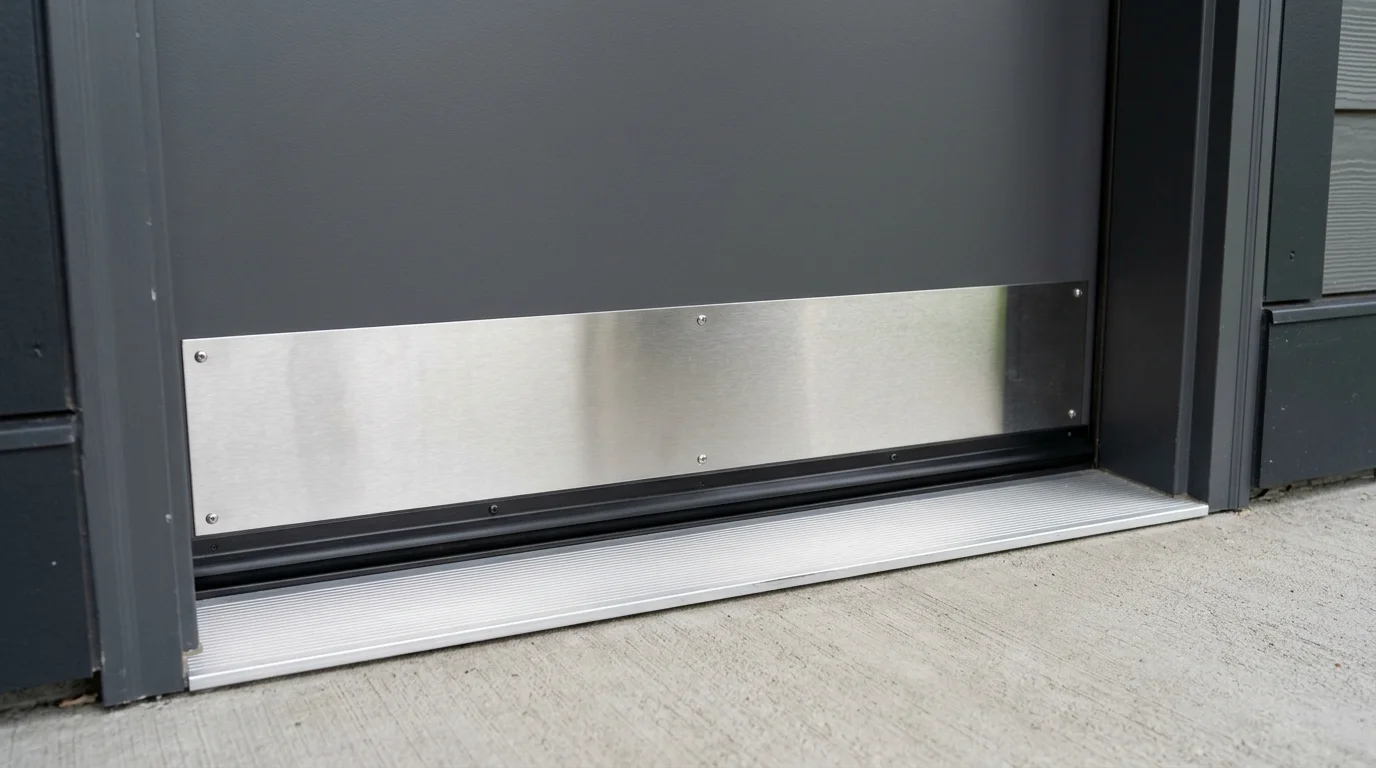
Deep dents, sharp creases or several dents across one panel are harder to hide. Filler can be used, but large repairs tend to show when light hits the door at an angle. On paneled doors, filler can also be hard to shape around the raised panel lines. For lower-door damage, a metal kick plate can be a clean, practical cover that also protects against future scuffs.

When the skin is torn or separated

If the steel is split, punctured, or pulling away from the foam core (it sounds hollow or flexes when you press it), filler won’t last. At that point, replacing the door slab is usually the right call.

Repair Options for Rust That Actually Last


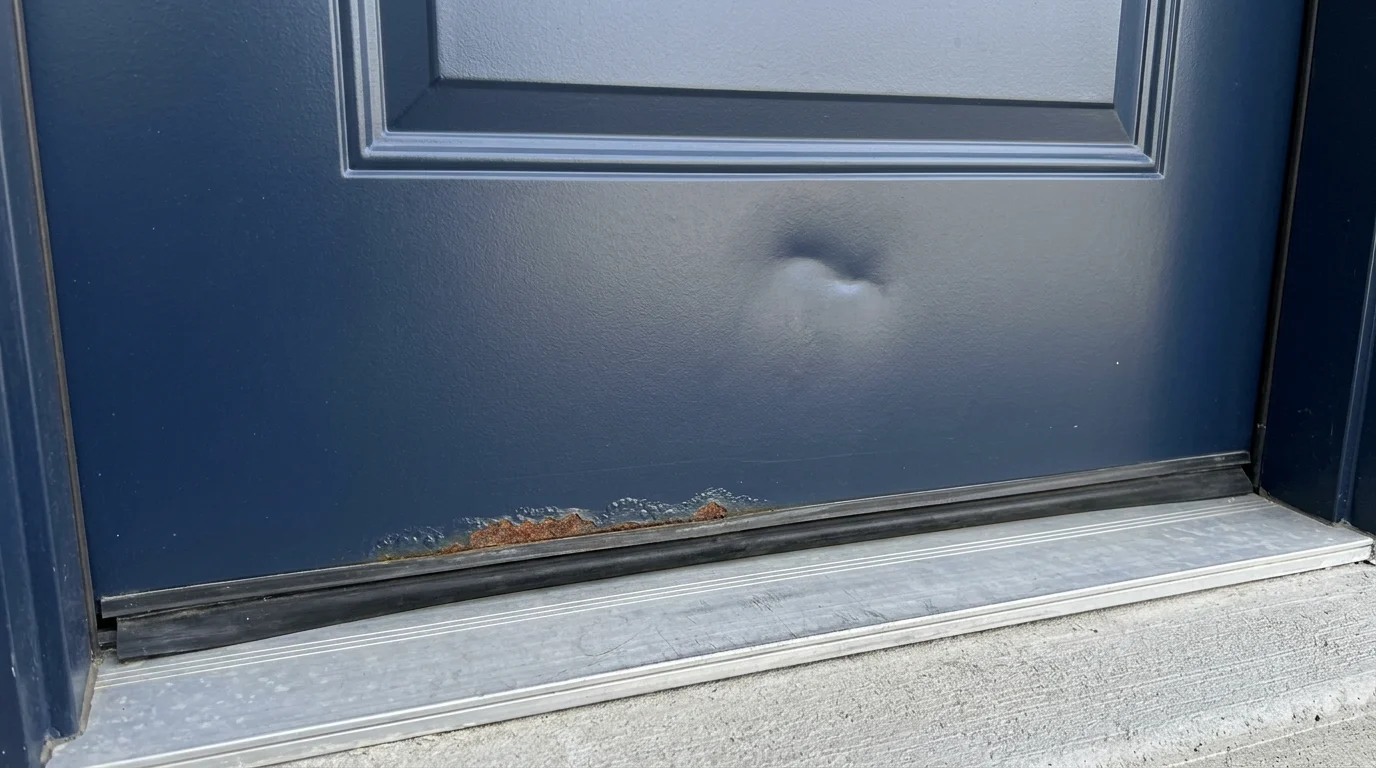
Lower part of a steel entry door with surface rust along the bottom edge and a shallow dent in the panel

Surface rust

If the rust is only on the surface and the metal underneath is solid, it can be repaired:

  1. Remove all loose paint and rust with a wire brush or sandpaper until you reach bright metal
  2. Treat any remaining pitting with a rust converter
  3. Apply a rust-inhibiting metal primer
  4. Finish with two coats of exterior paint

The critical step is the next one: fix the water source. Replace the door sweep, adjust or reseal the threshold, and seal the bottom edge of the door. Without that, the rust will come back in the same spot.

Rust that has eaten through the steel

If you can push a screwdriver through the metal, see holes, or the bottom of the door is crumbling, the damage is structural. Patching rust-through on a thin door skin rarely lasts, because rust keeps spreading under the patch and the foam core may already be wet. Replacing the door (or the whole door unit if the frame and threshold are also damaged) is the lasting fix.

Repair or Replace? A Simple Checklist


Repair is usually worth it if:

  • Dents are shallow and limited to one or two spots
  • Rust is surface-only and the steel feels solid
  • The door still closes, latches and seals properly
  • The frame and threshold are in good shape

Replacement is usually the better value if:

  • Rust has made holes or the bottom edge is soft or crumbling
  • The skin is torn, punctured or separated from the core
  • There are multiple deep dents or creases
  • The door sags, sticks, lets in drafts or no longer locks securely
  • The frame or threshold is rotted or rusted too

Repaired steel entry door with fresh paint, stainless kick plate and a new door sweep sealing against the threshold

A new steel or fiberglass entry door also gives you a chance to improve security, insulation and curb appeal at the same time. You can browse styles, sizes and options in our door catalog or see our replacement front door service.

How to Prevent Future Dents and Rust


  • Check the door sweep and weatherstripping every fall and replace them when they’re worn
  • Touch up chips and scratches right away, before water can get under the paint
  • Repaint the door every few years, or sooner if it gets direct sun
  • Keep snow, ice melt and standing water off the threshold
  • Add a door stop and a kick plate if the door gets heavy daily use
  • Make sure gutters and the overhang direct rain away from the entry

Get a Lasting Fix from A1 Doors Services


Not sure whether your steel door needs a touch-up or a replacement? Our licensed technicians can inspect the door, frame and threshold, find what’s causing the damage, and recommend the option that will actually last, with no guesswork. A1 Doors Services serves homeowners in Texas, Connecticut and Alabama.

Call (855) 676-0881 or contact us to schedule an inspection.

Frequently Asked Questions


Can you pop a dent out of a steel entry door?

Usually not. Most steel entry doors have a foam core bonded to the back of the steel skin, so there’s no way to push the dent out from behind. The reliable fix is to fill, sand, prime and paint the dent, or to replace the door if the damage is large.

Is it worth fixing a rusty steel door?

Yes, if the rust is only on the surface and the metal is still solid. Sanding to clean metal, priming with a rust-inhibiting primer and repainting can last for years, as long as you also fix the leak that caused it. If the rust has created holes or the bottom edge is crumbling, replacing the door is the better investment.

How long does a steel door dent or rust repair last?

A properly done repair, with clean metal, the right filler, metal primer and exterior paint, can last many years. Repairs usually fail early when products are skipped or when the water source (worn sweep, bad threshold, chipped paint) isn’t fixed.