(855) 676-0881

French Doors Not Meeting in the Middle: Astragal, Hinge, and Flush Bolt Adjustments


Published: Oct 9, 2026

Few architectural features add as much character and light to a home as a beautiful set of French doors. However, because they rely on two panels meeting precisely in the center without a central mullion, even a slight shift in your home’s foundation or natural wear and tear can cause them to misalign. When French doors do not meet properly in the middle, it is more than an aesthetic nuisance—it compromises your home’s security, allows pests inside, and can lead to major energy loss.

If you are struggling to get your doors to latch or seal, you do not necessarily need a full replacement. French doors operate as an interconnected mechanical system of hinges, flush bolts, and astragals. Misalignment in one component directly impacts the performance of the others. Understanding how to diagnose and adjust these parts can save you time, money, and frustration. When DIY solutions fall short, professional French door replacement and repair services are always available to restore your entryway’s integrity.
The 2-Minute Diagnostic: "The Reveal Test"


Before turning a single screw, you must pinpoint exactly where the alignment has failed. Professional carpenters do this by reading the “reveal”—the gap between the door panels and the frame.

The industry standard for a proper double-door reveal is 1/8 inch (roughly the thickness of a nickel). If your gap exceeds 3/16 inch, your weatherstripping cannot seal, and your multi-point locking system will fail to engage securely.

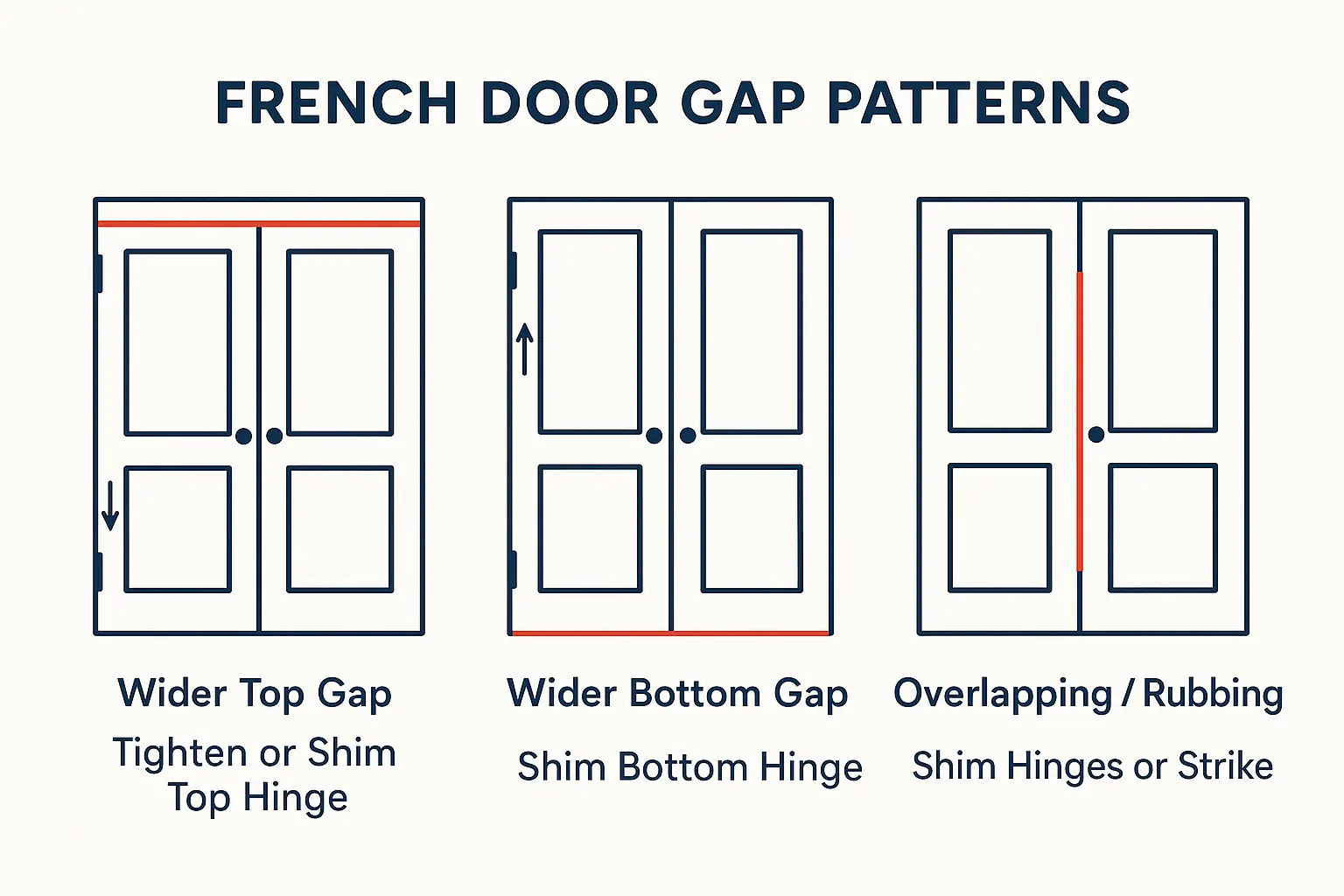
To perform the Reveal Test, close your doors and look closely at the gaps. If the gap is wider at the top, your top hinge is likely sagging. If the doors overlap or rub near the bottom, your bottom hinge or frame has shifted.

You can also use the “Paper Test”: slide a sheet of paper between the closed doors. If it slides through effortlessly with no resistance, your gap is too wide. If it pinches and tears, the doors are rubbing.

The Reveal Test: Quickly diagnose French door misalignment by observing where the gap is widest to pinpoint hinge sag or structural issues.


Step-by-Step Adjustments for Hinges, Astragals, and Flush Bolts


Once you have identified the symptoms, you can systematically adjust the three core elements of your double-door system.

Phase 1: Correcting Hinge Sag

In double-door systems, the “active” leaf (the door panel you open most frequently) sags up to 40% faster than the inactive leaf due to constant kinetic stress.

  1. Tighten Loose Screws: Over time, the weight of the glass panels pulls on the hinges. Tighten all hinge screws on both the door leaf and the jamb. If the screws spin without tightening, the wood fibers inside the jamb are stripped.
  2. The 3-Inch Screw Trick: To pull a sagging top jamb back toward the wall framing, remove one of the short center screws from the top hinge leaf on the jamb side. Replace it with a heavy-duty, 3-inch structural wood screw. Drive it slowly; this screw will bite directly into the house framing studs, pulling the entire door frame back into plumb.
  3. Shim Standard Hinges: If the frame is plumb but the door still sags, insert thin cardboard or plastic shims behind the bottom hinge leaf to push the bottom of the door slightly inward, leveling the panel.
  4. Adjusting 3D Hinges: If you have modern uPVC or fiberglass doors, remove the plastic hinge caps. Use an Allen wrench to turn the horizontal and vertical adjustment screws. Turning them clockwise will raise or shift the door panel toward the jamb.

Phase 2: Sealing the Astragal Overlap

The astragal is the vertical molding attached to the meeting edge of the inactive door panel. It seals the gap and holds the strike plates for your active door’s locks.

  1. Secure the Astragal Body: If the astragal is loose, it will twist when the doors close, preventing a tight seal. Tighten the mounting screws running along its length.
  2. Tune the Strike Plates: If your deadbolt or latch misses its slot, do not chisel the wood. Modern astragals feature adjustable sliding strike plates. Loosen the retaining screws, slide the metal plate up or down to align with the latch, and retighten.
  3. Replace the Boot Seals: If you feel drafts at the very bottom or top of the astragal, the rubber boots have likely worn down. Slide out the old boots and install OEM replacement seals to stop cold air from invading your home. If your exterior door is causing drafts or energy loss, replacing these seals is your first line of defense.

Phase 3: Anchoring the Flush Bolts

For your French doors to lock securely, the inactive door must remain absolutely rigid. This rigidity depends on the top and bottom flush bolts.

  1. The Threaded Bolt Adjustment: Roughly 70% of modern residential flush bolts feature threaded steel rods inside the astragal. If your flush bolt does not reach deep enough into the header or sill keeper, you can adjust it. Extend the bolt, grip the tip with pliers, and rotate it counter-clockwise to lengthen the rod by up to 1/2 inch.
  2. Clear the Keepers: The primary cause of lower flush bolt failure is debris. Vacuum out dirt, pet hair, and carpet fibers from the bottom threshold strike hole so the bolt can fully drop.
  3. Align the Strike Plates: If the bolt misses the hole, use a metal file or Dremel tool to gently enlarge the strike plate opening rather than moving the plate itself. If you find the lock mechanisms themselves are sticking or damaged, you may need professional hardware repair and diagnostics to ensure smooth operation.

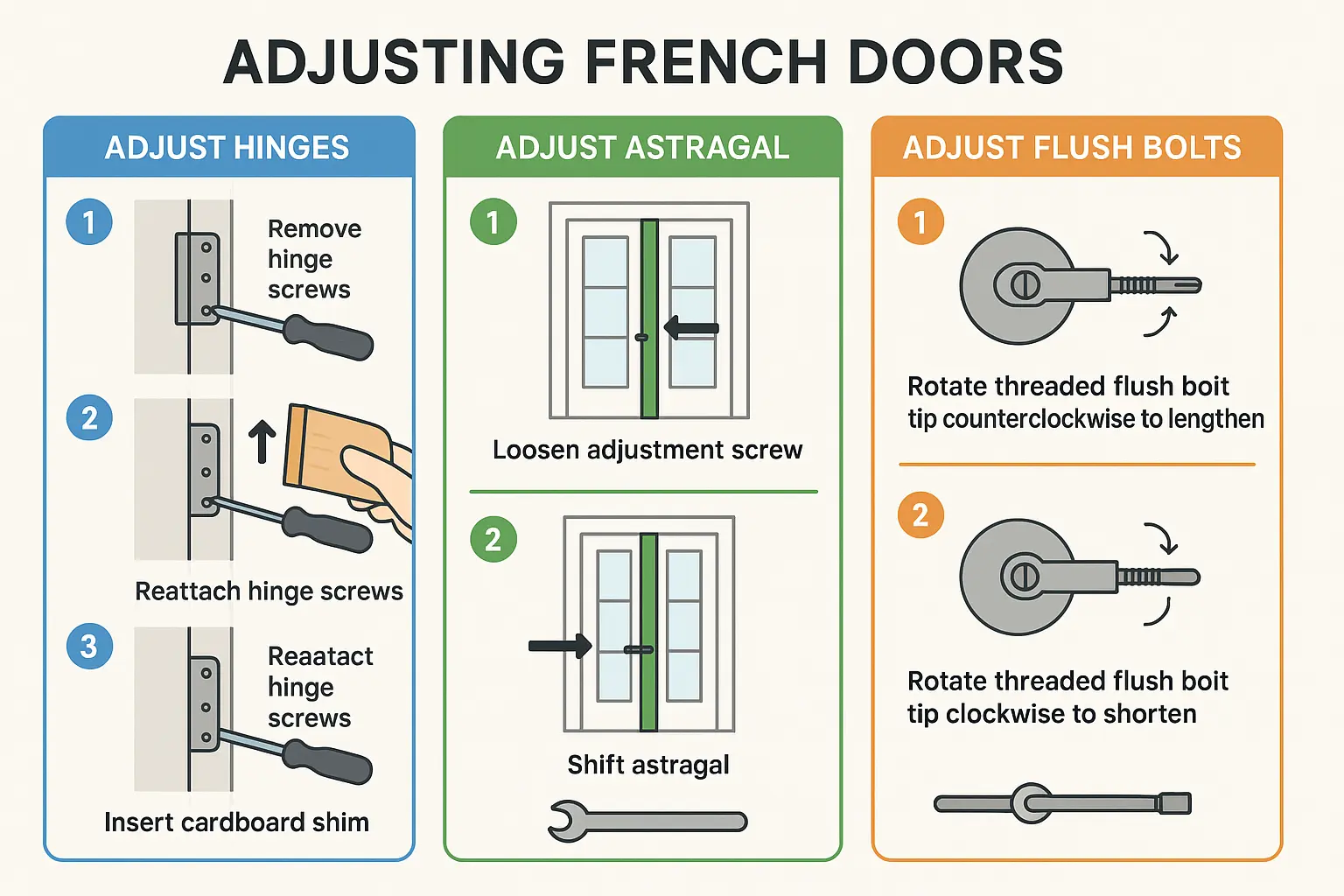
Step-by-step guide to adjusting French door hardware: hinges, astragal, and flush bolts to fix gaps and ensure proper door meeting.


Repair vs. Replace: Deciding Your Next Steps


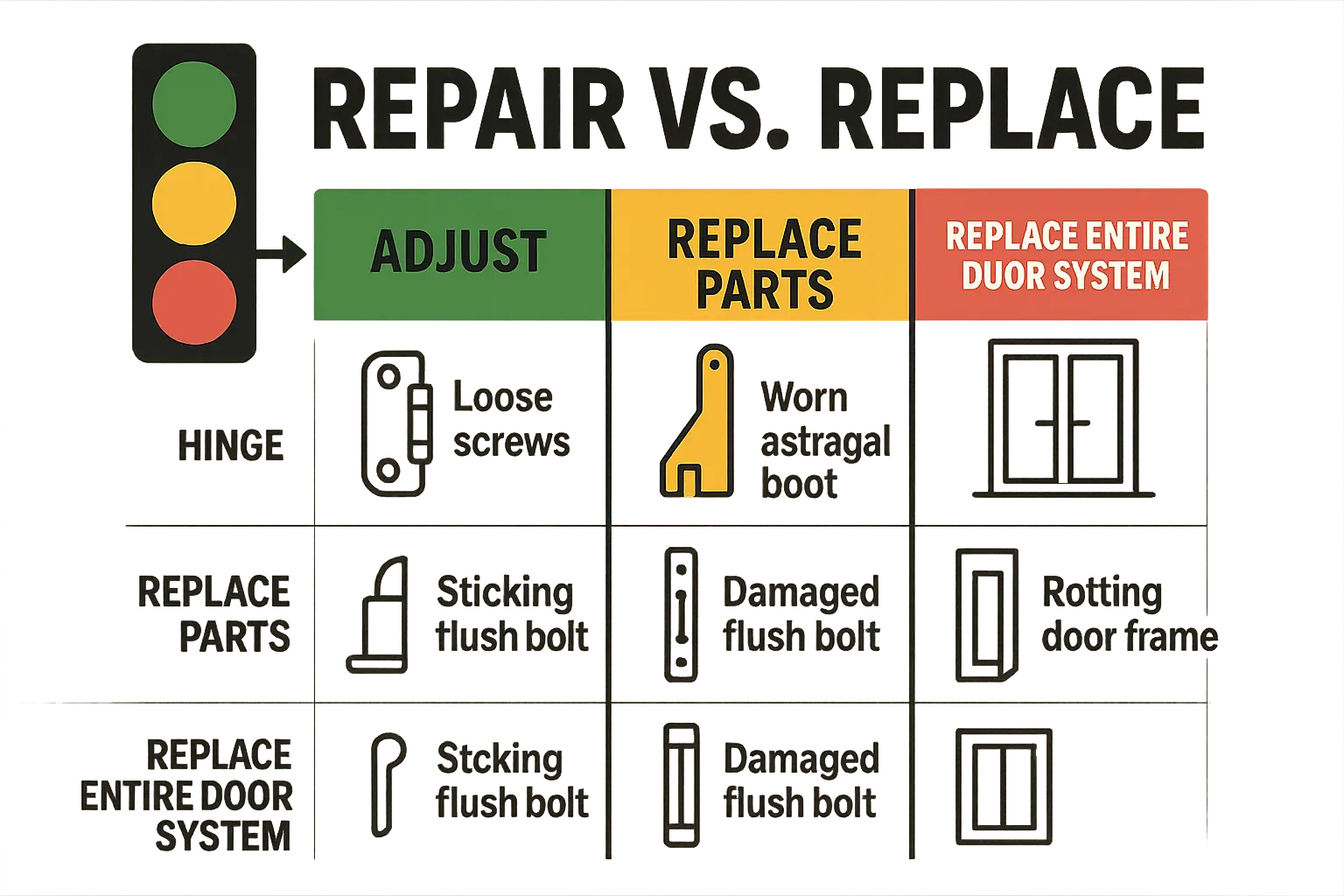
While many French door issues can be resolved with a screwdriver and patience, some structural problems require professional intervention or a complete system replacement. Use the matrix below to evaluate your situation.

Issue Recommended Action DIY Feasibility
Minor drafts, loose screws, latch misalignment Adjust: Tighten hardware, shim hinges, adjust strike plates High
Broken flush bolt slide, torn astragal boot, worn hinge pins Replace Parts: Install new OEM hardware or weatherstripping Medium
Severely warped wood, rotted jambs, cracked glass, structural sagging Replace System: Professional installation of a new door unit Low (Requires Professional)

If you discover your door frame is rotting or warped beyond repair, attempting to adjust the hinges will only yield temporary results. In these cases, factoring in the door jamb repair cost against a full, modern replacement is the smartest financial path.

Quick decision matrix for DIYers: when to adjust, replace parts, or replace the entire French door system based on common issues and severity.


Proactive Care for Long-Term Alignment


To prevent future misalignment, incorporate French door maintenance into your seasonal home care routine. Lubricate hinge pins annually using a dry graphite spray or silicone lubricant; avoid standard WD-40, which attracts dirt and accelerates wear on brass and bronze components. Checking and tightening hinge screws twice a year—especially before winter—will keep your doors swinging smoothly and sealing perfectly.


Partner with Connecticut's Door Experts


For over 15 years, A1 Doors Services has provided homeowners across Connecticut with reliable, affordable, and professional door solutions. Whether you need a quick hardware tune-up or a flawless new French door installation, our fully trained and licensed technicians bring a personal, detail-oriented approach to every home. We offer prompt, same-day service to restore your home’s security and comfort. Contact A1 Doors Services today to schedule your consultation.

Frequently Asked Questions


Why are my French doors suddenly drafty and hard to lock?

This is typically caused by natural house settling or hinge wear. When the top hinges sag, the door panels tilt inward, widening the center gap and misaligning the deadbolt with the astragal strike plate.

Can I use standard WD-40 to lubricate my French door hinges?

No. WD-40 is a solvent, not a long-term lubricant. It will eventually dry out, attract household dust, and grind down the brass or steel inside your hinge pins. Use dry graphite spray or silicone-based lubricants instead.

How do I know if I need a professional instead of a DIY fix?

If your door frame is physically soft or rotting, if the wood panels have warped due to humidity, or if the doors continue to sag immediately after you tighten the hinges, the issue is structural. A licensed professional should step in to evaluate the framing.