(855) 676-0881

Commercial Door Services: What a Quarterly Door Inspection Covers


Published: Nov 23, 2026

Evaluating preventive maintenance programs often leaves facility managers balancing operational uptime against budgetary constraints. While routine monthly walk-throughs spot basic cosmetic damage, a comprehensive quarterly service goes significantly deeper. Over 60% of commercial building safety citations stem from egress issues like unlatching fire doors, painted fusible links, or wedged-open assemblies.

A professional quarterly inspection establishes a structured audit across the three operational pillars of your building: pedestrian entrances, industrial loading docks, and life safety fire assemblies.
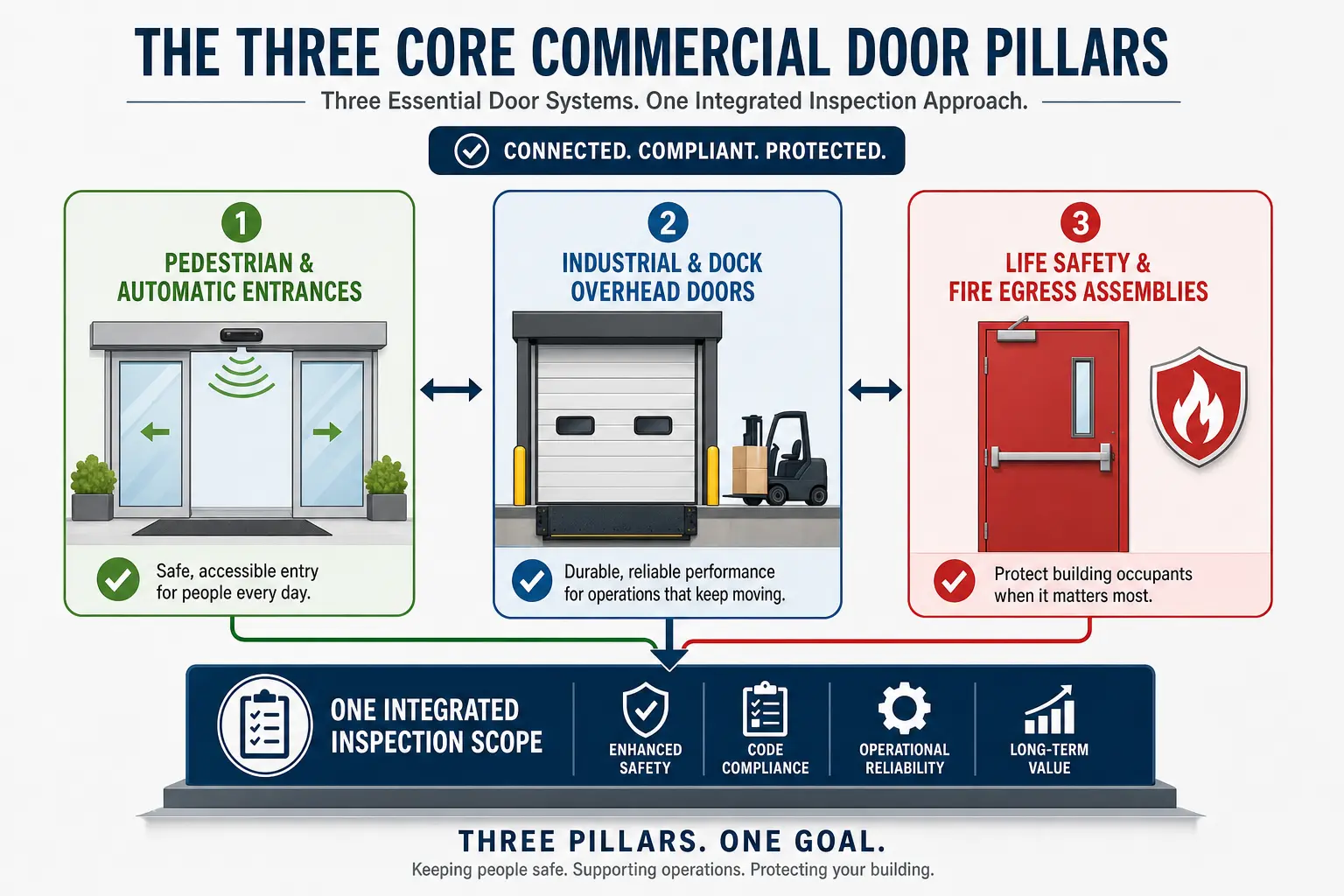
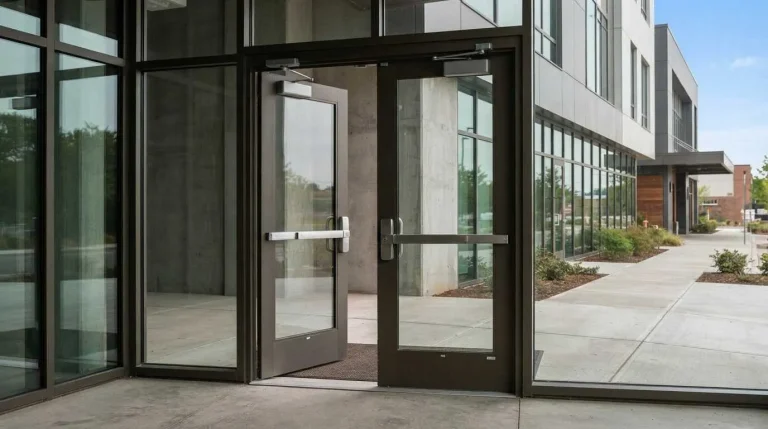
Visualizing the Three Core Pillars of Commercial Door Inspections clarifies how quarterly maintenance covers automatic entrances, industrial dock doors, and fire/life safety assemblies together.

The Universal Quarterly Commercial Door Inspection Checklist


A complete service evaluation systematically reviews three core categories to protect your building’s integrity and daily traffic flow:

1. Automatic & Pedestrian Entrances

Certified technicians evaluate motion and presence sensor detection zones per ANSI/BHMA A156.10 guidelines. The evaluation covers force restrictions, emergency breakout mechanisms, and guide rail alignment. Prompt attention to automatic sliding door repair prevents minor sensor drift from becoming a safety liability.

2. Industrial Overhead & Loading Dock Doors

Inspectors audit high-tension counterbalances, drum seatings, and cable wear. Standard commercial torsion springs carry a rating of 10,000 cycles (lasting roughly 200 days at 50 cycles daily). High-traffic operations require targeted checks of roller stems, panel hinges, photo-eye alignments, and motor operator brake adjustments.

3. Life Safety & Fire Egress Assemblies

Technicians review full compliance with commercial door inspection requirements. This includes testing positive self-latching functions, coordinator sequencing on double doors, and verifying that panic hardware operates cleanly without binding.

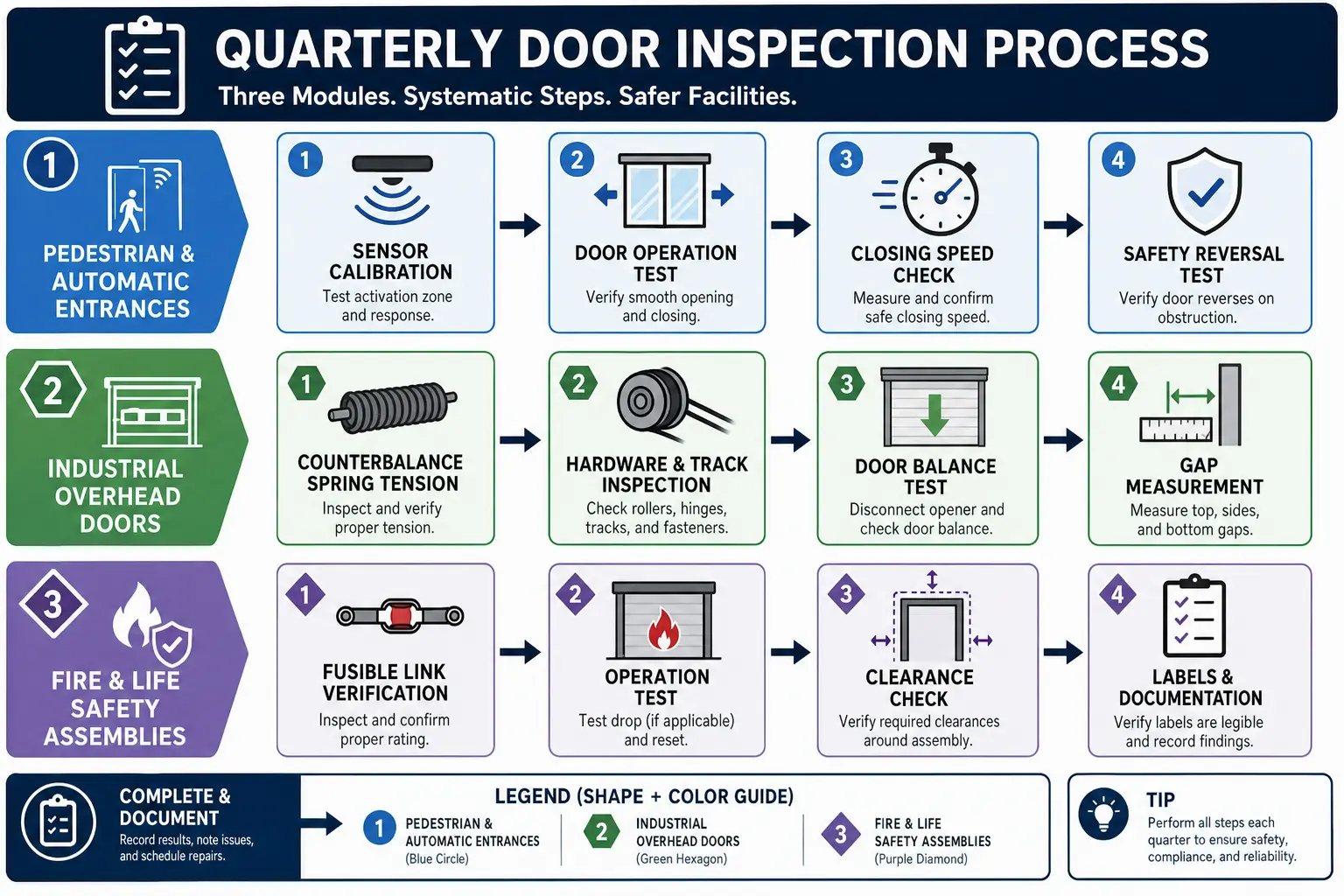
Stepwise quarterly inspection process flowchart demystifies how technicians assess and maintain each commercial door assembly for safety and compliance.

Need a Quick Fix?

Tell us what’s wrong with your door — we’ll get it sorted.

Professional Technician vs. In-House Maintenance Boundaries


Assigning door maintenance entirely to internal janitorial or custodial teams introduces liability risks. While in-house personnel can clear debris from tracks and perform visual sweeps, technical adjustments require certified hands.

Task Category In-House Staff Scope Professional Technician Scope
Overhead Doors Clear track debris, check seal integrity Adjust torsion spring tension, align electrical limit switches
Automatic Entrances Clean sensor glass, check threshold clear Calibrate opening/closing force, adjust ada door operator service controls
Fire Doors Verify openings remain unblocked Perform NFPA 80 clearance measurements & drop testing

Attempting to adjust high-tension spring lines or electrical operator clutches without specialized tools can result in sudden mechanical failure or personnel injury.

Compliance, Clearance Gap Standards, and NFPA 80


Adhering to strict measurement standards ensures your facility passes municipal fire and safety checks. During an nfpa 80 fire door inspection, technicians check that clearance gaps do not exceed:

  • Top and Side Clearances: Maximum 1/8 inch (3.2 mm) for hollow metal doors.
  • Bottom Undercut: Maximum 3/4 inch (19 mm) above the finished floor (3/8 inch for smoke control assemblies).
  • Meeting Stiles: 1/8 inch ± 1/16 inch on paired door leaf setups.

Closing speed is equally vital. Per ADA and ANSI standards, door closers must take at least 5 seconds to move from 90 degrees open down to 12 degrees. Proper commercial door closer adjustment prevents harsh slamming while guaranteeing complete latch engagement.

Financial Justification: PM Contracts vs. Emergency Repairs


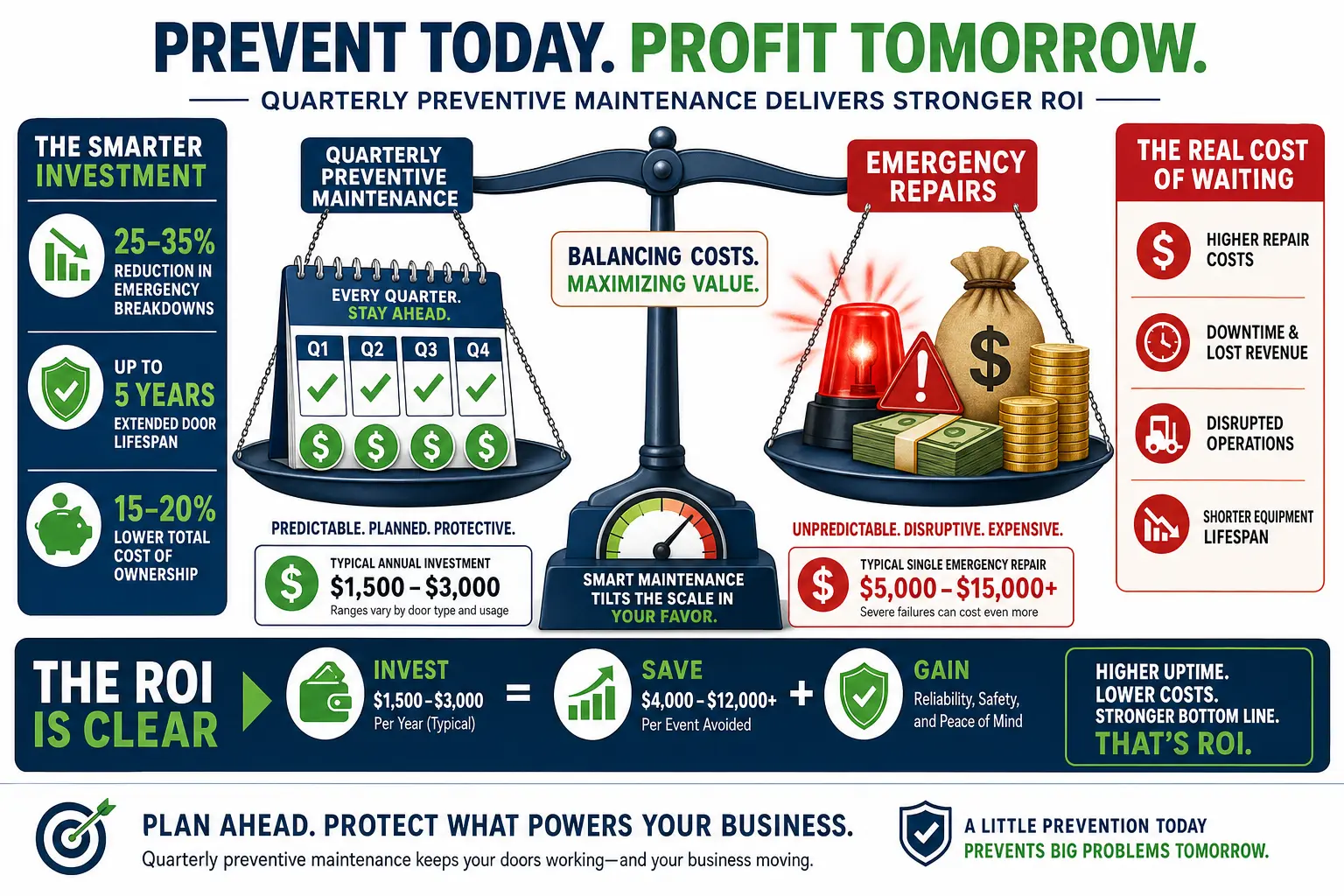
Investing in regular service yields measurable operational savings. Data shows structured maintenance programs reduce emergency breakdown dispatches by 25% to 35% while extending overall equipment operational life by up to 5 years.

A cost-benefit scale infographic helps facility leaders remember how regular quarterly maintenance saves money by preventing costly emergency repairs and extending door life.

Unplanned dock downtime can cost facilities upwards of $500 per hour in stalled logistics and supply chain delays. Shifting from reactive dispatch to scheduled quarterly maintenance stabilizes operating costs and eliminates the premiums associated with urgent emergency commercial door repair.

Professional Inspection Deliverables and Red-Tag Protocols


Following every quarterly visit, facility leaders receive a comprehensive audit report detailing operational status across all entry points. If a technician identifies a severe safety hazard—such as a broken counterbalance cable or a non-closing fire door—a “Red-Tag” out-of-service protocol is triggered. This immediately locks out the assembly, shifts liability away from your internal team, and prioritizes repairs to restore full functionality safely.

Frequently Asked Questions


What is the difference between an annual fire door drop test and a quarterly door inspection?

An annual drop test specifically satisfies NFPA 80 fire code mandates for dynamic drop-testing drop assemblies. A quarterly inspection provides a broader operational evaluation across all facility doors, catching physical wear, sensor misalignment, and mechanical issues before they trigger compliance failures or unexpected breakdowns.

How do high-cycle springs affect my maintenance schedule?

Standard 10,000-cycle springs reach their wear limit rapidly in high-traffic commercial settings. Installing high-cycle springs (rated for 25,000 to 100,000 cycles) extends operational lifespans, but quarterly inspections remain critical to check cable tension, drum alignment, and bearing wear under heavy daily usage.

Does quarterly maintenance satisfy OSHA and ADA requirements?

Yes. Quarterly inspection contracts evaluate door closing speeds under ADA guidelines (minimum 5-second closing sweep) and verify that emergency egress doors operate freely without sticking, helping keep your facility compliant with OSHA workplace safety standards.