(855) 676-0881

Sliding Door Off Track: Safe Lift-Out and Reset Master Guide


Published: Nov 23, 2026

A derailed sliding door creates immediate frustration and home vulnerability. Whether you are dealing with a jammed bedroom closet slider or a patio glass door that refuses to glide, attempting force without understanding the mechanical hardware can lead to costly damage or safety hazards.

Evaluating whether to attempt a DIY reset or contact a licensed door repair technician comes down to identifying door mechanics, panel weight, and underlying failure causes.
Emergency Quick-Assessment: Identifying Your Door Assembly


Before attempting to lift or realign any door, you must identify its structural design. Treating a heavy exterior glass unit with the same handling as a lightweight interior door is a primary cause of accidental glass breakage and track damage.

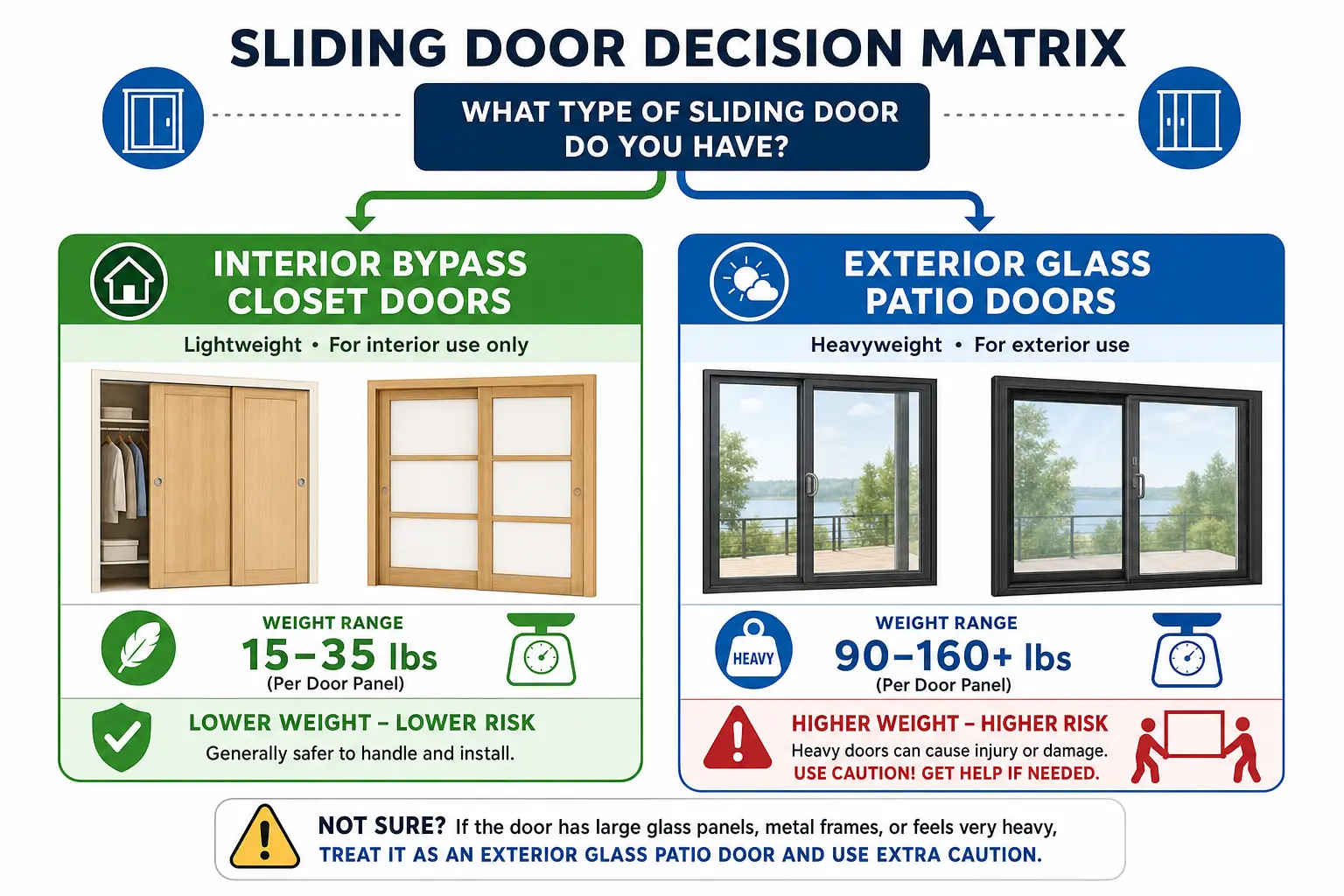
Interior bypass doors weigh between 15 and 35 pounds, hanging from top track rollers with floor guides keeping alignment. Exterior glass patio doors weigh between 90 and 160 pounds, resting their entire weight on bottom roller wheels riding a metal track rail.

Emergency Quick-AssessmentThis decision matrix visually clarifies the fundamental difference between interior bypass closet doors and heavy exterior patio doors, helping users immediately identify their door type to follow correct safe repair procedures.
Need a Quick Fix?

Tell us what’s wrong with your door — we’ll get it sorted.

Pathway A: Interior Bypass and Pocket Closet Doors


Interior closet doors typically slip off their tracks when floor guides loosen or top wheel hangers disengage.

  1. Remove the Floor Guide: Unscrew the floor-mounted center keeper bracket using a Phillips screwdriver to allow bottom door swing.
  2. Execute the 15°–30° Tilt: Angle the bottom of the outer panel toward you by 15 to 30 degrees to clear the lower threshold.
  3. Align Top Rollers: Lift slightly and guide the wheel brackets back into the upper track channel slots. For concealed space systems, professional pocket door installation near me ensures hidden internal tracks remain undamaged.
  4. Re-anchor Floor Keepers: Reinstall the floor guide, ensuring doors pass each other without surface rubbing.

Pathway B: Exterior Heavy Glass Patio Doors


Patio sliding doors require mechanical preparation prior to lift-out. Forcing a heavy panel without adjusting internal components risks bending aluminum tracks or cracking glass seals.

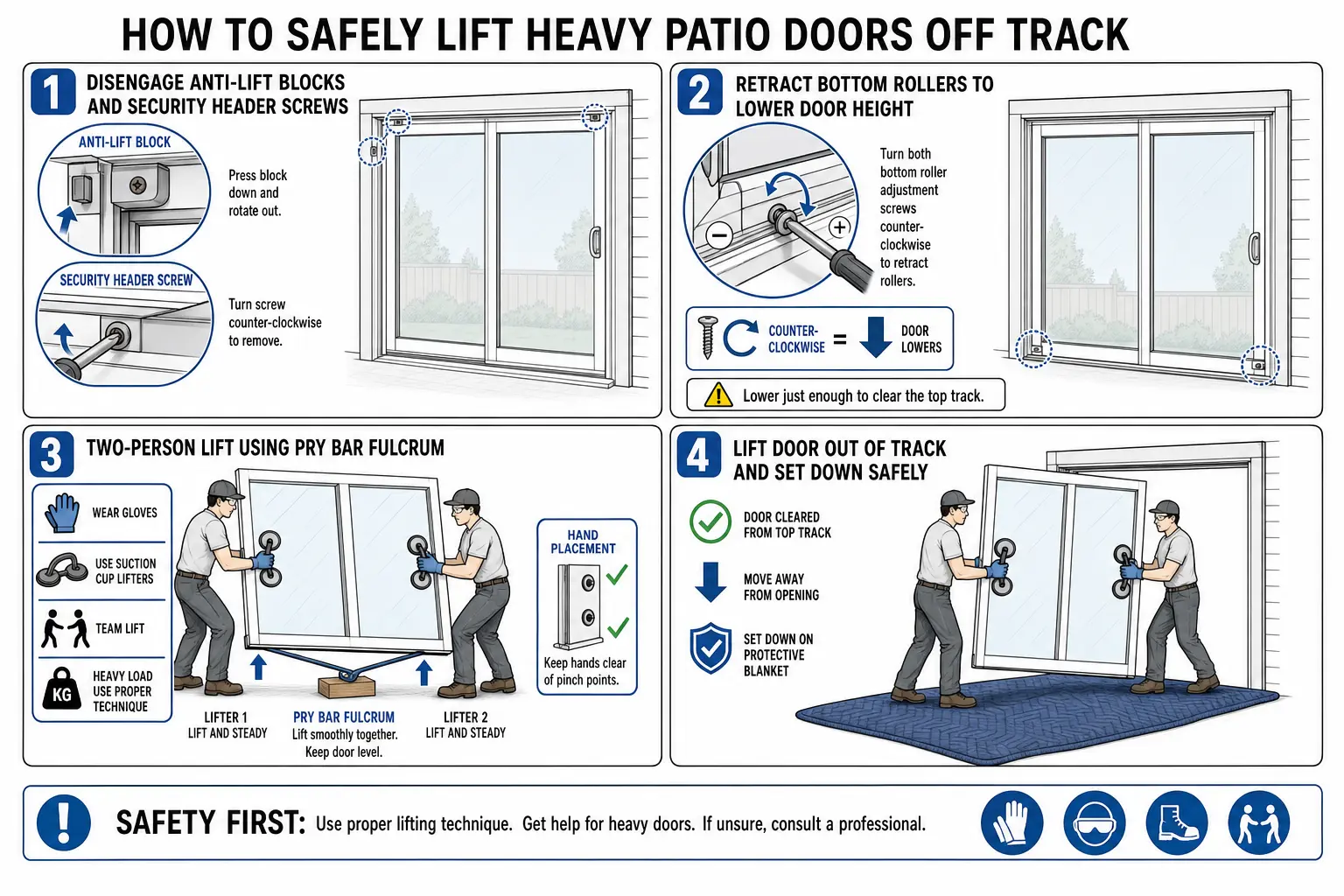
  1. Disengage Anti-Lift Security Blocks: Locate safety tabs or security screws inside the top frame header. These anti-lift blocks prevent intruders from removing the door from outside and must be loosened or removed first.
  2. Retract Bottom Rollers: Locate the roller adjustment access holes near the bottom corners of the door stile. Turn the lower adjustment screw counter-clockwise to retract the wheels into the frame, lowering the door height to create top clearance.
  3. Execute Two-Person Lift-Out: Using suction glass lifters or firm gripping points, two people should lift the door upward into the top channel pocket, tilt the bottom outward over the bottom stainless rail, and carefully set it on drop cloths.
  4. Clean and Re-Seat: Remove track debris, vacuum grit, inspect roller bearings, and lower the door back onto the rail before extending roller height clockwise.

Exterior Heavy Glass Patio Door ResetThis four-step visual guide breaks down the complex and safety-critical process of lifting a heavy exterior patio sliding door off its track, emphasizing mechanical steps and ergonomic handling to prevent injury or damage.
When track rails show structural warping or deep scoring, specialized sliding door track repair restores effortless glides without requiring complete door replacement.

The Chemical Care Standard: Lubrication Myths Busted


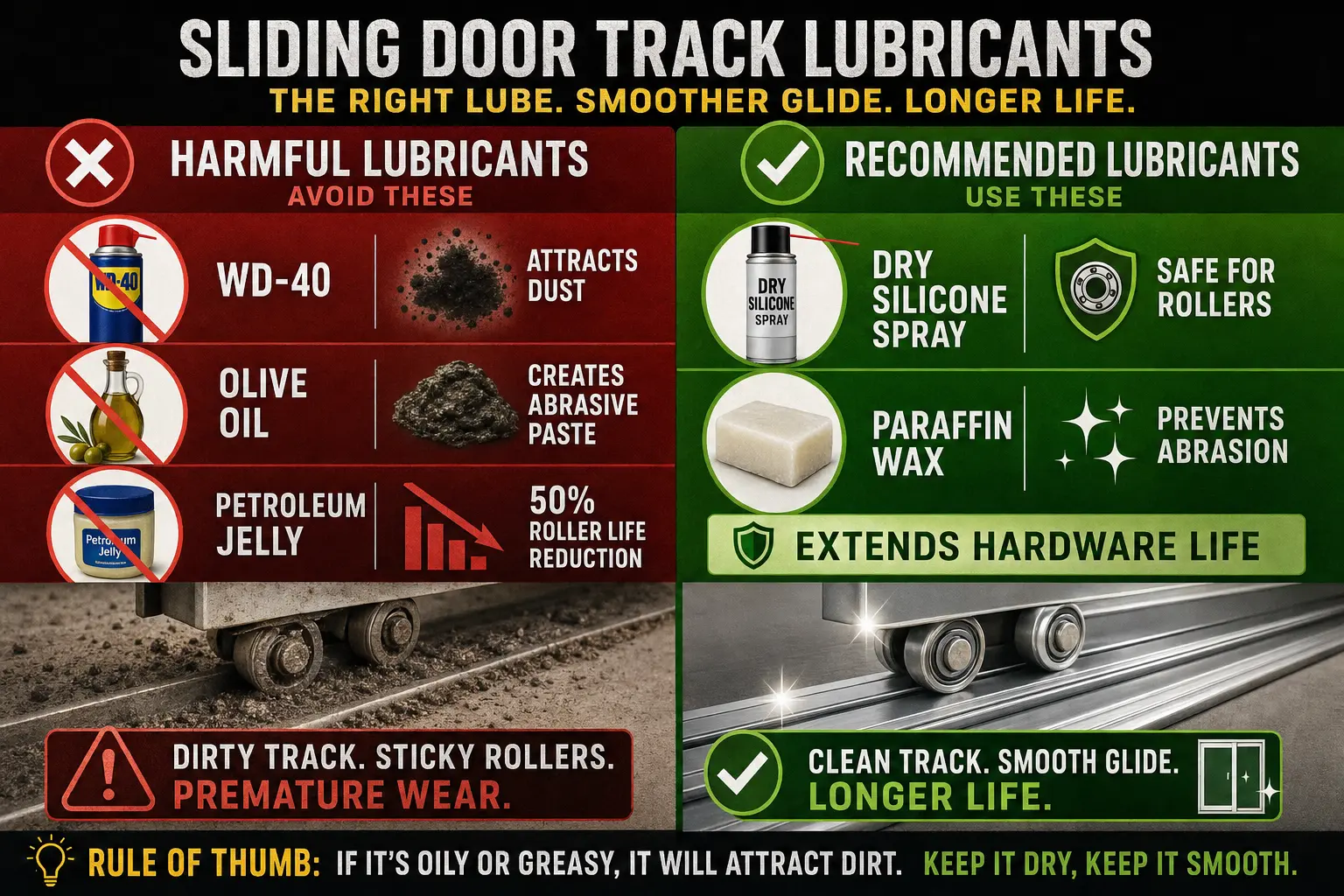
Using standard WD-40, household oils, or grease on sliding door tracks is a primary cause of hardware premature failure. Hardware diagnostics show petroleum-based sprays attract environmental dust, forming an abrasive paste that reduces roller wheel lifespan by 70% within six months.

Lubrication Myths vs FactsThis infographic clearly contrasts common but damaging lubricants against scientifically recommended options, making it easy to remember which products protect sliding door hardware and which accelerate failure.
Always apply 100% dry silicone spray or solid paraffin wax. Dry film lubricants create a slick barrier without attracting grit or degrading plastic wheel bearings.

MOFU Decision Matrix: DIY Repair vs. Professional Call


Hardware analysis reveals that 68% of off-track incidents stem from debris flattening roller wheels, 22% from loose alignment guides, and 10% from bent track lips.

Evaluating your project requirements helps determine the most practical path forward:

  • DIY Reset ($0 – $25): Suitable for simple track cleaning, basic realignment, or routine dry silicone lubrication on undamaged light doors.
  • Handyman Service ($150 – $250): Practical for basic interior door resets or simple single-wheel swaps.
  • Licensed Door Specialist ($250 – $450): Recommended for heavy patio glass doors, corroded rollers, damaged track caps, or frame alignment issues backed by service warranties.

Knowing how to choose door installation repair services ensures your door receives trained technical care, accurate hardware components, and long-term operating reliability.

Frequently Asked Questions


Why won't my sliding glass door lift out of the frame track?

Exterior sliding glass doors often feature anti-lift header blocks or security screws installed inside the top track channel to prevent break-ins. You must unbolt or disengage these safety blocks and fully turn bottom roller screws counter-clockwise to lower panel height before the door will lift free.

How do I fix a door that keeps jumping off the track every time it slides?

Repeated derailment indicates flat spots on roller wheels, loose floor guide screws, or bent track lips. Cleaning track channels, straightening minor metal lips, and replacing worn wheel bearings resolves recurring jumps.

What lubricant is safe to use on sliding door tracks?

Use 100% dry silicone spray or paraffin wax. Never use standard WD-40, motor oil, or lithium grease, as wet lubricants capture dirt, creating an abrasive paste that damages bearings and track surfaces.