Choosing a screen mesh is a balancing act between durability, visibility, and airflow. Many people assume they need the strongest screen fabric available, only to discover it dramatically reduces natural light and fresh breezes.
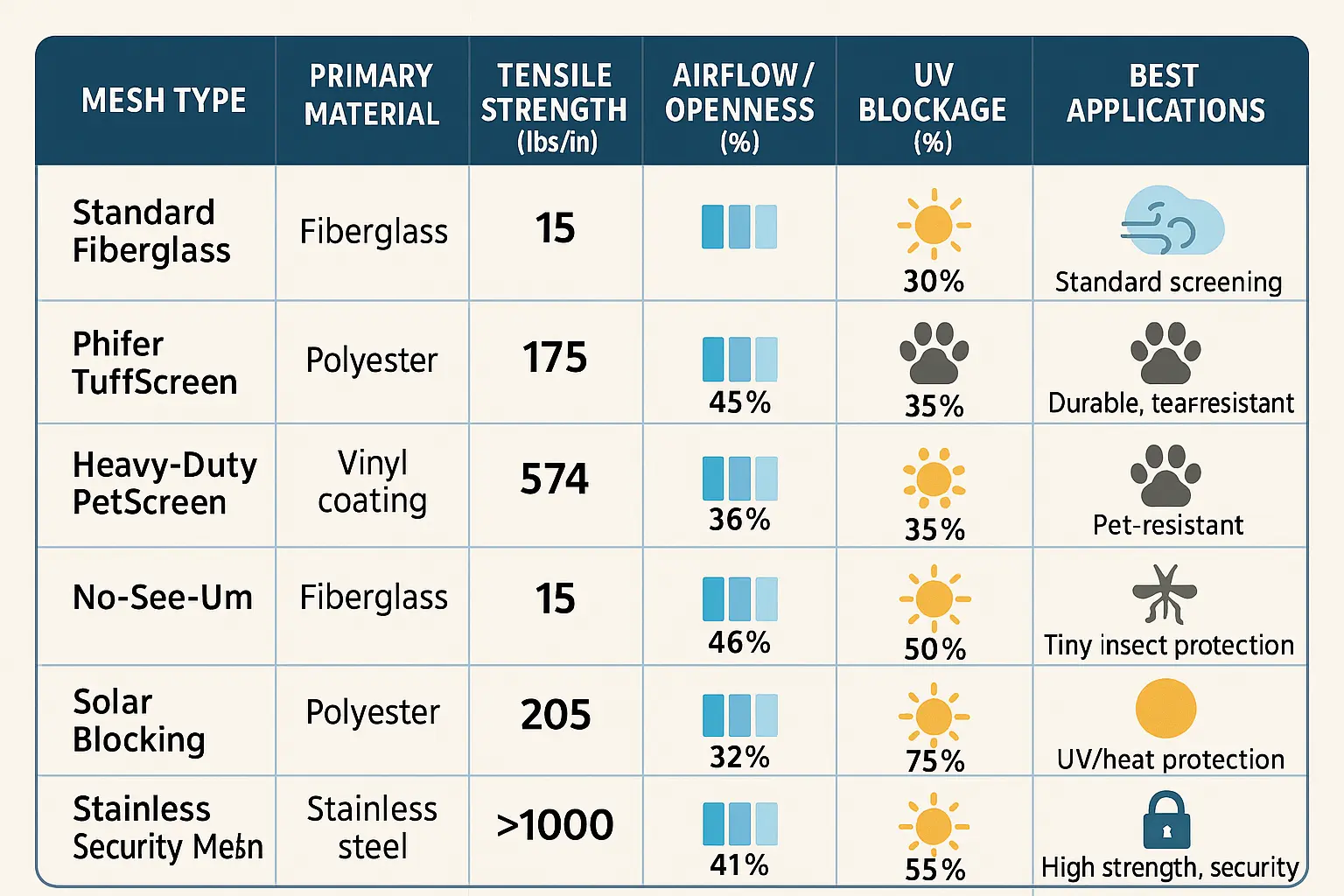
Standard PVC-coated fiberglass mesh has an openness factor of 65% to 70%, allowing maximum airflow. However, its warp-breaking strength is only about 42 lbs per inch, making it incredibly vulnerable to pet claws, stray toys, and high-impact wind.
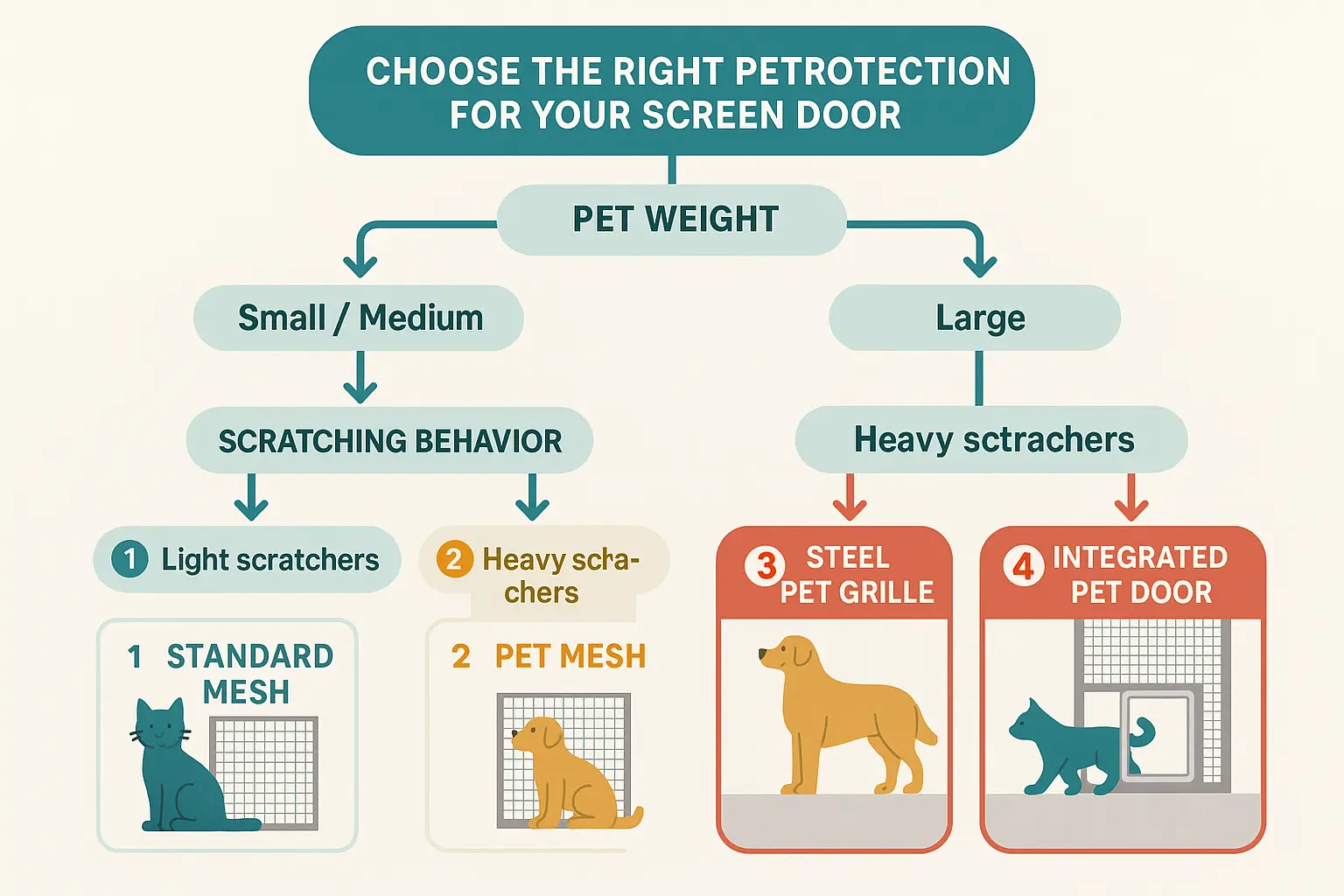
Conversely, heavy-duty pet-resistant screen mesh made of vinyl-coated polyester offers an extreme warp-breaking strength of approximately 315 lbs per inch—making it roughly 7 to 8 times stronger than standard fiberglass. Because the yarn diameter is significantly thicker (0.025″ compared to the standard 0.011″), it reduces the openness factor to between 35% and 45%. This results in a nearly 30% reduction in airflow.
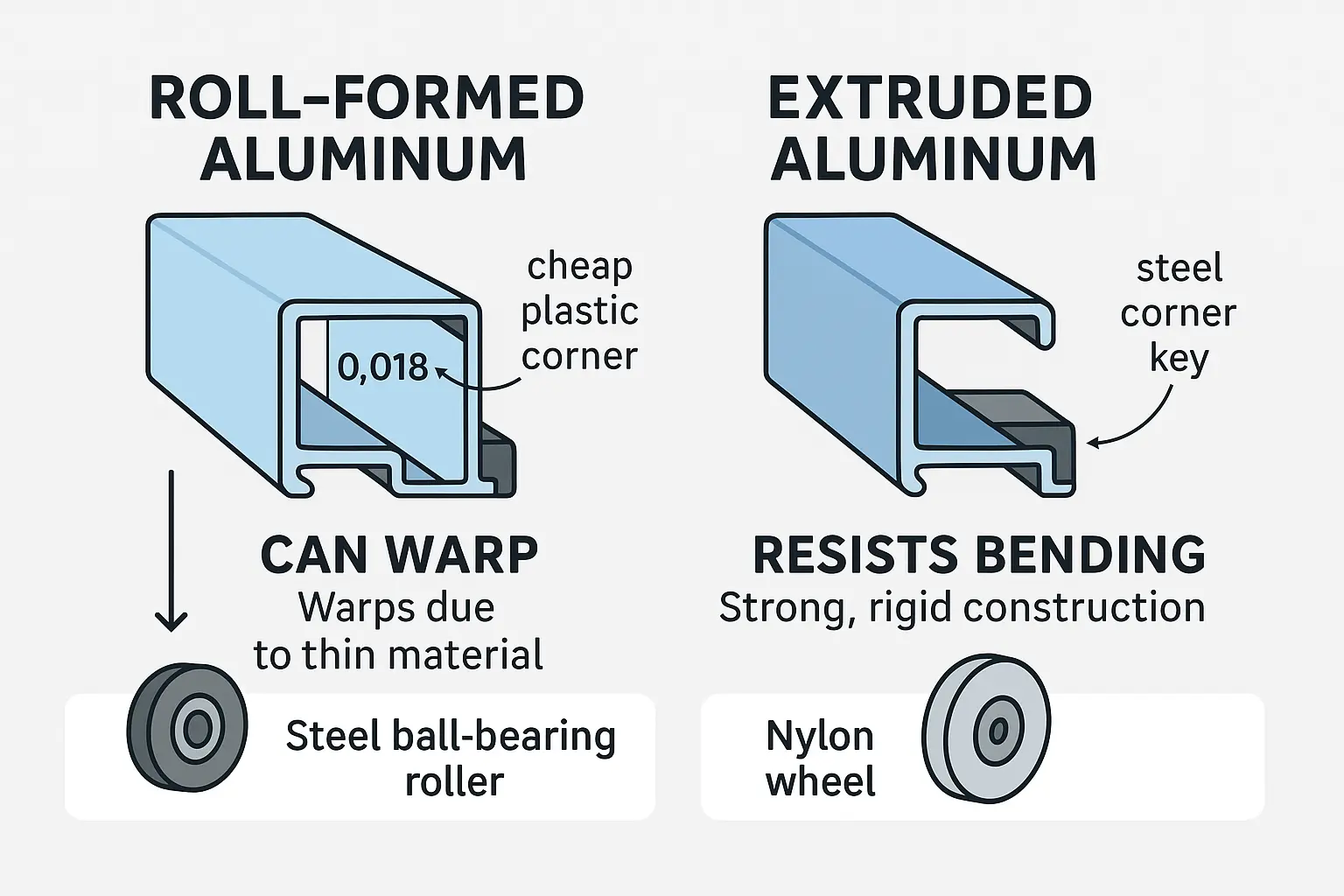
For homeowners who want durability without losing their breeze, specialized intermediate options like Phifer TuffScreen® strike a balance. It offers 150 lbs of tensile strength with 55% openness. If your existing frame is in excellent structural condition but the screen fabric has degraded over time, asking yourself, “can you replace the screen on a screen door?” is a great first step. Re-screening an existing, high-quality extruded frame is a highly sustainable, cost-effective way to upgrade performance without purchasing an entirely new unit.