If you have to shoulder your exterior door, pull it tight, or lift the handle to turn your deadbolt, you are dealing with bolt-to-strike misalignment. It is a frustrating friction point that compromises home security and accelerates hardware wear. Deciding whether you need a quick $0 screw adjustment, a $15 hardware tweak, or a professional service call starts with identifying the root cause behind the binding.
Door Won’t Lock Unless You Push or Lift? Bolt-to-Strike Alignment Guide
Published: Nov 17, 2026
In this article (7 sections)
- Diagnosing Door Misalignment: Hinge Sag vs. Frame Settlement
- Interactive Troubleshooting Decision Matrix
- The Zero-Cost Hinge Fix for Sagging Doors
- Adjusting Pressure: Weatherstripping and Latch Tabs
- The Blind Transfer and Precision Filing Method
- Repositioning Strike Plates without Screw Hole Slippage
- Frequently Asked Questions
Diagnosing Door Misalignment: Hinge Sag vs. Frame Settlement
Empirical hardware repair data reveals that 60% of door alignment failures stem from structural house settling and frame movement, 30% from hardware wear and loose top hinge screws, and 10% from improper initial installation or slab warping.
Standard mechanical deadbolts tolerate up to 1.5mm (1/16 in) of offset before binding. Motorized smart locks require less than 0.5mm of friction tolerance; minor binding triggers motor stall errors and drains batteries rapidly. Performing proper repair front door diagnostics before making invasive frame cuts ensures you don’t ruin decorative trim or compromise door stability.
Need a Quick Fix?
Tell us what’s wrong with your door — we’ll get it sorted.
Interactive Troubleshooting Decision Matrix
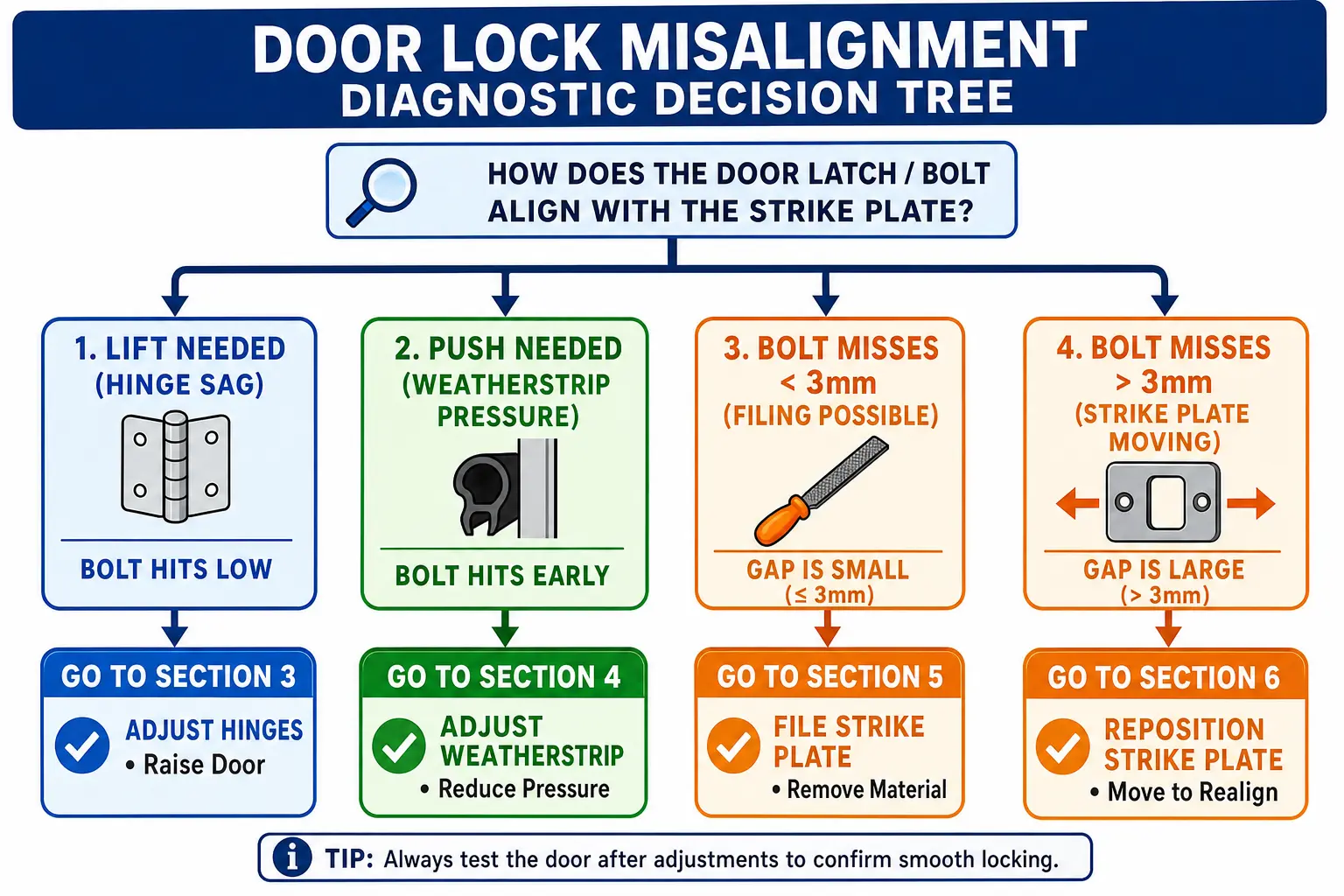
To determine your exact repair path, inspect the reveal gap around your door panel. Close the door and check the clearance margin between the door edge and jamb. If the gap at the top latch corner is tighter than the top hinge corner, your door panel is sagging.
- Lifting required: Hinge adjustment needed (sagging panel).
- Pushing required: Weatherstrip over-compression or strike tab offset.
- Off by < 1/8″: Minor strike plate filing.
- Off by > 1/8″: Strike plate repositioning and hole plugging.
The Zero-Cost Hinge Fix for Sagging Doors
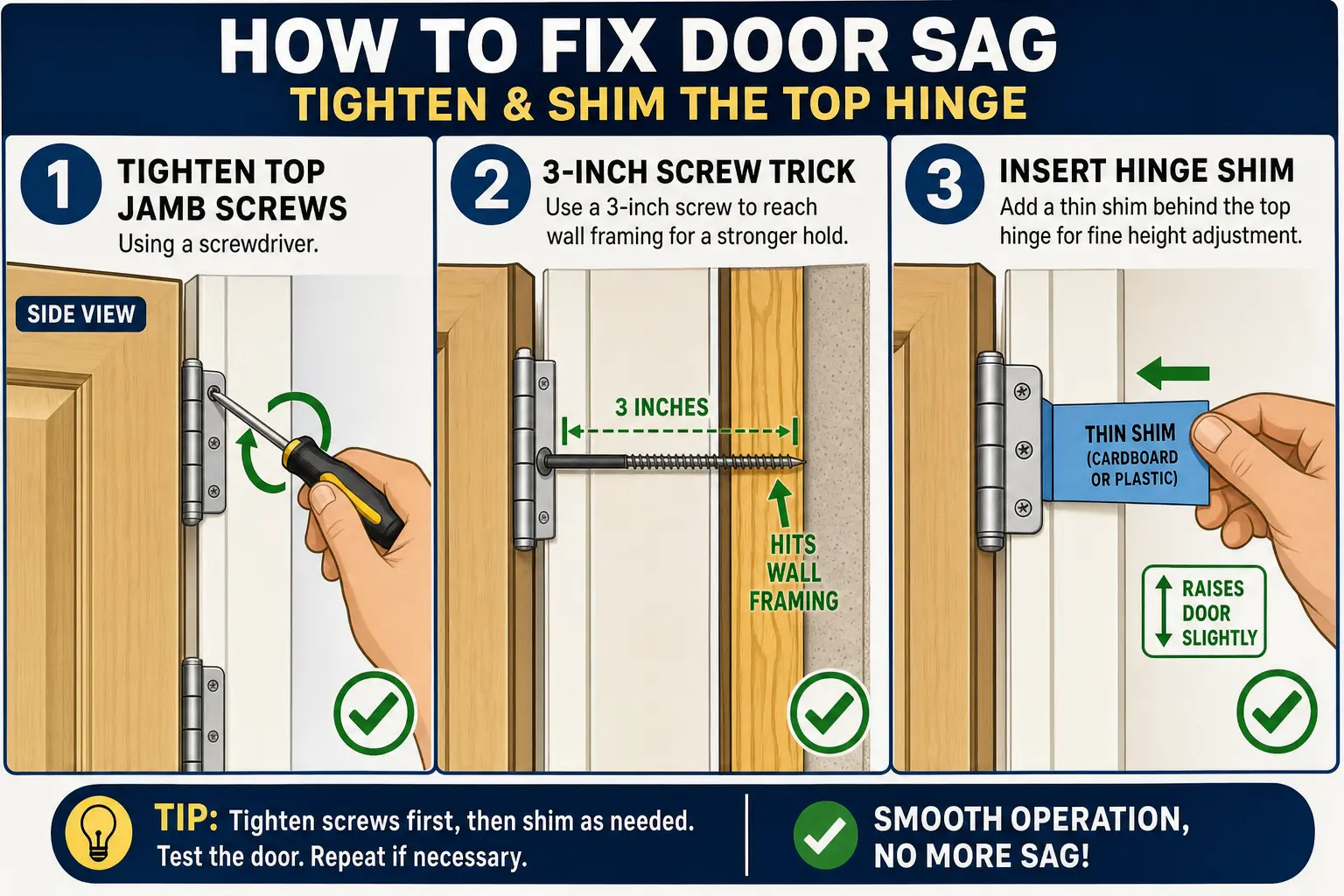
When a door sags, the deadbolt strikes the top edge of the strike hole. Before filing metal, resolve loose hardware causing common tubular latch problems explained in field service evaluations.
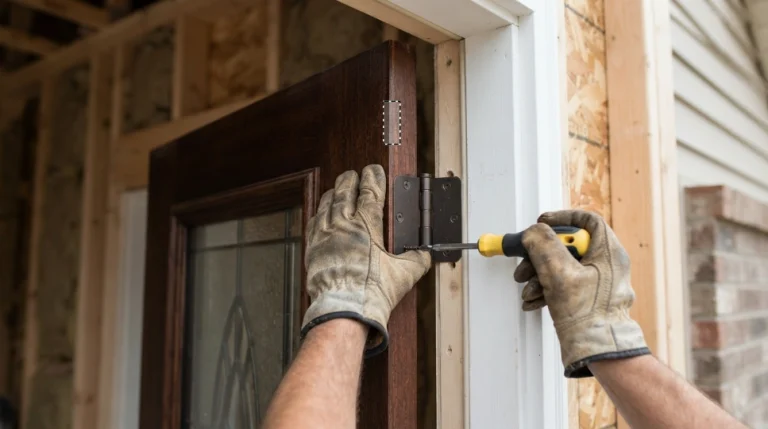
- Tighten Screws: Tighten all screws on the top hinge leaf using a hand screwdriver.
- The 3-Inch Screw Trick: Remove the center screw from the jamb-side top hinge. Drive a 3-inch structural wood screw straight into the wall framing. This pulls the top of the jamb tight against the framing stud, lifting the latch side of the door panel by up to 1/8 inch.
- Hinge Shims: Insert a thin cardboard or plastic hinge shim behind the bottom hinge leaf to push the bottom edge inward and elevate the latch corner.
Adjusting Pressure: Weatherstripping and Latch Tabs
If you must push hard against the door to extend the deadbolt, the issue is often depth pressure rather than height alignment.
Insert a flathead screwdriver into the adjustable lip tab inside the handle’s strike plate and bend it forward slightly. This lets the spring latch catch securely without requiring excess force.
Seasonal humidity swells wooden frames, leading to a door not latching in winter or summer due to seal over-compression. Upgrading stiff weatherstripping to flexible types of kerf weatherstripping restores smooth closure without sacrificing energy efficiency.
The Blind Transfer and Precision Filing Method
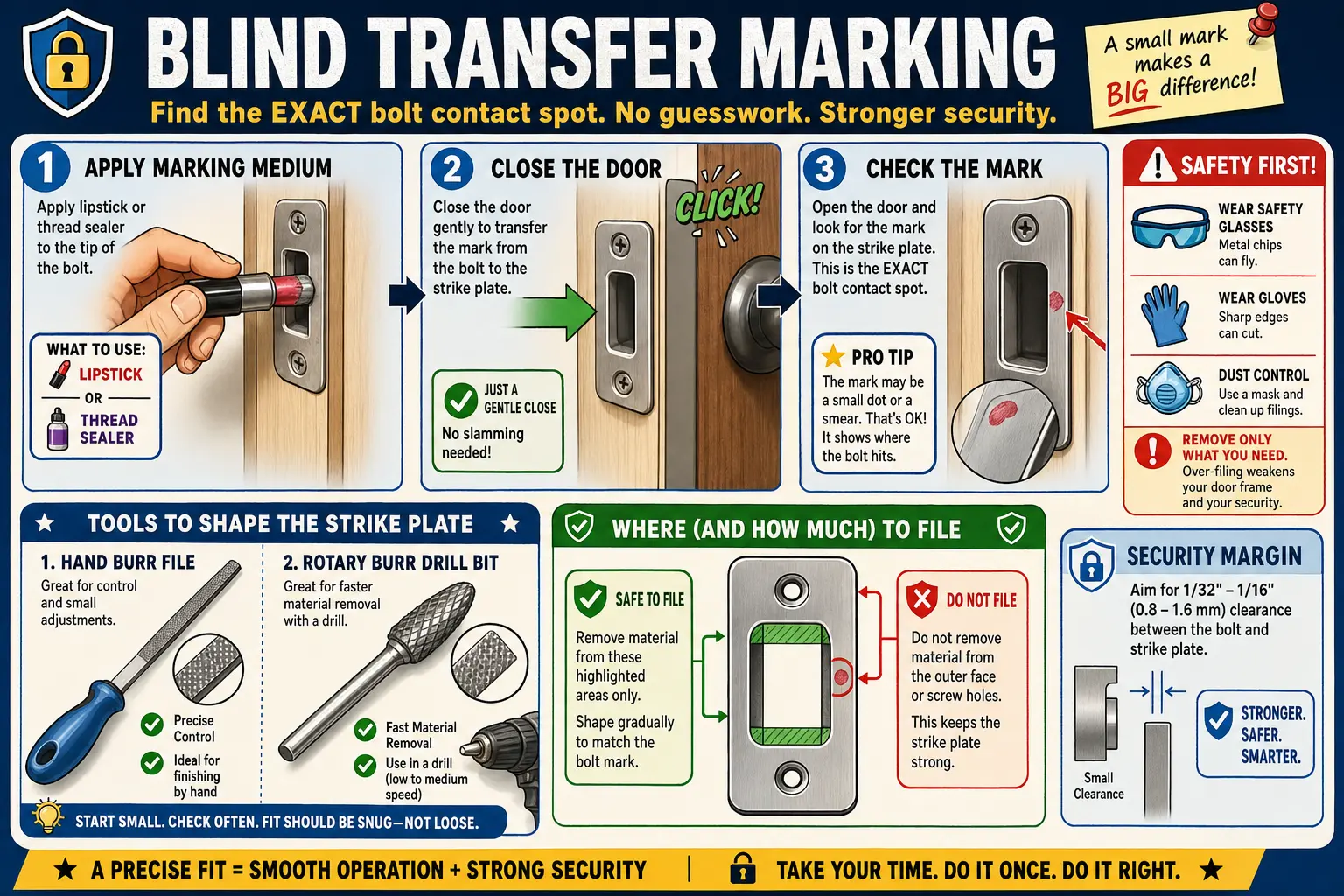
When frame hinges are square but the deadbolt rubs the metal opening by less than 1/8 inch, pinpoint the binding spot using a non-destructive transfer test:
- Apply lipstick, dry-erase marker, or thread sealer onto the tip of the deadbolt.
- Turn the thumbturn until the bolt contacts the strike plate.
- Retract the bolt and open the door to reveal the exact transfer mark.
Use a hand file or rotary burr bit to remove metal only where marked. Security Warning: Filing a strike plate opening by more than 3mm (1/8 in) removes critical metal edging, reducing kick-in resistance by up to 40%. Reviewing how to fix a door frame that was kicked in highlights why structural integrity must be maintained during adjustments.
Repositioning Strike Plates without Screw Hole Slippage
When misalignment exceeds 1/8 inch, filing metal weakens hardware. Repositioning the strike plate is necessary, but drilling new holes right next to old ones causes screws to slip back into the existing pilot holes.
- Remove the strike plate and chisel away wood to create a new recess.
- Dip wooden toothpicks or 1/4-inch hardwood dowels in wood glue, jam them tightly into the old screw holes, and cut them flush.
- Allow the glue to dry, then drill fresh pilot holes into the solid wood plug.
If wood rot or split lumber prevents screws from holding, a complete door jamb replacement restores frame strength. When severe structural movement distorts the opening entirely, an overall entry door needs replacement provides a permanent solution.
Frequently Asked Questions
Will filing my strike plate make my door easier to kick in?
Filing up to 1/16 inch of metal has negligible impact. However, enlarging the opening by more than 1/8 inch (3mm) weakens the metal lip by up to 40%. Always ensure your strike plate is anchored directly into the wall framing using 3-inch structural screws.
Why does my front door only misalign in winter or summer?
Wood slabs expand in high summer humidity and contract during dry winter months. Seasonal temperature shifts also cause subtle movement in foundation framing, shifting the jamb relative to the door panel.
When should I call a professional door technician?
If tightening hinges and adjusting strike plates fails to resolve the issue, or if you discover cracked jamb wood and heavy frame sag, calling an experienced technician ensures your home remains secure without risking damage to your entry system.