(855) 676-0881

Kicked-In Door Repair: Rebuilding the Jamb and Strike After Forced Entry


Published: Oct 5, 2026

Dealing with a forced entry is a deeply unsettling experience. Beyond the immediate emotional toll, homeowners are faced with a critical physical security dilemma: is a quick DIY patch enough, or does the entry system require a comprehensive structural overhaul?

When a door is kicked in, the damage is rarely isolated to the lock itself. Restoring your home’s boundary requires a precise understanding of wood structural integrity, fastener engineering, and physical security hardening.
Emergency Triage & The "Do Not Touch" Insurance Checklist


Before picking up any carpentry tools, you must address the administrative and investigative steps required to preserve evidence for law enforcement and insurance claims:

  1. Document the Scene: Take high-resolution photographs of all tool marks, wood splinters, lock latch alignment, and footprint marks on the door face.
  2. File a Police Report: Call local authorities to report the break-in and request an incident or occurrence number. Do not alter the damage until officers have cleared the scene.
  3. Contact Your Insurance Carrier: Initiate a homeowner’s insurance claim. Your carrier will need the police report number and your photographic evidence to authorize coverage for a professional repair front door service.
  4. Construct a Temporary Overnight Brace: If you cannot complete the repairs before nightfall, secure the opening by wedging a heavy-duty 2×4 timber from the floor at a 45-degree angle directly under the interior door knob, or install a heavy-duty security bar.

Anatomy of a Forced Entry: Why the Jamb Splits


Statistics show that 55.4% to 80% of all residential break-ins occur through a door, with the front entryway being the most common target [3]. During these forced entries, the high-grade deadbolt itself rarely fails. Instead, the steel bolt acts as a lever, transferring the kinetic energy of a kick directly into the door frame.

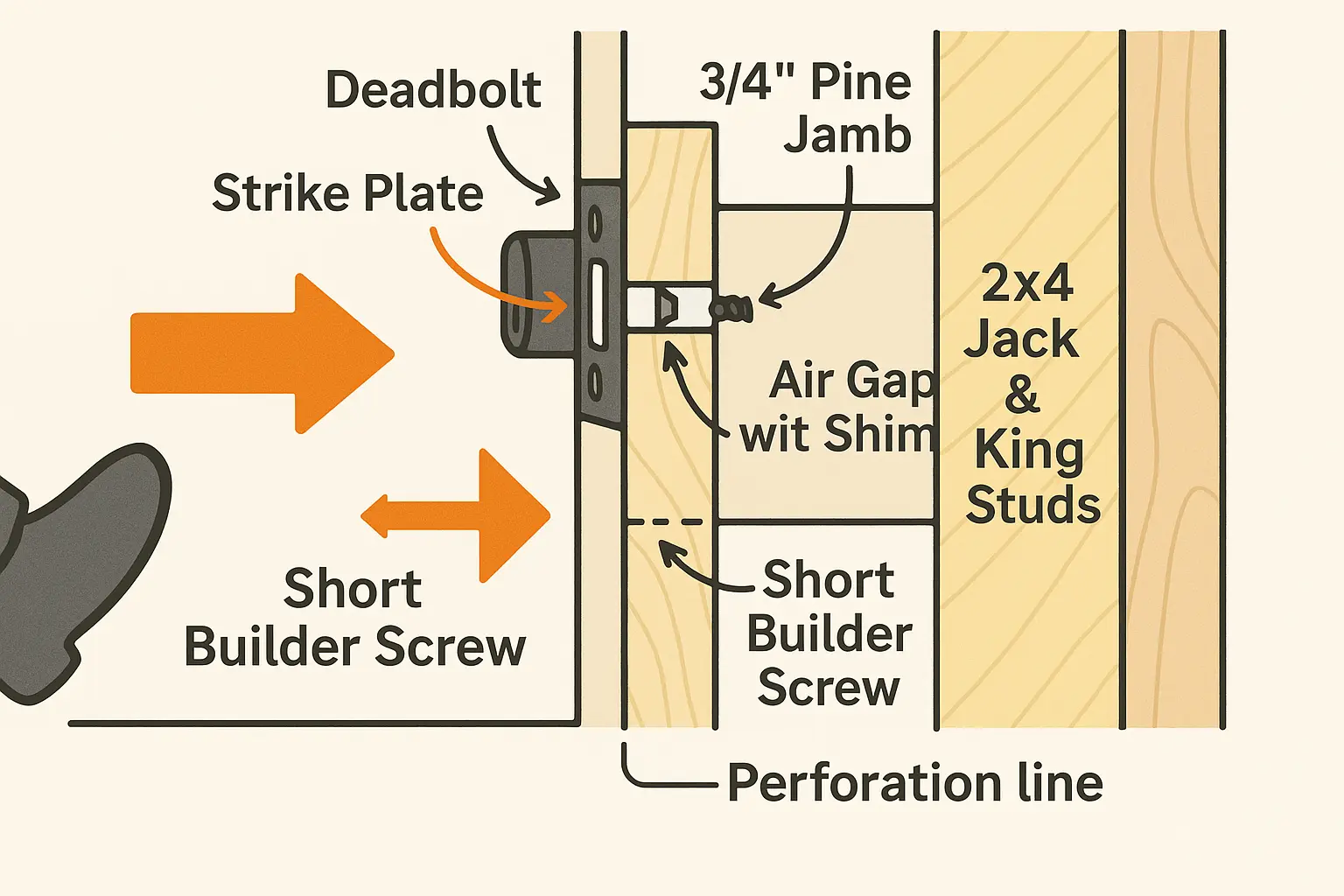
Because standard builder-grade strike plates are secured with short, 1/2-inch or 3/4-inch screws, they anchor solely into the decorative 3/4-inch soft pine jamb. Under impact, this soft pine splits cleanly along the vertical screw line, tearing the strike plate completely out of the frame [1].

This diagram illustrates the structural anatomy of a door frame and how short screws fastening only the jamb surface lead to wood splits during forced entry, helping readers visualize why upgrading screws and reinforcing studs greatly improves security.


Rebuilding the Substrate: Two Carpentry Methods


To restore your frame’s structural integrity, you must rebuild the wood substrate before mounting any new hardware. If the damage is extensive, calculating the professional door jamb repair cost against a DIY fix is an important consideration.

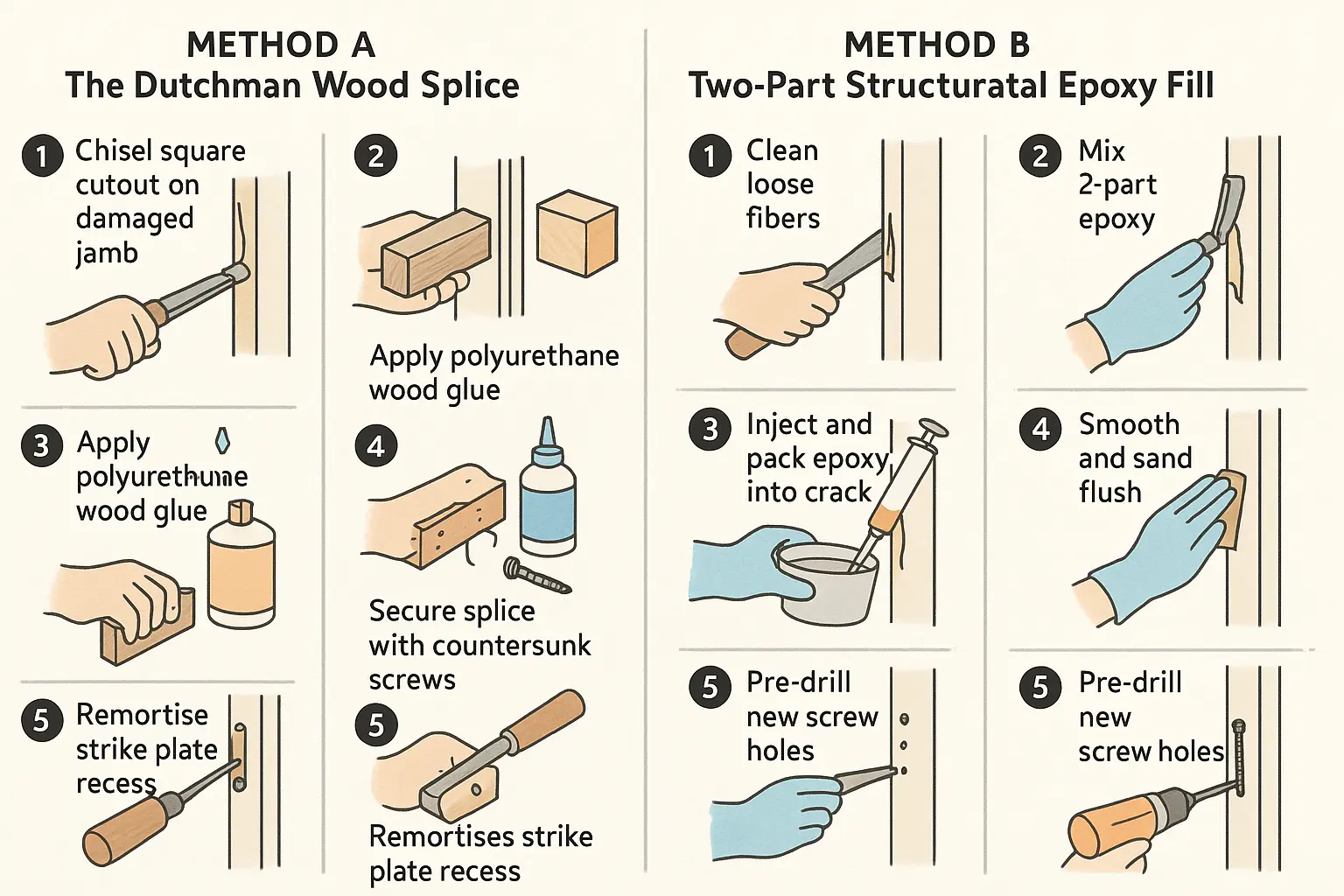
Method A: The Dutchman Wood Splice (Best for Severe Splitting)

This traditional carpentry technique involves removing the shattered section of the jamb and replacing it with a solid wood block:

  • Step 1: Use a multi-tool or chisel to cut a clean, square, rectangular pocket around the damaged portion of the jamb.
  • Step 2: Cut a matching piece of solid yellow pine or structural oak to fit the pocket precisely.
  • Step 3: Apply high-strength polyurethane wood glue (such as Titebond III) to the contact surfaces.
  • Step 4: Insert the wood block, secure it with countersunk structural wood screws, and clamp it until the glue cures.
  • Step 5: Plane the surface flush, sand, and re-mortise the pocket for your strike plate.

Method B: Two-Part Structural Epoxy (Best for Minor Cracking)

If the wood is cracked but still mostly intact, a high-strength epoxy can bind the fibers together:

  • Step 1: Clean the crack thoroughly, removing loose splinters and dust.
  • Step 2: Mix a two-part structural wood epoxy (like Abatron WoodEpox or Bondo Wood Filler).
  • Step 3: Inject or pack the epoxy deep into the cracks using a putty knife, ensuring no air voids remain.
  • Step 4: Overfill the area slightly, allow it to cure fully, then sand the surface completely flush.

If you suspect the structural studs behind the jamb have also shifted or split, securing a professional door frame testing diagnostic is highly recommended to ensure your home’s framing remains secure.

This illustrated guide breaks down the two primary carpentry repair methods for kicked-in door jambs, enabling readers to confidently choose and follow the correct restoration technique based on damage severity.


Strike Plate Upgrades: Hardening the Latch Area


Once the wood substrate is fully restored, reinstalling standard builder-grade hardware will leave you vulnerable to a repeat breach. Achieving true door frame security requires hardware that bypasses the soft jamb entirely.

By upgrading to 3-inch or 3.5-inch #9 structural wood screws, you anchor the strike plate directly into the double 2×4 jack and king studs framing the house, multiplying the door’s kick resistance by up to 10x [1, 2].

  • Heavy Box Strikes: These feature a fully enclosed steel cup that wraps the deadbolt, preventing lateral movement.
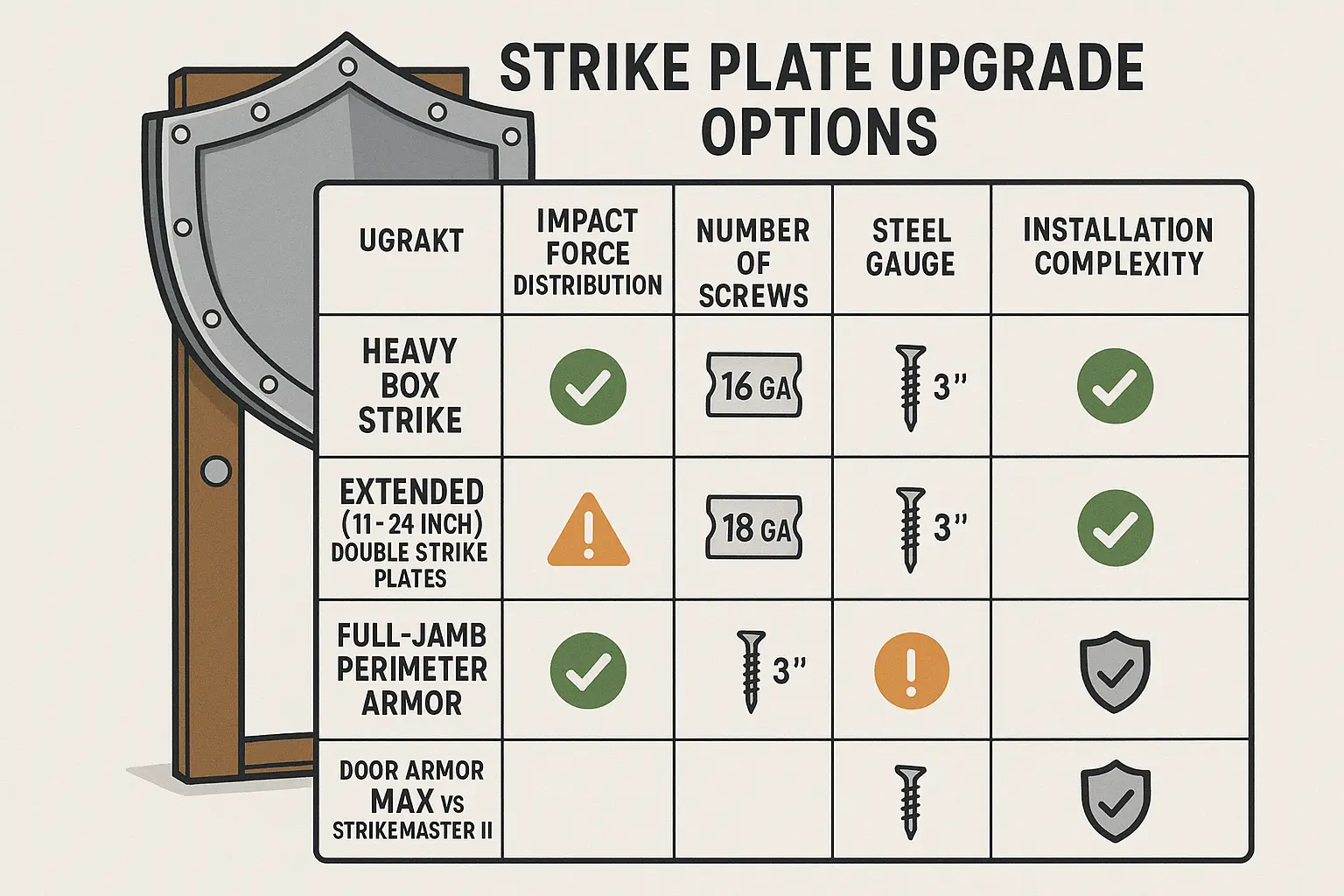
  • Extended Double Strike Plates (11″ to 24″): These distribute impact forces over a wider surface area, utilizing 6 to 9 long structural screws.
  • Full-Jamb Perimeter Armor (e.g., Door Armor MAX): This heavy 16-gauge steel shield wraps the entire jamb, offering the highest level of reinforcement.

While a basic DIY wood filler repair might cost under $30, investing in these structural hardware upgrades is essential to prevent future failures [2].

This comparison matrix visually anchors key product choices for strike plate upgrades, helping readers remember critical features to evaluate when selecting hardware that reinforces door security.


Step-by-Step Security Hardening Protocol


To ensure your newly repaired door functions perfectly and provides maximum protection, follow this professional installation protocol:

  1. Pre-Drill Pilot Holes: Always use a 1/8-inch drill bit before driving 3-inch or 3.5-inch screws. This prevents the newly spliced wood or cured epoxy from splitting under high torque.
  2. Apply the “One-by-One” Rule: When upgrading the hinge screws to anchor into the studs, replace only one screw per hinge at a time. This keeps the door slab properly aligned and prevents sagging.
  3. Verify Full Deadbolt Throw: Test your deadbolt with the door open, then closed. If the deadbolt does not extend fully into the frame pocket, it cannot lock into its high-strength shear position.
  4. Schedule Regular Checks: Perform periodic door maintenance to ensure hinges remain tight, weatherstripping is intact, and latch alignment is perfectly centered.

If the structural damage is too severe to safely repair, consult a professional technician to evaluate whether your entire entry door needs replacement.


Frequently Asked Questions


What is the average door jamb repair cost after a break-in?

A basic DIY repair utilizing wood fillers, structural screws, and a reinforced strike plate ranges from $15 to $130. However, a professional emergency repair to rebuild the jamb structure and properly align the door typically ranges from $250 to $600. If the frame is severely fractured and requires a full door system replacement, costs can range from $2,500 to $7,000 [4].

Can I use cosmetic wood putty to repair a kicked-in door frame?

No. Cosmetic wood putty or plastic wood products are designed strictly for aesthetic fills; they have no structural shear strength. If the frame is subjected to force again, cosmetic fillers will instantly crumble. You must use a two-part structural epoxy or perform a Dutchman wood splice to restore the frame’s integrity.

Why do standard door frames split so easily when kicked?

Standard door frames are typically made from 3/4-inch-thick soft pine. Because builders often install strike plates with short 1/2-inch screws, these screws only penetrate the soft pine jamb instead of reaching the underlying double 2×4 wall studs. This concentrates the force of a kick onto a small, soft wood surface, causing it to split immediately [1].