

ADA and Handicap Door Operators
An accessible entrance rarely needs a new door. In most buildings it needs an operator on the door that is already there, placed and set so that anyone can get through it without help. A1 Door Services installs, repairs and adjusts ADA door operators and handicap door openers across Texas, Connecticut and Alabama — on main entrances, vestibules, restrooms, corridors, classrooms and suite doors.
 (855) 676-0881
Get in touch with us
Call us 24/7: (855) 676-0881
Or Let Us Call You
Fitting an Operator to a Door You Already Have
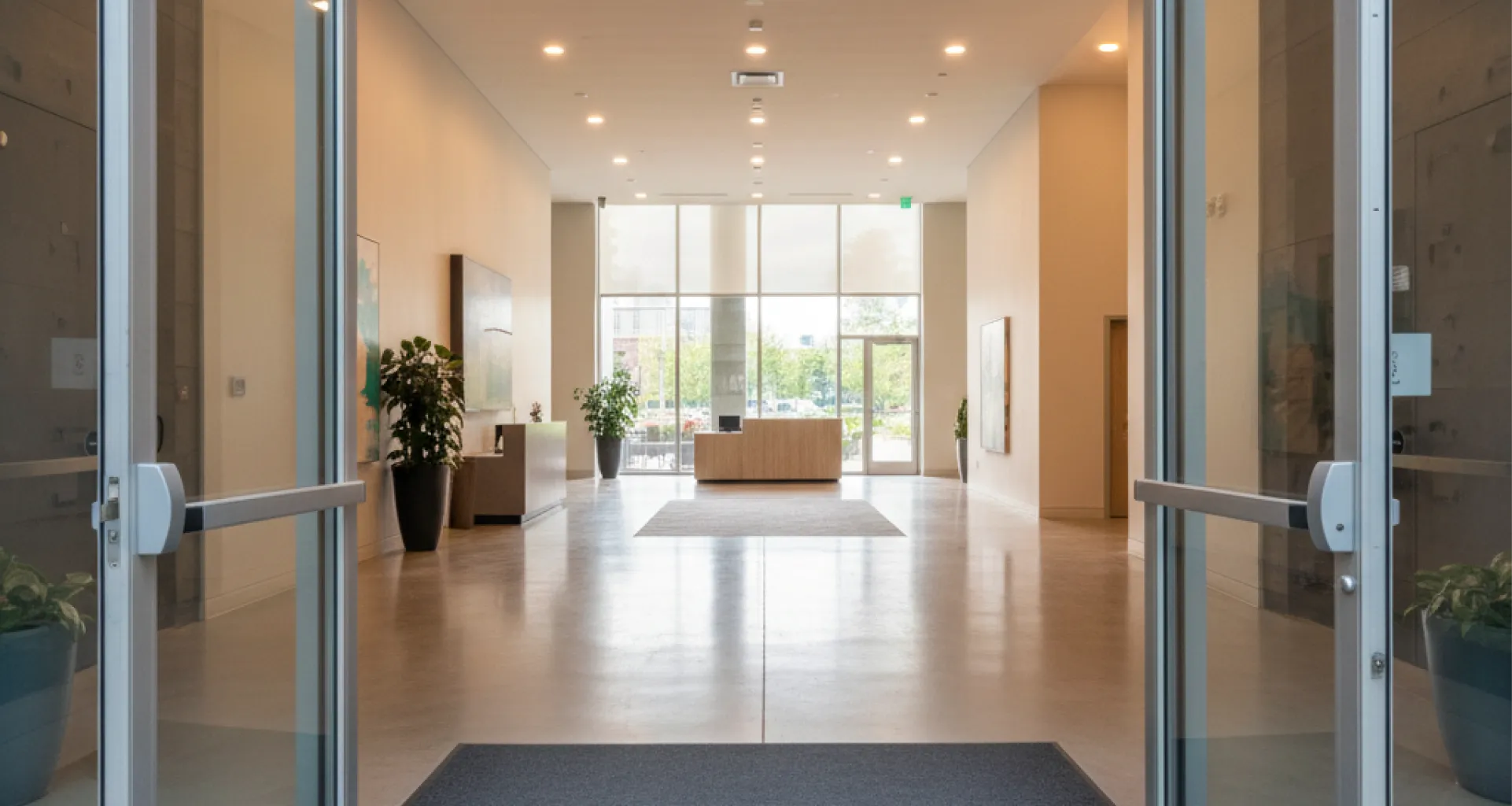
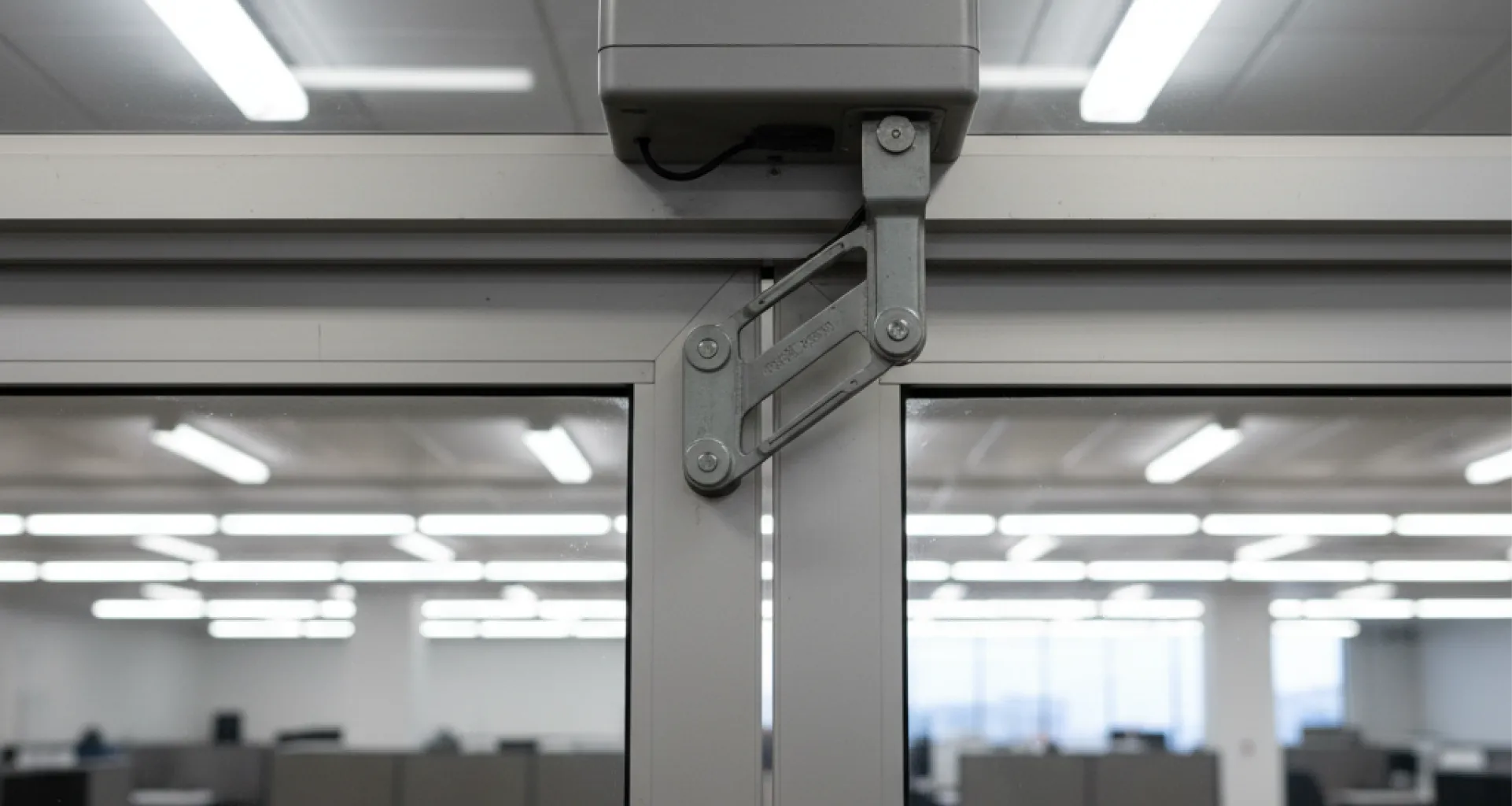
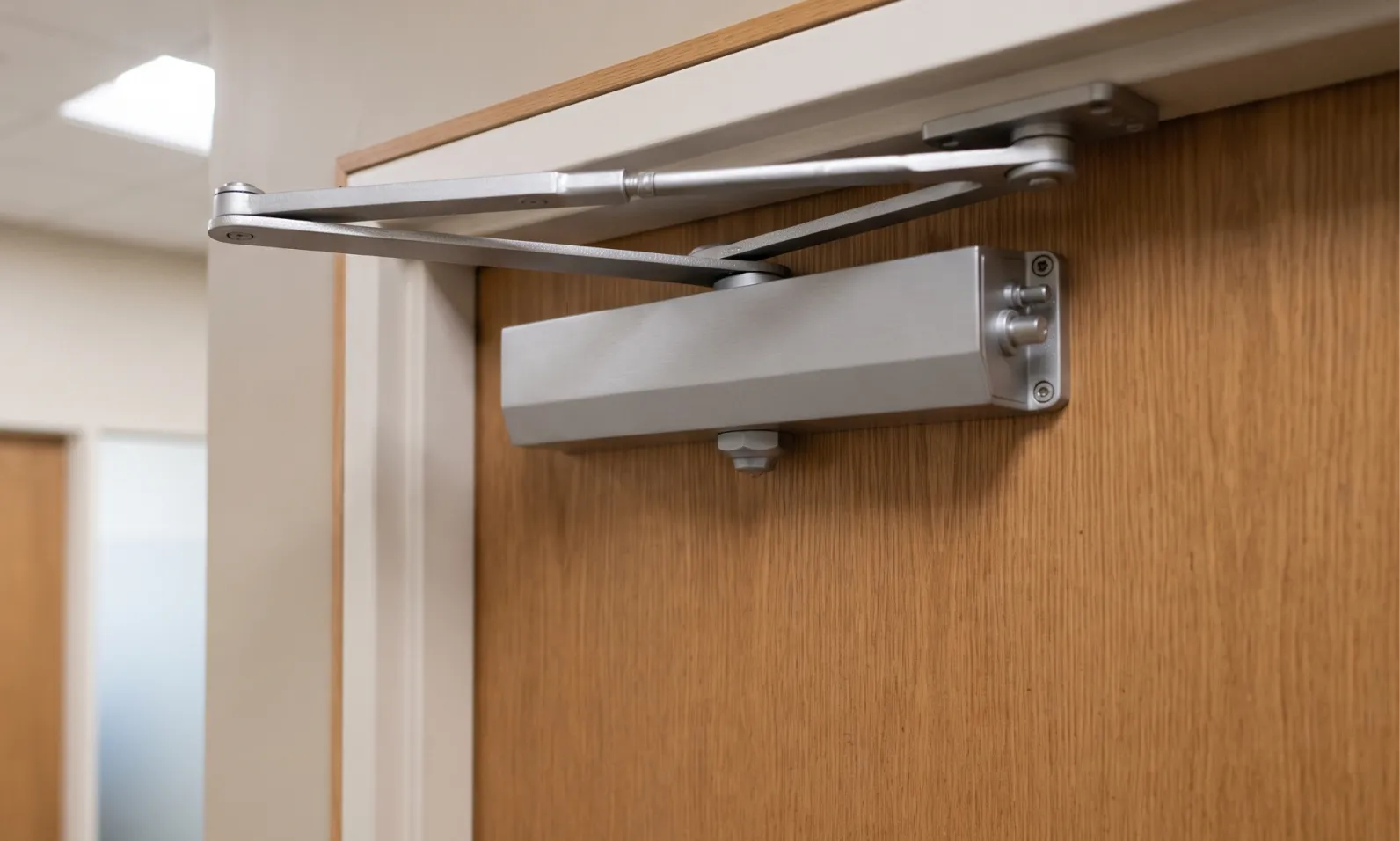
A low-energy operator mounts on the header of an existing swing door and opens it under power when someone activates it. The door, frame and finish stay as they are, and the work is normally a single visit per opening.
Where a slider is already in place, retrofit operators are available for those too, provided the frame and header can carry the unit and the panel weight is within range. The survey confirms both before anything is ordered, along with where the power feed will come from.
This is the least disruptive route to an accessible entrance and, on a heavy exterior door, usually the only practical way to bring the opening force down to a usable level.
Actuators and Where People Actually Reach
An operator is only useful if the button is somewhere a person can reach from the direction they approach the door. Actuator placement matters as much as the operator itself, and it is the thing most often got wrong on otherwise correct installations.
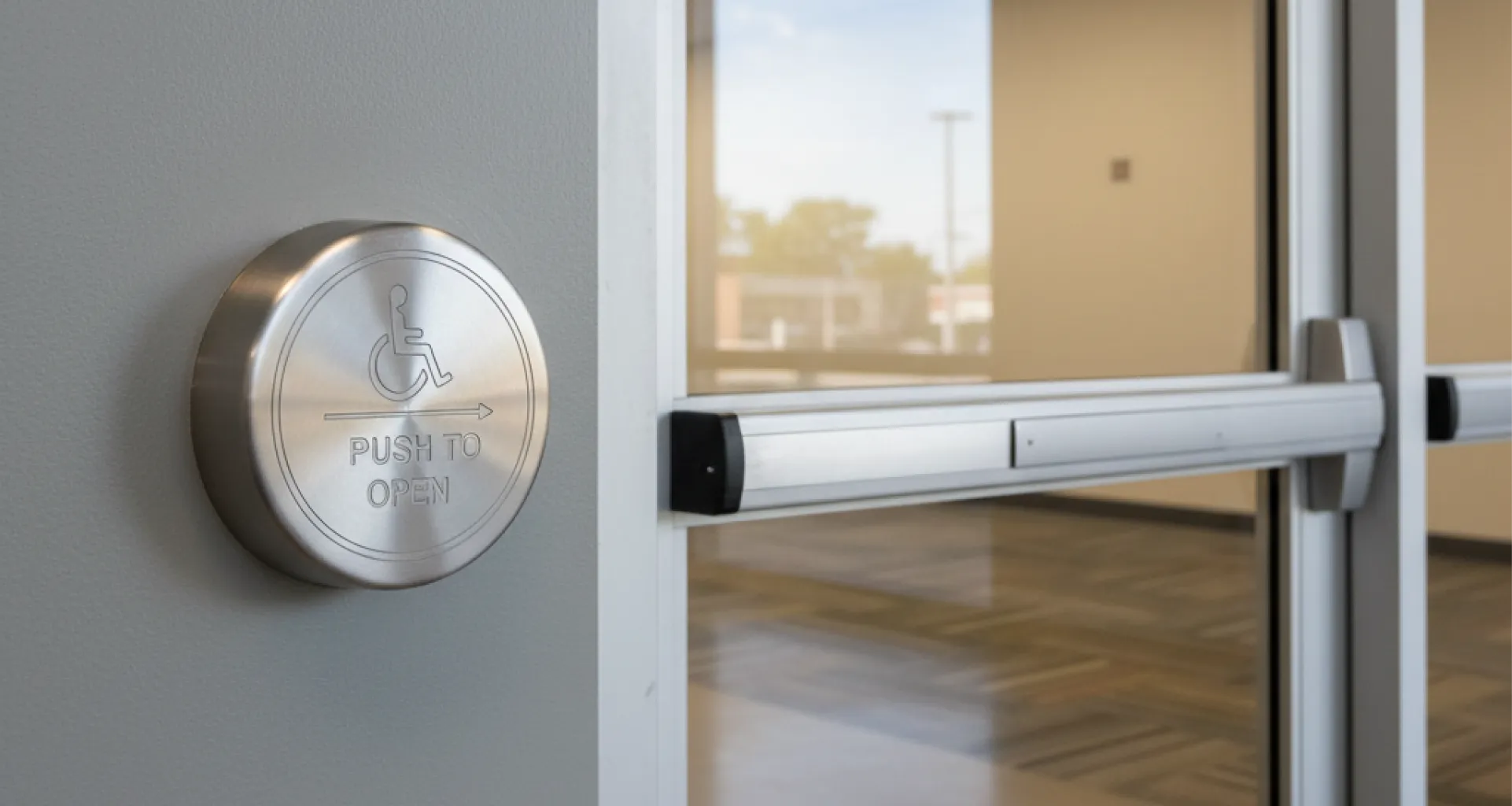
Push plates
Round and square wall plates in the standard commercial sizes, plus narrow jamb-mount plates where wall space is tight. Mounted at a height and distance that works from a wheelchair as well as standing.
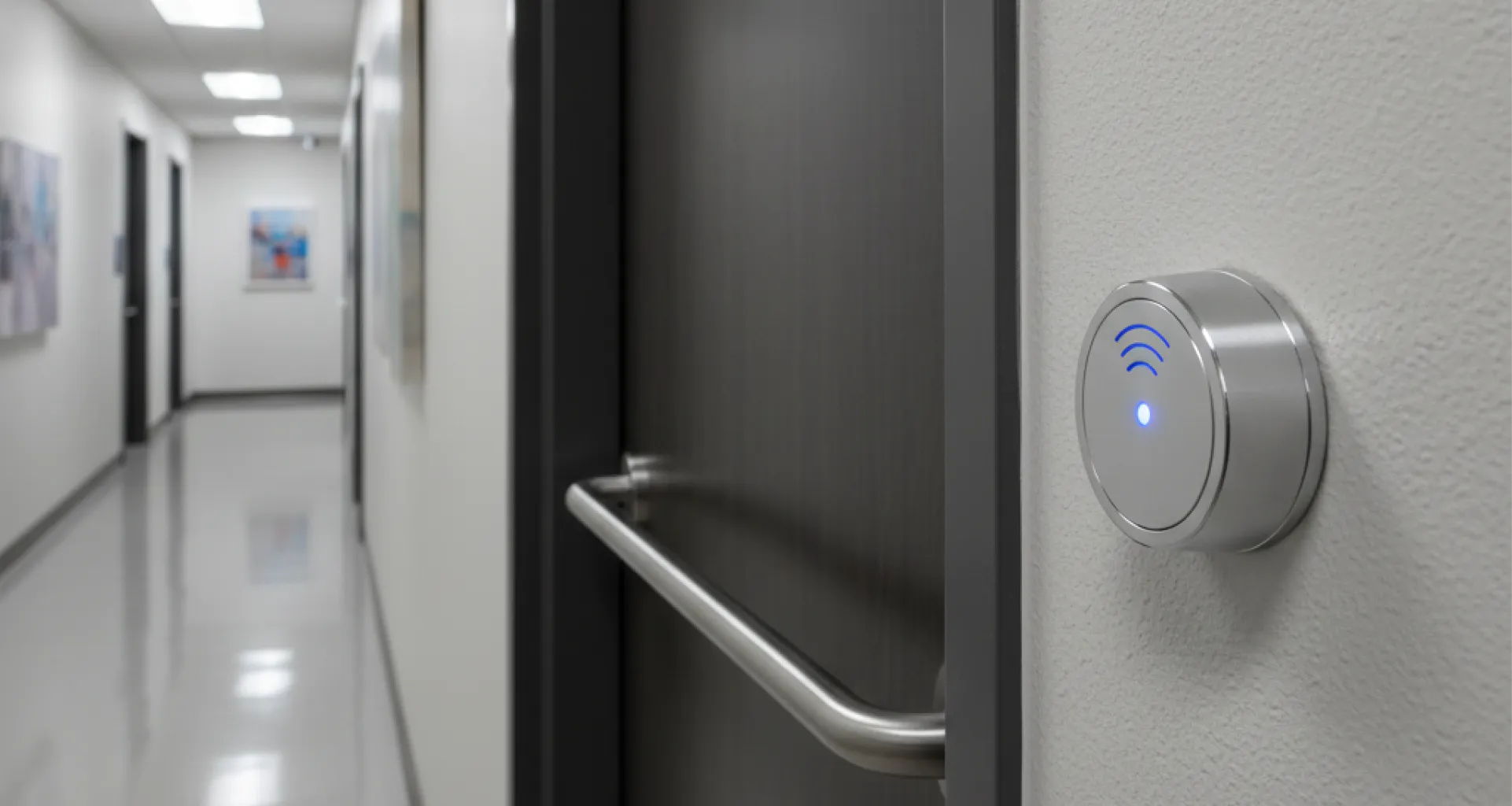
Touchless wave sensors
No-touch actuators for clinics, restrooms, laboratories, food service and patient areas, where surfaces are a concern. They fit to the operator already installed.
Wireless actuators
Battery transmitters and receivers where running cable through a finished wall, a glass surround or a historic fabric is not practical.
Key switches and credential activation
For openings that should only operate for authorised users, or only during set hours, wired through the building’s access control.
Setting the Door So It Works for the Person Using It
An operator that opens too fast, closes too fast or does not stay open long enough is worse than no operator at all. We set opening speed, closing speed, hold-open and force to the figures ANSI/BHMA A156.19 calls for, measured with a gauge and a stopwatch.
Where the actuator sits well back from the door, activation delay is added so the door is fully open by the time the person reaches it — a requirement regularly missed on installations that are otherwise correct.
Manual opening force with the power off is checked too, since a power outage should not turn an accessible entrance into an impassable one.
What Else Makes an Entrance Accessible
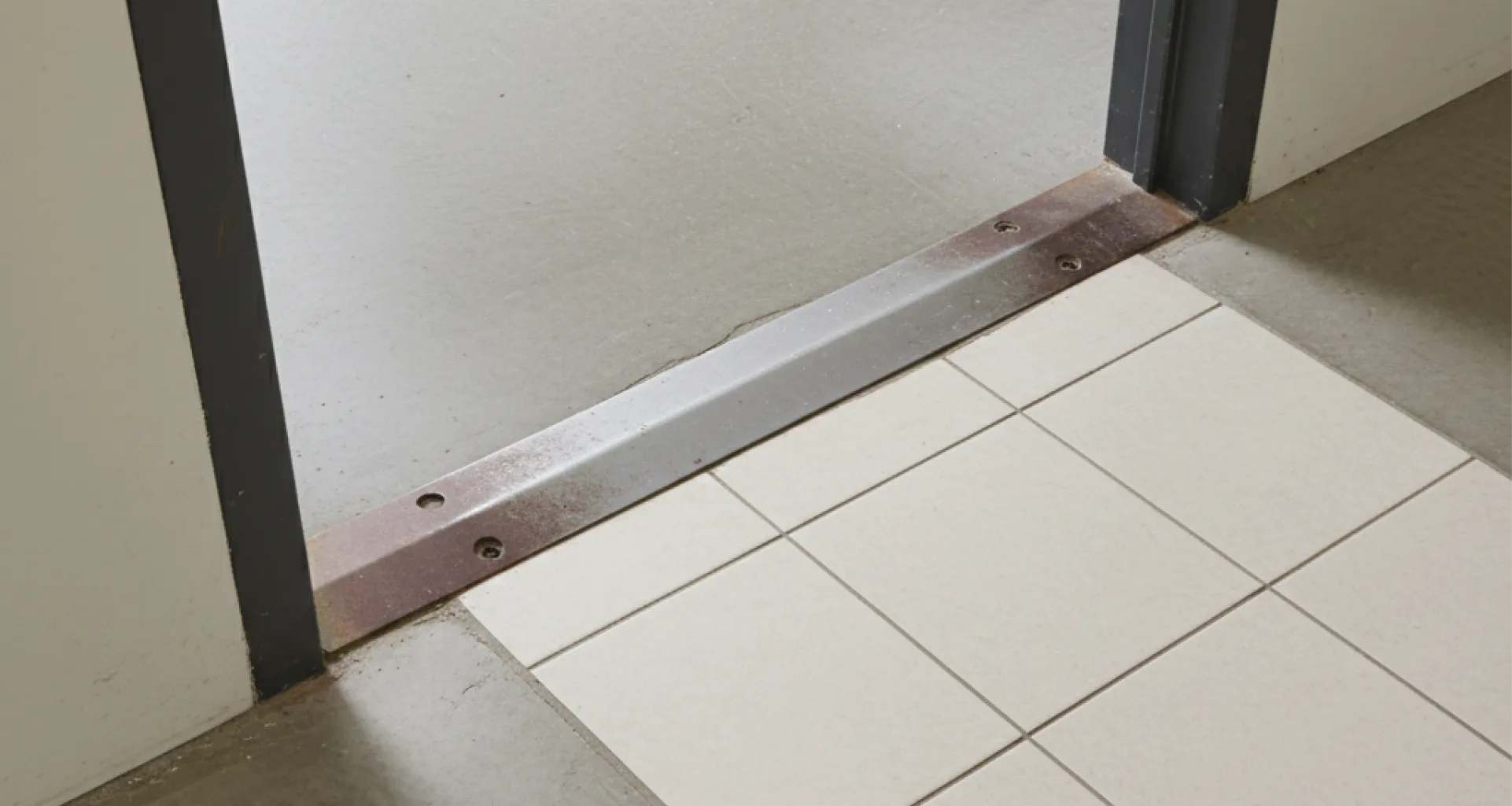
An operator solves the force problem, but not always the whole opening. We survey and correct the other things that block an accessible route: clear width at the doorway, threshold height and bevel, hardware type and mounting height, closer sweep timing on doors that stay manual, and the manoeuvring space on the approach side.
Where an entrance falls short in more than one place, you get the full list rather than an operator fitted to a door that still will not pass. Where it falls short in only one, we say that too.
Interior Openings, Not Just Front Doors
Restroom doors, vestibule pairs, corridor doors, classroom and suite entrances and meeting room doors are where most accessibility complaints actually originate. They are also the quickest openings to automate, because they are lighter, sheltered from weather and usually already have power nearby.
A building that automates its front entrance and leaves the restroom door at 30 pounds of opening force has not solved the problem it set out to solve.
Repairing and Replacing Existing ADA Operators
Handicap door openers that have stopped responding, open too slowly, or no longer hold open long enough are repaired the same way any operator is: arm and linkage, control board, actuator and wiring, then timing and force reset.
Wall actuators take a lot of abuse — they are hit by carts, wheelchairs and shoulders every day — and a plate that only works on the second or third press is an actuator fault, not an operator fault. Obsolete units are replaced with current operators sized to the leaf.
Keeping Accessible Openings Accessible
Accessible openings drift out of adjustment like any other automatic door, and the drift is harder to notice: a hold-open that has shortened by two seconds, a closing cycle that has sped up, an actuator that now needs a firmer press.
Scheduled maintenance re-measures timing and force on every accessible opening, tests each actuator, and checks that the clear width and threshold have not been compromised by new flooring, matting or furniture on the approach.
Choosing Between an Operator and a Different Fix
An operator is not always the answer. Where a door is heavy because the closer is set too hard, adjusting the closer is quicker and solves it. Where the hardware is the problem — a knob instead of a lever, a latch mounted too high — changing the hardware is the fix.
Where the door is genuinely heavy, exposed to wind, or on a route people use with their hands full, an operator is the practical answer and usually the only one that will hold.
We tell you which it is. Fitting a power operator to a door that needed a closer adjustment is an expensive way to solve a cheap problem, and it is a common outcome when nobody measures first.
Touchless and Hands-Free Accessible Openings
Wave-to-open actuators do two jobs at once: they remove the contact surface, and they remove the need for any push force at all. On restroom, clinic, laboratory and food service doors that is often the deciding factor.
They fit to the operator already in place, so an existing accessible opening can be converted in a short visit without changing the door. Foot-activated and elbow-height actuators are used where people routinely approach with full hands.
Detection range and hold-on time are set at the door, because a wave sensor that only triggers from six inches away is no more usable than a heavy plate.
Surveying a Building Opening by Opening
Accessibility is a property of a route, not of a door. An entrance that meets every requirement leading to a corridor door nobody can open has not made the building accessible.
We survey building by building rather than door by door: every opening on the route measured for clear width, threshold height and bevel, hardware type and mounting height, opening force and closer sweep timing. The output is a list of openings with what each one needs — an operator on some, a closer adjustment on others, hardware or threshold work on the rest — so the work can be planned in order of impact.
Service Areas
Texas — Austin, Cedar Park, Cypress, Richardson, McKinney, Sherman, Paris. Connecticut — Hartford, New Haven, Danbury, Greenwich. Alabama — Birmingham.
Tell us which openings need to be accessible and we will survey them and set out what each one needs.
Our Services
Frequently Asked Questions
Does the ADA require automatic doors?
No. The ADA sets requirements for clear width, opening force, hardware and closing speed on accessible routes. A power operator is one way to meet them, and on a heavy exterior door it is usually the most practical one.
Can a handicap door opener be added to an existing door?
Yes. That is the normal way it is done — the operator mounts on the existing header and the door, frame and finish stay unchanged.
How long does an ADA door operator have to stay open?
Hold-open time is set by the standard that governs the door type. We measure and set it rather than leaving it at the factory default.
What is the difference between power-assist and low energy?
With power-assist the user still pushes the door and the operator reduces the effort. A low-energy operator opens the door on its own when someone activates it.
Can operators be fitted to restroom doors?
Yes, and restrooms are one of the most common requests. Touchless wave actuators are usually specified there rather than push plates.
Can you check whether our entrance meets ADA requirements?
Yes. We measure clear width, threshold, hardware height and type, opening force and closer timing on each door and give you the list of what falls short.
Our push plate only works sometimes — is the operator failing?
Usually not. Wall actuators take daily impact and wear out well before the operator does. Replacing or rewiring the actuator normally resolves it.