

24/7 Emergency Automatic Door Repair
A door stuck open is an open building. A door jammed shut is an entrance nobody can use, and on an accessible route it is an entrance somebody cannot get through at all. A1 Door Services takes emergency automatic door calls around the clock across Texas, Connecticut and Alabama — nights, weekends and public holidays included, on every door type and every make, whether or not we installed it.
 (855) 676-0881
Get in touch with us
Call us 24/7: (855) 676-0881
Or Let Us Call You
What Happens on an Emergency Call
The technician arrives, runs the door through a cycle where it is safe to do so, and establishes whether the entrance can be left in automatic operation at all. Anything that could injure someone — a presence sensor that has failed, a door closing on people, a panel hanging out of the header — takes the door out of automatic mode immediately.
From there the opening is made usable or made secure: the door is switched into safe manual operation, a faulty sensor is isolated, power is restored to the operator, or the entrance is secured so the building can be closed.
The permanent repair follows in the same visit where the part is on the truck, and is scheduled where it is not. Either way the building is not left open or unsafe overnight.
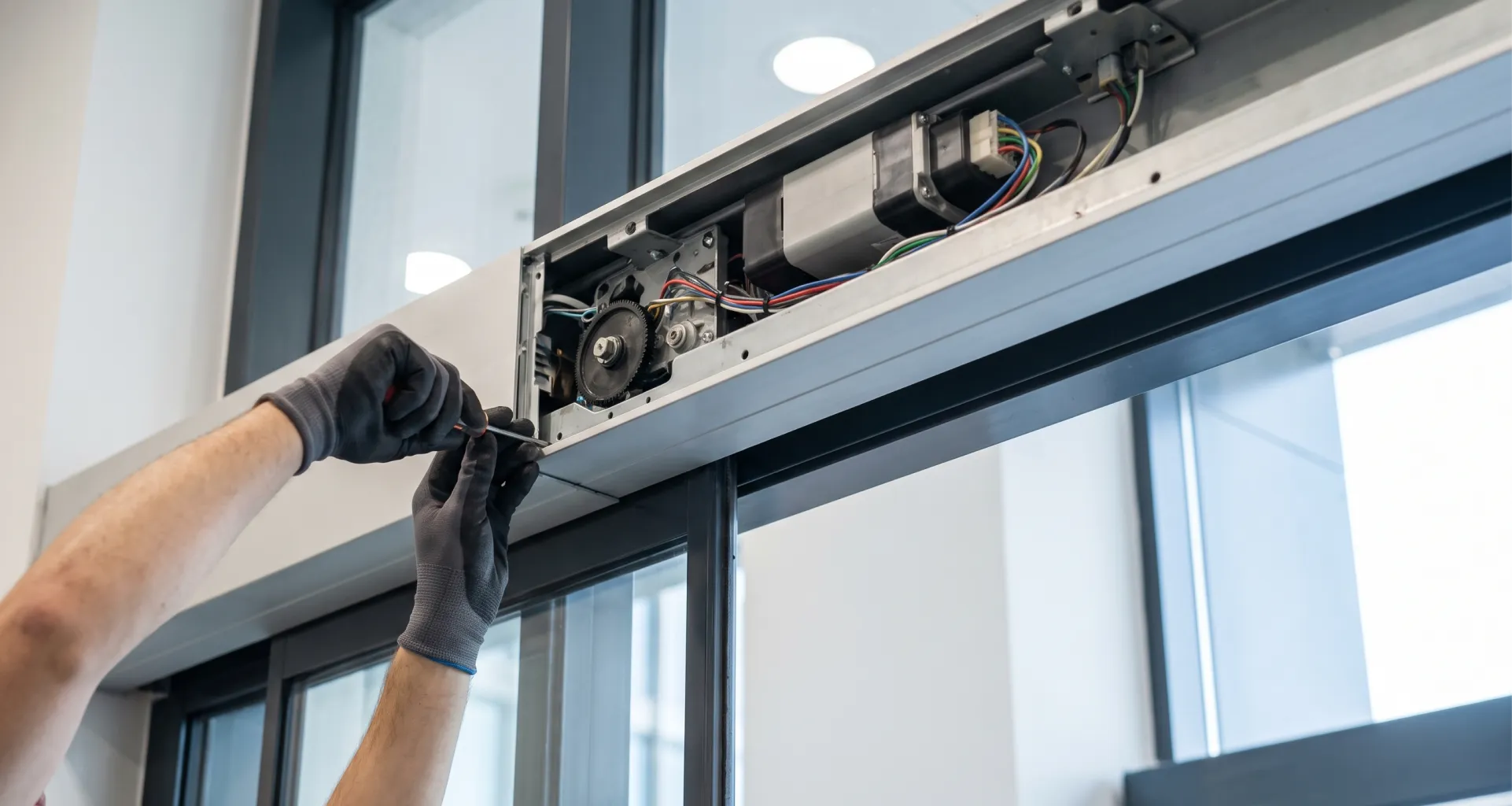
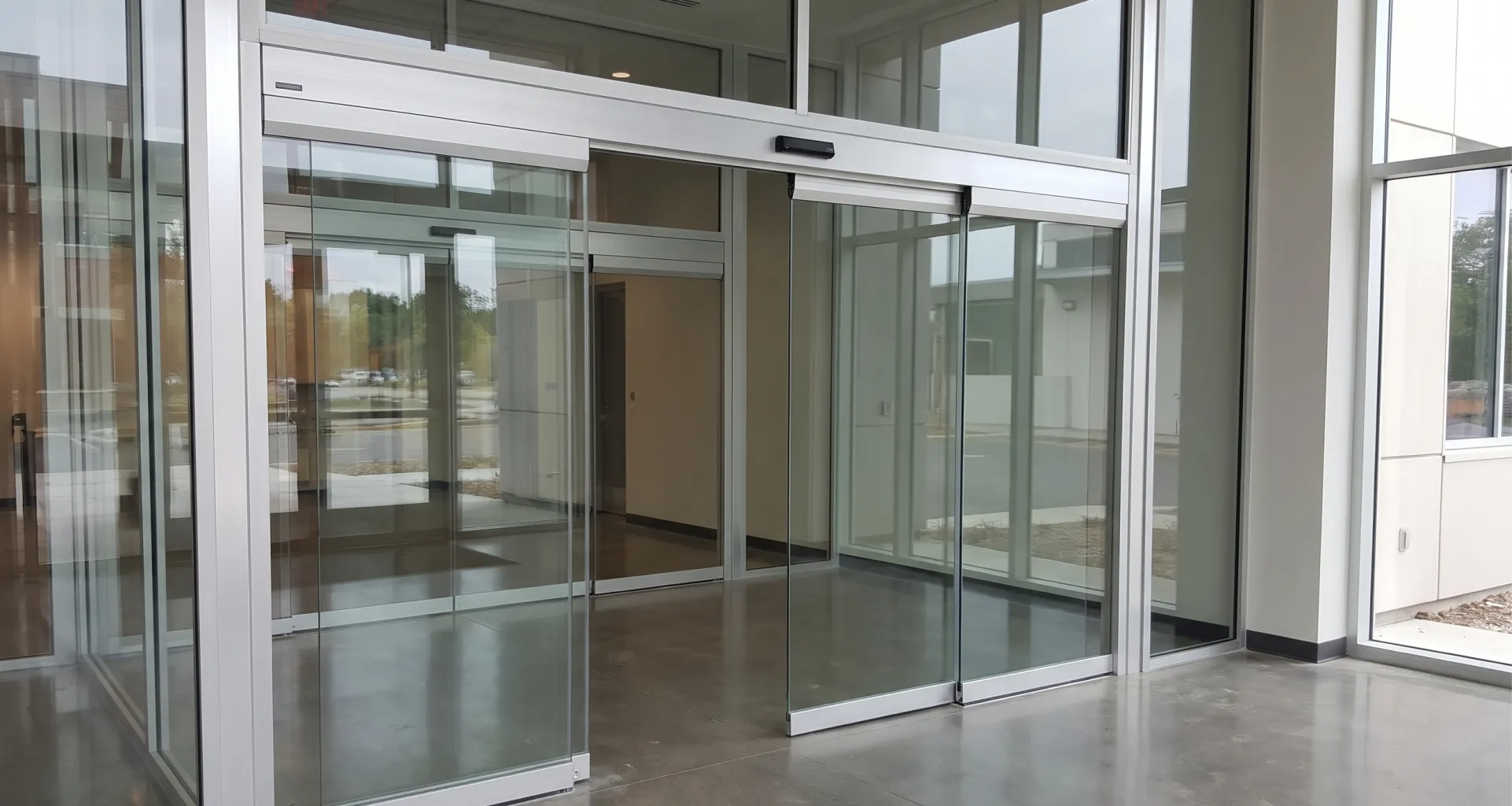
Doors Stuck Open
An entrance that will not close is the most common emergency call we take, and it is usually a presence sensor holding the door, a hold-open switch left engaged, a failed limit or encoder, or a control board that has lost its position.
Where the door cannot be made to close under power, it is put into manual operation and closed, or the opening is secured. In retail and hospitality this is often the difference between closing on time and standing a member of staff at an open entrance all night.
Doors That Will Not Open
A jammed entrance is a life safety problem before it is an inconvenience, particularly where it forms part of an escape route or the accessible way into the building.
Causes range from a failed operator or drive belt to a locking device that has not released, a control board fault, or a panel that has dropped and is binding in the track. We restore manual operation first so the opening is usable, then diagnose the fault.
Panels Off Track and Physical Damage
A derailed panel is not something to force back into place — carriers, rollers and the track itself are usually already damaged, and forcing it turns a running-gear repair into a panel replacement.
On an emergency call the panel is supported or removed, the opening is made safe, and the damaged running gear is replaced. Where glass or a panel is broken, the opening is secured and measured for the replacement in the same visit.
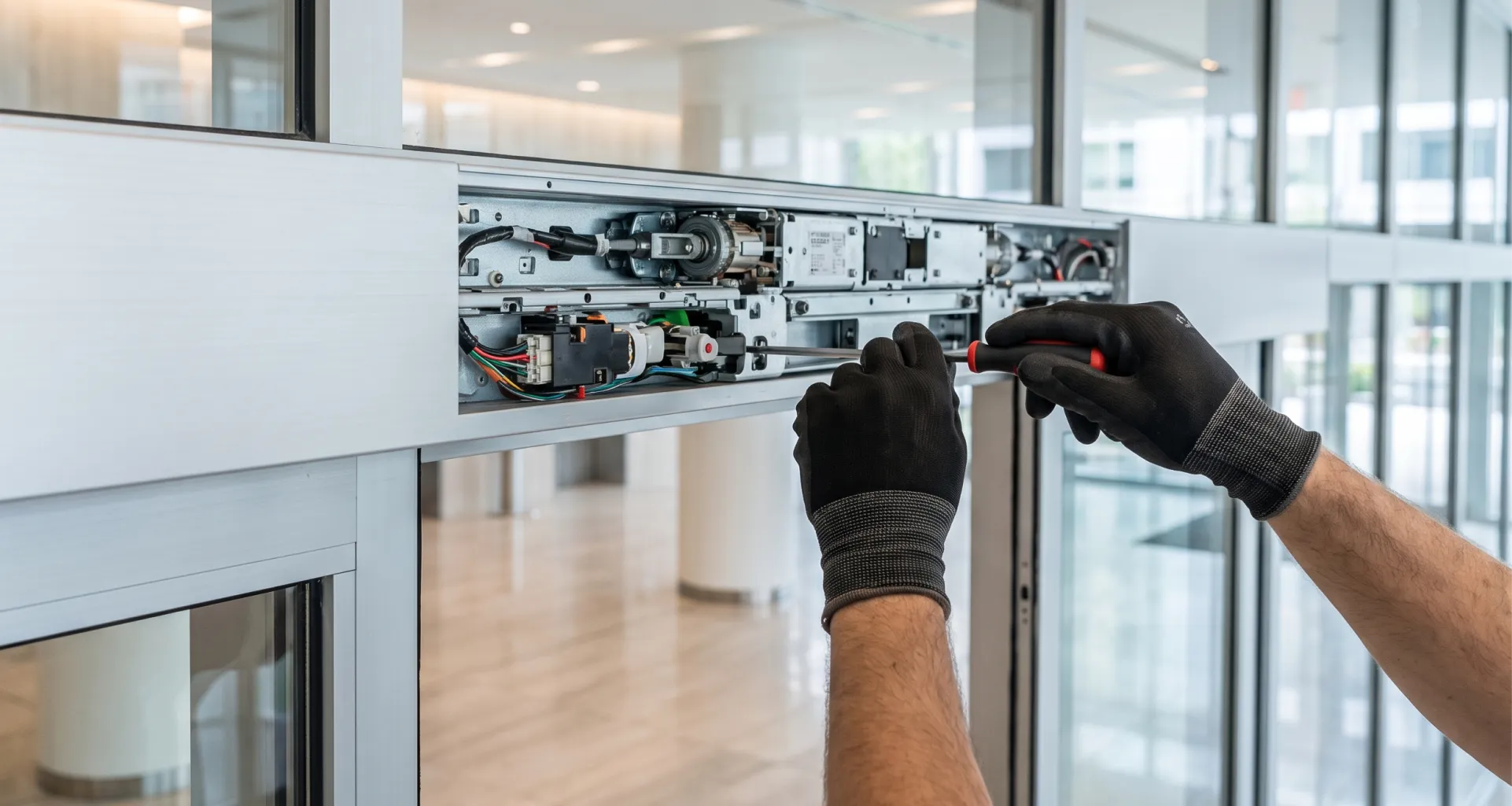
Sensor Faults That Cannot Wait
A door that closes on people, or that fails to detect someone standing in the opening, is treated as an emergency regardless of whether the door is otherwise working.
Where the sensor cannot be replaced on the spot, the door is taken out of automatic operation rather than left running until a part arrives. That is not a convenient answer, but it is the correct one.
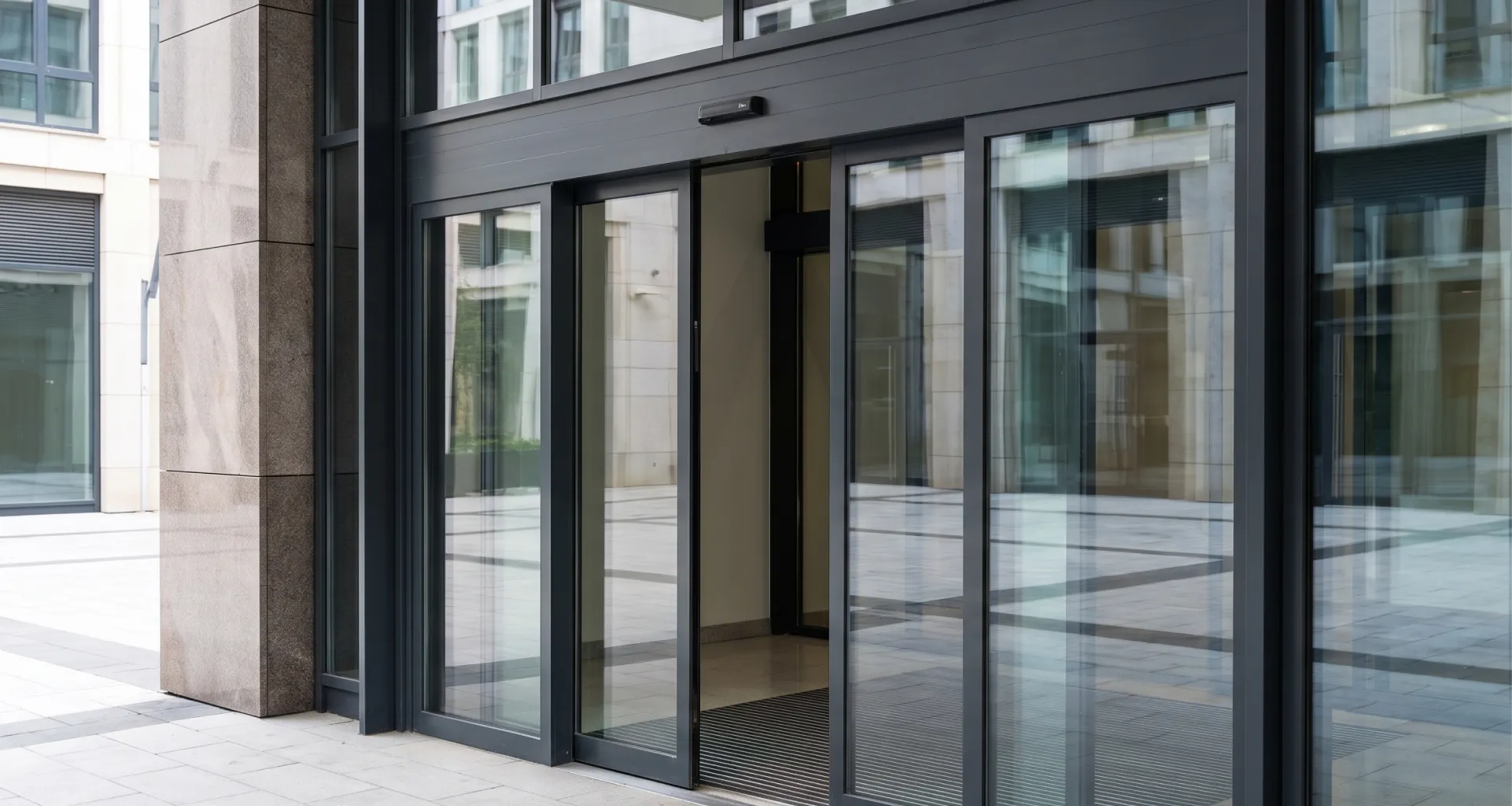
Entrances That Will Not Lock
A door that runs perfectly all day and then refuses to lock at closing is an emergency for a very different reason. Locking faults come from the operator sequence, the electric lock or strike, the access control interface, or a panel that no longer aligns with the frame.
Where the lock cannot be restored the same night, the opening is secured so the building can be closed.
After-Hours, Weekends and Holidays
Emergency calls are answered outside normal working hours, including weekends and public holidays. Retail, healthcare, hospitality and transport buildings run when everyone else has gone home, and so do the entrances that serve them.
Calls in secure or restricted buildings are arranged with whatever access and escort the facility requires, so the technician is not standing at a locked service door at two in the morning.
Situations We Get Called To
- Door stuck open and the building cannot be closed.
- Door jammed shut or unresponsive to any activation device.
- Panel off track or hanging out of the header.
- Door closing on people or failing to detect anyone in the opening.
- Entrance will not lock at closing time.
- Glass or panel broken by impact, weather or forced entry.
- Operator running continuously or cycling without stopping.
- Entrance dead after a power event or an alarm activation.
After the Emergency Visit
Most emergency calls have a cause behind them that was visible before the failure — a belt that had been slipping for weeks, a sensor drifting out of alignment, a track filling with grit.
We tell you what actually caused it, and where the entrance is one of several on the site we will say plainly whether the others are heading the same way. Buildings that move from emergency calls to a scheduled interval generally stop making emergency calls.
What to Tell Us When You Call
The more precise the description, the more likely the technician arrives with the part. It helps to know the door type — sliding, swing, folding or revolving — roughly how old the entrance is, and what the door is doing rather than what you think is wrong with it.
Whether the door has power, whether it moves at all, whether it responds to the push plate, and whether anything is visibly damaged all narrow the fault before anyone is on the road. So does whether the entrance is on an escape route or is the accessible way into the building, because that changes the priority.
If the site has restricted access, a security desk or an escort requirement at night, telling us at the point of the call saves the technician standing outside a locked service door.
Emergency Calls on Doors We Have Never Seen
Most emergency automatic door repair calls are on doors installed by somebody else, often years ago and sometimes by a company that no longer exists. That is normal and it does not change the response.
Vans carry the components that fail most often across the major systems, along with the tools to put a door into safe manual operation whatever the make. Where the entrance turns out to be an obsolete system, we make it safe and then tell you honestly whether it can be kept running or whether it is time to plan a replacement.
Recurring Emergency Calls on the Same Door
When the same entrance produces three call-outs in a year, the problem is almost never the part that was replaced each time. It is a bent track wearing out carriers, a racked frame the operator is fighting, a supply issue killing boards, or an operator that was undersized for the leaf from the day it went in.
On a repeat call we look at the history rather than only at tonight’s fault, and we say plainly whether the entrance needs a structural correction, a different operator or a replacement. Buildings that keep paying for the same emergency are usually buying the wrong repair.
Service Areas
Texas — Austin, Cedar Park, Cypress, Richardson, McKinney, Sherman, Paris. Connecticut — Hartford, New Haven, Danbury, Greenwich. Alabama — Birmingham.
Call the emergency line and tell us the building, the door and what it is doing. A technician is dispatched from there.
Our Services
Frequently Asked Questions
What counts as an emergency?
A door that will not close, will not open, is off track, will not lock, has broken glass, or is closing on people. Anything that leaves the building open, unusable or unsafe.
Do you take calls at night and on weekends?
Yes, around the clock, including public holidays.
Can you make the door safe if the part is not available tonight?
Yes. The door is put into safe manual operation or the opening is secured, and the permanent repair is completed once the part is on site.
Do you take emergency calls on doors you did not install?
Yes. Most emergency calls are on doors installed by someone else, on every major make including obsolete systems.
Can you get the entrance locked for the night?
Yes. Where the door itself cannot be made to lock, we secure the opening so the building can be closed.
Our door is closing on people — should we keep using it?
No. That is a safety fault. Switch the door off or take it out of automatic operation and call us — a door that cannot detect someone in its path should not be running.
Can you attend a secure or restricted building at night?
Yes, with whatever access and escort arrangements the facility requires. Tell us when you call so it can be arranged before the technician arrives.