

ICU and Hermetic Door Service
ICU, operating room and isolation doors do a different job from an entrance. They hold a seal, they run quietly beside patients, and they have to break away when a bed or a crash cart needs the full opening. A1 Door Services installs, repairs, replaces and maintains ICU and hermetic doors across Texas, Connecticut and Alabama, working inside occupied units rather than waiting for them to empty. The parts that fail on these doors are not the ones that fail on a storefront entrance, and the constraints around the work are completely different. Both change how the job is planned.
 (855) 676-0881
Get in touch with us
Call us 24/7: (855) 676-0881
Or Let Us Call You
Door Types We Service
ICU and CCU sliding doors
Manual and automatic patient room doors in single-slide, bi-part and telescopic configurations, with breakaway swing leaves that open the full width for beds and equipment.
Hermetically sealed doors
Operating rooms, imaging suites and sterile processing, where the door forms part of the room’s pressure and air seal rather than simply closing the opening.
Isolation room doors
Negative and positive pressure rooms, where seal integrity is the entire point of the door and a degraded gasket is a clinical problem, not a comfort one.
Cleanroom doors
Controlled-environment entrances, pass-throughs and gowning room doors, including interlocked pairs that will not open simultaneously.
Healthcare barn and cart doors
Surface-mounted sliding doors for equipment rooms, storage, support spaces and patient areas where a swinging leaf would take too much floor.
ICU and Hermetic Door Repair
The failures on these doors are quiet ones. Seals and gaskets harden and lose compression, breakaway leaves stiffen or stop latching, quiet-running components start to make noise in a space where noise matters clinically, and the drive loses the smoothness a patient room requires.
We service the drive and track, repair and replace carriers, guides and hardware, restore breakaway operation, and reset the door’s speed and hold-open for the way the room is actually used. On automatic units the control board, sensors and activation devices are diagnosed the same way as on any other operator.
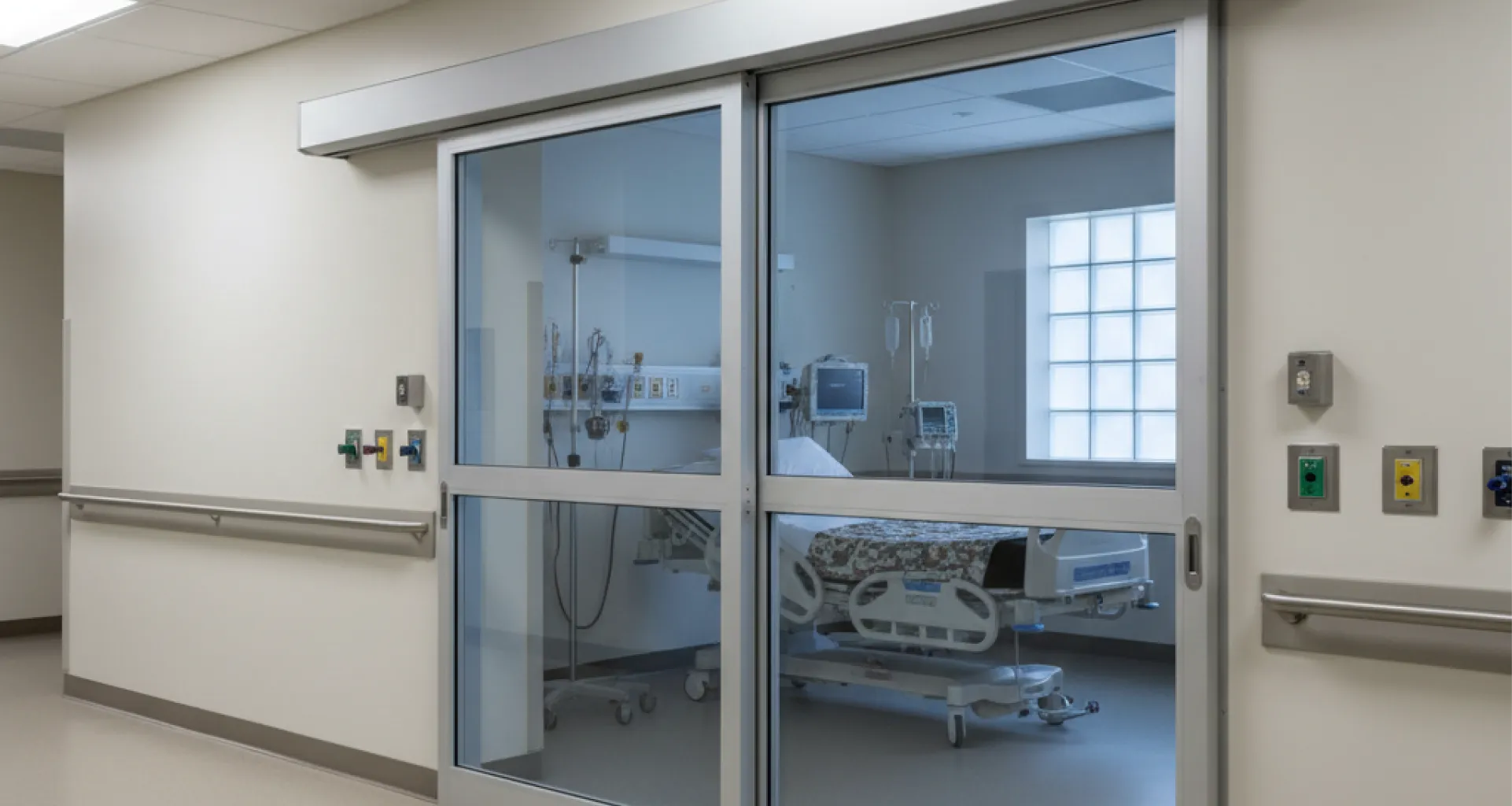
Seal and Gasket Replacement
Perimeter seals, bottom seals and head gaskets are the components that decide whether a hermetic or isolation door is doing its job. They harden, compress and tear, and unlike a mechanical fault they degrade without any visible change to how the door moves.
We replace perimeter and bottom seals, head and jamb gaskets and drop seals, and check compression across the full closed position rather than at one point. On isolation and pressure rooms this is usually the single most valuable thing that gets done during a service visit.
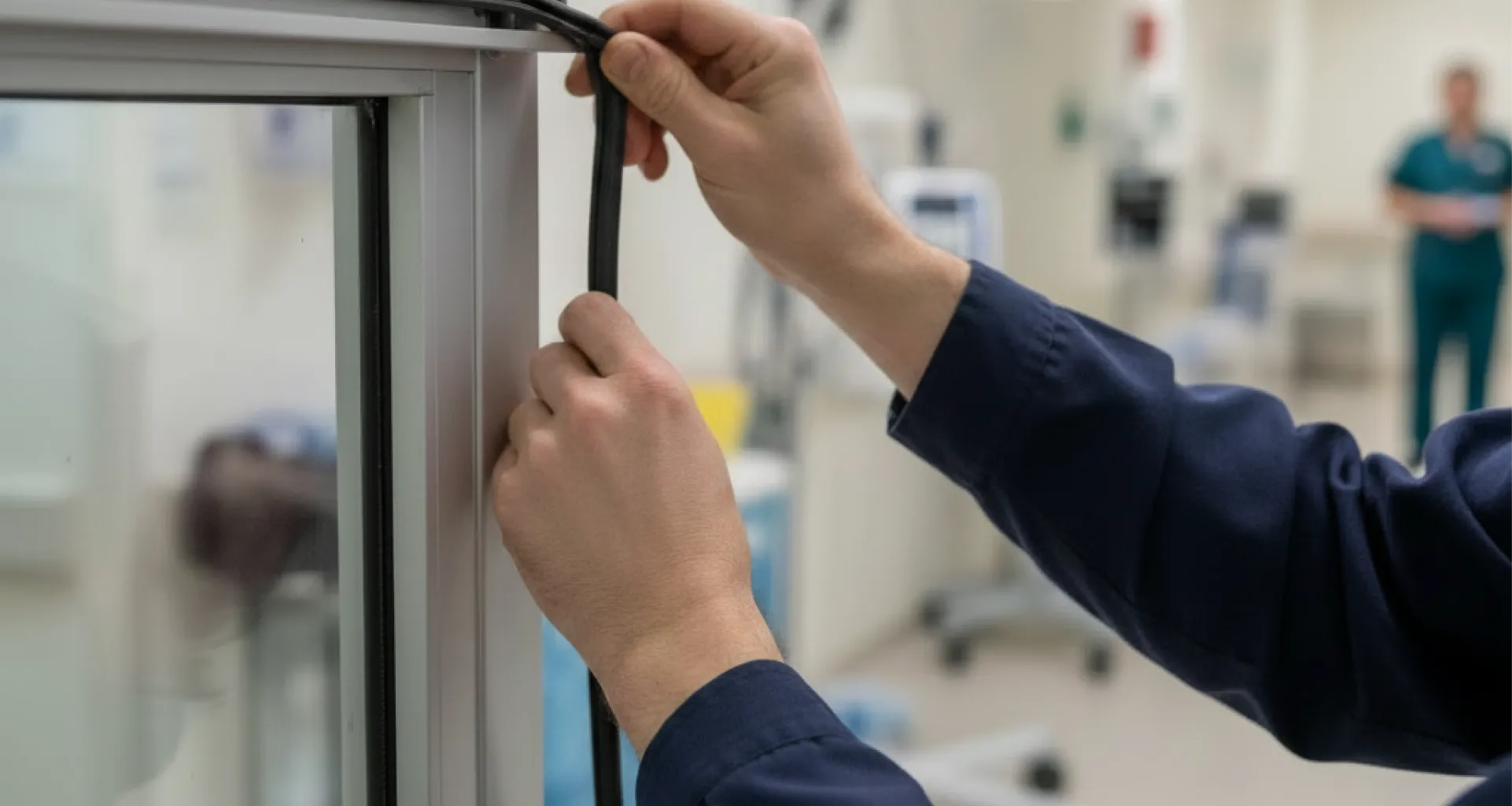
Breakaway Leaf Service
The breakaway leaf is what turns a patient room slider into an opening a bed can pass through. It has to release under a reasonable force, swing clear, and latch back into place afterwards — every time, in an emergency, without anyone thinking about it.
Breakaway hinges, latches, catches and stops are serviced and replaced where they have stiffened or worn, and the release is tested from both directions before the technician leaves the room.
Working Inside a Live Unit
Almost none of this work can wait for a ward to empty. Service is scheduled with the unit rather than around it, one room at a time, with containment in place where the work generates dust and the opening left usable or covered while the work is in progress.
Where a room has to stay sealed, we plan the work into a downtime the department chooses rather than opening it on short notice. Access, infection control requirements and escort arrangements are agreed before the technician arrives, not at the door.
Touchless Activation in Patient Areas
Wave actuators and hands-free activation are fitted to patient room, corridor and support doors where hand contact with surfaces is a concern. They mount to the operator that is already in place, so a whole unit can be converted without changing any doors.
Foot-activated and elbow-height actuators are used where staff routinely approach with full hands, particularly around clean supply and sterile storage.
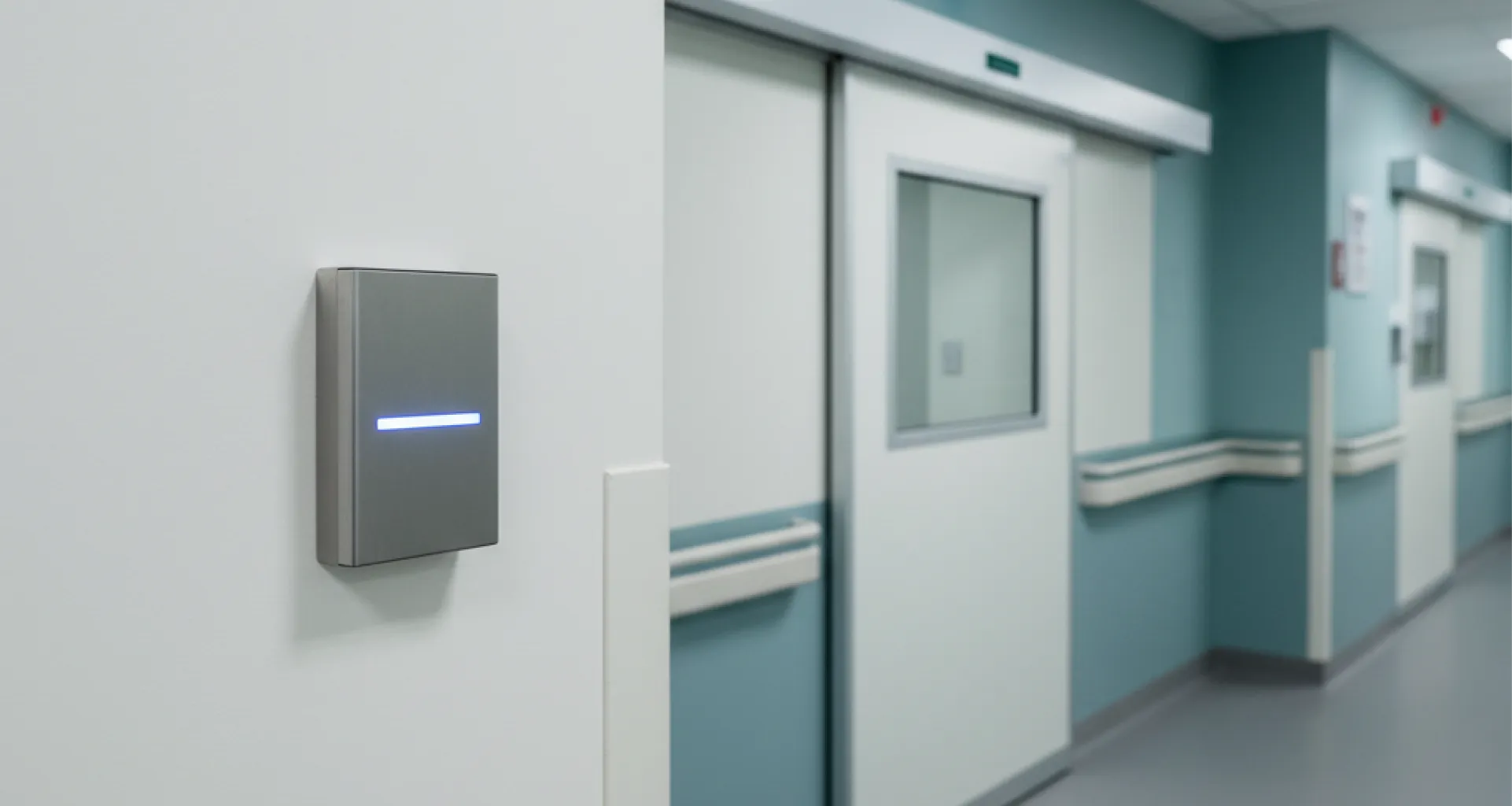
Installation and Replacement
New ICU and hermetic doors are installed into both new and existing openings, and older units are replaced with current systems that hold their seal and run quietly. Replacement is normally staged room by room so the unit never loses more than one bay at a time.
Manual ICU doors are converted to automatic operation where the department wants hands-free access, provided the frame and header can carry an operator and the room’s pressure requirements allow it.
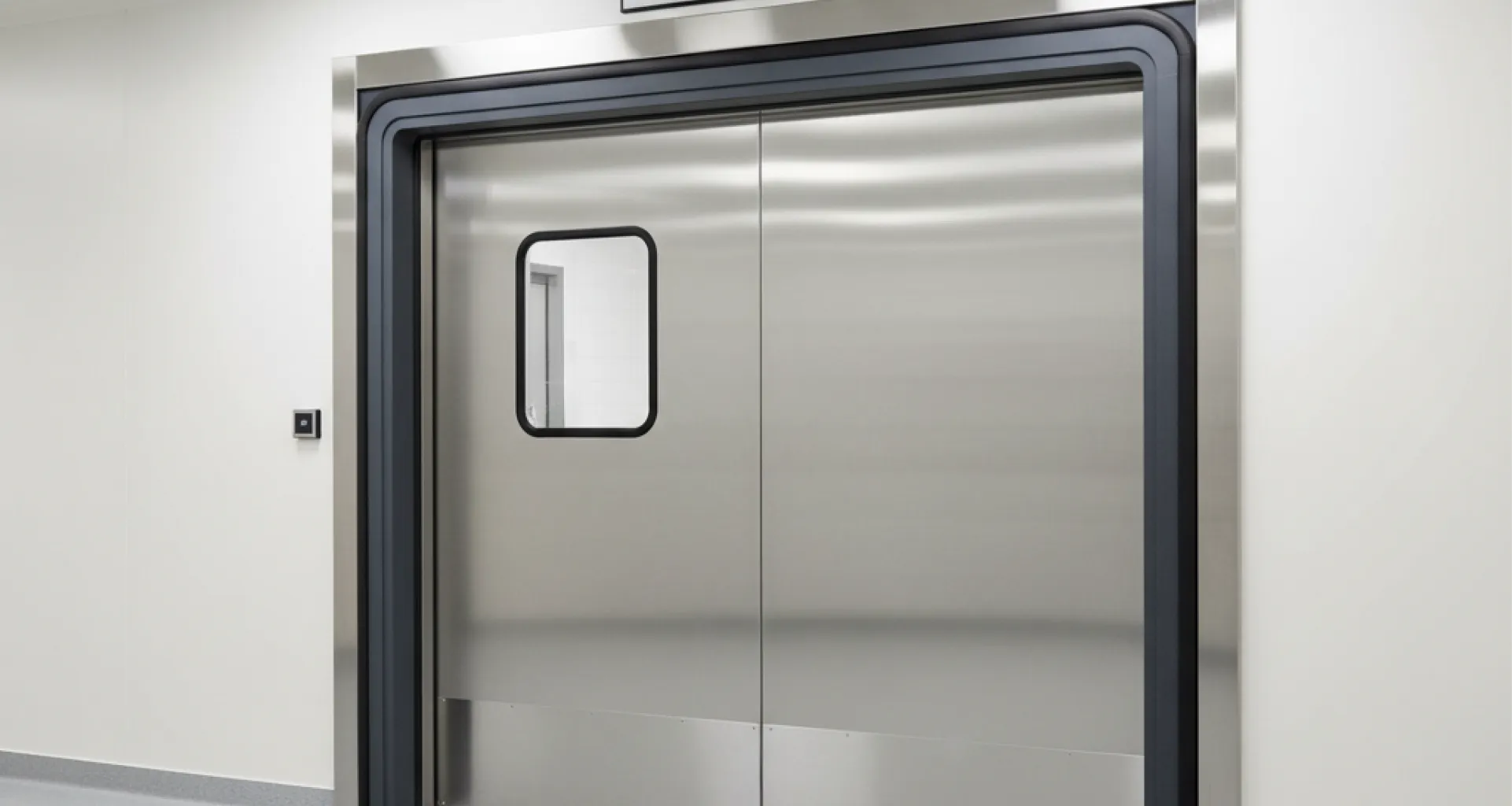
Scheduled Maintenance in Clinical Areas
Clinical doors are best maintained on a fixed interval agreed with the department, because the components that matter most — seals, gaskets and breakaway hardware — degrade on a timeline rather than failing suddenly.
Each visit covers seal and gasket condition and compression, breakaway release and re-latch, drive and track condition, speed and hold-open settings, and touchless actuator function, all carried out room by room without interrupting the unit.
Quiet Operation and Why It Matters Clinically
In a patient area, noise is not a comfort issue. Doors that rattle, thump on close or squeal on the track affect rest, and on a ward where doors cycle every few minutes it accumulates through the night.
Noise on these systems comes from worn carriers and guides, a drive losing regulation, hardened seals dragging on the frame, or a breakaway leaf that no longer sits flush. All of them are serviceable, and all of them are usually audible long before they become a mechanical fault.
We treat a noisy patient room door as a work order rather than as a cosmetic complaint.
Coordinating With Infection Prevention and Facilities
Work in clinical spaces is agreed before the technician arrives — which rooms, when, what containment is required, who escorts, and what happens if the opening cannot be closed at the end of the shift.
We plan the sequence so the department loses one room at a time rather than a corridor, and we finish and hand back each opening before starting the next. Where a room has to stay sealed through the work, the job goes into a scheduled downtime rather than being fitted around the ward’s day.
Cleanroom, Pharmacy and Laboratory Doors
The same discipline applies outside patient areas. Compounding pharmacies, laboratories, sterile processing and cleanroom suites all rely on doors that seal, interlock and hold a pressure differential rather than simply close.
We service interlocked pairs so both leaves cannot open together, replace seals and gaskets that have lost compression, and set speeds so a door does not disturb airflow when it opens. Pass-throughs, gowning room doors and airlock sequences are covered on the same visit.
Replacing Clinical Doors Without Closing the Unit
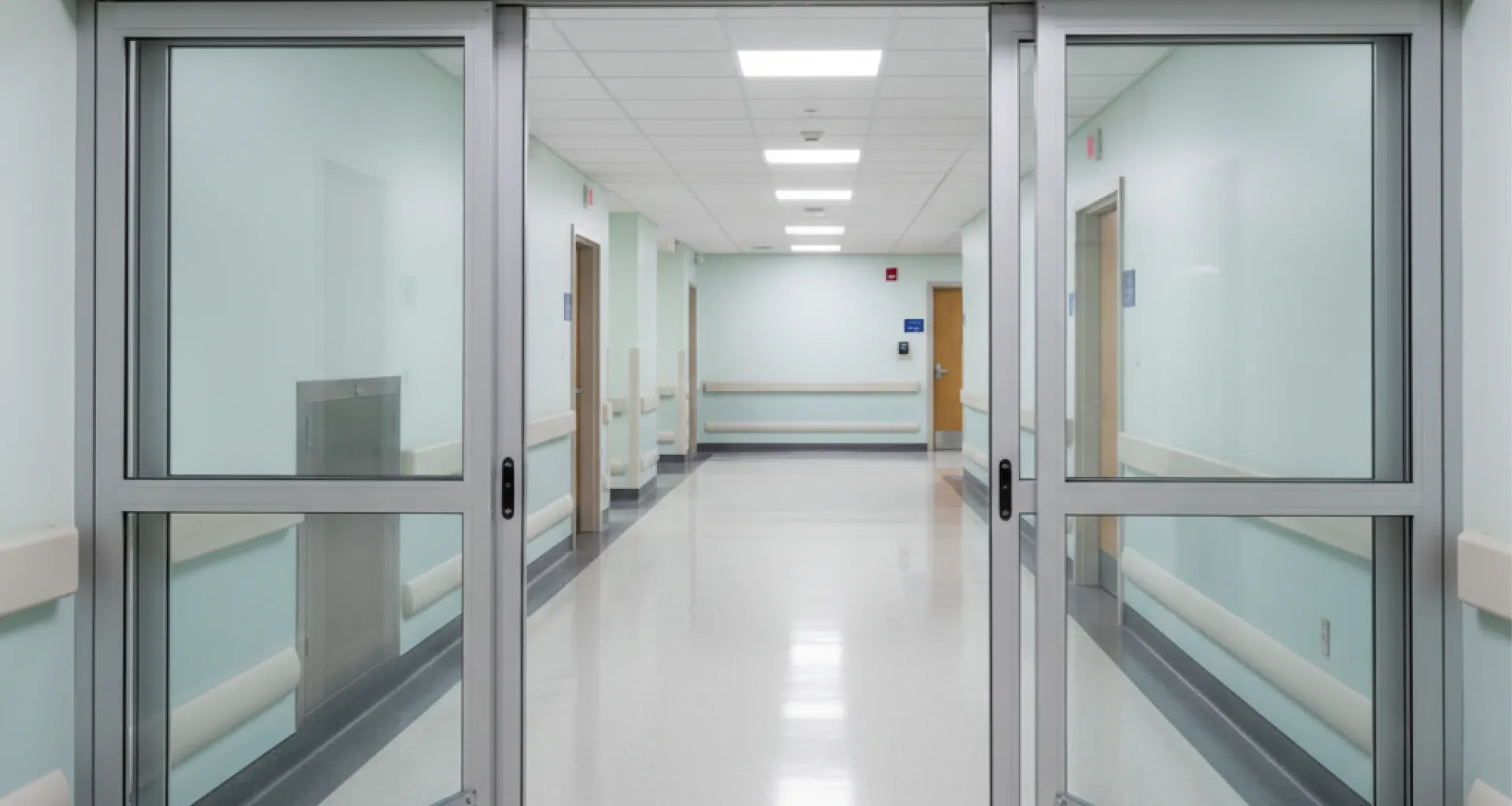
Clinical door replacement is planned room by room, in windows the department chooses, with containment in place and the room handed back complete before the next one starts.
In most cases the new door goes into the existing frame, which keeps each room out of use for hours rather than days. Where a whole unit is being refurbished, we sequence the openings so the ward never loses more than one bay at a time and the corridor route stays clear throughout.
Service Areas
Texas — Austin, Cedar Park, Cypress, Richardson, McKinney, Sherman, Paris. Connecticut — Hartford, New Haven, Danbury, Greenwich. Alabama — Birmingham.
Tell us the unit and the door type, and we will plan the work around the ward’s schedule.
Our Services
Frequently Asked Questions
What makes an ICU door different from a normal sliding door?
It runs quietly, seals against the frame, and has a breakaway leaf so a bed or crash cart can pass through the full opening. The drive and hardware are built for that duty rather than for street traffic.
What is a hermetically sealed door used for?
Operating rooms, imaging suites and sterile processing, where the door has to hold the room’s pressure and air seal rather than just close the opening.
Can these doors be serviced while the unit is occupied?
Yes. Work is scheduled with the unit, done one room at a time, with containment and infection control measures agreed in advance.
Can existing ICU doors be made touchless?
Yes. Wave actuators mount to the existing operator, so a whole unit can be converted without replacing doors.
Do you service isolation and negative pressure room doors?
Yes, including seal and gasket replacement, which is what usually degrades first on those rooms and what most affects their performance.
Can a manual ICU door be converted to automatic?
Often yes, provided the frame and header can carry an operator and the room’s pressure and clinical requirements allow it.
How often should clinical doors be serviced?
On a fixed interval agreed with the department. Seals, gaskets and breakaway hardware degrade gradually, so they are best caught on schedule rather than on failure.