(855) 676-0881

Choosing the Right Screen Door: The Complete Architectural Guide


Published: Sep 28, 2026

For homeowners and business owners, selecting a screen door often feels like a compromise between structural aesthetics and functional ventilation. You want to invite fresh air in, but you don’t want to ruin your property’s curb appeal or risk a flimsy DIY setup that falls apart in a single season.

The choice comes down to three crucial variables: your frame’s architectural style, daily traffic frequency, and regional climate demands. By understanding the mechanical systems, material grades, and engineering options available, you can select a screen door that enhances your space while offering seamless, long-term durability.
The Core Screen Door Types


Navigating the market requires understanding how different screen configurations handle daily operations.

  • Hinged Screen Doors: The traditional swing door. Usually built from wood, vinyl, or extruded aluminum, these require a clear swing radius but offer a timeless look and simple mechanical reliability.
  • Sliding Screen Doors: Commonly paired with sliding patio glass doors. A frequent point of frustration is plastic track wheels sticking or jumping. When investing in sliding and patio door installation, upgrading to heavy-duty brass or stainless steel ball-bearing rollers prevents track failures.
  • Retractable Screen Doors: These use a spring-tensioned canister to pull the mesh out when needed and hide it when not in use. They preserve your architectural views but require high-quality tensioning springs to prevent “lazy retraction.”
  • Magnetic Screen Doors: An affordable, hands-free option utilizing central magnetic seams. They are highly functional for temporary setups but lack structural wind resistance and are prone to adhesive failure on rough frames.
  • Storm-Screen Combo Doors: Heavy-duty, rigid doors featuring interchangeable glass and screen panels. If your property faces harsh winter winds and hot summers, opting for professional storm door replacement provides the perfect seasonal energy shield and airflow hybrid.
  • Security Screen Doors: Built with high-tensile steel frames and marine-grade woven steel mesh. If your goal is to replace entry doors with more secure options without sacrificing natural ventilation, these systems provide cut-proof, impact-resistant security.

If your existing frame is structurally sound but the mesh has degraded, you may wonder: can you replace the screen on a screen door? Yes, professional technicians can easily rescreen your existing frames with upgraded materials, saving you the expense of a full frame replacement.

Material Science Matrix: Frame and Mesh Chemistry


Your screen door’s longevity depends heavily on the materials used in its construction. Extruded aluminum (specifically 6063-T6 aircraft-grade) offers the highest strength-to-weight ratio and corrosion resistance. Wood frames offer unmatched historic charm but will expand, contract, and eventually crack in high-humidity climates. Vinyl or PVC frames are cost-effective but can warp and degrade under intense UV exposure.

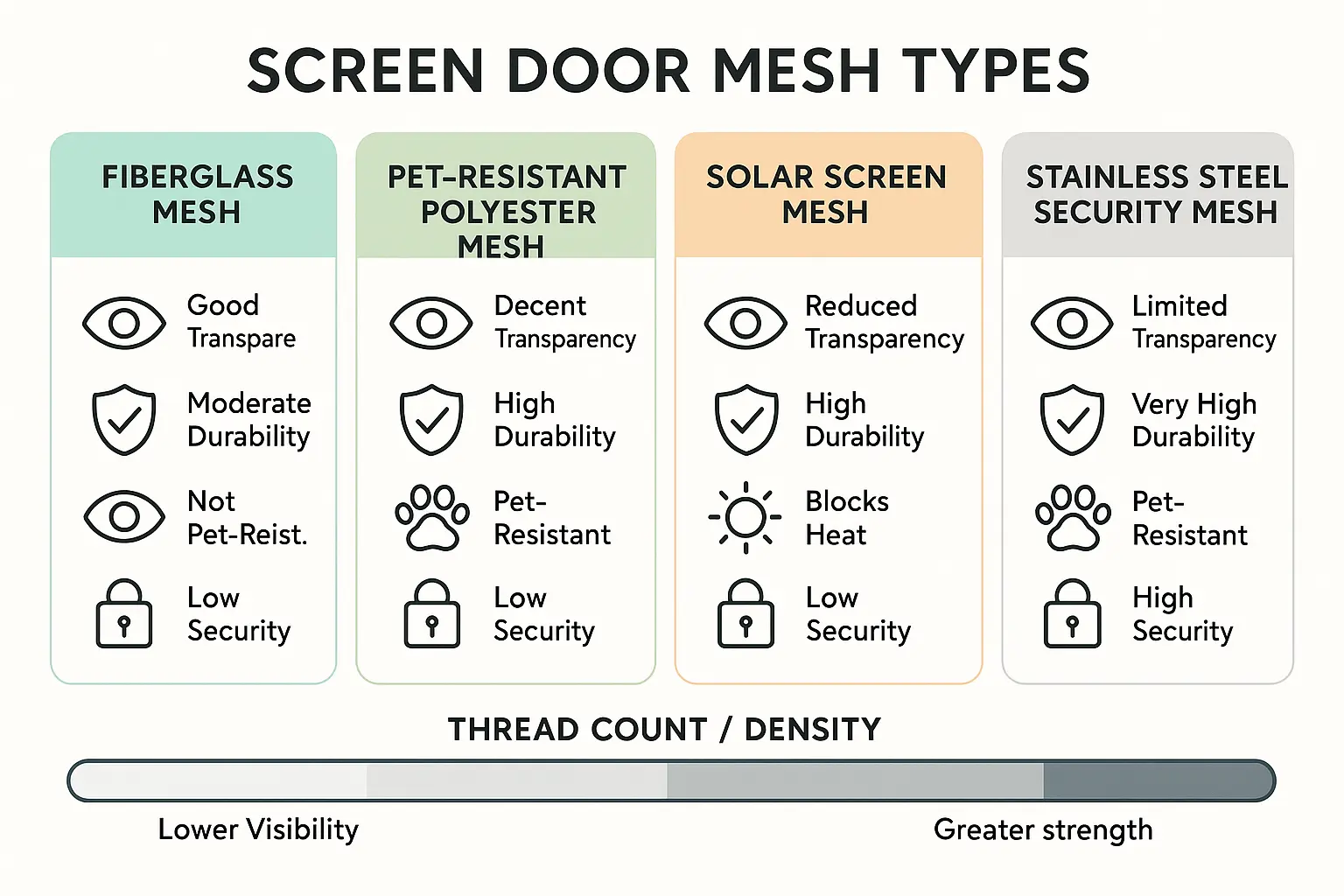
The choice of mesh is equally critical:

  • Fiberglass Mesh: Highly transparent and budget-friendly, but prone to stretching and tearing under minimal claw pressure.
  • Vinyl-Coated Polyester (Tuff-Screen/Pet Mesh): Up to seven times stronger than standard fiberglass. It resists tears from dog and cat claws while maintaining excellent visibility.
  • Solar Screen Mesh: Specifically woven to block 80% to 90% of solar heat gain and glare, significantly reducing cooling costs in sun-drenched entryways.
  • Stainless Steel Security Mesh: Woven marine-grade 316 stainless steel that cannot be cut with knives or torn by force, offering premium security.

This infographic visually compares common screen mesh materials used in screen doors, highlighting their strengths such as pet durability, solar heat blocking, and security, helping homeowners pick the best mesh for their needs.

Understanding these material tiers also helps demystify the price spectrum. While basic magnetic screens cost between $10 and $30, mid-tier DIY aluminum retractable frames range from $199 to $379. Premium, custom-installed architectural systems built from aircraft-grade aluminum and specialized mesh represent a lifetime investment ranging from $550 to $1,800+.

The French Door and Double Opening Challenge


French doors are an architectural highlight, but installing screens on them has historically been difficult. Standard sliding screens require a permanent center post, which destroys the wide, unobstructed view that French doors are designed to provide.

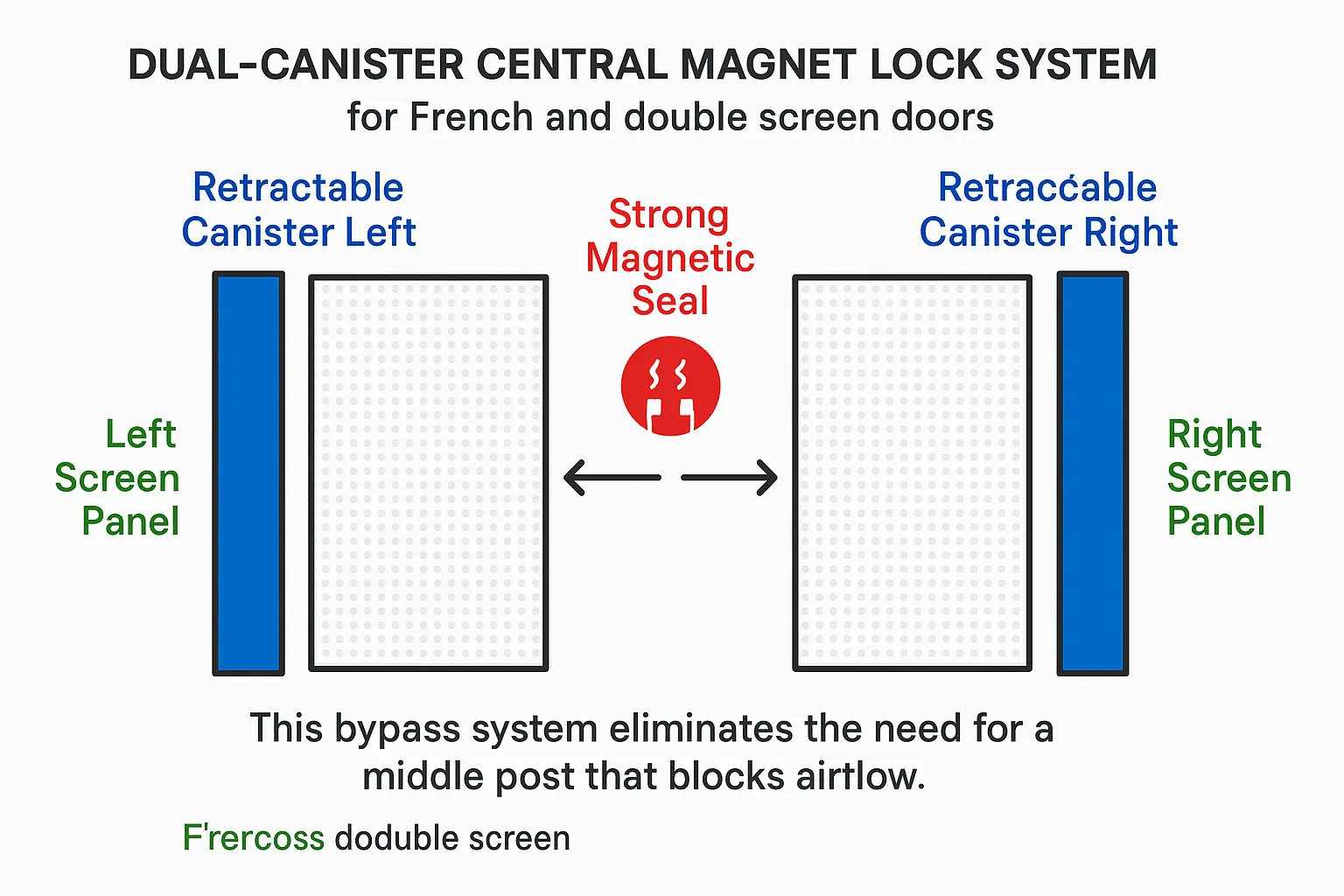
To solve this, modern architectural designs utilize a Dual-Canister Central Magnet Lock System.

This diagram explains how the Dual-Canister Central Magnet Lock System works on French or double doors by allowing retractable screens to meet in the center with a strong magnetic seal, preserving ventilation and providing an unobstructed view without a permanent center post.

In this configuration, two independent retractable canisters are mounted on the left and right outer jambs. When deployed, the screens pull toward the center of the opening and meet with a continuous, high-strength magnetic seal. When retracted, the screens pull completely back into their slim housings, leaving your double-door view fully clear.

Substrate-Specific Installation Decisions


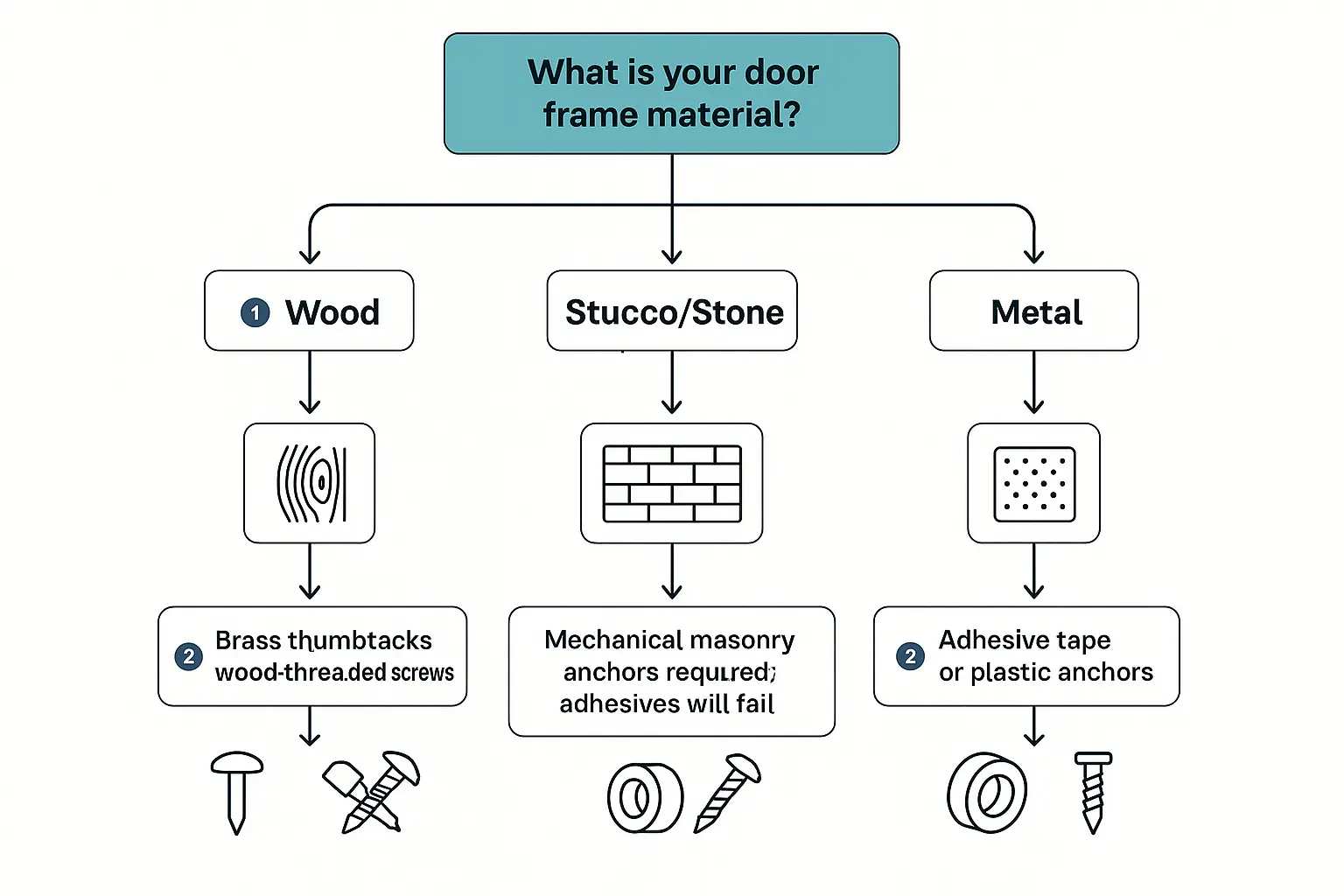
A major cause of screen door failure is improper mounting. Different building substrates require highly specific anchoring methods to ensure the door remains square and operates smoothly.

This flowchart guides users through choosing the right installation method for screen doors depending on their door frame material, helping prevent common adhesive failure and mechanical issues.

Using adhesives on uneven surfaces like stucco or brick mold will result in structural failure under summer heat. Similarly, mounting heavy-traffic doors on residential or commercial frames requires specialized fasteners. If you are retrofitting a business entryway, securing the screen track requires professional commercial door repair techniques to mount metal-to-metal casings securely without stripping the substrate.

Maintenance and Performance Lifespan


To keep your screen doors operating smoothly year after year, follow these two critical maintenance rules:

  1. Keep the Tracks Clean: Debris, pet hair, and dirt will clog sliding and retractable bottom tracks, causing the glides to stick or jump. Vacuum the tracks seasonally and spray them with a dry silicone lubricant. Avoid wet lubricants like WD-40, which attract dirt and compound the sticking issue.
  2. Monitor Tension Springs: Retractable screens rely on internal spring tension. If your screen begins to retract lazily, the spring tension may need to be adjusted or calibrated by a professional technician to prevent track damage.

Whether you need a simple rescreening, a storm door replacement, or a custom double-door retractable installation, working with experienced professionals ensures your doors operate perfectly.

Frequently Asked Questions


How do I prevent my retractable screen door from slamming?

High-quality retractable screens feature integrated speed-reduction dampers that slow the screen down as it approaches the canister. If your screen is slamming, the internal spring tension may be too high, or the dampening system may require adjustment.

Which screen door mesh is best for pets?

Vinyl-coated polyester mesh (often called Pet Screen or Tuff-Screen) is the best option. It is roughly seven times stronger than standard fiberglass, allowing it to withstand claw scratches and impacts without tearing or stretching out of shape.

Can I install a screen door on an out-swing door?

Yes. If your primary entry door swings outward, the screen door must be mounted on the interior side of the door frame. Retractable screens are ideal for this application, as their low-profile canisters blend seamlessly with your interior trim.