(855) 676-0881

Master Entry Door Customization & Curb Appeal Guide


Published: Oct 14, 2026

Selecting a new entry door sits at the intersection of home aesthetics, security, and long-term asset value. Real estate staging research indicates that 83% of home buyers cite the main entrance as a primary factor when forming a first impression of curb appeal. Upgrading your entry system is not merely a cosmetic project—it is one of the highest-yielding exterior investments you can make.

According to Remodeling Magazine’s Cost vs. Value Report, upgraded steel and fiberglass door replacements yield up to a 100% cost recovery at resale. Furthermore, Zillow market research reveals that homes featuring charcoal or matte black front doors sell for up to $6,000 more than expected. Achieving these returns requires balancing architectural design, functional glass, durable hardware, and structural efficiency.
Architectural Style Matching Engine


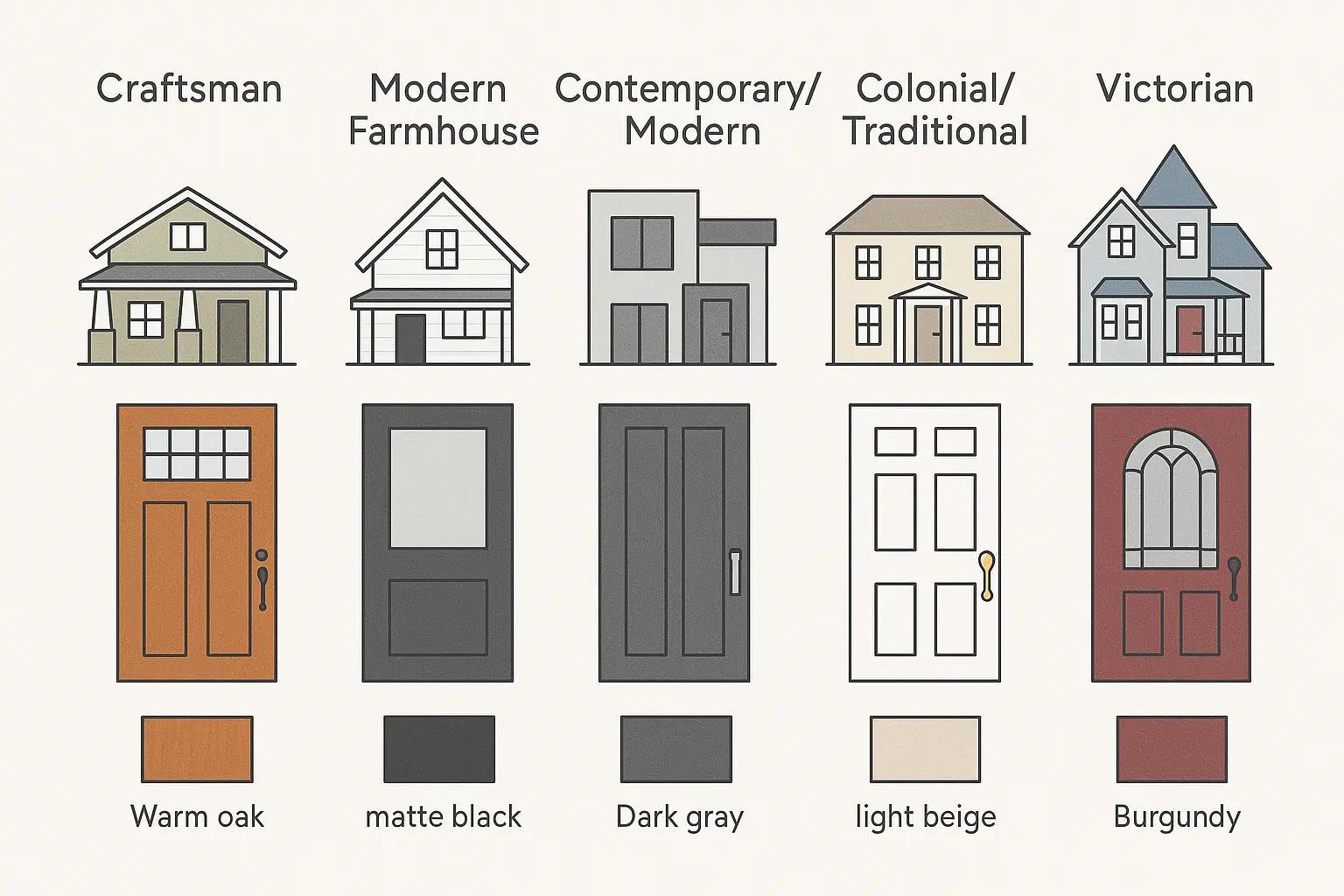
To maximize curb appeal, your front entrance must harmonize with your home’s structural style. Indiscriminately pairing modern hardware with traditional millwork creates visual friction that detracts from home value. Evaluating options through a structured comparison of custom doors vs ready-made doors allows you to choose grid patterns, panel profiles, and wood grains aligned with your home’s architecture.

Architectural Style Matching Matrix: Understand how to select entry door design elements and colors that harmonize with specific home styles for cohesive curb appeal.

  • Craftsman Homes: Feature recessed paneling, dentil molding, and upper three-lite glass inserts. Warm oak finishes paired with oil-rubbed bronze hardware preserve historic integrity.
  • Modern Farmhouse: Benefits from clean vertical planking, 4-lite to 6-lite glass grids, matte black handlesets, and high-contrast color choices like slate or midnight black.
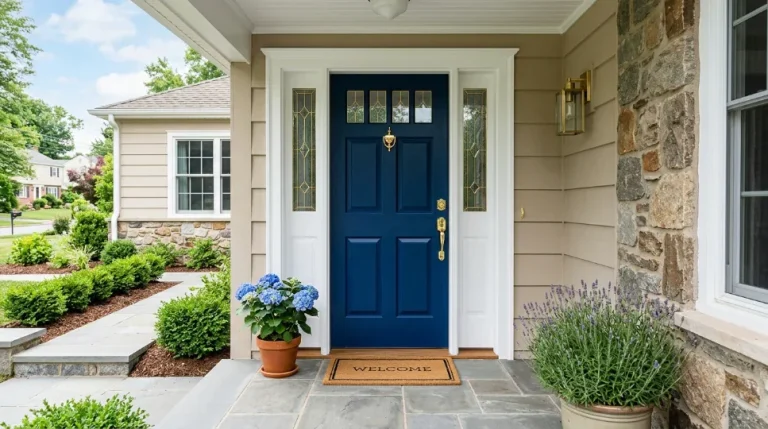
  • Colonial & Traditional: Demands classic 6-panel symmetry, oval or crown transom glass, polished brass accenting, and deep jewel tones like hunter green or navy.
  • Contemporary: Embraces full-lite glass, large-scale pivot configurations, extended vertical pull bars, and neutral satin nickel or graphite palettes.

When planning a replacement front door, matching architectural proportions prevents common installation missteps, such as overwhelming a compact porch or undersizing a grand portico.

Glass Insert Customization: Balancing Natural Light & Privacy


Decorative glass transforms dark entryways, but selecting glass requires balancing privacy against daylight transmission.

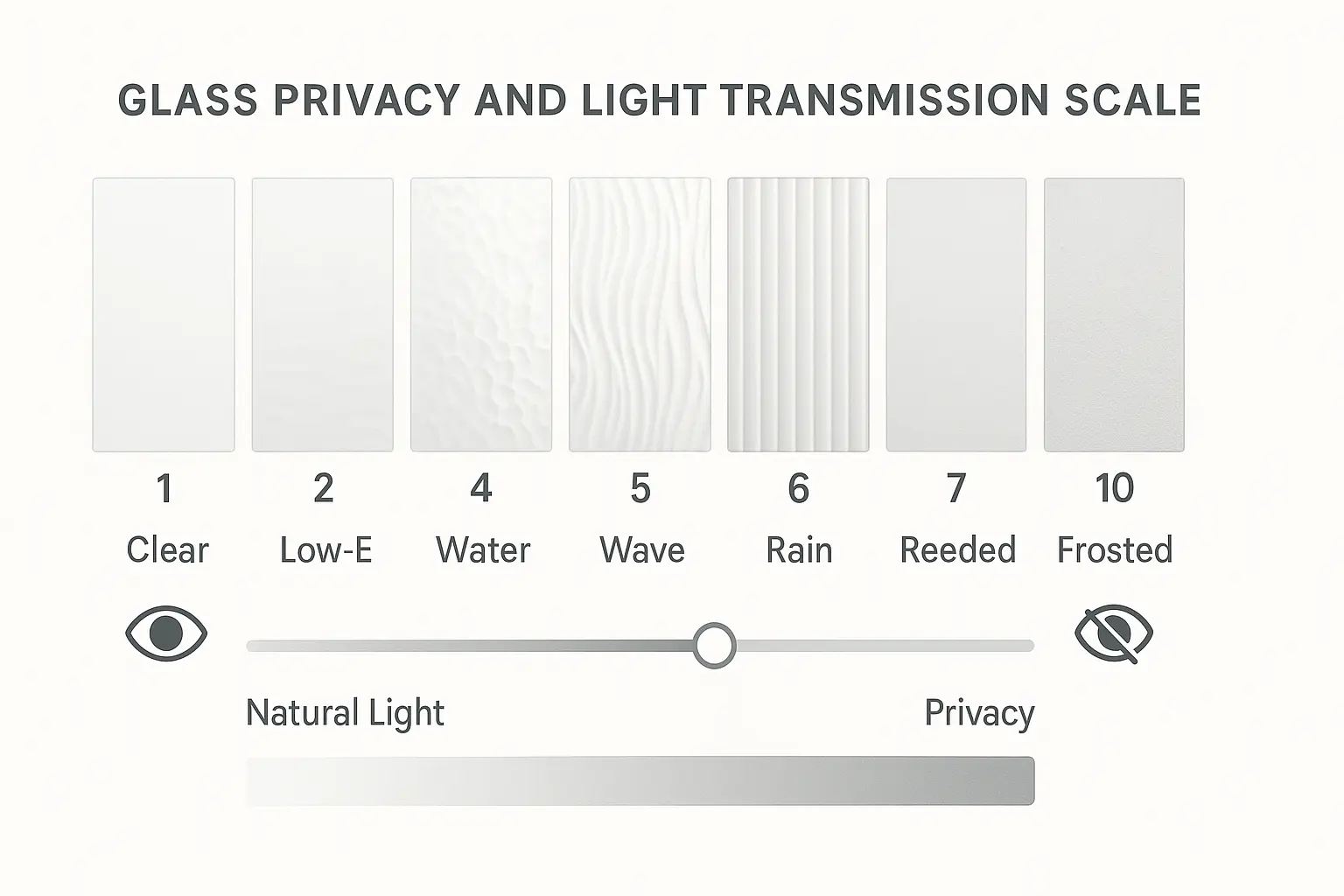
Glass Privacy Scale: Visually balance natural light entry with desired privacy by understanding the spectrum of decorative glass insert options from transparent to opaque.

Evaluating options on a 1 to 10 Glass Privacy Scale provides clarity:

  • Level 1–3 (Clear Low-E Glass): Maximum light transmission with total visual clarity. Ideal for isolated properties or controlled sightlines.
  • Level 4–6 (Water, Pear, & Wave Glass): Gentle light distortion that blurs interior objects while allowing bright daylight diffusion.
  • Level 7–8 (Rain & Reeded Glass): Vertical textured patterns providing substantial privacy without sacrificing natural illumination.
  • Level 9–10 (Acid-Etched & Frosted Glass): Near-total opacity that guarantees interior privacy day and night.

Integrating transoms or sidelights expands natural lighting without reducing core security. Furthermore, choosing Low-E insulated dual-pane glass enhances front door energy efficiency and weatherproofing, cutting HVAC losses by up to 15%. Selecting the proper coating is also critical when determining the best front door for direct sunlight to prevent interior thermal transfer and finish fading.

Decorative Hardware & Finish Selector


Door hardware serves as the visual hardware anchor of your entrance. Beyond aesthetic appeal, hardware choices dictate physical perimeter security and weather resistance.

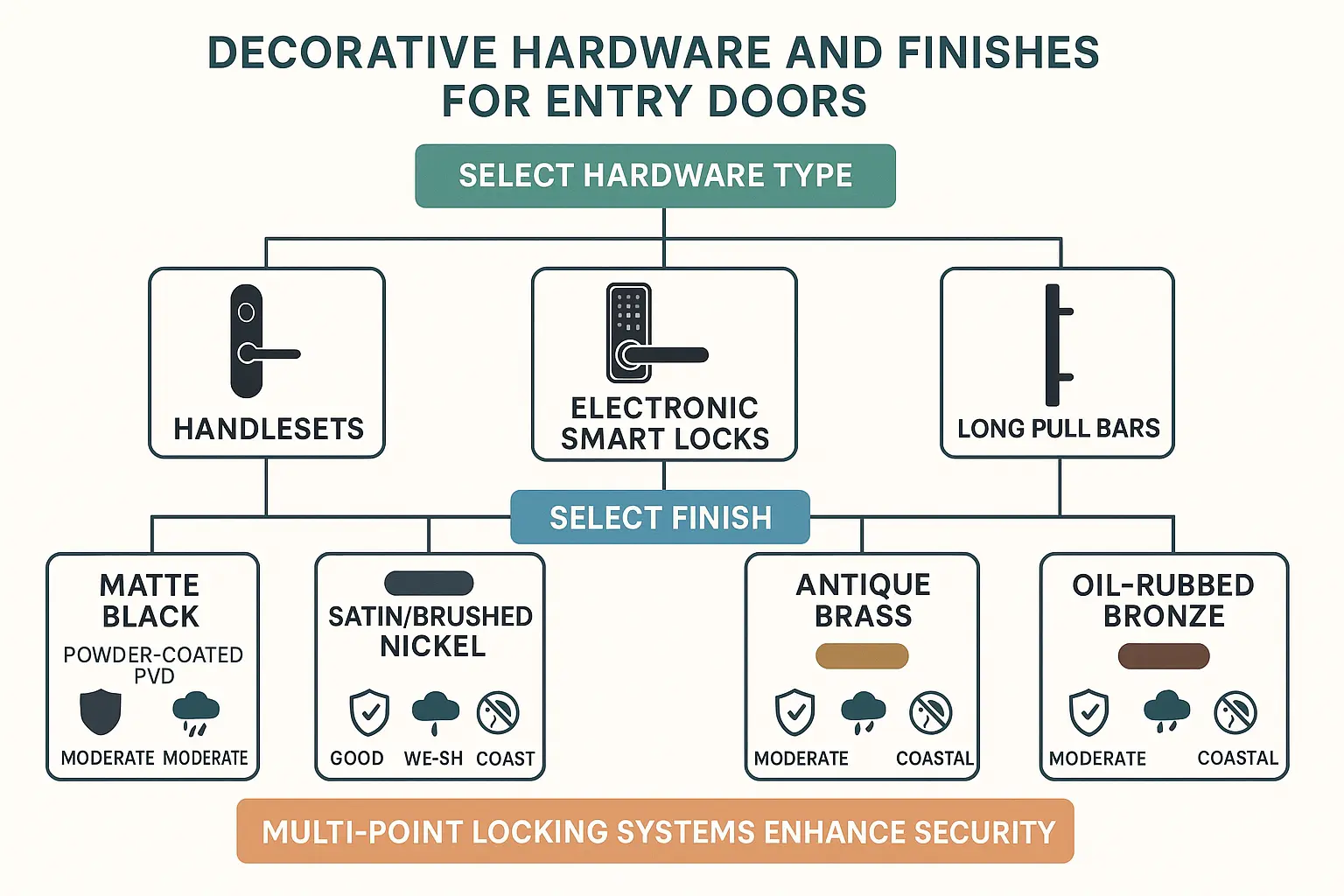
Decorative Hardware Selection Flowchart: Learn how to choose entry door handlesets and finishes that combine aesthetic appeal with durable performance in your climate.

When specifying handlesets and deadbolts, material finishing technology determines long-term appearance:

  • PVD (Physical Vapor Deposition) Finishes: Bonds finishing alloys at an atomic level, offering ultimate resistance against coastal salt fog and corrosion.
  • Powder-Coated Finishes: Delivers smooth, uniform matte black or colored appearances ideal for modern designs, offering high scratch resistance.
  • Living Finishes (Oil-Rubbed Bronze): Designed to age dynamically over time, developing a rich patina preferred on rustic or historic properties.

Pairing custom hardware with multi-point locking systems enhances structural stability, ensuring complete entry door security reinforcement. Whether selecting low-maintenance fiberglass entry doors or opting for maximum impact protection with steel entry door security and efficiency, high-performance hardware preserves mechanical function through extreme seasonal temperature changes.

Elevate Your Entrance with Expert Precision


Selecting and configuring a custom entry door requires aligning style preferences with long-term performance specs. Partnering with experienced professionals ensures your installation achieves precise weatherization sealing and frame alignment. Schedule a consultation with our licensed technicians for a professional front door replacement and installation evaluation tailored to your home.

Frequently Asked Questions


What front door colors yield the highest return on investment at resale?

Market data demonstrates that neutral dark colors, specifically charcoal gray, deep black, and dark navy, generate the highest resale premiums. These shade options create high-contrast focal points against classic exterior cladding finishes.

Can I install a decorative glass insert without compromising home security?

Yes. Modern entry door glass inserts utilize multi-layer tempered safety glass rated for impact resistance. When combined with multi-point lock hardware and reinforced framing, decorative glass maintains perimeter integrity.

How do I choose between fiberglass, steel, and wood for custom entry doors?

Fiberglass provides the optimal balance of rot resistance, thermal insulation, and convincing wood-grain textures with minimal maintenance. Steel offers maximum budget-friendly security, while natural wood provides unmatched authentic historic warmth but requires periodic re-staining.