Steel Entry Door Engineering Guide: Security and Efficiency


Published: Aug 19, 2026

Choosing a front door involves balancing aesthetics, energy costs, and home security. For many homeowners, the search starts with a simple choice between wood, fiberglass, and steel. While steel entry doors are often associated with commercial toughness, modern residential steel doors combine high-end design with advanced structural engineering.

This guide decodes the mechanics of premium steel doors to help you make an informed investment.


The Physics of Security - Steel Gauge Decoded


The strength of a steel door is determined by its steel gauge—the thickness of the metal skin. In the steel industry, a lower gauge number indicates thicker steel.
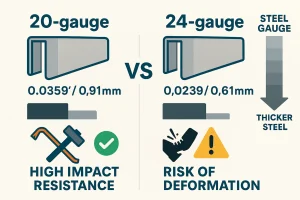
20-gauge steel doors are significantly thicker and more impact-resistant than 24-gauge doors, offering nearly 49% more steel mass and superior protection against dents and break-ins.

Most standard big-box entry doors use 24-gauge steel, which has a decimal thickness of approximately 0.0239 inches. While affordable, 24-gauge steel is susceptible to structural warping under extreme temperature changes and can dent from minor impacts like hailstorms or stray sports balls.

In contrast, premium security doors are engineered from 20-gauge steel, which is 0.0359 inches thick. This upgrade provides 49% more steel mass than 24-gauge options. This added density prevents warping, dampens outdoor noise, and increases the structural holding force of the lock-set by over 300%, making forced entry nearly impossible.

To maximize security, premium doors pair heavy-gauge steel with integrated, rigid composite or solid wood “lock blocks.” These internal reinforcements ensure deadbolts anchor into a solid structure rather than thin hollow metal.


Solving the Thermodynamic Equation - Energy Efficiency & Thermal Breaks


A common concern with steel doors is their thermal conductivity. Because metal transfers heat quickly, an uninsulated steel door can lead to drafty hallways, high utility bills, and interior condensation or frost during cold New England winters.

Engineered steel doors solve this using two primary components:

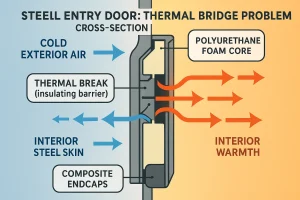
Thermal breaks in steel doors interrupt heat transfer between exterior and interior steel skins, vastly improving energy efficiency and preventing interior condensation or frost.

  • The Thermal Break: This is an insulating barrier made of vinyl or composite material that separates the exterior and interior steel skins. Because the metal skins do not touch, thermal bridging is prevented, stopping heat or cold from transferring through the door.
  • Insulated Cores: High-performance doors are injected with dense polyurethane foam. This insulation system raises the door’s R-value to R-5 or R-6 (matching or exceeding premium fiberglass, and far outperforming solid wood’s R-2 rating).

The Chemistry of Longevity: Defeating Rust and Wear


High-quality steel entries are built to resist moisture and rust. To ensure long-term durability, look for doors made with Galvannealed steel—an iron-zinc alloy coating. Unlike traditional hot-dip galvanizing, which can flake under thermal expansion, galvannealing creates a porous surface that permanently bonds with factory-applied primers and paints.

Additionally, quality manufacturers use mitered top corners and epoxy-primed panels to prevent water from pooling inside the frame. For added defense in areas with direct rain exposure, installing a high-quality storm door replacement can protect your main entry from the elements.


Steel vs. Fiberglass vs. Wood - The Ultimate Mid-Funnel Comparison Matrix


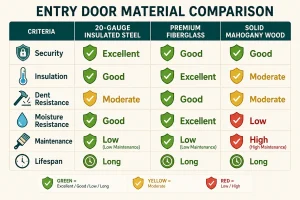
This comparative infographic highlights the strengths and weaknesses of steel, fiberglass, and wood entry doors, helping buyers remember key differences for informed decisions.

When choosing an entry material, comparing the trade-offs in security, upkeep, and lifetime value is essential.

For those seeking maximum security and low maintenance without sacrificing energy efficiency, 20-gauge steel remains the most reliable option. If your existing entry experiences issues like sagging or misalignment, contacting a professional for reliable door repair near me can quickly restore its performance.


Structural Restoration: What Happens If It Dents?


A common hesitation with steel doors is the fear of permanent denting. However, a dented steel door does not require a full replacement. Because of its structural properties, steel can be repaired using standard automotive restoration techniques:

  1. Sanding: Sand the damaged area down to the raw galvannealed steel layer.
  2. Filling: Apply a durable auto-body filler compound (such as Bondo) to level the dent.
  3. Refinishing: Once cured, sand the filler smooth, apply a high-quality exterior primer, and paint the door to match its original finish.

Making the Right Entry Investment


A front door is a long-term investment in your home’s security and curb appeal. By choosing a 20-gauge galvannealed steel door with a true thermal break, you ensure lasting durability and energy efficiency.

For expert selection, commercial applications, or professional installation, consult a specialist to find the ideal setup for your property. From custom residential entries to heavy-duty commercial door repair, working with experienced professionals ensures your installation is precise, secure, and built to last.

Steel Entry Door FAQs


Do steel doors get hot in the summer or cold in the winter?

Only if they lack a thermal break. Engineered steel doors with a thermal break remain neutral to the touch on the interior side, regardless of exterior temperatures.

Can I paint a steel door myself?

Yes. Since premium doors come factory-primed, you can apply high-quality exterior acrylic latex paint. Avoid dark colors in direct sunlight to minimize heat absorption.

Do steel doors rust over time?

Galvannealed steel doors are highly rust-resistant. As long as deep scratches are promptly primed and painted, the underlying zinc-iron alloy prevents rust from spreading.