1. Door Hitting Top Corner or Dragging on Header
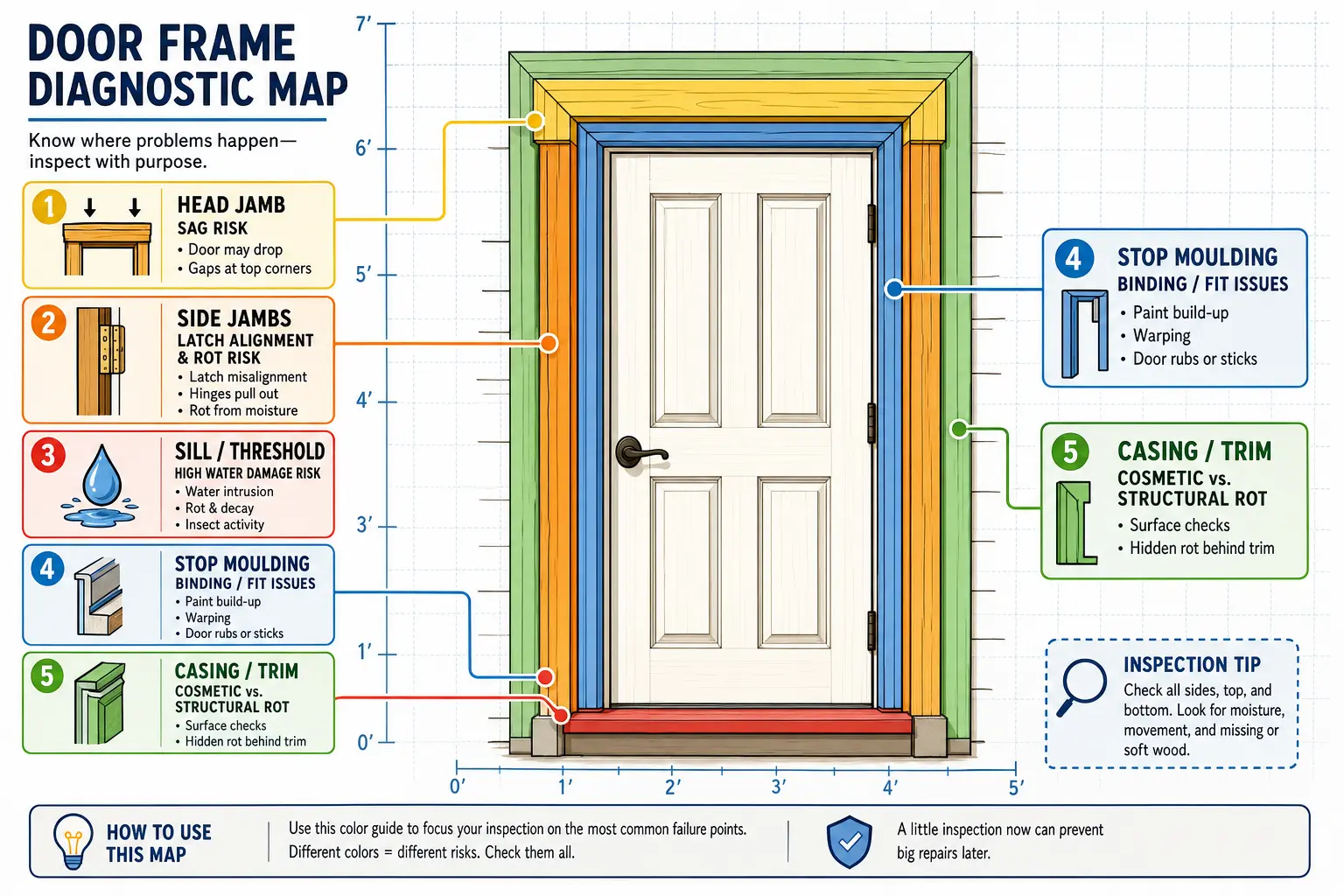
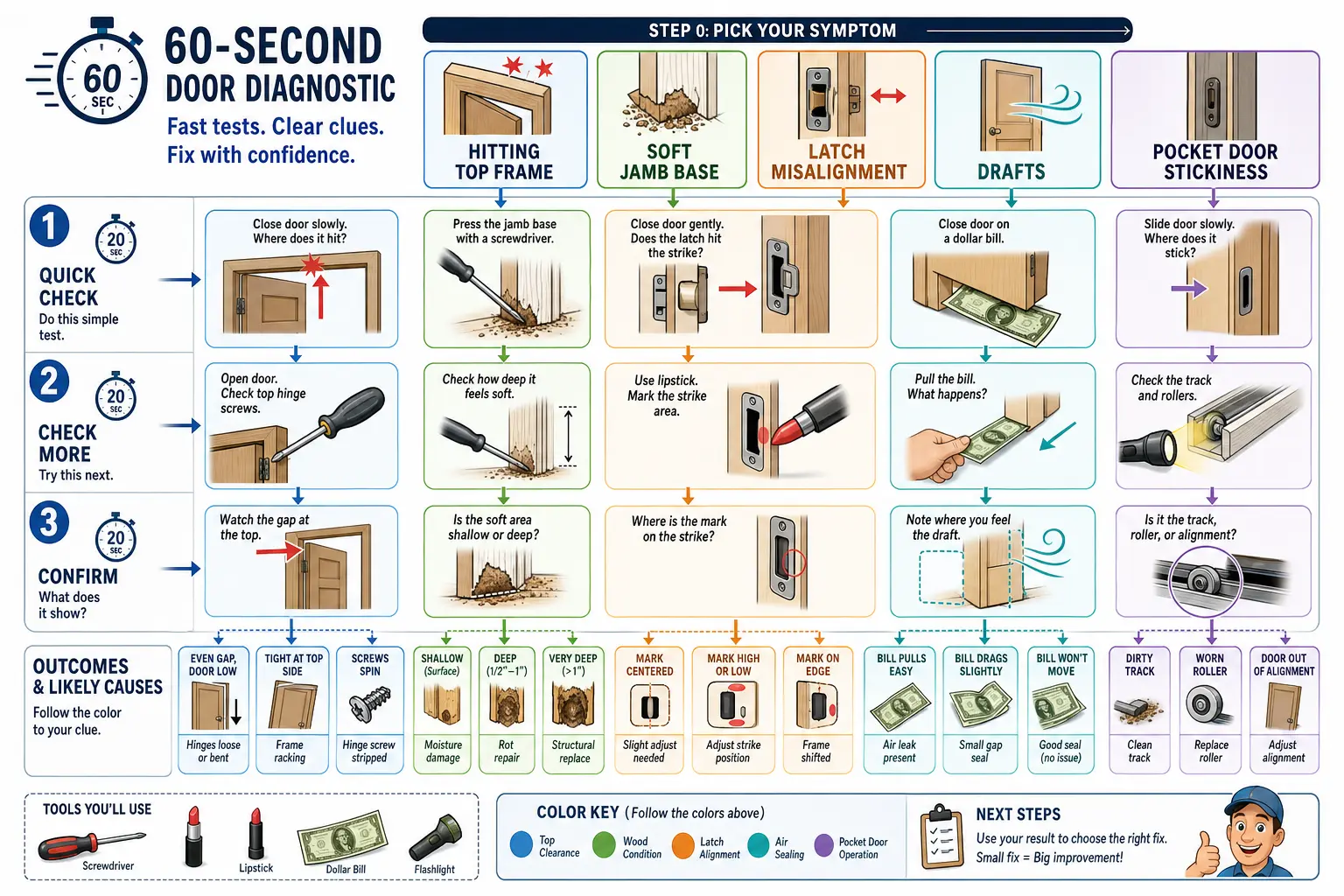
Architectural standards dictate a uniform 1/8-inch (3mm) clearance gap along the head and side jambs. Gap variations exceeding 3/16 inch indicate active frame wracking, loose upper hinge screws, or header deflection. Run a 60-second clearance audit using a gap gauge to pinpoint whether the issue is localized hinge wear or full frame tilt.
2. Soft, Spongy, or Flaking Wood near Thresholds
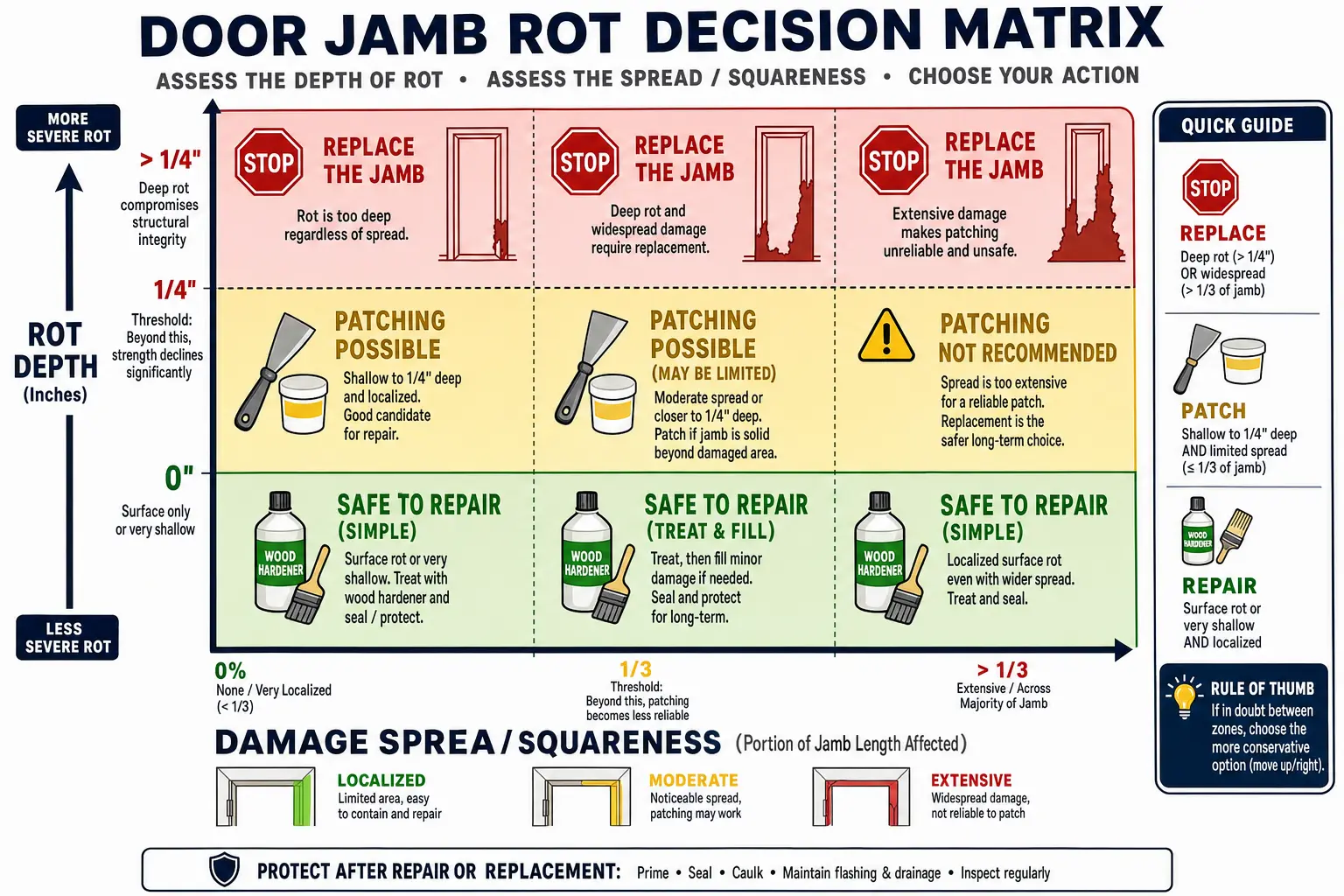
Perform a screwdriver depth probe on suspect timber. It is essential to identify the fungus type present:
- Brown Rot (“Dry Rot”): Causes wood to break down into rigid, cubical fractures with rapid structural load loss. If decay depth exceeds 1/4 inch, structural integrity is lost.
- White Rot: Slowly breaks down lignin, leaving a spongy, stringy texture. If caught early before deep penetration occurs, it can often be consolidated with epoxy.
3. Deadbolt Latch Missing Strike Plate
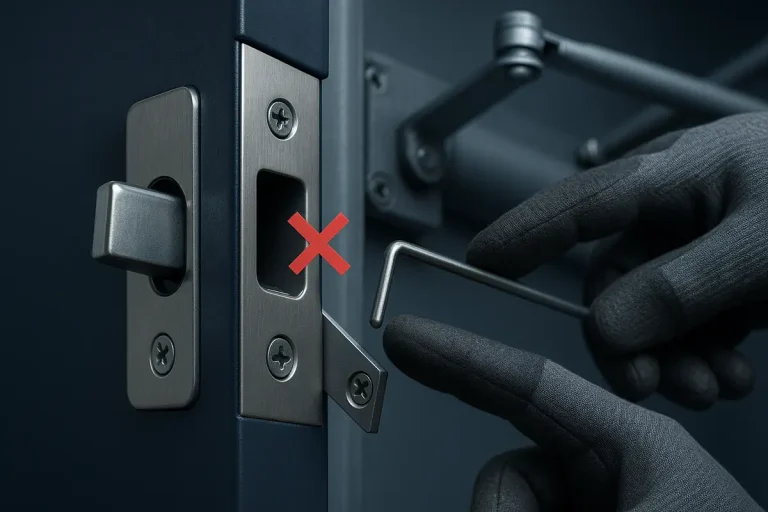
If a door fails to latch cleanly, seasonal thermal movement or jamb bowing is often at fault. Understanding underlying door latch failure mechanisms helps determine whether the strike plate simply needs repositioning or if the side jamb has shifted out of plumb.
4. Gaps, Drafts, and Daylight Leakage
When daylight shows around a closed door, inspect for crushed weatherstripping or warped jamb legs. Learning how to tell if an exterior door is causing drafts or energy loss involves conducting a dollar-bill drag test along the stop moulding to measure seal tension.
5. Pocket Door Binding and Track Resistance
Pocket door frames feature internal split-jamb studs. Binding usually stems from wall cavity flexing, header track sag, or mounting bracket looseness rather than traditional jamb rot.