(855) 676-0881

The Engineering of First Impressions: Guide to Entry Systems


Published: Sep 15, 2026

Choosing an entry door is a balancing act between architectural statement and material engineering. While a door establishes your home’s design language, it must also serve as a high-performance barrier against temperature shifts, moisture, and structural wear.
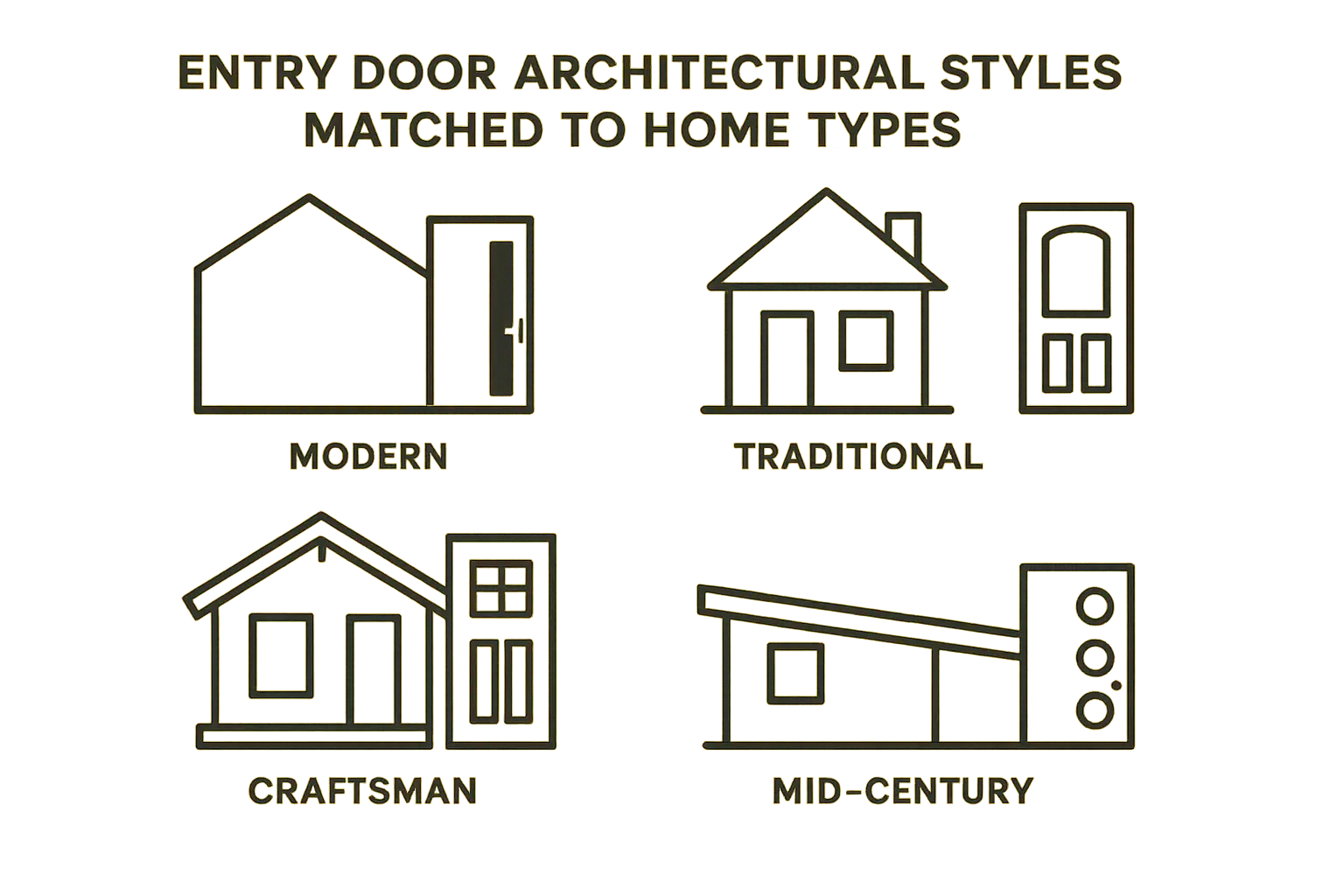
Matching entry door styleMatching your entry door style to your home’s architectural style ensures aesthetic harmony and optimizes curb appeal. This visual clarifies common door styles for popular home types.

For homeowners evaluating replacement doors, focusing on surface aesthetics is rarely enough. True durability depends on material science, thermal properties, and structural engineering.

The Overhang Exposure Test: Mitigating Thermal Damage


Many homeowners overlook how local climate affects material longevity. Solid wood doors exposed to harsh direct sunlight undergo thermal bowing. This occurs when the exterior surface reaches up to 140°F in direct sunlight, while the air-conditioned interior remains at 72°F.

According to AAMA/WDMA performance standards, this thermal differential can cause a structural deflection of up to 1/4 inch, warping the wood and breaking the weather seal. To prevent this, active front door sun protection is vital.

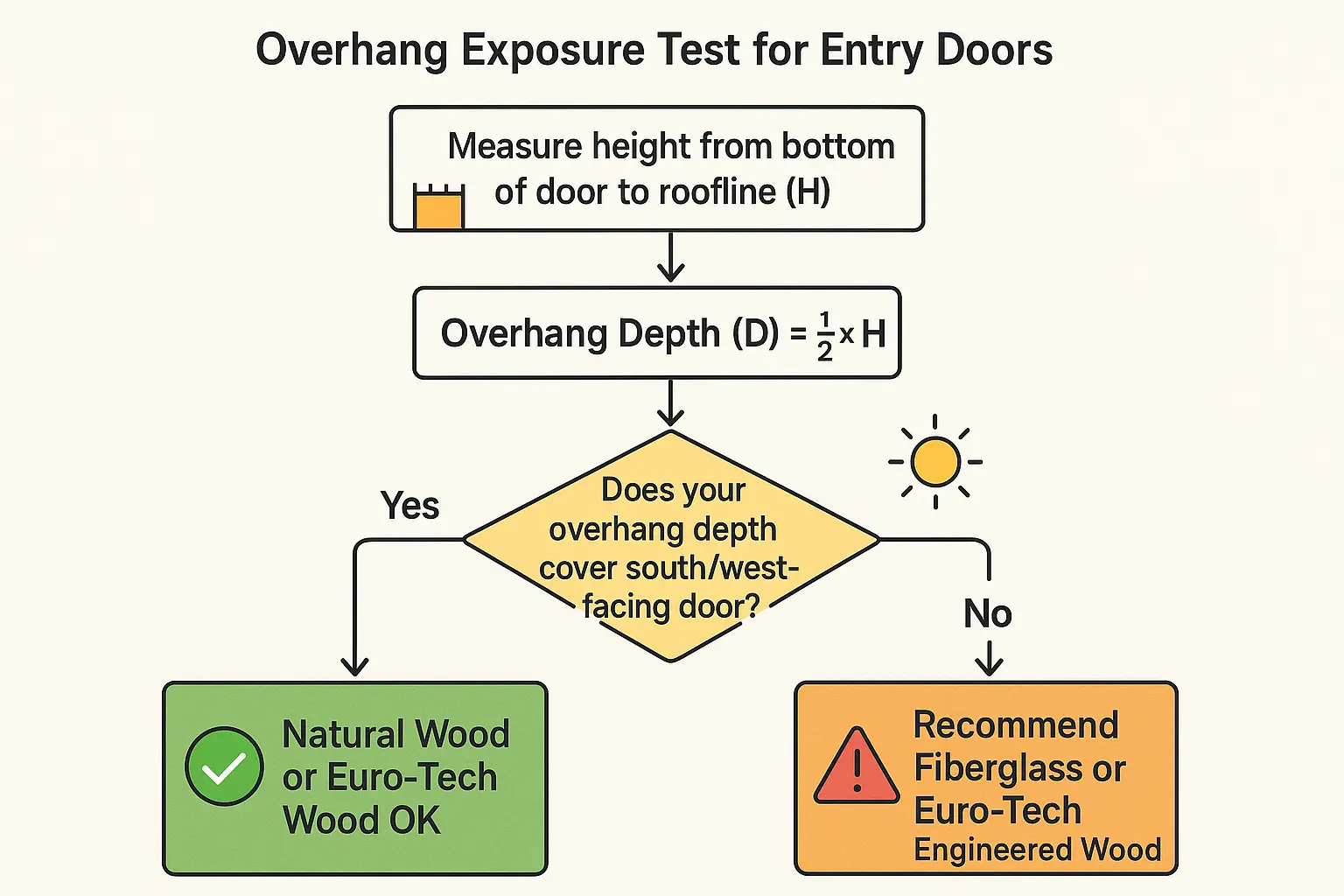
Before choosing wood, apply the standard mathematical Overhang Formula to assess your entry’s protection level:

$$text{Overhang Depth } (D) = frac{1}{2} times text{Height from bottom of door to roofline } (H)$$

If your entry orientation is South or West and your porch depth is less than half the roofline height, standard wood slabs are highly susceptible to warping.

Overhang exposure flowchartThis overhang exposure flowchart teaches you how to calculate if your entry door is sufficiently protected by a porch roof, guiding you to select the right material to prevent warping and ensure long-term durability.

Material Science Blueprint: Wood, Fiberglass, and Steel


Understanding the engineering differences behind each material allows you to choose the best balance of aesthetics, durability, and insulation.

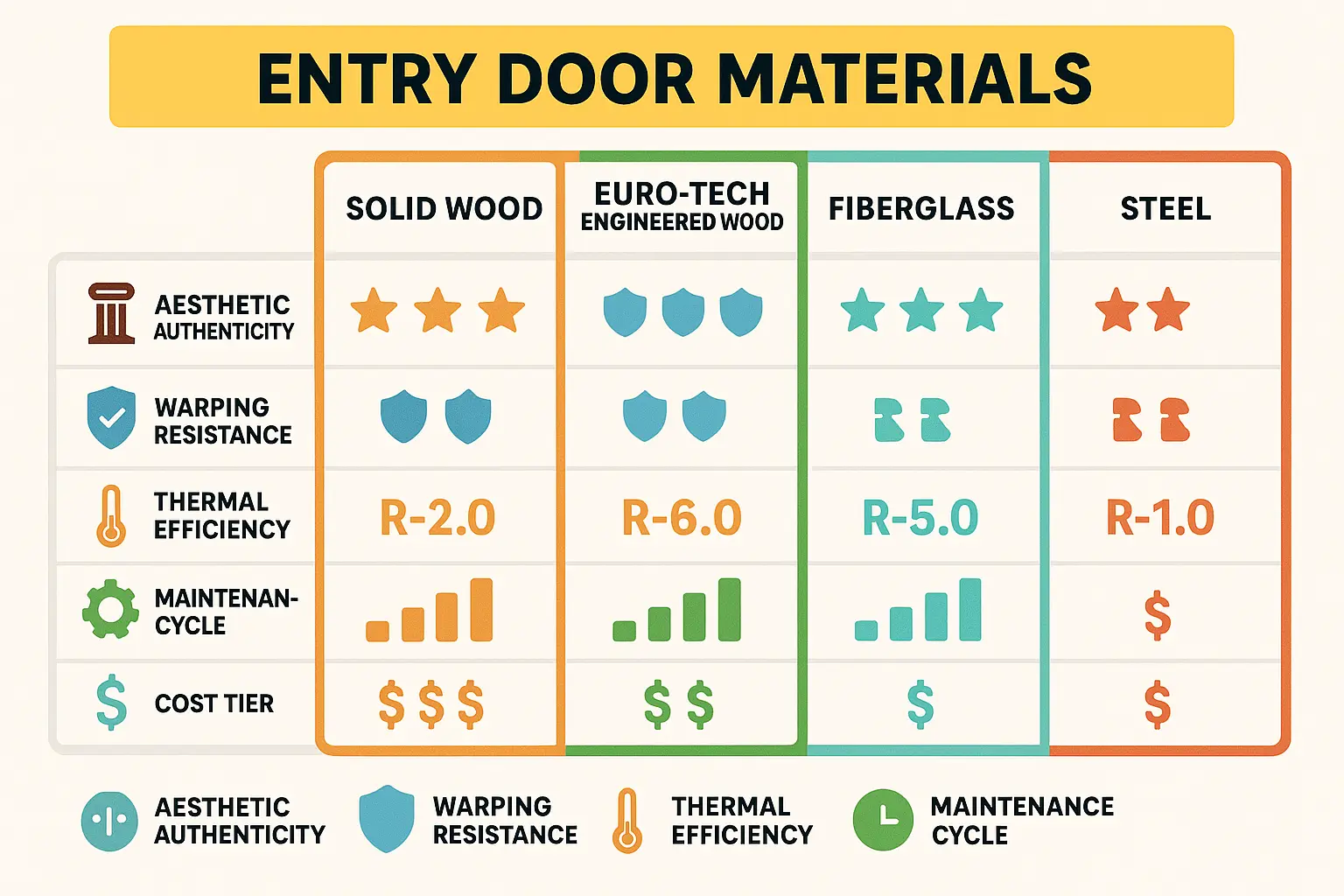
  • Solid & Engineered Wood: Traditional solid wood offers authentic beauty but requires refinishing every 12 to 24 months. Advanced engineered cores (like Euro-Tech) sandwich insulating polystyrene between real wood veneers, eliminating warping while keeping authentic textures.
  • Fiberglass: Molded compression skins mimic real grain perfectly. Filled with polyurethane foam, fiberglass offers up to 5 times the thermal performance of solid wood, with an R-value of up to R-5.8.
  • Steel: Heavy-duty steel entry doors offer maximum security. With a polyurethane core, they balance high security with a strong insulated metal door u factor to minimize energy loss.

Whether you need a classic entry or a complex french door replacement, matching the material to your home’s structural framing is essential.

Material performance comparisonThis comparison infographic anchors your understanding of entry door materials by visualizing their performance across essential features, helping you make informed, memorable decisions.

Architectural Styles and Structural Integration


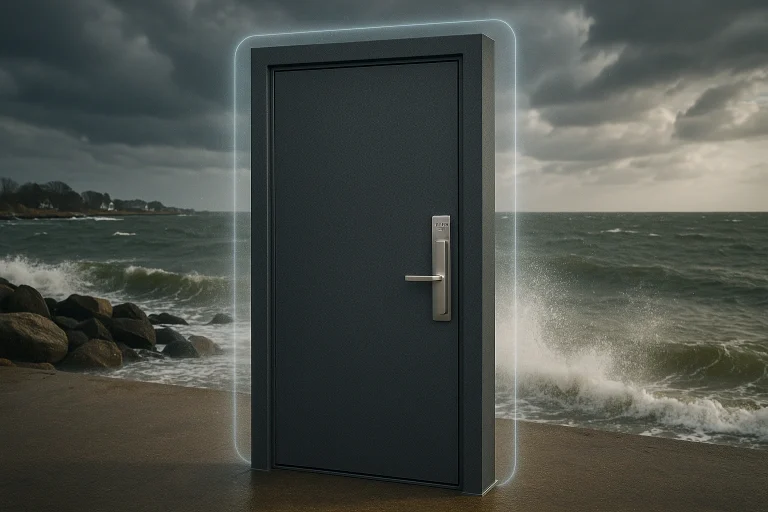
Different styles impose distinct structural requirements. Modern pivot doors, for instance, bypass traditional side-jamb hinges. They transfer 100% of their immense weight to a heavy-duty bottom spindle anchored directly into the floor slab rather than relying on the vertical side jambs.

Standard butt-hinge designs, on the other hand, rely entirely on the rough frame. Over time, shifting soil can pull frames out of alignment, resulting in drafts and sticking. Incorporating a rot-resistant, composite jamb that won’t rot protects your door frame from decay and shifting.

If you are planning an upgrade, browse our catalog to find replacement front doors that fit your architectural style. Professional door services ensure that your door frame, multi-point locks, and weatherstripping are properly aligned for life.


Frequently Asked Questions


Why do 8-foot doors require multi-point locking systems?

Doors that are 8 feet tall are more prone to thermal bowing because of their large surface area. A multi-point locking system latches at the top, middle, and bottom. This physically pulls the slab flush against the weatherstripping, keeping the door straight and preventing air leaks.

Can fiberglass doors be painted or stained to look like wood?

Yes. Modern premium fiberglass doors feature deep, molded wood-grain skins. These skins can be stained with gel stains or painted with high-grade exterior acrylics to mimic species like Mahogany, Oak, or Fir, without the continuous maintenance of natural wood.

How does thermal bridging affect steel doors in winter?

Without a thermal break—a non-conductive barrier separating the interior and exterior metal skins—steel doors will transfer external temperatures inside. Our doors use advanced thermal breaks and polyurethane cores to block heat transfer and stop interior frost buildup.