Draft-Proofing Your Rear Entryway: Energy-Efficient Back Doors Built for CT Climates
Published: Oct 22, 2026
Why Back Doors Are Your Home’s Greatest Energy Drain
According to the U.S. Department of Energy, doors and windows account for roughly 25% of a residential home’s heating and cooling energy loss through air leakage and thermal conduction. While front entryways frequently feature protective porches, back doors face severe exposure to New England’s coastal winds, freezing winter freeze-thaw cycles, and humid summers.
If you are currently evaluating how can i tell if an exterior door is causing drafts or energy loss?, start by checking your rear entryway. High glass-to-frame ratios, pet door penetrations, and heavy mudroom traffic make back doors particularly vulnerable to thermal seal failures. Upgrading to a modern, engineered back door restores comfort while driving down monthly heating and cooling costs.
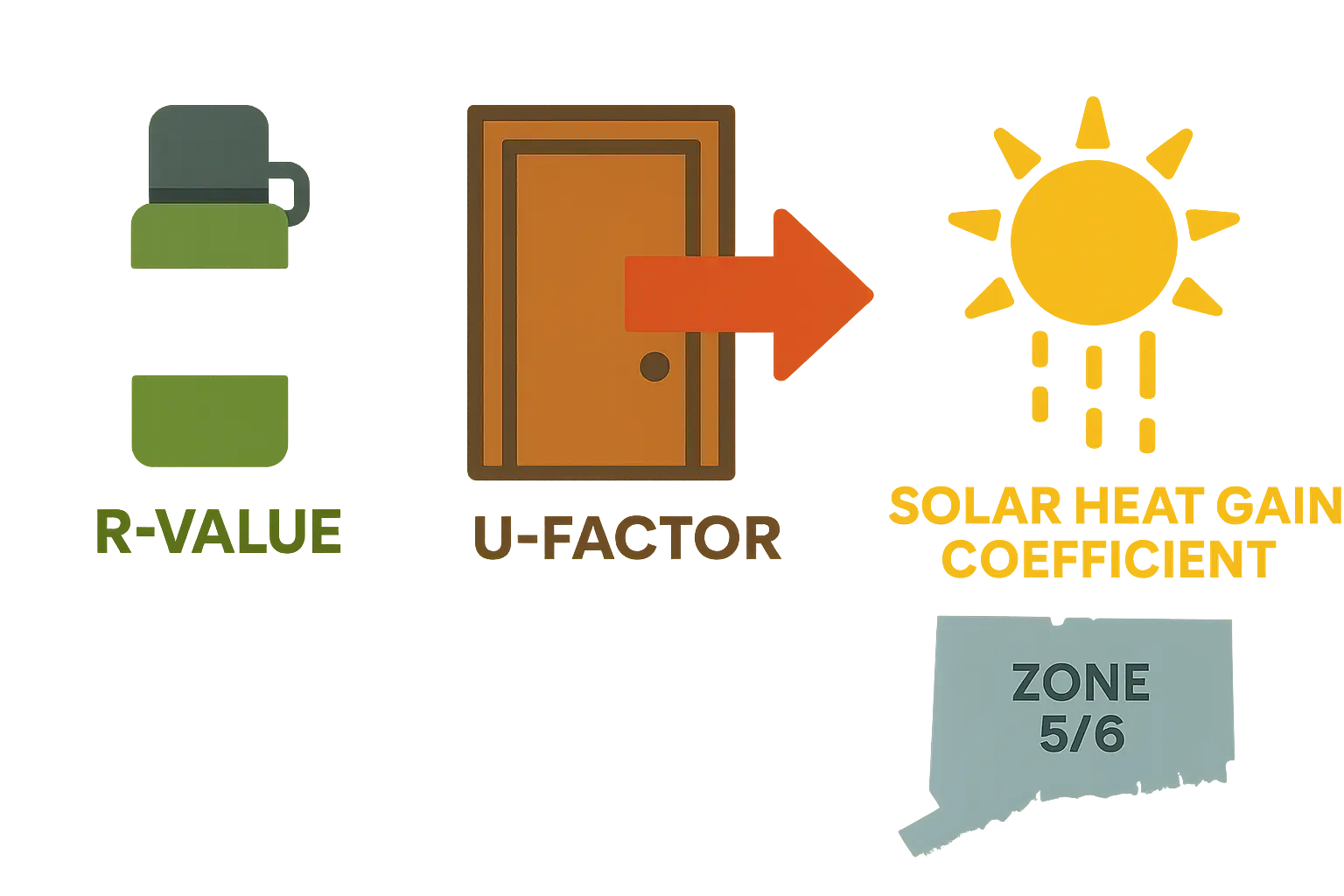
Understanding Energy Ratings: R-Value, U-Factor, and SHGC for CT
Evaluating door performance requires understanding three key energy metrics:
- U-Factor: Measures the rate of non-solar heat flow. Lower numbers indicate better insulating properties. Under ENERGY STAR v7.0 standards for Connecticut’s Northern Climate Zone, opaque doors must achieve a U-factor $le 0.17$, while doors with greater than half glass require a U-factor $le 0.26$.
- Solar Heat Gain Coefficient (SHGC): Measures how well a door blocks solar radiation heat. In Connecticut, a glass SHGC $le 0.40$ (or $le 0.23$ for half-lite units) balances winter solar warming with summer heat deflection.
- R-Value: Measures thermal resistance to heat flow. Higher R-values indicate superior insulation performance.
Understanding your door u factor helps you select certified energy-efficient door solutions engineered specifically for northeastern weather extremes.
Material Battleground: Fiberglass vs. Steel vs. Wood for Back Doors
Selecting the optimal core material balances long-term structural durability with thermal resistance:
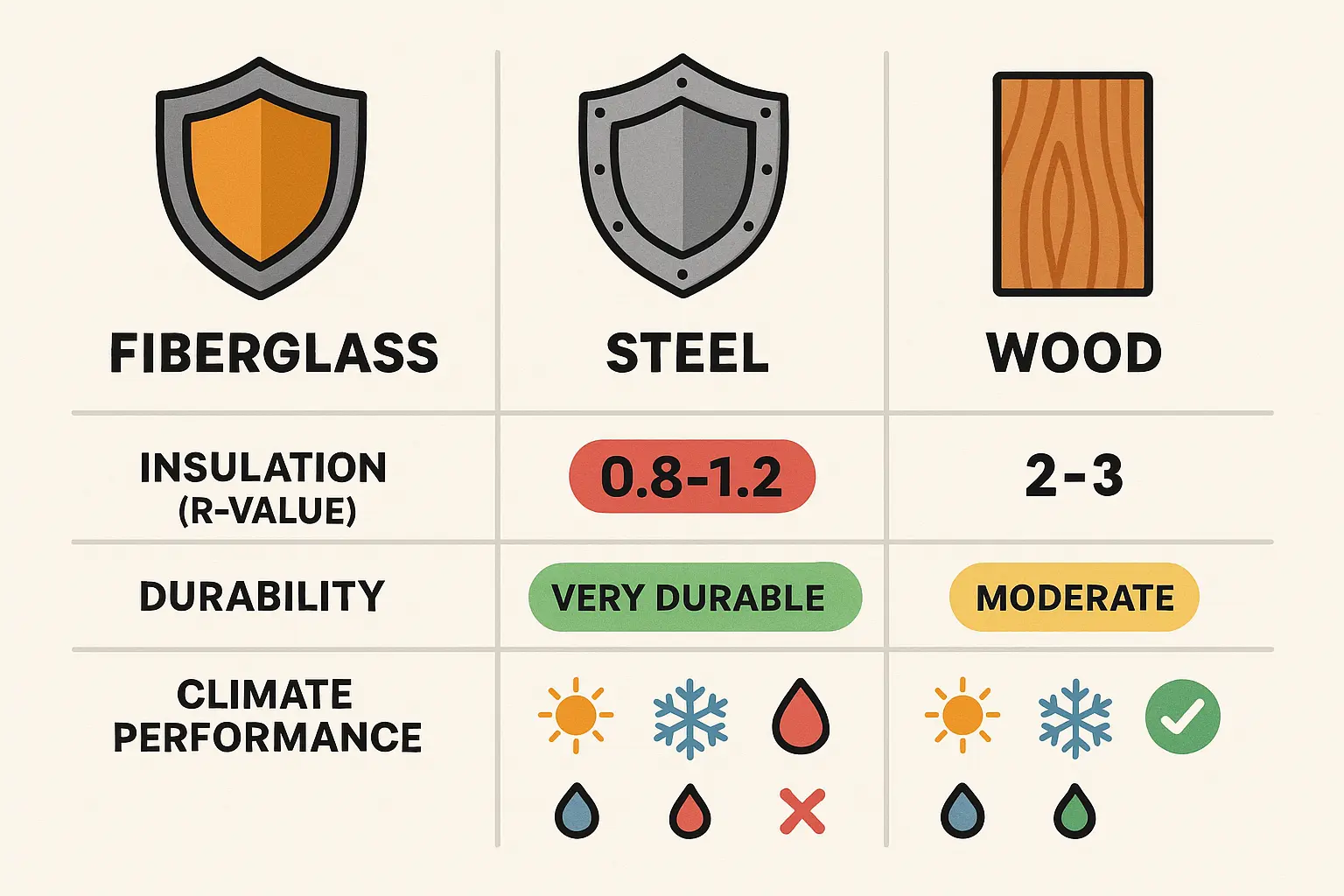
- Insulated Fiberglass: High-density polyurethane foam cores deliver R-values between R-6.0 and R-7.0+, providing 400% higher insulation value than traditional wood. Fiberglass remains completely immune to rot, denting, and humidity expansion.
- Insulated Steel: Foam-core steel offers high structural security and R-values from R-5.0 to R-6.0 at an affordable price point, though thermal breaks are required to prevent exterior cold transfer.
- Solid Wood: Offers timeless warmth with R-values of R-3.0 to R-3.7, but requires continuous maintenance to prevent severe freeze-thaw warping and frame seal gaps.
When comparing options across exterior doors ct, pairing an insulated fiberglass frame with double or triple-pane Low-E glass allows you to enjoy backyard views without sacrificing thermal protection. Selecting performance-driven types of glass for doors ensures low emissivity and gas-fill insulation between panes.
The Perimeter Defense: Sealing, Weatherstripping & Weatherproof Door Stops
Even high-R-value door panels fail if air infiltrates the perimeter frame. Draft-proofing relies on three hardware components:
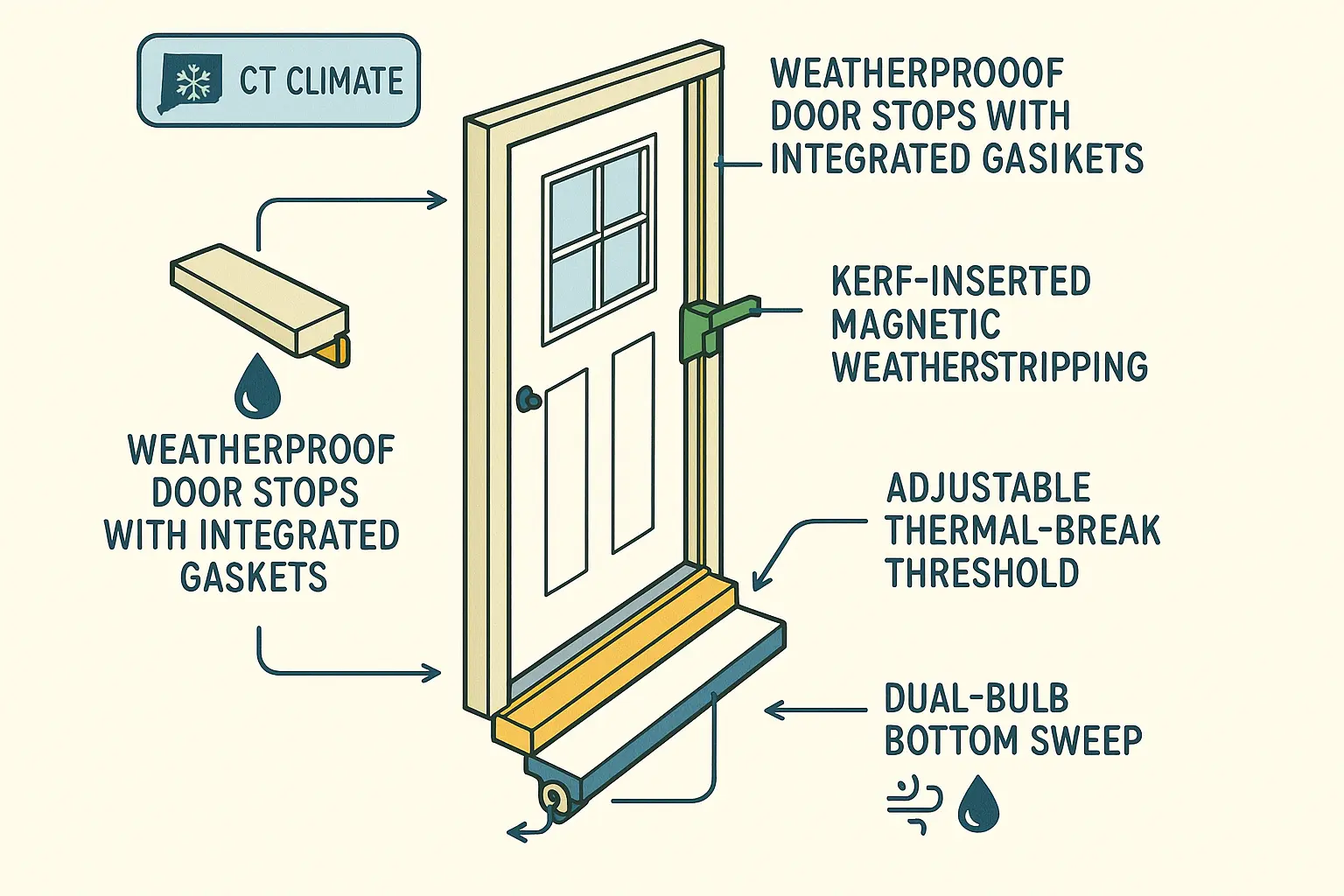
- Weatherproof Door Stops: Heavy-duty molded door stops equipped with integrated vinyl or TPE gaskets seal the head and side jambs tightly against wind pressure.
- Kerf Weatherstripping: Flexible compression seals inserted directly into jamb grooves maintain tight contact along the door edge.
- Thermal-Break Thresholds & Sweeps: Adjustable bottom sills break thermal bridges, while dual-bulb bottom sweeps block air infiltration across the subfloor.
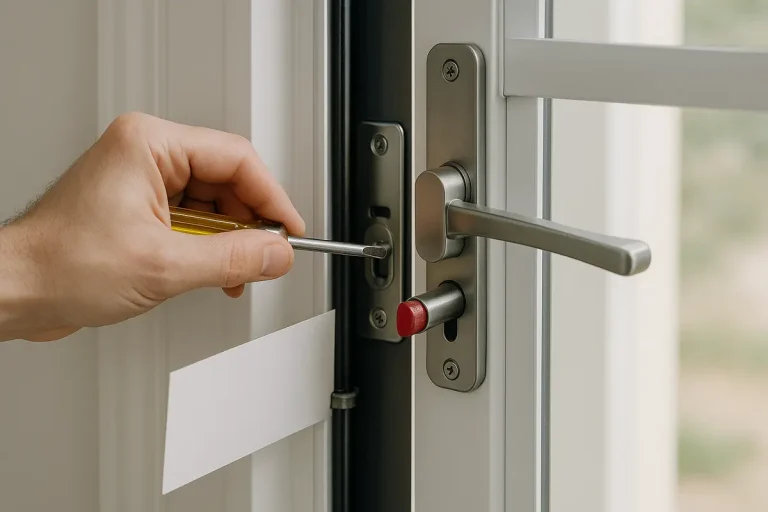
Following the proper steps outlined in our exterior door guide prevents common alignment mistakes that allow cold air into rear mudrooms.
Financial ROI: Tax Credits and Energy Savings
Upgrading your back door yields immediate financial returns. The EPA reports that installing ENERGY STAR certified exterior doors reduces average household energy bills by approximately 12%.
Furthermore, under the federal Section 25C Energy Efficient Home Improvement Credit, homeowners can claim a 30% tax credit up to $250 per exterior door (capped at $500 annually for two or more doors). Combining federal tax incentives with lower monthly heating expenses ensures a fast return on your replacement investment.
The A1 Doors Services Advantage
An energy-efficient door slab can only perform as well as its installation. Unshimmed frames, improper squareness, or missing perimeter insulation void factory energy ratings. Factory-prehung engineered door systems deliver up to 64% superior water and air sealing compared to standard field-assembled units.
For over 15 years, family-owned A1 Doors Services has provided Connecticut homeowners with expert door installation and repair services. Our licensed technicians install prehung units with precision laser leveling, custom thermal foam insulation, and weatherproof door stops to ensure lifetime draft protection. Contact A1 Doors Services today to schedule your in-home draft evaluation and quote.
Frequently Asked Questions
What is the most energy-efficient material for a back door in Connecticut?
Insulated fiberglass with a high-density polyurethane foam core is the most energy-efficient material for Connecticut homes. It delivers R-values between R-6.0 and R-7.0+—over four times the insulation value of solid wood—and will not warp, rot, or swell during intense freeze-thaw cycles.
How much can I claim with the Section 25C federal energy tax credit?
Under Section 25C, qualified ENERGY STAR certified exterior doors earn a 30% tax credit on product costs up to $250 per door, with a maximum yearly cap of $500 when replacing two or more exterior doors.
Can replacing weatherstripping fix my back door drafts without a full replacement?
Replacing worn weatherstripping and installing heavy-duty weatherproof door stops can fix minor perimeter air leaks. However, if your door panel lacks an insulated core, has rotted framing, or features single-pane glass, replacing the unit with an ENERGY STAR prehung door system is necessary to stop heat loss.