(855) 676-0881

Modern Office Access Control & Door Security: An Evaluator’s Guide


Published: Oct 20, 2026

Selecting an office door access control system requires balancing physical security, employee convenience, and life safety compliance. Commercial property crime costs U.S. businesses over $50 billion annually according to FBI data. Upgrading legacy lock-and-key hardware to integrated access control reduces vulnerability while streamlining daily facility operations.

Evaluating modern access control involves looking beyond software interfaces to understand how physical locks, door frames, credentials, and emergency egress mechanisms function together.
System Architecture & Credential Benchmarks


Modern access systems fall into two primary categories: cloud-managed SaaS architectures and legacy on-premises servers. Cloud systems offer remote management, real-time activity monitoring, and seamless software updates without dedicated server maintenance. Local caching ensures controllers maintain access logs and enforce permissions locally even during internet outages.

Credential Technologies

  • Mobile Credentials (NFC/BLE): Mobile credential adoption has grown over 150% year-over-year. Smartphones using encrypted Bluetooth Low Energy (BLE) or Near Field Communication (NFC) eliminate physical badge overhead, though 78% of facilities maintain dual-card reader capabilities to support legacy badges and visitors.
  • Keycards & Fobs: Physical RFID cards remain common. However, legacy 26-bit Wiegand protocol credentials are unencrypted and vulnerable to physical cloning devices. Modern deployments require Open Supervised Device Protocol (OSDP v2.2) with AES-128 encryption to secure reader-to-controller communications.
  • Biometric Authentication: Facial, fingerprint, or palm scanning provides high-security two-factor authentication (2FA) for sensitive areas like server rooms and executive suites.

Locking Hardware Mechanics


Selecting the correct locking hardware depends on door material, usage frequency, and security requirements.

Commercial electromagnetic locks (maglocks) provide continuous holding forces ranging from 600 lbs for interior doors to 1,200 lbs for exterior perimeters. Maglocks are inherently fail-safe, meaning they unlock when power drops. Grade 1 heavy-duty electric strikes offer up to 1,500 lbs of static strength, holding latches securely while accommodating fail-secure configurations that keep doors locked during power failures.

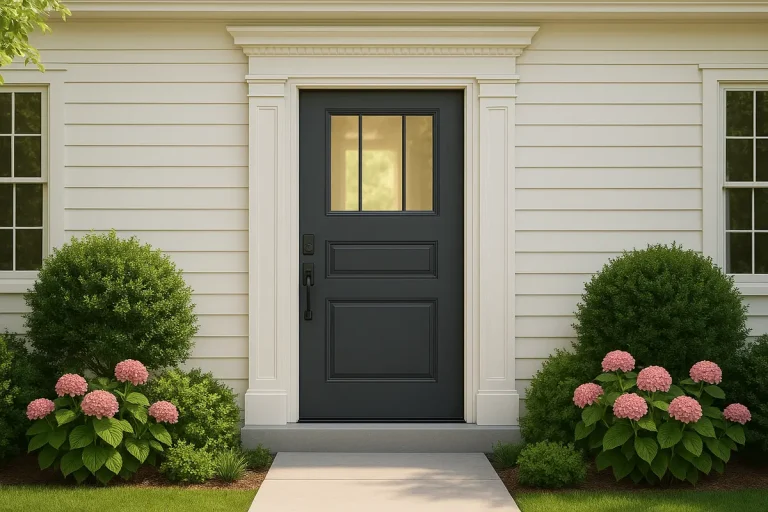
For high-traffic exterior entries, structural reinforcement prevents frame distortion over time. Upgrading physical jambs and opting for complete entry door security ensures electronic locking hardware performs to its rated mechanical strength.

The Commercial Door-by-Door Security Matrix


Every opening in an office building serves a distinct functional purpose and requires a tailored hardware combination.

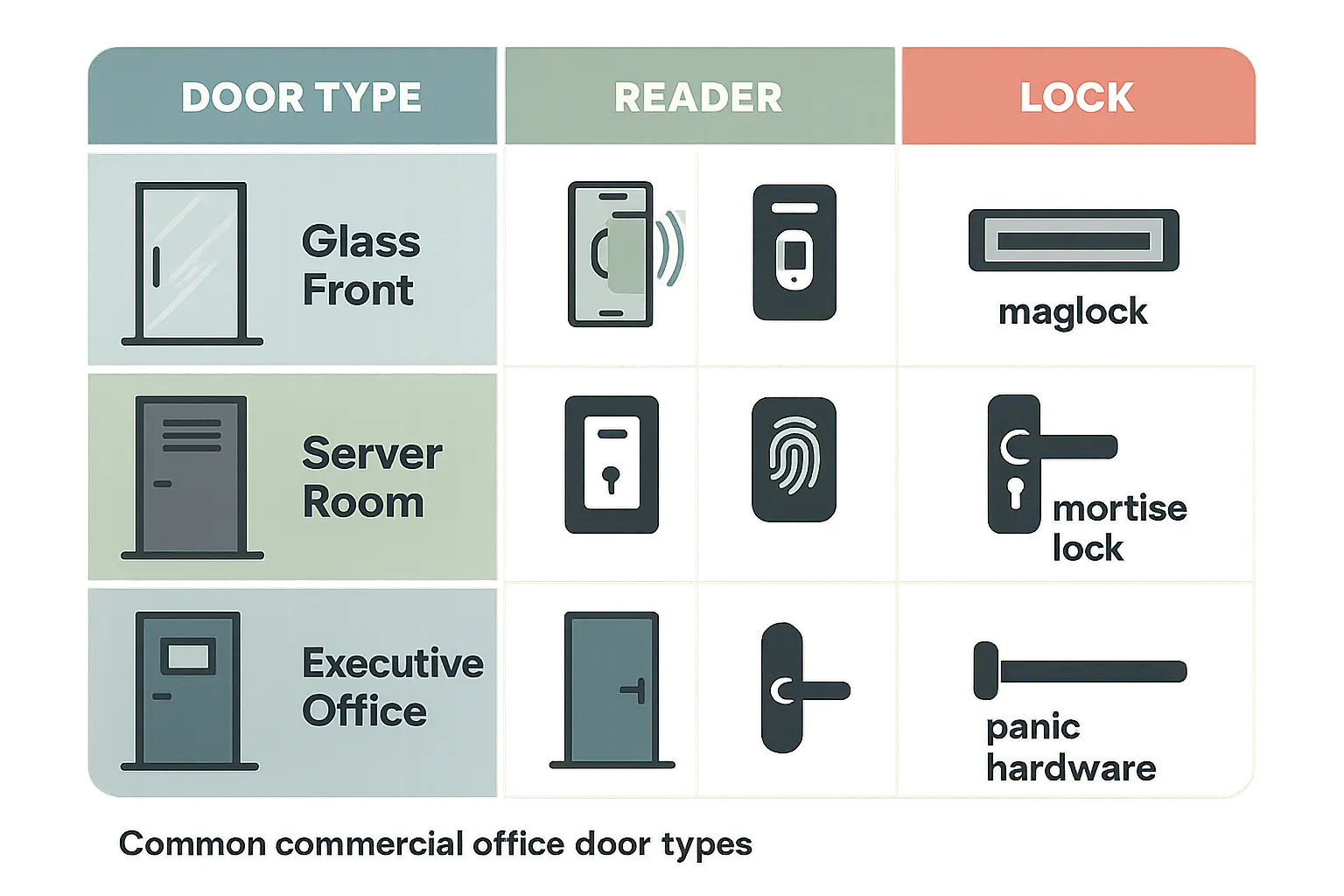
This infographic clarifies which access control hardware combinations best fit specific office door types, helping facility managers visualize tailored security solutions at a glance.

  1. Main Glass Entrance: Video intercom combined with an OSDP mobile/card reader and an electric strike or magnetic lock.
  2. Server Rooms & Data Closets: Biometric reader paired with keycard 2FA, heavy-duty electrified mortise lock, and door position switches.
  3. Interior Office Suites: Smart wireless lever locks with integrated keypads or BLE readers for flexible user management.
  4. Emergency Fire Exits: Electrified exit devices that meet strict egress standards while maintaining perimeter security.

Life Safety & Code Compliance


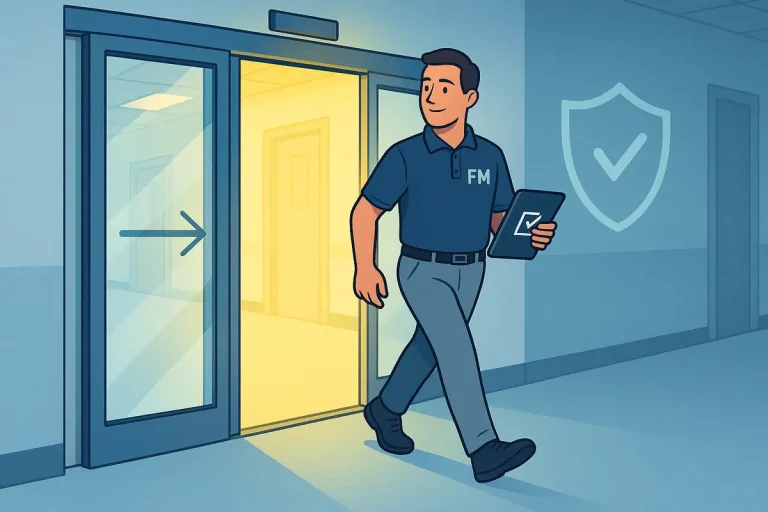
Installing electronic locks requires strict adherence to fire safety and emergency egress regulations under NFPA 101, UL 294, and the International Building Code (IBC).

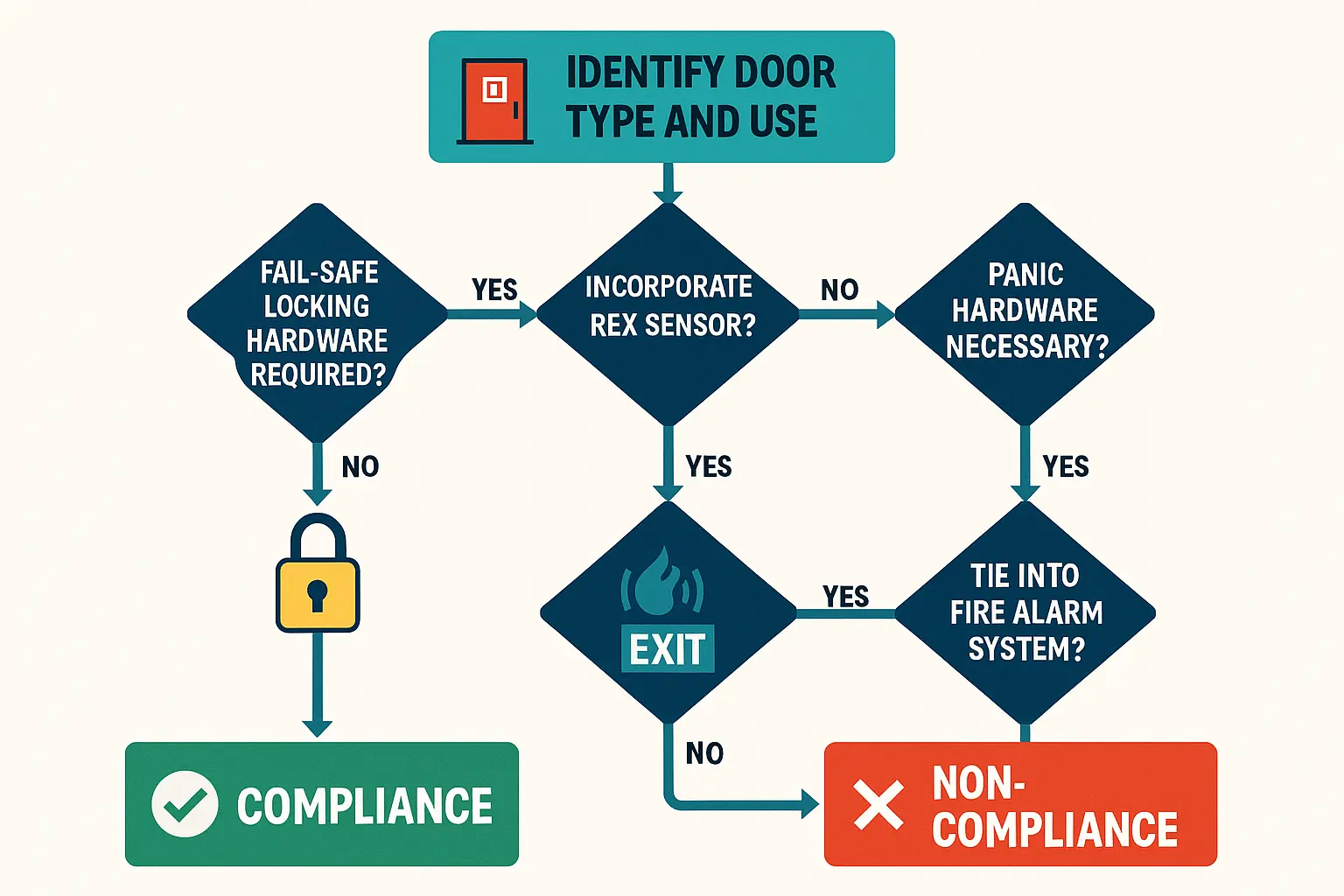
This flowchart breaks down complex fire safety and egress code requirements into an easy-to-follow process, reducing confusion for security planners and installers.

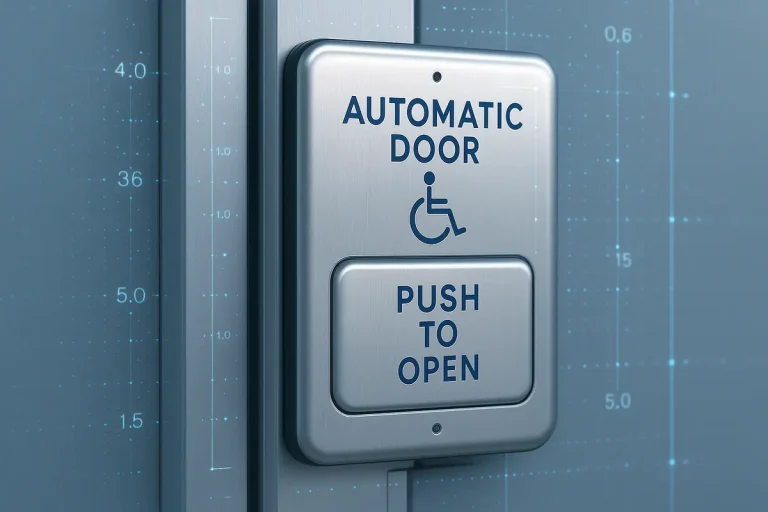
Electromagnetically locked exit doors must automatically release upon activation of the fire alarm system, power loss, or dedicated motion-sensing Request-to-Exit (REX) devices. Emergency stairwells and designated escape paths frequently mandate physical push bars. Meeting commercial door panic bar code requirements ensures occupants can exit instantaneously in an emergency without special knowledge or keycard credentials.

If physical hardware fails or frames sustain structural impact, prompt panic bar installation and repair maintains compliance and protects property. Likewise, knowing how to fix a kicked in door frame immediately after structural damage prevents critical vulnerabilities in your access control setup.

Total Cost of Ownership (TCO) & Budgeting Breakdown


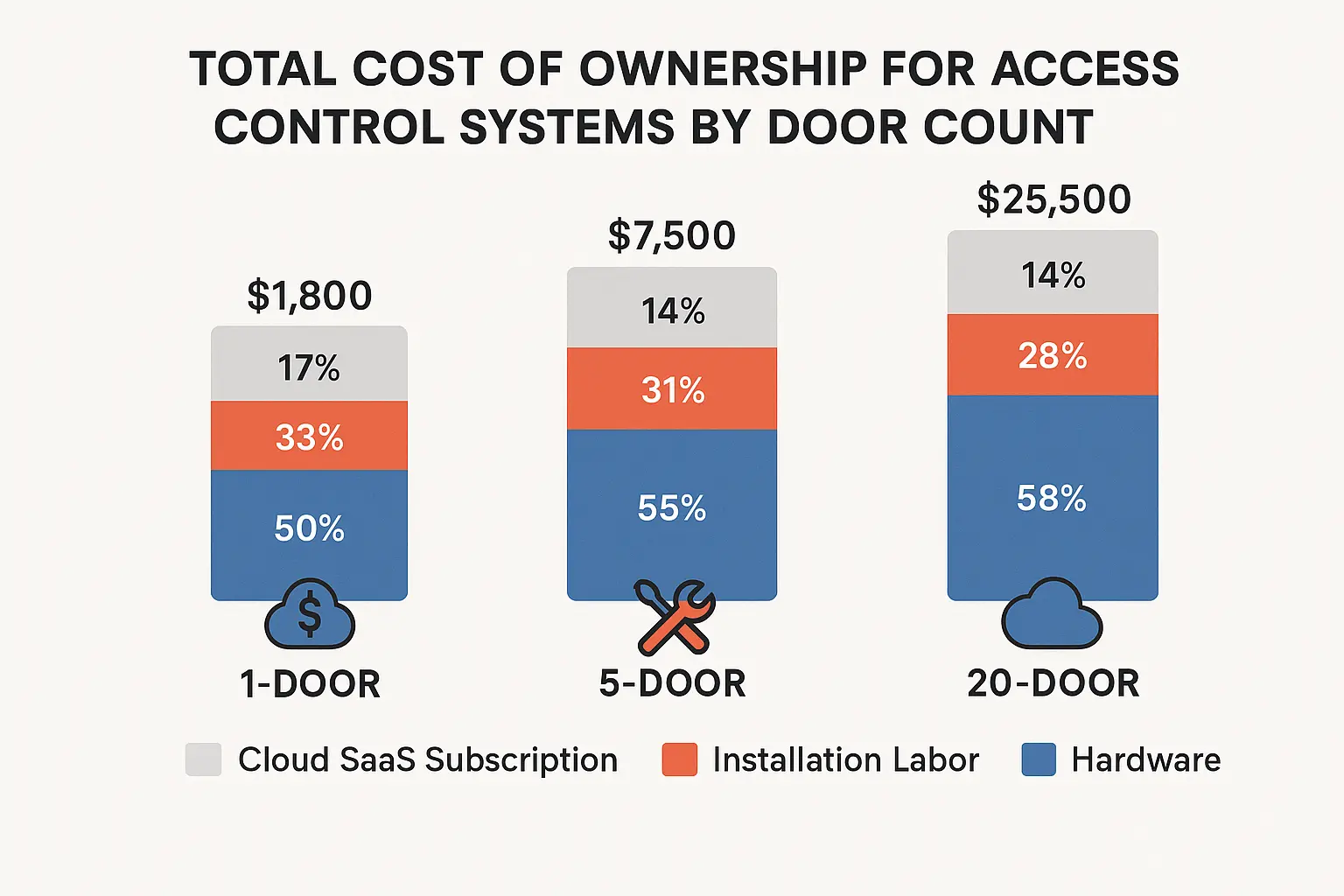
Budgeting for access control requires analyzing upfront capital expenditures alongside ongoing software licensing and lifecycle operational expenses.

This cost breakdown visual helps decision-makers quickly grasp how access control expenses scale with door quantity and what factors impact budget planning.

  • Hardware & Controllers: Hardware costs scale based on door configuration, ranging from standard electric strike setups to high-security dual-reader biometric doors.
  • Installation & Labor: Complex wire runs through commercial frames, drop-ceiling cabling, and power supply installations represent key deployment factors.
  • Recurring Software (SaaS): Cloud access platforms charge per-door monthly or annual fees, covering ongoing cloud hosting, security patches, mobile credential provisioning, and platform upgrades.

Frequently Asked Questions


What happens to electronic door locks during a power outage or internet loss?

Commercial access controllers feature battery backup units that provide continued operation for hours during power outages. Additionally, modern door controllers locally cache user permissions in onboard RAM, ensuring doors unlock for valid credentials even if local internet or cloud connectivity drops completely.

What is the main security difference between Wiegand and OSDP reader protocols?

Legacy Wiegand protocol sends unencrypted data over physical wires, making it vulnerable to interceptors and credential cloning tools like Flipper Zero. Modern OSDP v2.2 uses AES-128 encryption, bidirectional communication, and constant reader status monitoring to eliminate physical hacking risks.

Are magnetic locks compliant with local fire safety codes for commercial offices?

Yes, but only when installed with mandatory life safety overrides. Under NFPA 101 and IBC standards, maglocks must automatically drop power and unlock when the fire alarm triggers, when building power drops, or when a dual-technology Request-to-Exit (REX) sensor or manual emergency release button is activated.