(855) 676-0881

Emergency Commercial Door Board-Up: What Happens in the First Hours After a Break-In


Published: Sep 28, 2026

Discovering a break-in at your commercial property is a high-stress event. As a business owner or facility manager, you are suddenly forced to handle active security threats, law enforcement investigations, and liability risks all at once.

During these critical first few hours, the choices you make will dictate your recovery time, insurance claim success, and the ultimate cost of your repairs. Understanding the operational sequence of a secure emergency board-up ensures you protect your facility without incurring unnecessary secondary damage.

The First 4 Hours After a Break-In


When a breach occurs, time is your greatest enemy. Managing the scene step-by-step is crucial to stabilizing your property safely and legally.
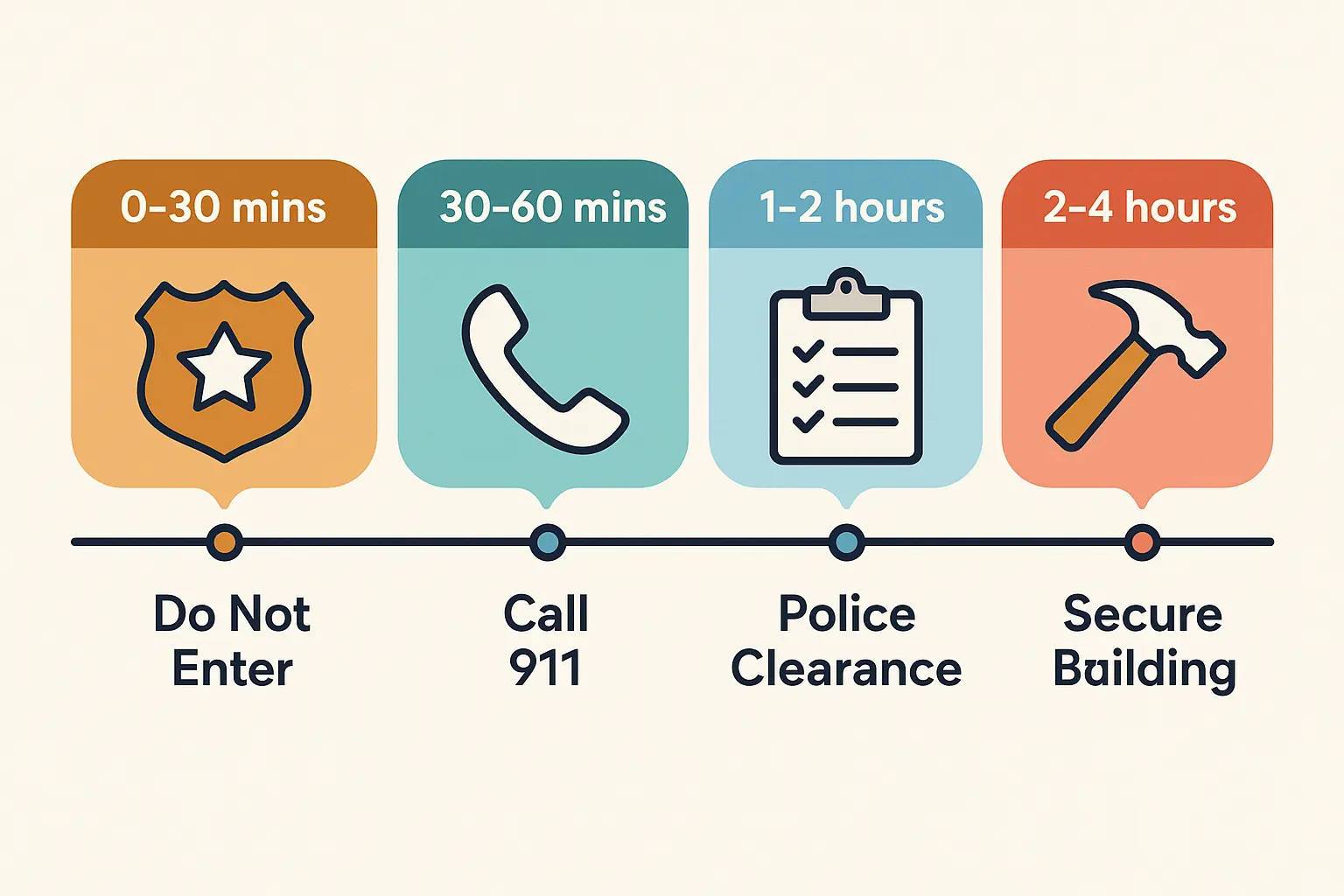
Visual timeline highlighting critical actions during the first four hours after a commercial break-in, guiding business owners through immediate safety, legal, and boarding procedures.

Minute 0 – 30: Safety and First Response

If your alarm goes off or you arrive to find a shattered storefront, do not enter the building. An intruder may still be inside, or the structural integrity of the glass and framing could be compromised. Call 911 immediately. If possible, monitor your security camera feeds from a safe distance to gather initial details for the arriving officers.

Minute 30 – 60: Police Clearance and Evidence Preservation

Once police arrive, let them clear the building. Do not touch anything within the breach zone. This preserves physical evidence like fingerprints or tool marks. Secure the police report number immediately, as your insurance company will require this to open your claim.

Hour 1 – 2: Dispatching the Right Board-Up Service

Do not hire a generic handyman. Securing a commercial entry point requires a team specialized in emergency commercial door repair. When calling a partner, ask: “Do you use tension clamping, or will you be drilling directly into my aluminum frame?” A professional team understands how to protect your assets while securing the perimeter.

Hour 2 – 4: Securing the Building Envelope

Once dispatched, technicians will clear the hazardous glass debris, assess the structural frame, and install a heavy-duty, temporary barrier to restore environmental and physical security.

Technical Deep Dive – The "Bolt-Through Clamping Method" (No-Drill)


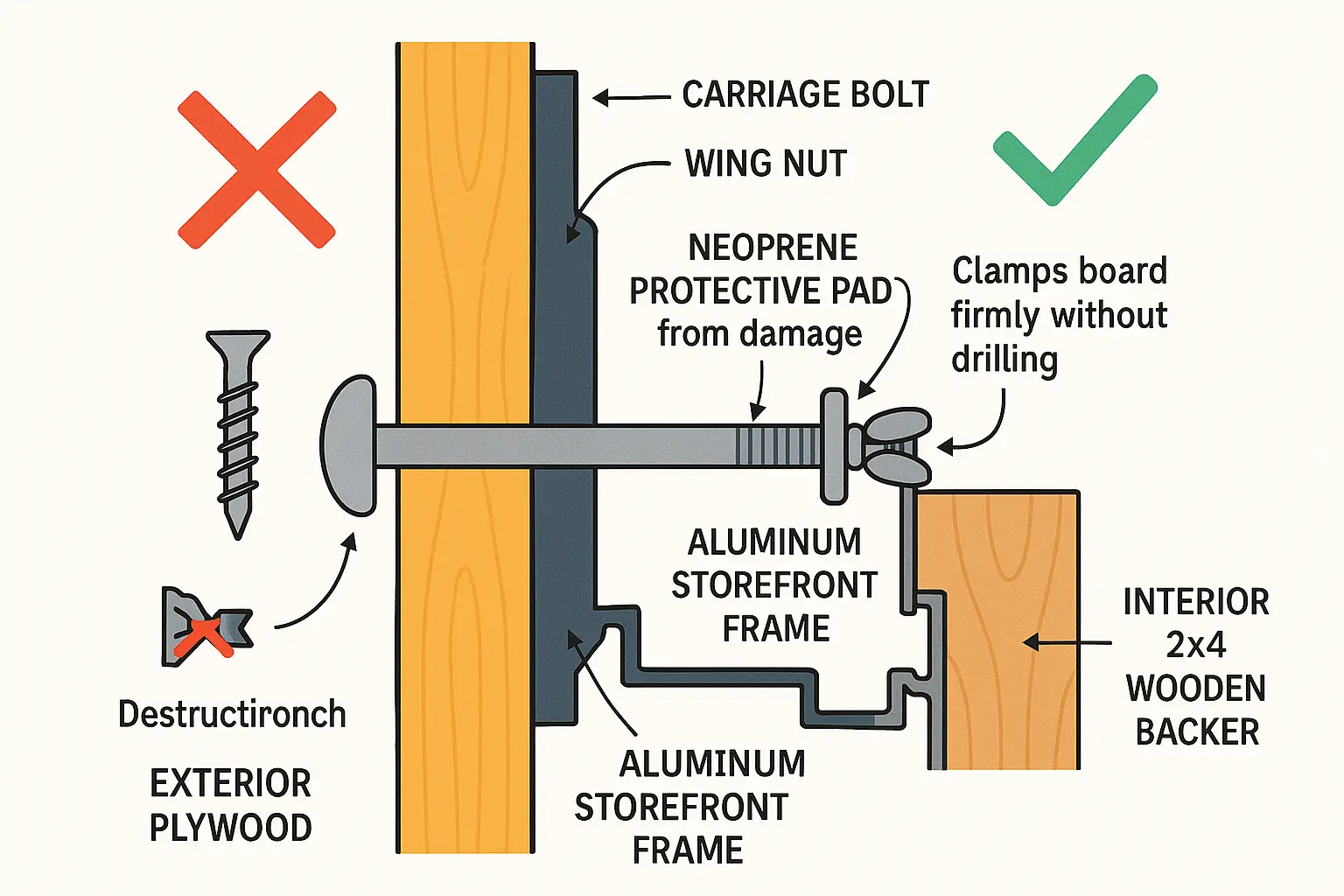
Many emergency glass and boarding companies take the easy way out by drilling self-tapping screws directly into your aluminum storefront extrusion profiles. This ruins the structural integrity of your entry, voids manufacturer warranties, and turns a basic glass repair into an expensive $3,500 to $6,000 full frame replacement.

To prevent this, ensure your service provider uses the non-destructive Tension-Fit Bolt-Through Clamping Method.

Detailed diagram explaining the non-destructive bolt-through clamping method that preserves storefront frames during emergency board-ups, preventing costly damage and warranty voiding.

  EXTERIOR                                                      INTERIOR             ┌──────────────────────────────────────────┐             │       Plywood Barrier (1/2" - 3/4")      │             └──────────────────────────────────────────┘                                  │                       Neoprene Protective Pad                                  │             ===================  │  ==================== ◄── Aluminum Storefront Frame                                  │                             Carriage Bolt (Threaded Rod)                                  │             ===================  │  ==================== ◄── Aluminum Storefront Frame                                  │                       Neoprene Protective Pad                                  │             ┌──────────────────────────────────────────┐             │         2x4 Structural Backer            │             └──────────────────────────────────────────┘                                  │                              Hex Nut / Washer (Tightened from Inside)

This structural engineering method uses plywood on the exterior, backed by neoprene or rubber spacer pads to protect the anodized aluminum finishes. Heavy-duty carriage bolts pass through the open window space and are secured to interior 2×4 structural wood backers.

Because the nuts are tightened from the inside, there are no exposed screw heads on the exterior, making it virtually impossible for an intruder to unscrew or pry the board-up loose. This protective approach is standard practice during professional aluminum storefront door repair.

The Commercial Insurance Playbook


Standard commercial property insurance policies (such as the standard ISO CP 10 30 form) contain a strict “Duty to Mitigate Loss” clause. This clause legally obligates you to take immediate, reasonable steps to protect your covered property from further harm.

If you leave a storefront open to the elements or vandals after a break-in, any subsequent damage (such as weather exposure or secondary theft) can be legally excluded from coverage. Furthermore, according to IICRC S500 standards, mold and microbial colonization can begin within 24 to 48 hours of an envelope breach. Acting quickly is not just about physical security—it is environmental stabilization.

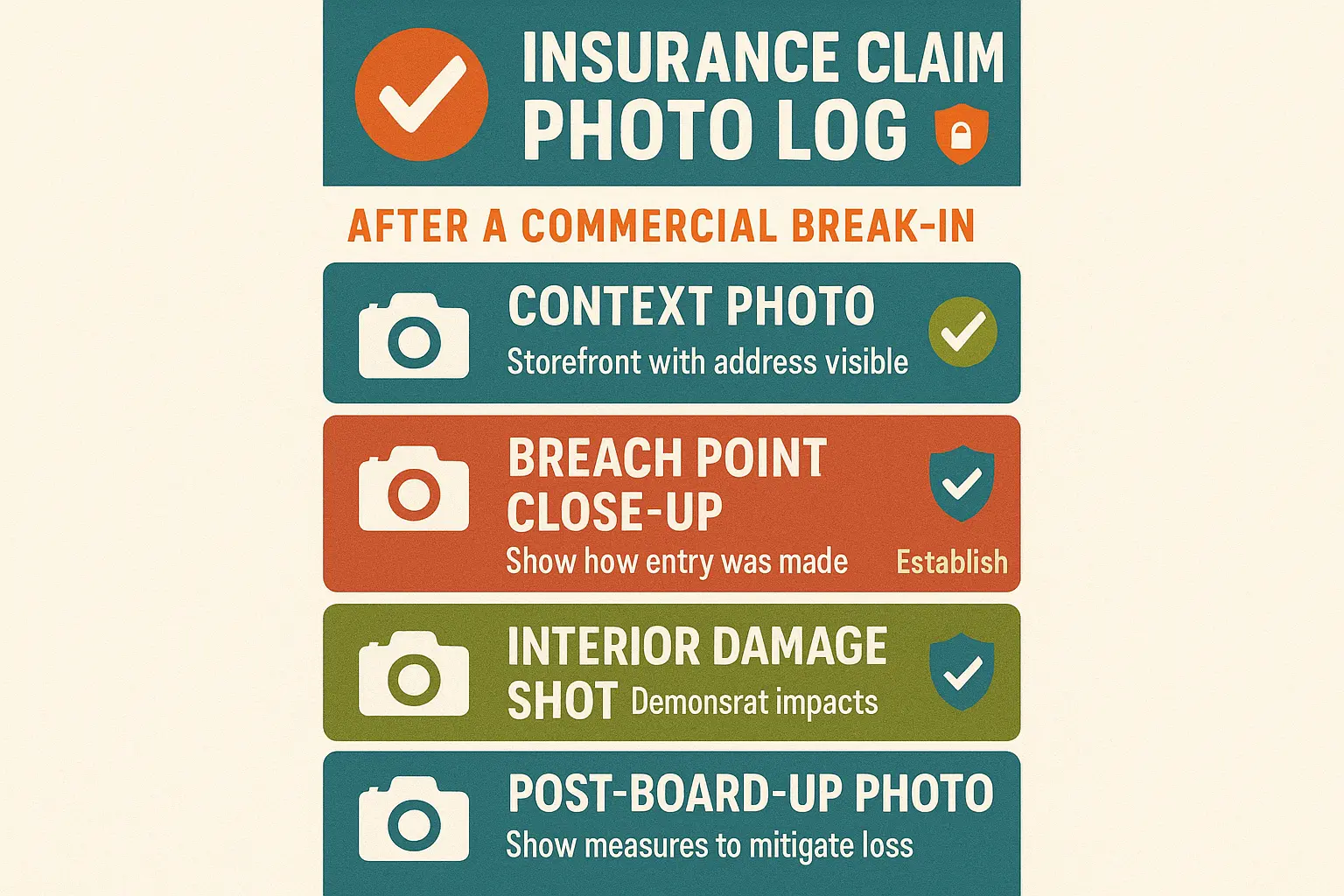
Essential photographic documentation checklist ensuring business owners capture the right evidence to meet insurance 'Duty to Mitigate Loss' requirements after a break-in.

To ensure your insurance claim is approved, build a clear photographic log before the board-up begins. Take wide-angle context photos showing the entire storefront, close-ups of the breach point, interior views of compromised areas, and final photos of the completed board-up.

When you quickly schedule a professional commercial door repair, these emergency boarding fees are classified as a “reasonable repair” expense, which often bypasses standard deductibles.

Materials Comparison: Plywood vs. Polycarbonate


Choosing the right material for your temporary barrier directly impacts your brand’s foot traffic, customer perception, and security level.

  • Plywood (The Standard): Utilizing 5/8-inch or 3/4-inch CDX plywood (conforming to FEMA P-361 impact standards) is highly secure and cost-effective. However, it blocks all natural light and signals to the public that your business is closed or vulnerable.
  • Polycarbonate / Lexan (The Premium Alternative): This clear, shatter-resistant material allows natural light into your space, permits security cameras to view outside, and keeps your business looking operational. It is the preferred choice for high-end retail, auto dealerships, and restaurants in active shopping districts.

Investing in high-quality secure materials keeps your commercial property safe while you plan a long-term commercial facility door maintenance strategy to reinforce your entry points against future threats.

Frequently Asked Questions


Does standard commercial property insurance cover the cost of an emergency board-up?

Yes. Under standard commercial property policies, emergency board-ups are typically covered under the “reasonable repairs” or “preservation of property” provisions. Because you are fulfilling your legal duty to mitigate further loss, these emergency mitigation costs are often paid out directly by the insurer, sometimes even bypassing your standard property deductible.

Will temporary boarding damage my expensive aluminum storefront doors?

Only if done incorrectly. If a contractor uses self-tapping drywall screws to mount plywood directly into the aluminum face, they will permanently ruin your door frame. If you work with a certified commercial glazier who utilizes the tension-fit bolt-through clamping method, no drilling occurs, preserving your frame, finish, and manufacturer warranty.

Why shouldn't I just use a general handyman for an emergency board-up?

Commercial entry doors utilize complex pivot systems, continuous hinges, concealed closers, and specialized security locks. A general handyman rarely possesses the specialized knowledge to secure these components without causing secondary damage. Licensed commercial door technicians ensure the structural stability of the opening while preparing the site for correct glass and hardware fabrication.