A compromised door frame impacts your home’s security, climate control, and curb appeal. According to Remodeling Magazine’s Cost vs. Value reports, front door and frame restoration yields a 64% to 85% return on investment upon home resale. When facing jamb damage, homeowners must evaluate whether a quick patch, a structural timber splice, or a full jamb replacement provides the safest and most cost-effective path forward.
Residential Door Frame Repair: Evaluating Techniques, Materials, and Solutions
Published: Nov 3, 2026
Diagnostic Framework and Severity Assessment
Before selecting tools or materials, you must accurately categorize the damage type and structural impact. Performing comprehensive door frame testing helps determine if the integrity of the underlying wall framing is compromised.
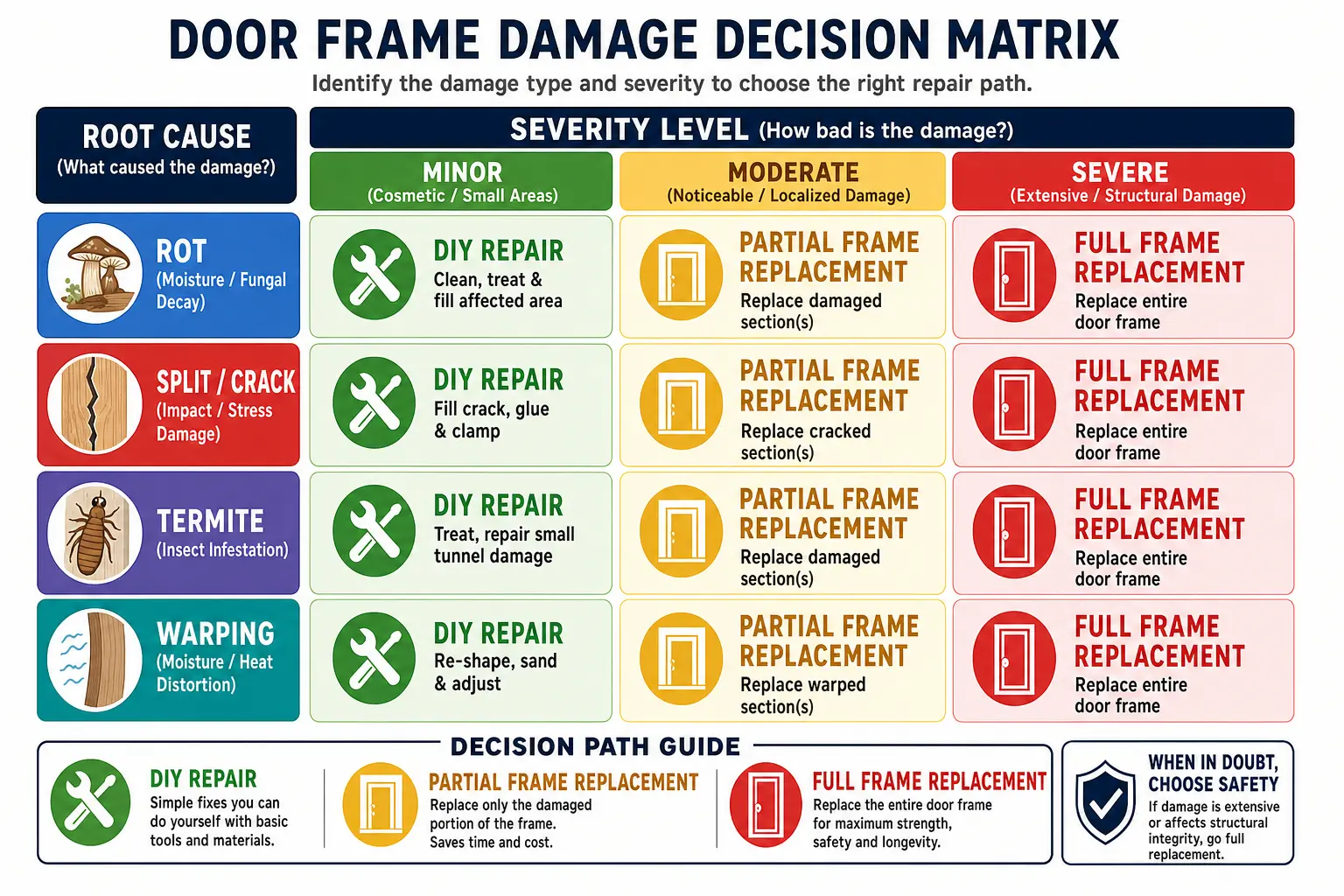
- Minor Surface Blemishes: Scratches and hairline splits under 1/8 inch deep affect aesthetics but do not undermine security.
- Localized Wood Rot & Termite Damage: Fungal decay or insect voids that affect less than 30% of the jamb length can usually be remediated by cutting out bad timber or using structural resins.
- Split Jambs & Forced Entry Breaks: Structural splits along the strike plate require reinforced anchoring and timber splices.
- Severe Structural Failure: Rot or damage exceeding 30% of the frame—or extending into the underlying jack studs and header—demands a complete pre-hung replacement or professional intervention.
Tools and Materials Evaluation
Choosing the right fixative is critical to long-term repair survival. Industry standards show that standard water-based wood putty fails in exterior applications within 12 to 24 months due to freeze-thaw cycles and thermal expansion.
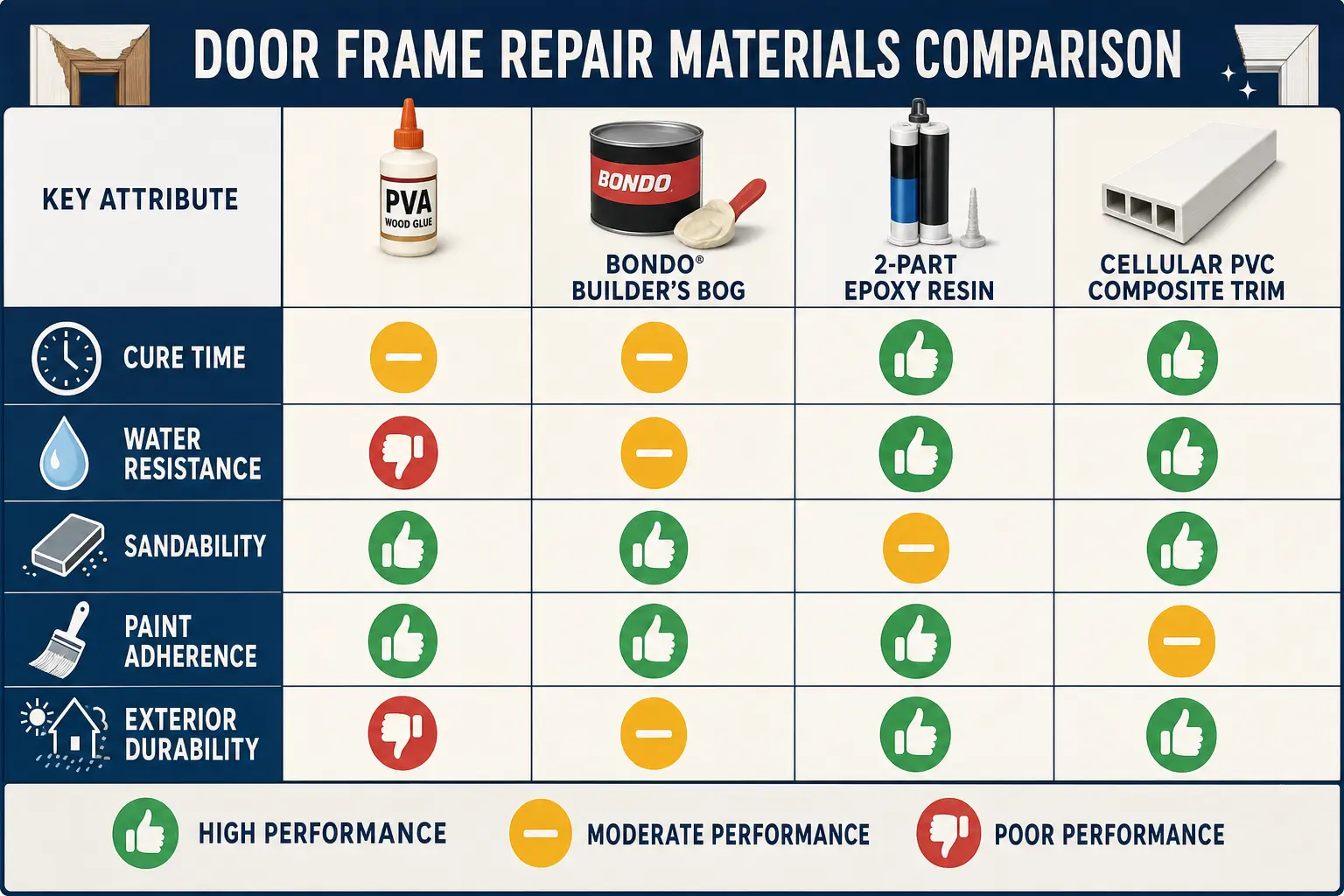
- PVA Wood Glue: Ideal for interior split frames where tight clamping pressure can be applied.
- Two-Part Epoxy Resins: Bonds molecularly with wood fibers to form a watertight, structural seal that expands and contracts naturally with ambient temperatures.
- Polyester Fillers (Bondo): Best for quick-curing cosmetic repairs, though less flexible than epoxy under exterior stress.
- Cellular PVC Trim: The ultimate rot-proof material for bottom jamb splices, creating a jamb that won’t rot.
Step-by-Step Scenarios and Advanced Repair Techniques
Scarf Joint Splice for Exterior Rot
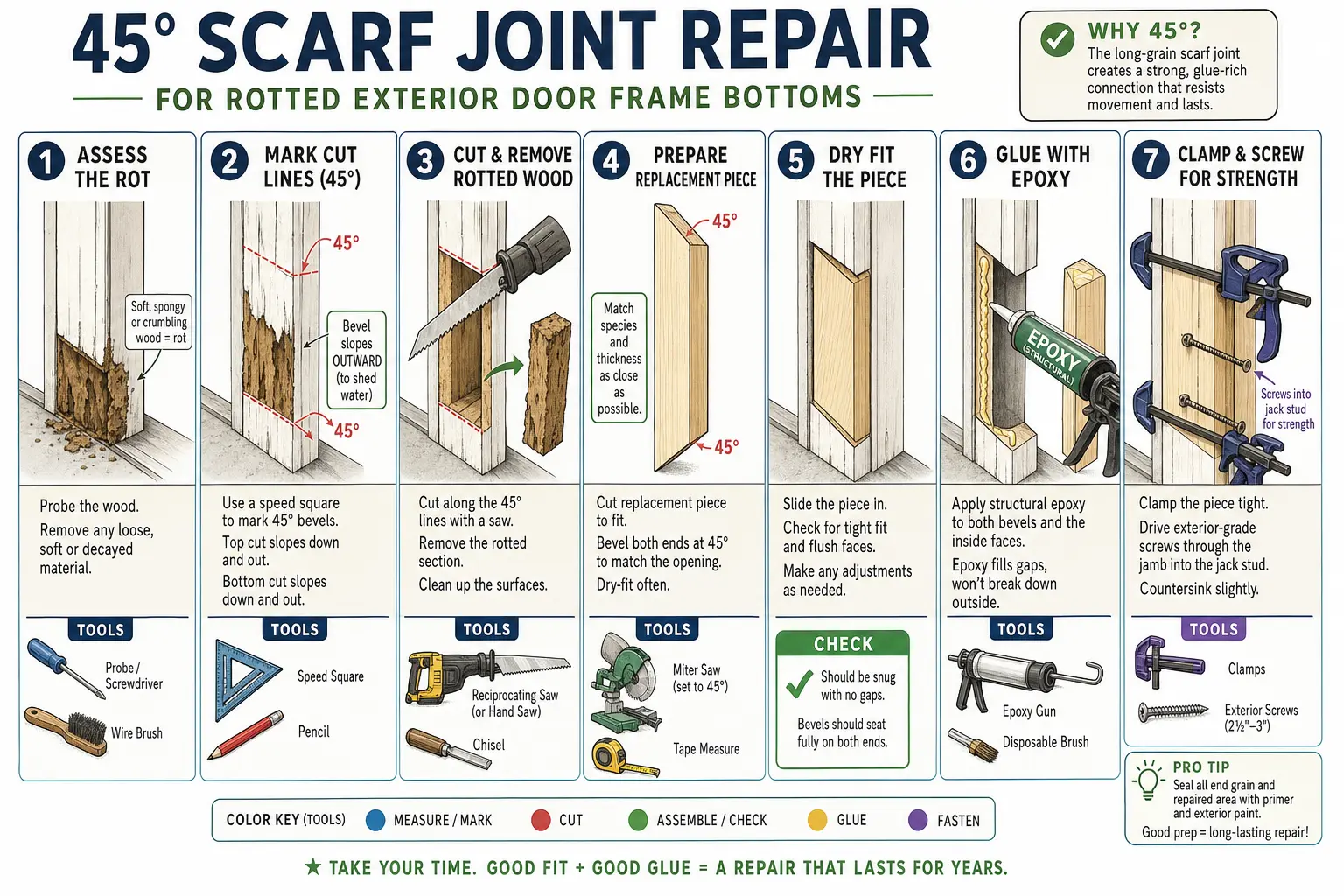
When replacing rotted bottom sections, cut the replacement timber at a 45-degree bevel sloping downward and outward. This scarf joint sheds water away from the wall cavity rather than letting moisture collect in horizontal butt joints. Pair this technique when replacing exterior door jamb and threshold assemblies.
Security Reinforcement for Split Frames
If you need to know how to fix a door frame that was kicked in, wood glue alone is insufficient. Remove the damaged trim, apply structural adhesive along the split, and clamp firmly. Install an extended strike plate driven by 3-inch to 4-inch structural screws directly into the 2×4 jack studs. This anchoring transfers load to the wall framing to effectively reinforce door frame integrity against future impacts.
Tailored Approaches for Specific Residential Doors
- Interior Doors: Hollow core and split jamb assemblies often warp or loosen over time. Contacting experienced interior door installers ensures plumb realignment without binding.
- Exterior Entry Doors: When you need to repair front door frames, focus on weather-sealing. Correct alignment prevents draft leakage and structural strain. Proper exterior door installation standards protect your home’s envelope.
- Storm Doors: Wind gusts frequently rip closers out of jambs. Installing backer plates prevents pull-out, while full storm door replacement fixes severely bent frames.
- Garage Door Frames: Moisture near concrete slabs rots bottom jambs. Using aluminum capping over PVC jambs combined with routine automatic garage door service extends frame lifespan.
Financial Decision Matrix: DIY vs. Professional Intervention
Executing a DIY patch for minor splits costs $25 to $75 in materials (epoxy, glue, structural screws). Professional handyman repairs for localized damage typically range from $150 to $400. However, full pre-hung door replacements range between $700 and $1,500+ for labor and materials. Evaluating damage severity early prevents costly structural overhauls down the road.
Frequently Asked Questions
When should I repair versus replace a damaged door frame?
If wood decay or split damage covers less than 30% of the jamb and the underlying jack studs are solid, localized epoxy patches or scarf joint splices are effective. If structural framing is degraded or damage spans over 30% of the frame, a full replacement ensures long-term safety.
Why do basic wood fillers fail on exterior door frames?
Water-based wood putties lack elasticity and shrink over time. Exterior temperature fluctuations and humidity cause wood to expand and contract, causing rigid fillers to crack within 12 to 24 months. Two-part marine-grade epoxies offer the flexibility and adhesion needed for lasting exterior repairs.
How do long structural screws improve frame security?
Standard door frame screws only penetrate the thin 3/4-inch jamb timber. Using 3-inch to 4-inch structural screws drives deep into the wall framing’s 2×4 jack studs, distributing forces across the house structure to prevent jamb splitting during forced entry attempts.