(855) 676-0881

Modernizing Retail Automatic Doors for High Traffic


Published: Sep 2, 2026

Your entrance door is your hardest-working employee. It greets every customer, works holidays and weekends without complaint, and is the first and last physical touchpoint for everyone who walks through it. But is it helping or hurting your business?

An old, slow, or unreliable automatic door can create subtle friction you might not even notice—a moment of hesitation for a parent with a stroller, a blast of cold air that makes shoppers uncomfortable, or an unsettling grinding noise that undermines your brand’s image. In a high-traffic retail environment, these small moments add up, impacting everything from customer experience to your monthly energy bill.

This guide is for the retail managers and facility planners who know their entrance is more than just a doorway. It’s an asset. We’ll explore how modernizing your automatic sliding doors is a strategic investment in durability, efficiency, and the seamless flow of business.
The Hidden Costs of an Outdated Entrance


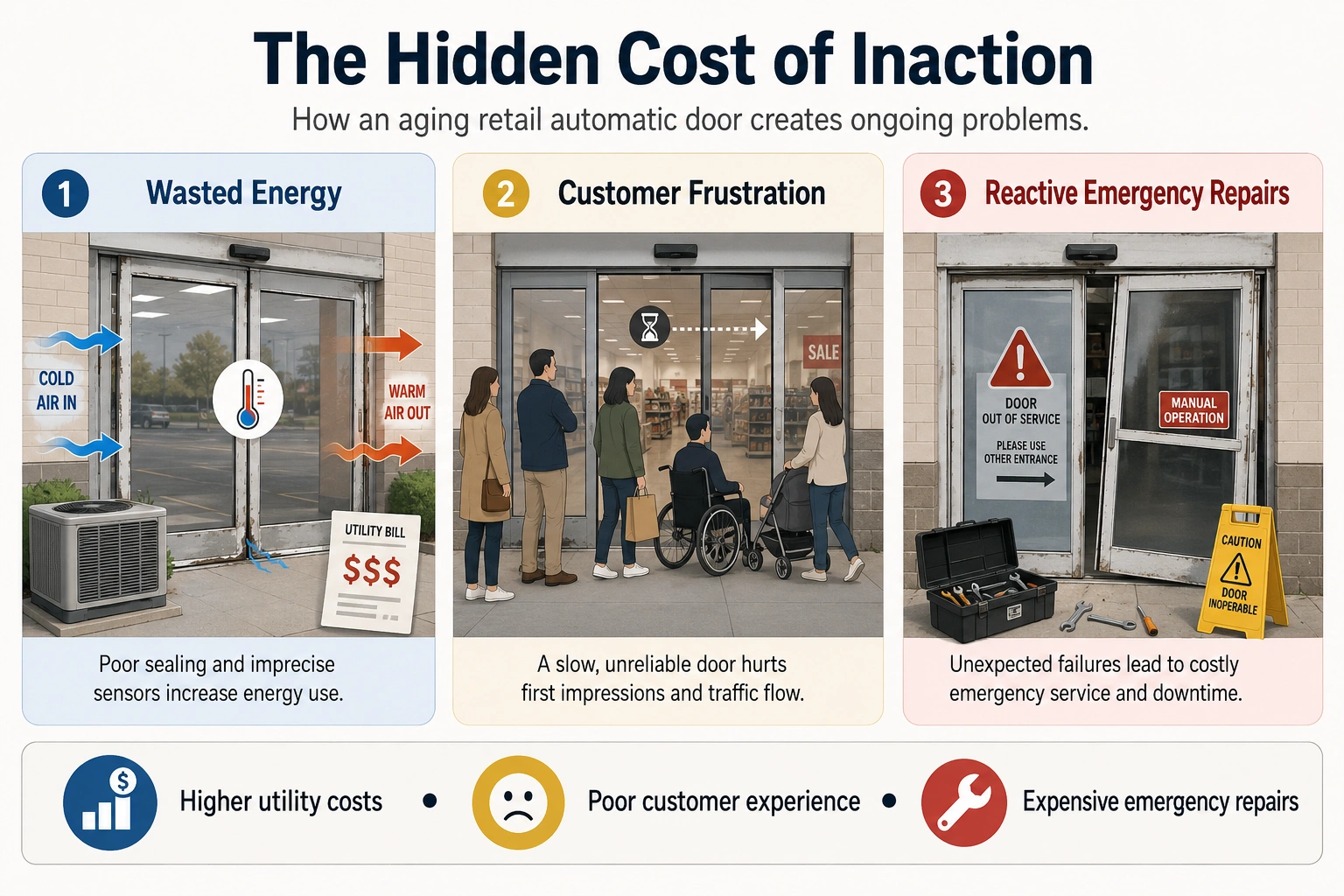
The Hidden Cost of Inaction

Before we talk about upgrades, let’s talk about the real cost of inaction. A door that seems “good enough” is often a source of hidden expenses and missed opportunities.

  • Wasted Energy: Older doors often have worn-out weather stripping and less precise sensors. Every time the door opens unnecessarily for a passerby or fails to create a tight seal, your HVAC system has to work harder to maintain the store’s temperature, driving up utility costs.
  • Customer Frustration: A slow, jerky, or malfunctioning door creates a poor first impression. It can impede traffic flow during peak hours and pose a accessibility challenge, frustrating customers before they’ve even started shopping.
  • Reactive Emergency Repairs: When a critical component fails on an old door, it’s rarely at a convenient time. Emergency repair calls are significantly more expensive than planned maintenance and can even lead to downtime where the entrance is closed or manually operated—a major disruption for any retail business. For any issues with a sliding door repair, addressing them proactively is always more cost-effective.

Understanding the "Cycle Count": Your Door's Lifespan


Think of your automatic door like a car engine; it has a finite number of cycles it can perform before parts begin to wear out. A “cycle” is one full open and close motion. In a quiet office, a door might see 100 cycles a day. In a busy supermarket or retail center, that number can easily exceed 1,000.

This is where the concept of “duty rating” becomes critical. A door system designed for medium traffic will fail prematurely in a high-traffic environment. The motor will burn out, the rollers will wear down, and the track will warp.

Here’s a simple breakdown of how traffic impacts the expected lifespan of door components:

Daily Traffic Level Daily Cycle Count Standard-Duty Component Lifespan Heavy-Duty Component Lifespan
Low < 250 Cycles 5-7 Years 10+ Years
Medium 250 – 500 Cycles 3-5 Years 7-10 Years
High / Extreme 500+ Cycles 1-2 Years 5-7+ Years

The “Aha” Moment: Many retailers are unknowingly using medium-duty doors in a high-traffic setting. The result? A constant cycle of repairs and a door that is always one busy Saturday away from failure.

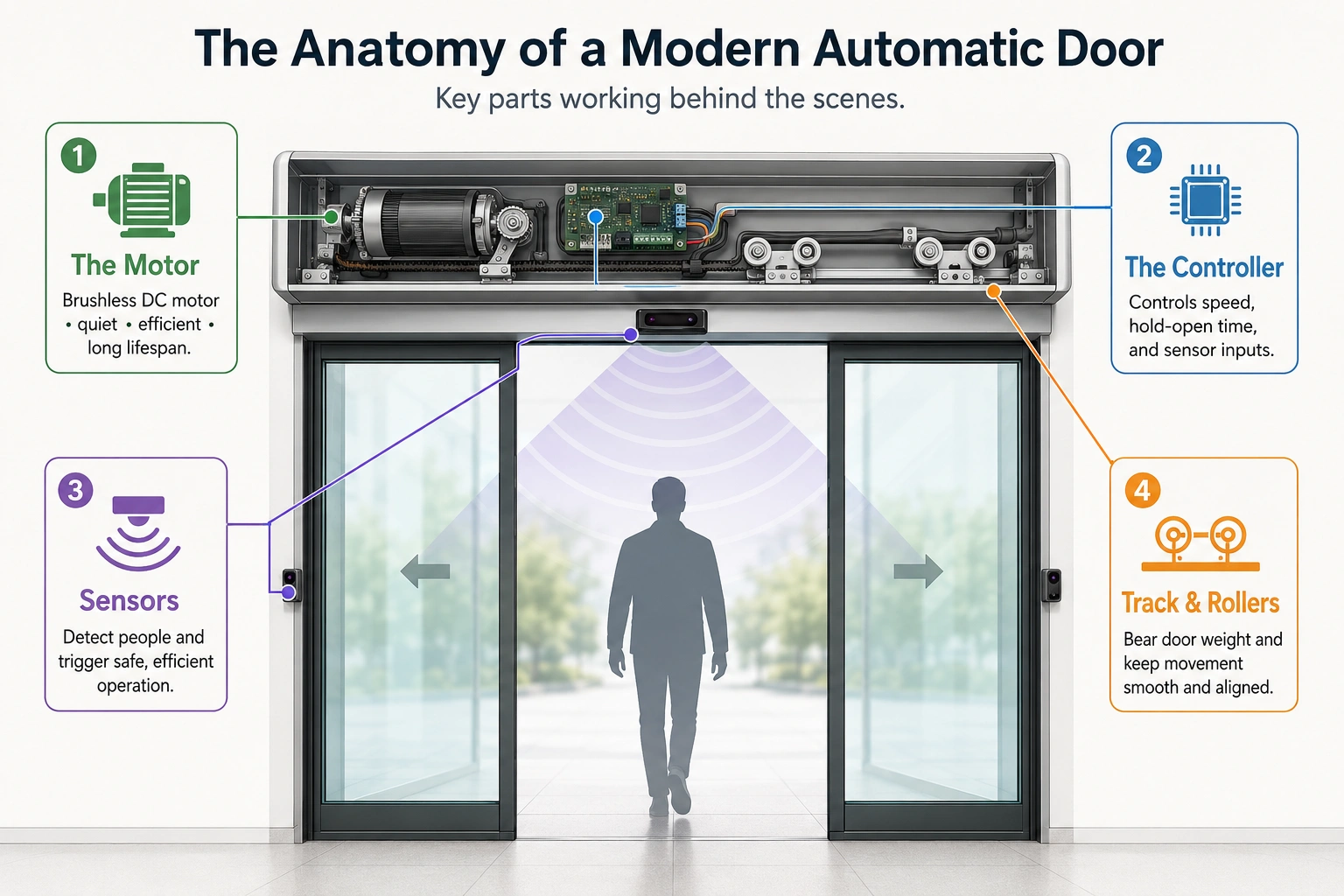
The Anatomy of a Modern Automatic Door


Anatomy of a Modern Automatic Door

To make smart upgrade decisions, it helps to know the key players working behind the scenes. A modern automatic door system is a finely tuned ecosystem of parts.

  • The Motor: This is the engine. Modern systems use brushless DC motors, which are quieter, more energy-efficient, and have a much longer lifespan than their older brushed counterparts. They provide the smooth, consistent power needed for heavy glass doors.
  • The Controller (The “Brain”): This microprocessor controls the door’s opening and closing speed, hold-open time, and sensor inputs. Modern controllers are “smart,” allowing for precise adjustments to optimize traffic flow and energy savings.
  • Sensors (The “Eyes”): These are arguably the most critical component for efficiency and safety. They detect people approaching and tell the controller when to open and close the door. The technology here has made incredible leaps.
  • Track and Rollers (The “Skates”): These components bear the full weight of the doors. In high-traffic settings, heavy-duty rollers and robust, perfectly aligned tracks are non-negotiable for preventing the jerky, grinding motion of a worn-out system.

The Modernization Matrix: Upgrading for Durability & Efficiency


Modernizing your entrance isn’t just about replacing old parts; it’s about choosing the right upgrades to solve specific problems.

Upgrading for Bulletproof Durability

For a high-traffic entrance, durability is paramount. These upgrades are designed to withstand constant use and abuse.

  • Invest in a Brushless DC Motor: If your door is more than 7-10 years old, it likely has a brushed motor. Upgrading to a brushless model is the single best thing you can do for long-term reliability.
  • Choose Heavy-Duty Rollers: Don’t skimp here. Urethane-coated, sealed bearing rollers provide a quieter, smoother glide and last exponentially longer under heavy loads.
  • Ensure a Robust Header and Track: The overhead header contains the entire drive system. A heavy-duty, reinforced header and a perfectly level track prevent sagging and wear, which are primary causes of motor strain.

Common Mistake: Choosing a system rated for “commercial” use without verifying its “high-traffic” duty rating. Result: The motor and rollers burn out in 18 months instead of the expected 5-7 years, requiring a full replacement.

Upgrading for Smart Efficiency

Efficiency upgrades pay for themselves by reducing energy costs and improving the customer experience.

  • Advanced Sensor Technology: This is where the magic happens.
    • Old Tech (Simple Motion Detectors): These often use a wide microwave field that triggers the door for distant traffic or even cars in the parking lot, causing constant “phantom openings.”
    • Modern Tech (Smart Infrared & Microwave Sensors): Modern sensors create a precise, targeted detection zone right at the threshold. They can distinguish between approaching and departing traffic, preventing the door from opening for someone who is just standing nearby. This dramatically reduces the number of unnecessary cycles and saves a fortune in HVAC costs.
  • High-Quality Weather Seals: Modern doors feature dual-astragal seals or “finger-proof” jambs that create an interlocking barrier against the elements. A tight seal can significantly reduce air infiltration, making the area around your entrance more comfortable for customers and staff.

A Proactive Approach: Spotting Trouble Before It Starts


You don’t need to be a technician to keep an eye on your door’s health. Empower your staff to perform a 1-minute visual check each week. This simple habit can catch small issues before they become expensive emergencies.

Your Weekly 5-Point Door Inspection Checklist:

  1. Listen: Does the door make any scraping, grinding, or squeaking noises as it moves? (Could indicate worn rollers or a debris-filled track).
  2. Look: Is there any visible damage to the glass or frame? Are the tracks clean and free of pebbles, salt, or dirt?
  3. Feel: Does the door move smoothly, or is it jerky and hesitant?
  4. Test the Sensors: Does the door open at the appropriate time as you approach? Does it stay open when you stand in the threshold?
  5. Check the Seals: Are the weather strips at the edges and bottom of the doors intact, or are they cracked and peeling?

By catching these things early, you can schedule maintenance at your convenience rather than being forced into an emergency call. A trusted partner providing professional door services can help you create a proactive maintenance plan that fits your needs.

Your Entrance is an Opportunity


Your automatic door is more than a utility; it’s a core part of your business operations and customer experience. By understanding its components and embracing modern technology, you can transform it from a potential liability into a reliable, efficient, and welcoming asset.

When you’re ready to assess your entrance, start with the 5-point checklist. And when you need expert advice on creating a more durable and efficient entryway, the team at A1 Doors is here to help you find the perfect solution.

Frequently Asked Questions (FAQ)


How long should a high-traffic commercial automatic door last?

With proper installation and regular maintenance, a heavy-duty system designed for high traffic can last 10-15 years or more. However, key components like rollers and sensors may need to be replaced every 5-7 years depending on the cycle count.

Are modern upgrades expensive?

While there is an upfront investment, modern upgrades often provide a strong ROI. The energy savings from advanced sensors and better seals, combined with the cost savings from avoiding emergency repairs, can make modernization a very smart financial decision.

Can I just upgrade my sensors without replacing the whole door?

In many cases, yes. Retrofitting modern sensors onto an existing operator is a cost-effective way to gain significant energy efficiency. A professional technician can assess if your current controller is compatible.

What is the most common point of failure?

Besides sensor issues, the most common failures in high-traffic doors are worn-out rollers and belts. These are the components doing the physical labor, and using standard-duty parts in a heavy-duty environment causes them to fail quickly.