(855) 676-0881

The Strategic Process of Automatic Door Modernization & Installation: The Commercial Facility Guide


Published: Sep 7, 2026

When a commercial entrance drags, fails, or leaks climate-controlled air, facility managers face a pivotal operational choice: continue paying for short-term repairs, or execute a comprehensive entryway modernization. Balancing immediate Capital Expenditure (CapEx) with long-term reliability requires a structured, strategic evaluation process.

A modernized entrance does more than just improve aesthetics; it directly impacts energy efficiency, legal compliance, and customer flow. Navigating this upgrade requires a thorough understanding of structural engineering, regulatory standards, and spatial logistics.
Modernization vs. Replacement: The CapEx Decision Matrix


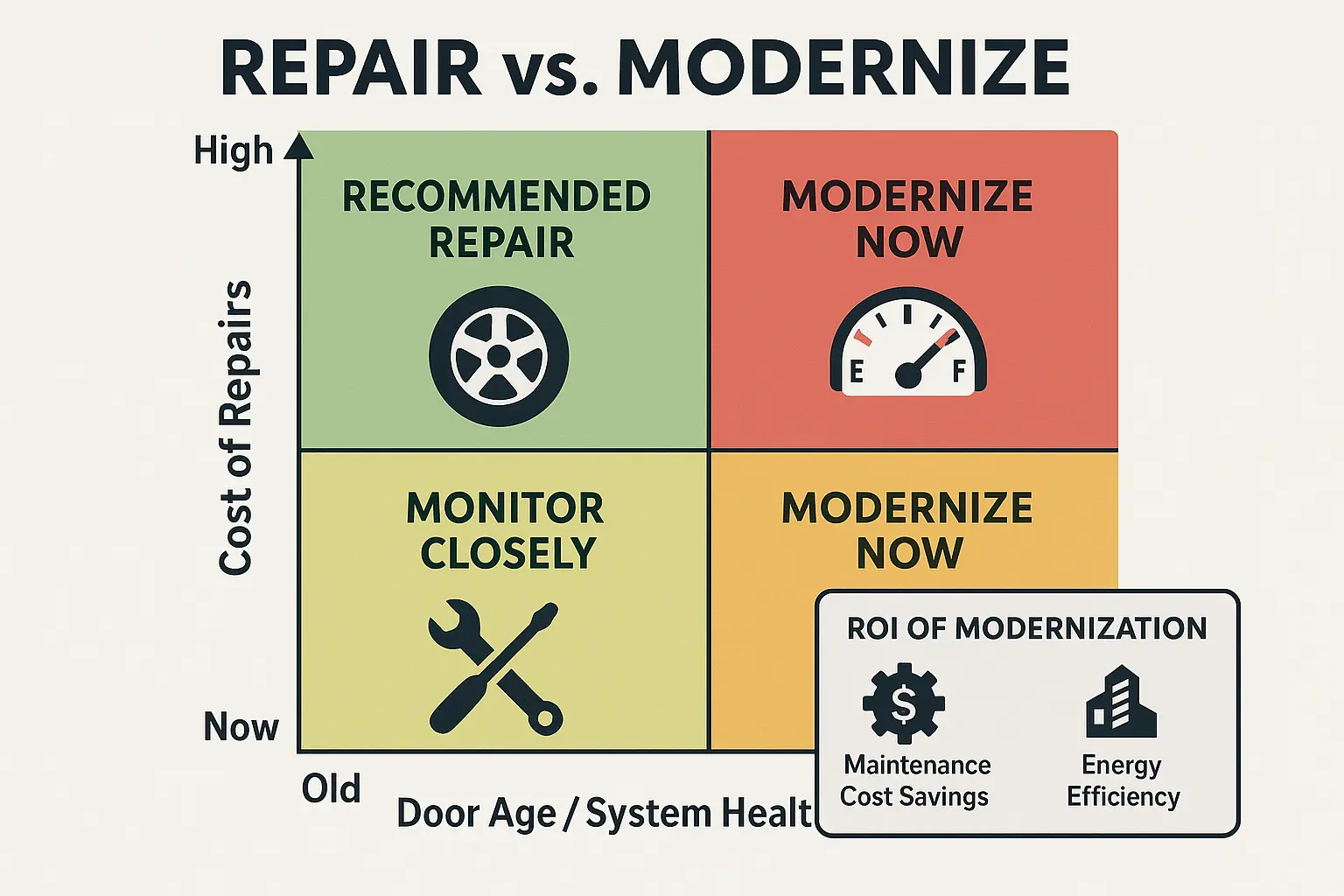
Before committing capital, facilities must determine whether a localized component repair or a complete system modernization is more cost-effective. For instance, executing a minor sliding door wheel replacement or replacing worn hanger tracks can temporarily resolve physical movement issues. However, if the underlying computerized operator or motor is failing, dragging panels will continue to strain the system, leading to repetitive maintenance calls.

A visual decision-making tool that helps facility managers quickly assess whether to undertake minor repairs or commit to full automatic door modernization based on cost, door age, and ROI considerations.

Phase 1: Commercial Automatic Door Site Assessment & Planning Guidelines


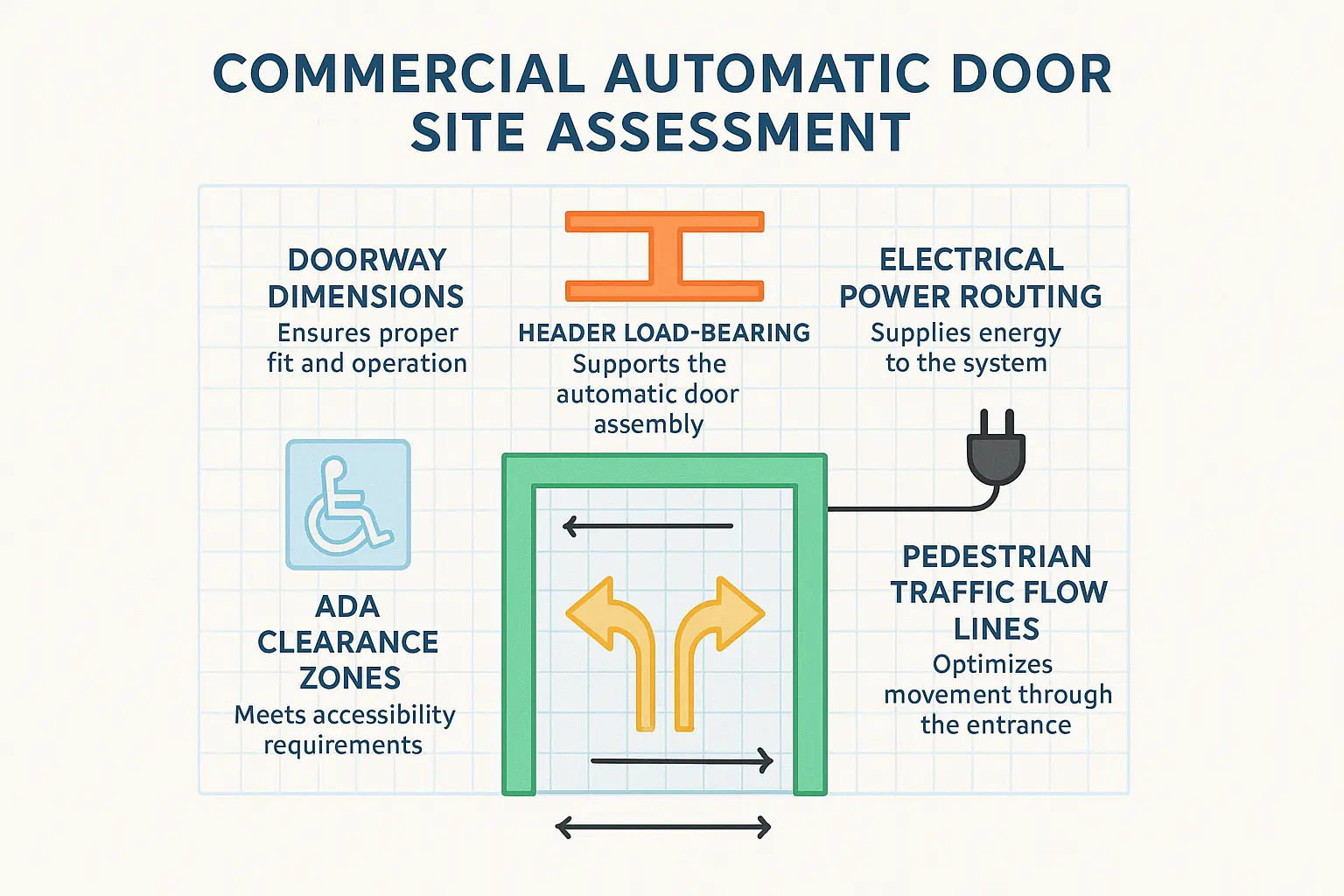
Every successful modernization project relies on a precise physical and structural assessment. Licensed installers must carefully evaluate spatial limitations, structural load ratings, and traffic volumes.

Our door installation hartford ct specialists evaluate several critical technical variables during the site survey:

  • ADA Standards (Section 404): Automatic doors must provide a minimum clear opening width of 32 inches when open at 90 degrees, with manual operating forces not exceeding 5 lbs for interior doors [1].
  • Header Load Capacities: Structural walls must support the weight of heavy, motorized operator headers and dual-tempered glass panels.
  • Electrical Routing: Coordinating dedicated power lines and emergency backup battery integrations.

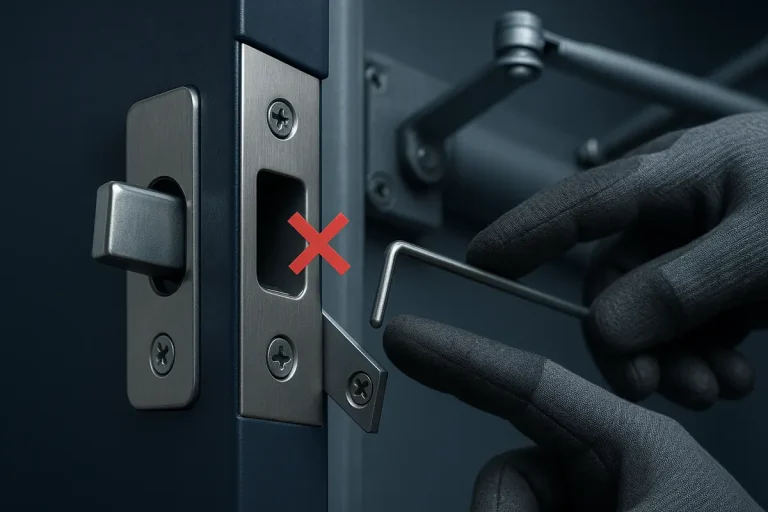
A step-by-step visual guide to commercial automatic door site assessment, highlighting critical measurements and planning considerations to ensure ADA compliance and structural safety.

Phase 2: Design and Integration for Specialized B2B Facilities


Commercial doors must be tailored to the distinct operational realities of the business environment they serve:

  • Auto Showrooms & Dealerships: Require high-visibility, wide-span glass automatic doors to facilitate effortless vehicle rotations and luxury customer entry.
  • Automotive Service Lanes: Heavy-duty, high-speed auto shop doors protect work bays from external wind and weather while managing consistent vehicle throughput.
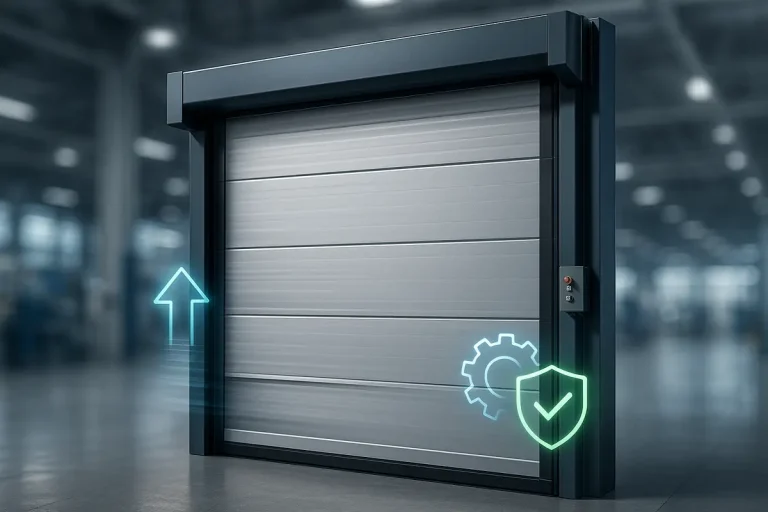
  • Logistics Hubs & Warehouses: High-speed, automated auto warehouse doors open rapidly to allow safe forklift operations while preserving internal environmental control.
  • Commercial Parking Structures: High-cycle automatic car parking door barriers control traffic and secure parking zones.

Phase 3: Technical Installation and Engineering Standards


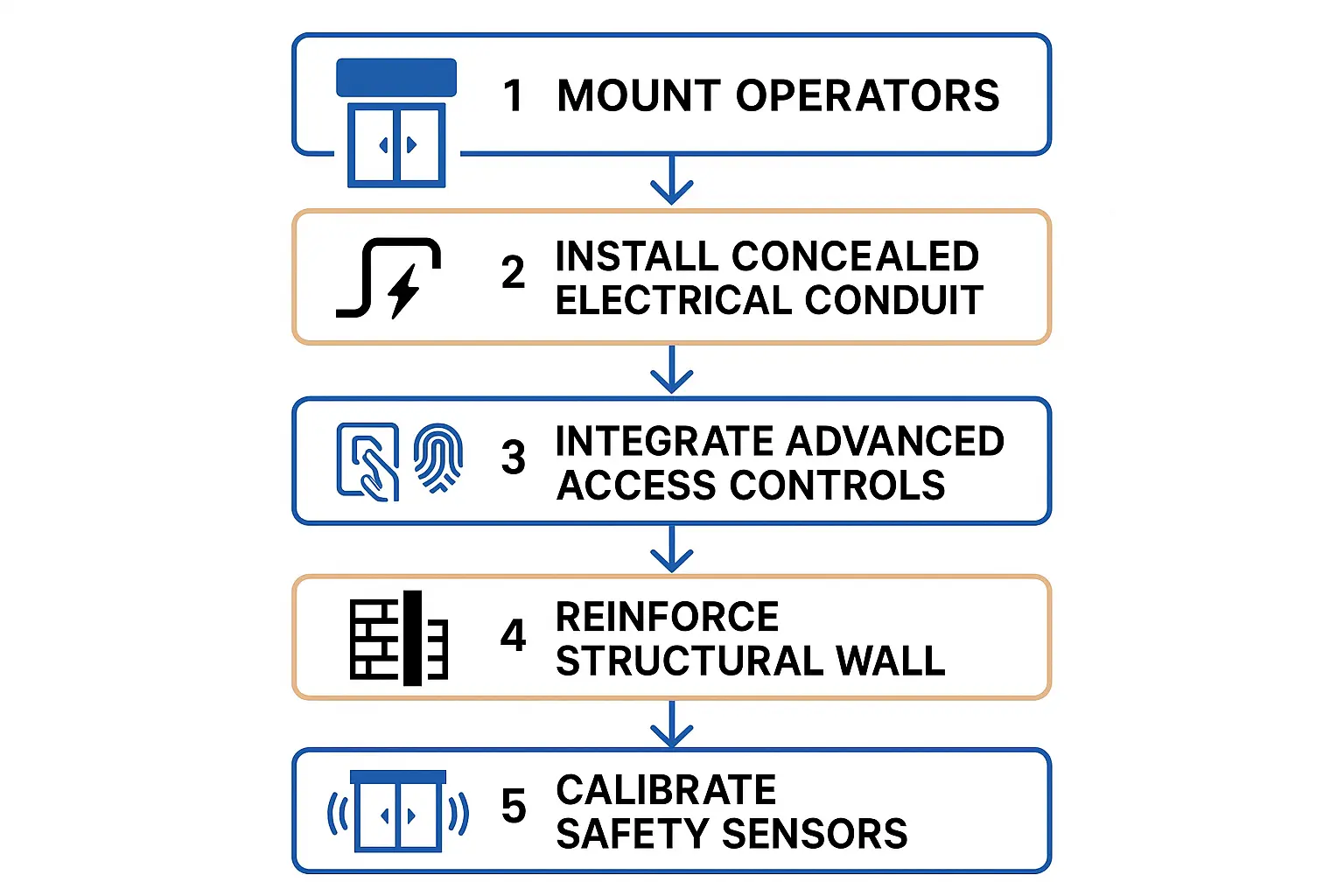
The physical installation process bridges structural craftsmanship with advanced electronics. Experienced technicians physically anchor the heavy-duty tracking headers, wire the motorized drive systems, and integrate peripheral access controls—such as touchless motion waves, card readers, and biometric security systems.

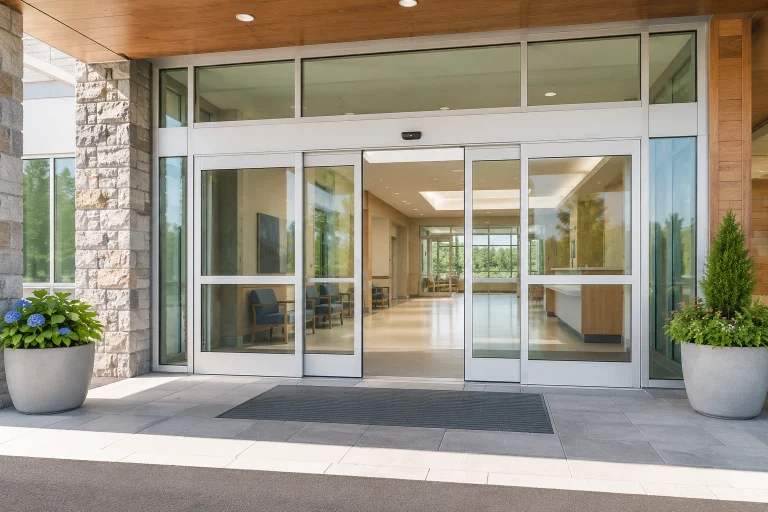
Breaking down the complex automatic door installation into clear, manageable steps helps building managers understand each critical phase from hardware mounting to compliance testing.

Thermal Envelope Optimization: Commercial Weatherstripping & Energy Seals


According to ASHRAE Standard 90.1, worn weather seals and slow-moving doors represent up to 30% of a commercial building’s heating and cooling loss [2].

Just as replacing worn passenger vehicle door seals prevents wind noise and water leaks, installing commercial-grade perimeter brush seals, bottom sweeps, and heavy-duty astragal seals on commercial storefronts is critical to maintaining a building’s thermal envelope, reducing overall HVAC energy expenditure by 15% to 22% [2].

Phase 4: Calibration, Compliance, and Safety Certification (ANSI & ADA)


A motorized door cannot be commissioned without exhaustive testing. Certified a1 doors services technicians calibrate presence-detection fields, safety-mat zones, and operating speeds in accordance with ANSI/BHMA A156.10 standards [3]. These protocols ensure pedestrian safety and prevent accidental contact during operation.

The Disruption Minimization Protocol: Keeping Your Business Open


Physical installation shouldn’t force operational shutdowns. At A1 Doors Services, we utilize a phased modernization approach. By scheduling heavy structural mounting and high-voltage wiring during evening shifts or off-peak hours, your facility remains fully accessible to guests and employees throughout the project.

Expert Navigation: Clarifying Search Intent


Please note: If you are searching for passenger vehicle bodywork—such as instructions to replace driver doors or sourcing components from salvage auto doors—we suggest reaching out to a local automotive collision repair shop or auto salvage business. Our licensed technicians focus exclusively on commercial property automation, architectural entryways, and industrial facility doors. Learn more about us and our targeted service offerings.

Frequently Asked Questions


How long does a standard commercial automatic door installation take?

Most commercial retrofits or system modernizations can be completed within 1 to 2 business days. Our technicians often perform structural preparation and wiring routing during off-peak hours to minimize business disruption.

What is the difference between a minor repair and a full modernization?

Minor repairs involve replacing individual wear-and-tear components like worn sliding rollers, tracks, or weatherstrips. A full modernization involves replacing the entire header assembly, computerized operator, and sensor system to bring an aging entryway up to modern ADA and safety standards.

How often should commercial automatic doors be inspected for safety compliance?

Under ANSI/BHMA A156.10 guidelines, commercial power-operated pedestrian doors should undergo a professional safety inspection at least once a year. Facility managers should also perform basic daily sensor tests to ensure the presence-detection fields are functioning properly.