A residential overhead garage door is a complex mechanical counterweight system operating under high physical tension. Moving a door weighing anywhere from 130 lbs to over 500 lbs daily requires every component to work in perfect synchronization. When a failure occurs, understanding how these components interact empowers property owners to make informed evaluation, repair, and upgrade decisions.
Overhead Door Mechanical Systems: Springs, Tracks, Cables & Panels
Published: Oct 23, 2026
Emergency Diagnostic & Safety Triage
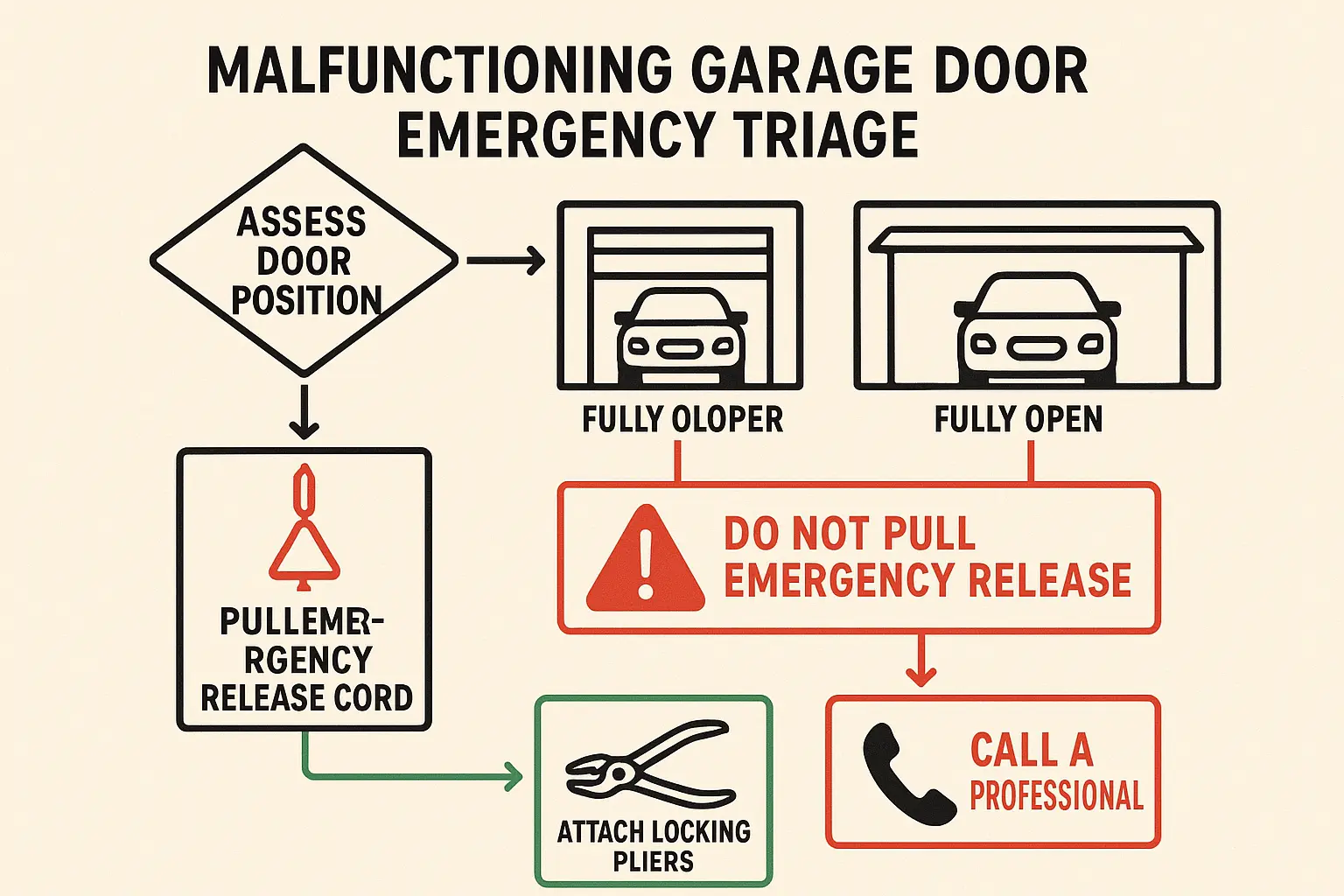
When an overhead door malfunctions, immediate safety triage is essential before assessing structural components. Federal standard 16 CFR Part 1211 requires emergency release mechanisms, but pulling the red cord on a door that is open or partially open with a broken spring releases hundreds of pounds of dead weight instantly.
If your vehicle is trapped, never attempt to lift a heavy door manually without securing the tracks. Using locking pliers under the bottom rollers can hold the door temporarily while you contact a licensed professional for garage door repair near me. High-tension zones—including torsion springs, bottom brackets, and winding cones—present severe risk and should never be disassembled without specialized training.
The Overhead Mechanical Subsystem Architecture
Overhead door assemblies rely on five core mechanical subsystems working together to manage counter-tension, smooth travel, and structural integrity.
- Torsion & Extension Springs: Standard torsion springs are engineered for roughly 10,000 cycles (1 cycle = 1 full open/close action). Based on ANSI/DASMA 102 standards, this equals a 6.8 to 7-year lifespan under typical daily use. Upgrading to high-cycle wire springs provides 25,000 to 50,000 cycles, extending service life to 15–20 years.
- Lift Cables & Drums: Constructed from 7×19 galvanized aircraft wire, cables wrap around calibrated drums to lift the door smoothly. Environmental conditions play a major role here: in coastal environments within 5 miles of salt water, atmospheric salt causes micro-pitting corrosion, reducing cable operational life from 12+ years down to 5–8 years.
- Tracks & Rollers: Steel tracks align the door’s vertical and horizontal travel. Commercial-grade 14-gauge steel offers significantly more rigidity than standard 16-gauge residential tracks. Replacing noisy 10-ball steel rollers with sealed 13-ball nylon rollers dramatically decreases operational noise and vibration.
- Door Panels & Hinges: Stile-reinforced door sections distribute operational flex across numbered hinges (#1 through #5) to maintain vertical alignment.
Diagnostic & Mechanical Cascade Matrix
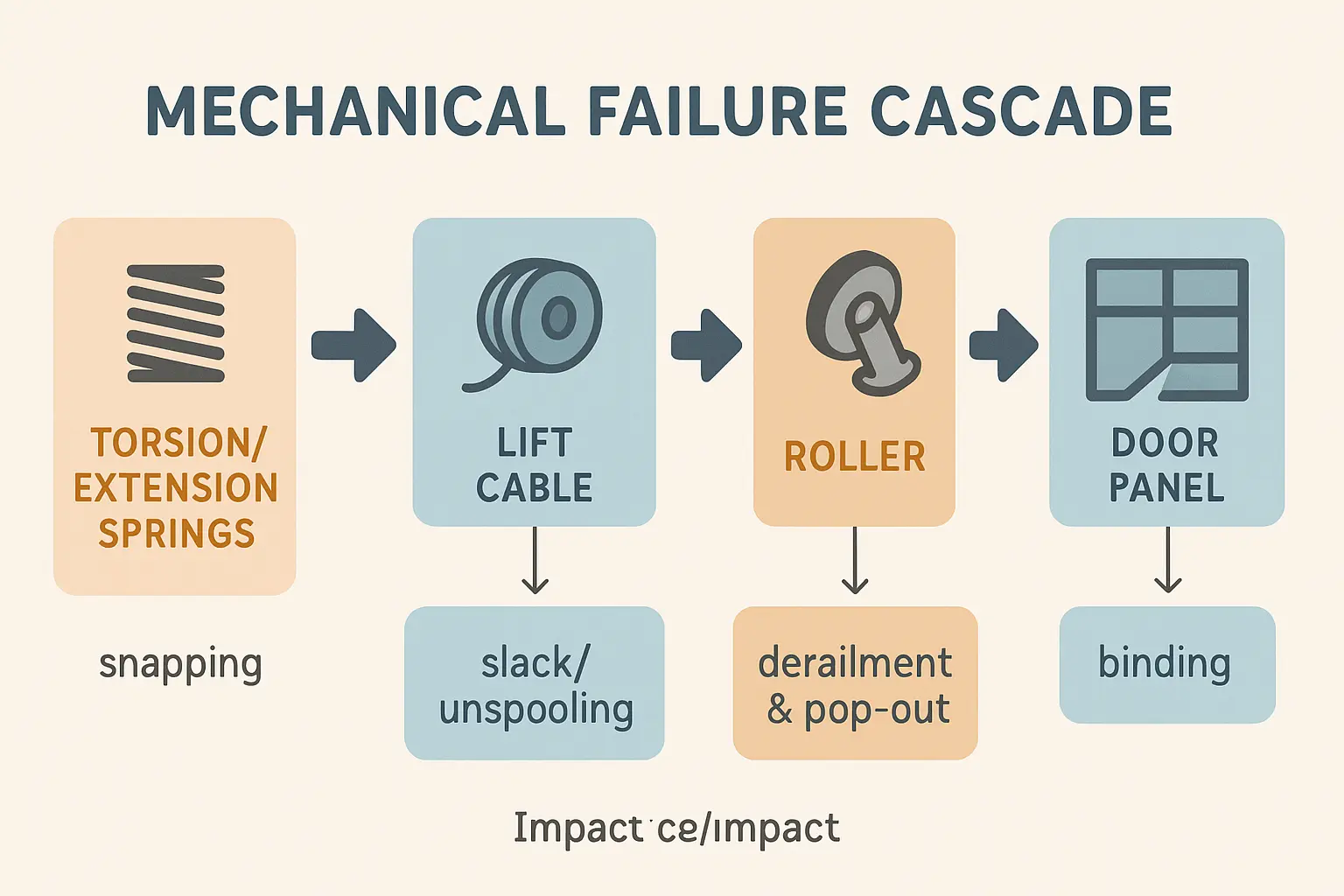
Overhead door components rarely fail completely in isolation. Understanding the Mechanical Failure Cascade reveals why small issues quickly turn into major system failures:
- Spring Failure: A torsion spring snaps due to metal fatigue.
- Weight Shift: 100% of the door’s weight shifts instantly to the lift cables and automatic opener motor.
- Cable Unspooling: Loss of balanced counter-tension causes cables to jump drum grooves and lose alignment.
- Roller Derailment & Track Binding: The crooked door forces rollers out of alignment, bending track assembly legs and stripping opener drive gears.
For minor operational alignment checkups, property owners can perform non-tensioned DIY door troubleshooting. However, dynamic failures like snapped cables or spring fractures require certified garage door spring repair.
MOFU Buyer's Decision & Cost Guide
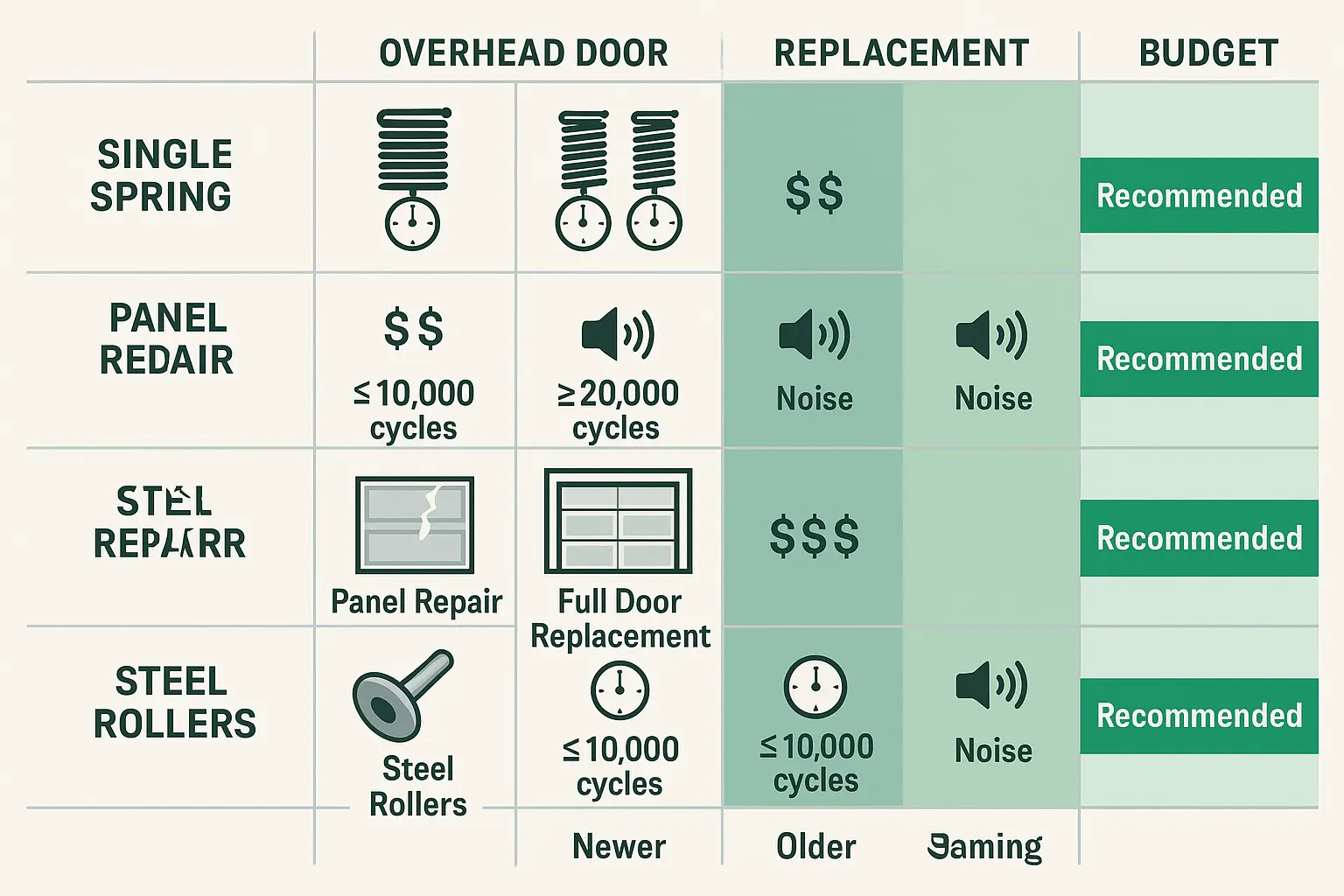
Evaluating component repairs versus comprehensive system replacements involves balancing short-term parts costs against long-term reliability.
The Dual Spring Replacement Strategy
When one spring breaks in a double-spring system, replacing both simultaneously is the most cost-effective choice. Industry field data shows that because both springs experience identical cycle stress, the surviving spring usually fails within 3 to 6 months of the first. Replacing both in a single service call avoids paying double for trip fees and labor.
Panel Repair vs. Full Door Replacement Threshold
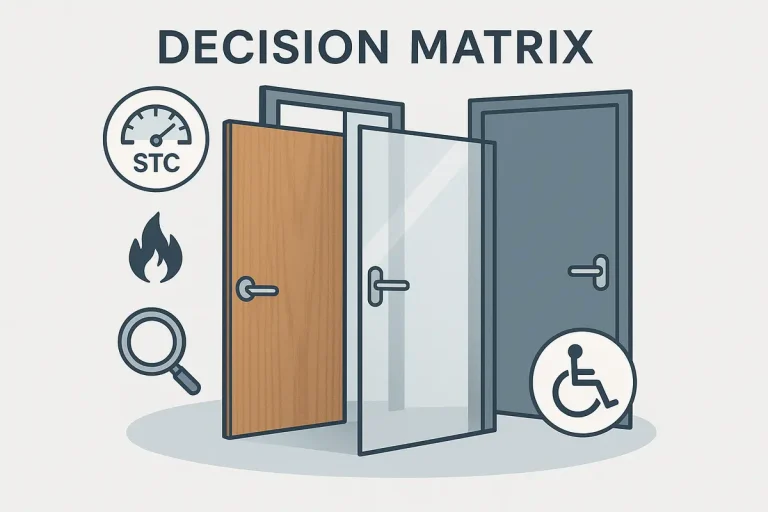
When assessing damaged sections on residential overhead garage doors, apply this practical decision framework:
- Replace Single Panel: If structural damage is isolated to a single bottom/middle panel, the door model is under 10 years old, and replacement panels are readily available from the original manufacturer.
- Replace Full Door: If the repair cost for replacement panels exceeds 50% of a complete new door package, or if UV exposure has caused widespread color fading on an older model, full replacement delivers better structural value and property aesthetic appeal. Explore our comprehensive evaluation framework on door repair vs door replacement.
Preventative Maintenance Protocol
Extending system longevity requires proactive care:
- Bi-Annual Balance Check: Disconnect the opener and manually raise the door 3 feet. A balanced system stays suspended in place; if it drops or shoots upward, spring tension needs professional adjustment.
- Proper Lubrication: Apply high-performance non-tacky silicone or lithium spray directly to rollers, hinges, and springs every six months. Never use standard WD-40, which acts as a solvent and strips protective factory grease from internal bearings.
Frequently Asked Questions
Should I replace both garage door springs if only one is broken?
Yes. Both springs endure the exact same cycle stress during operation. Field data confirms that the surviving spring typically fails within 3 to 6 months. Replacing both during a single visit saves on labor costs and prevents secondary service calls.
Can I replace a single damaged door panel instead of the whole door?
Single panel replacement is practical if structural damage is limited, the door model is under 10 years old, and matching parts are available. If repair costs exceed 50% of a replacement door assembly, upgrading the whole system offers superior value.
Why did my lift cable snap or come off the drum?
Cables slip or snap due to sudden torsion spring failure, salt corrosion, or track obstruction. When tension drops unexpectedly, slack causes the aircraft cable to jump off the drum grooves and fray against structural brackets.