DIY Door Troubleshooting And Minor Preventative Fixes


Published: Aug 4, 2026

When a door refuses to latch, squeaks incessantly, or handles wobble under pressure, you are faced with a frustrating decision: Can this be solved in fifteen minutes with the tools in your garage, or is it time to bring in professional help?

Taking on DIY door repairs without understanding the underlying physics and chemistry can lead to stripped screw holes, ruined lock cylinders, and warped frames. This guide provides highly practical, field-tested troubleshooting steps to help you confidently resolve minor door issues and recognize when a professional intervention is necessary.

The 3-Second Visual Diagnostic Tool


Door Fixes Diagnostic

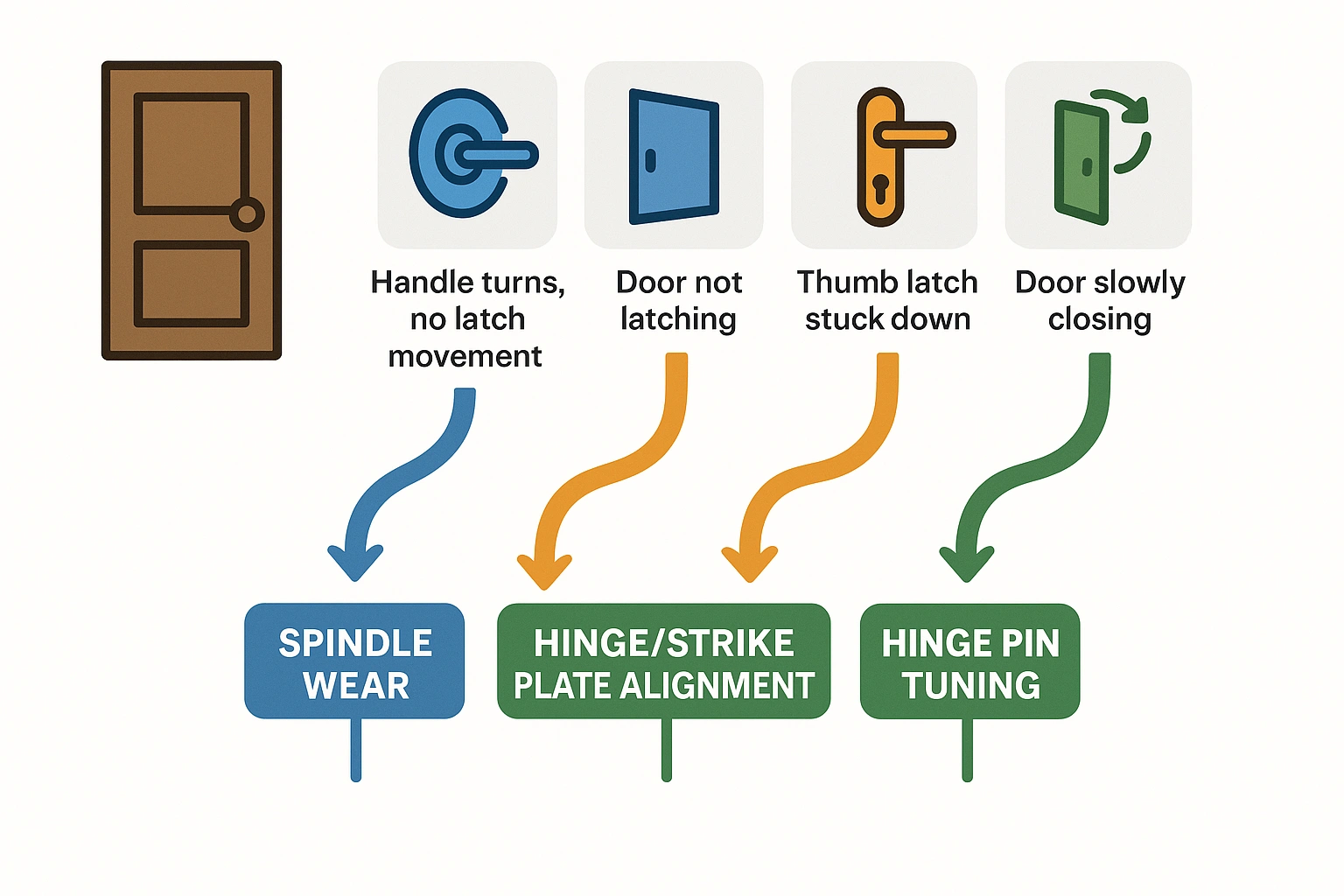
Before picking up a screwdriver, pinpoint your exact issue using the quick troubleshooting paths below to find your instant remedy.

  • Symptom A: The door handle turns, but the latch won’t retract -> Jump to Loose Knobs & Spindle Wear
  • Symptom B: The door won’t latch or lock cleanly into the frame -> Jump to Adjusting a Door That Won’t Latch
  • Symptom C: The handle or front entry thumb-latch is physically stuck down -> Jump to Brand-Specific Troubleshooting
  • Symptom D: The door squeaks or keeps slowly closing on its own -> Jump to Squeaky Hinges & Sagging Doors


Adjusting a Door that Won't Latch Properly


Adjusting a Door that Won't Latch Properly

When a door fails to latch, the issue is almost always a misalignment between the latch bolt and the strike plate hole.

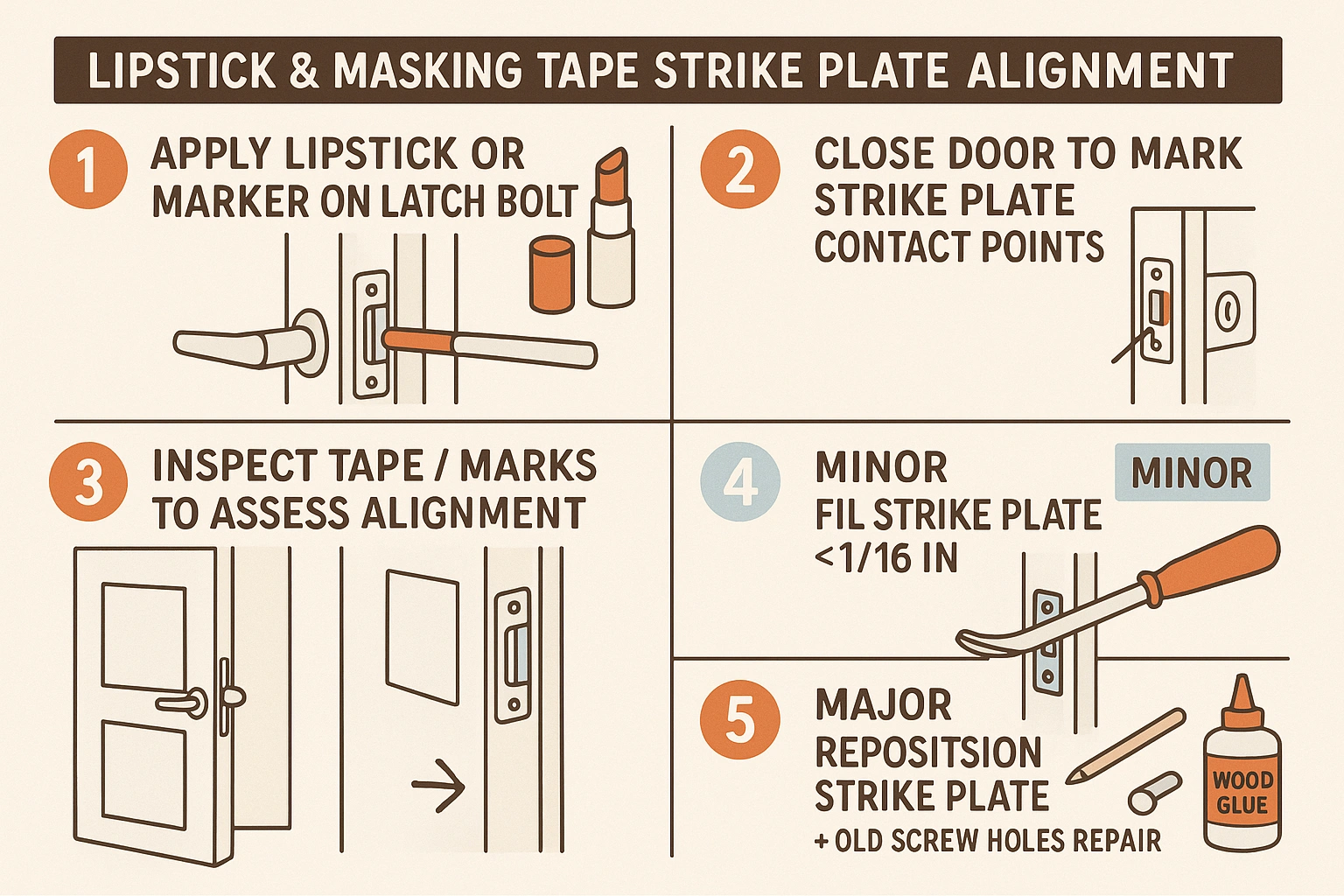
The Diagnostic: “Lipstick & Masking Tape” Test

  1. Apply colored chalk or lipstick directly to the edge of the latch bolt.
  2. Cover the strike plate opening on the door jamb with a strip of masking tape.
  3. Close and open the door, allowing the latch to press against the tape. The mark left behind shows you exactly where the latch is colliding with the metal strike plate.

The Fixes

  • Minor Alignment (under 1/16″): If the friction mark is only slightly off, do not remove the strike plate. Use a small, curved metal file to grind away the inner lip of the strike plate opening until the latch clicks into place smoothly.
  • Major Alignment (over 1/16″): Unscrew the strike plate. Use a chisel to expand the wood mortise in the direction of the misalignment. Fill the old screw holes with wooden toothpicks dipped in wood glue, snap them flush, and allow them to dry. Drill fresh pilot holes and reinstall the strike plate.

If structural frame shifting or major sagging has warped the frame beyond these limits, attempting to force it can cause severe structural damage. Seeking an expert door repair service is the safest way to realign the unit.


Tightening Loose Door Knobs & Spindle Wear


A loose, wobbly door handle is typically caused by backed-out mounting screws or a degraded internal spindle.

Locating Hidden Screws

Modern residential handles conceal their mounting screws under decorative trim pieces called “rose plates.” Look closely at the neck of the interior handle for a tiny slot. Insert a small flathead screwdriver into this slot to pop off the cover plate, revealing the mounting screws underneath. For handles secured by a tiny “grub screw” (tension screw) on the collar, tighten it using a 2mm Allen key.

Spindle Wear Mechanics

In standard tubular locks, a square metal spindle connects the interior and exterior handles. Budget-friendly hardware uses softer zinc alloy spindles. Over 5 to 10 years of persistent use, the square corners of this spindle wear down and become rounded inside the latch mechanism. If your door handle spins freely without retracting the latch, the spindle is stripped and requires replacement.

For more complex entry configurations or high-traffic entryways, scheduling a professional door repair near me ensures you get commercial-grade, long-lasting hardware replacements. If your issues stem from business entry doors, consider scheduling a specialized commercial door repair to protect security and compliance.


 

Brand-Specific Troubleshooting & Sticking Thumb Latches


Kwikset & Schlage Latch Issues

If your Kwikset SmartKey cylinder feels frozen or the handle won’t spring back, the internal spring cassette may have snapped or slipped. You can reset the cylinder by inserting the SmartKey tool into the reset hole while the functional key is turned 90 degrees. However, if the latch assembly does not retract when the cylinder is removed, the internal actuator is broken.

Thumb-Latch Sticking on Entry Handle Sets

Front entry thumb-latches push down on a vertical lifter bar that retracts the latch. When this mechanism catches or stays stuck down, internal friction is the culprit. Thoroughly clean the internal assembly with an aerosol electronics cleaner to strip away old grease and dirt. Follow this immediately with a premium dry Teflon or PTFE spray to restore smooth movement.


Squeaky Hinges & Sagging Doors


Tightening Loose Door Knobs

Using the wrong lubricant on squeaky hinges can worsen the problem over time.

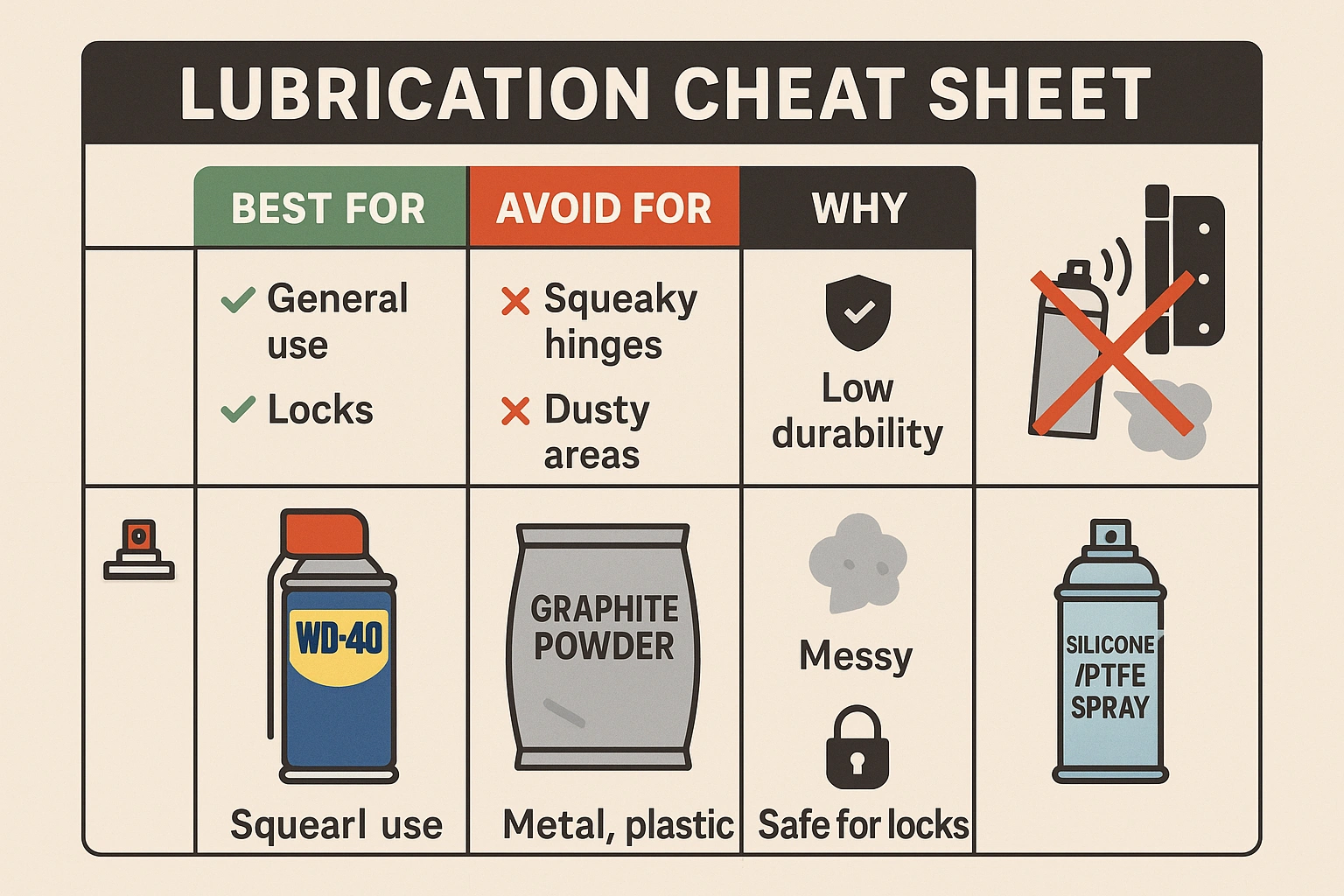
The Chemistry of Lock and Hinge Lubrication

  • Standard WD-40: Do not use. WD-40 is a solvent and penetrant containing 50% mineral spirits. While it temporarily stops squeaks, it quickly evaporates, leaving behind a sticky, microscopic organic residue. This residue actively attracts dust and drywall grit, turning into an abrasive paste that degrades metal hardware within 3 to 6 months.
  • Dry Graphite Powder: Safe for dry lock cylinders only. Never mix graphite with wet oils, as they combine to form a thick sludge that permanently freezes pins.
  • PTFE/Teflon and Silicone Sprays: The industry gold standard. These are dry, water-resistant lubricants that repel dirt and offer long-lasting protection.

The “Hinge Pin Bend” Method for Self-Closing Doors

If a door swings open or closed on its own, it is out of plumb. You can fix this without re-hanging the frame:

  1. Tap the middle hinge pin out using a hammer and a nail punch.
  2. Lay the pin flat on concrete.
  3. Tap the center of the pin lightly with a hammer to create a very subtle, micro-bend.
  4. Tap the pin back into the hinge. This slight bend introduces just enough friction to hold the door in any position.

If you are dealing with sagging exterior setups, installing a professional storm door replacement can protect your entry door, while structural aluminum door repair is often required to address deep frame warping.


Weatherstripping, Sweeps & Appliance Sidebars


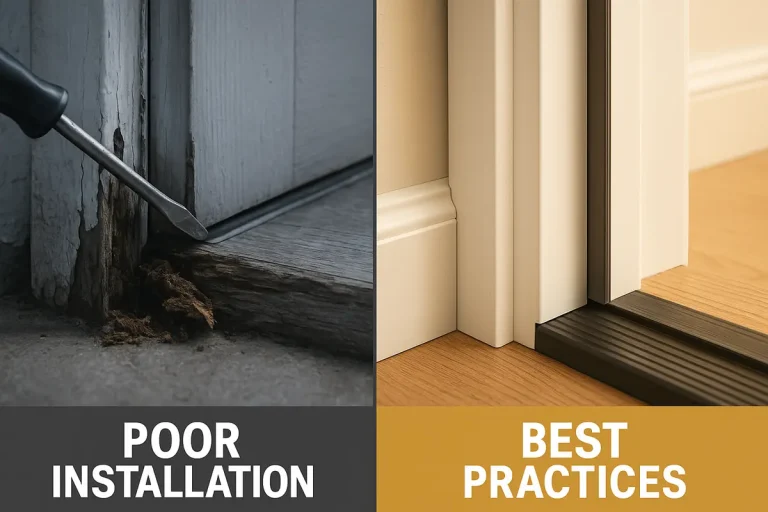
Replacing worn door sweeps and adjusting the threshold can cut energy loss significantly. Slide-in kerf weatherstripping can be pulled out of its groove and replaced directly, while screw-on door sweeps should be adjusted so the rubber blade makes light, uniform contact with the floor.

Sidebar: Appliance Lock Troubleshooting

If your self-cleaning oven door latch gets stuck, the oven’s control board will throw an “F90” or “LOC” error and disable the appliance.

  1. Unplug the oven or shut off the circuit breaker for 10 full minutes to reset the microprocessor.
  2. If it remains stuck, scrub the mechanical latch hook gently using a toothbrush and baking soda paste to remove baked-on carbon and grease.

For major household access systems, regular service keeps your home secure. Keeping your garage door running smoothly with a professional garage door service near me protects your primary entry point, while high-use main doors benefit from a specialized door closer service to ensure proper latching every time.


DIY vs. Pro Decision Matrix


Use this breakdown to determine if your door issue is a quick DIY project or requires professional tools and expertise.

Factor DIY Approach Call a Professional
Required Tools Screwdriver, metal file, PTFE spray, wood glue. Commercial routers, heavy-duty clamps, specialized alignment tools.
Material Risks Stripping minor screws; cosmetic adjustments. Structural frame cracking; breaking high-security smart locks.
Time Investment 15 to 45 minutes of troubleshooting. Professional repair completed quickly and correctly on the first visit.
Estimated Cost $5 to $25 for minor hardware or lubricants. Competitive, fair-rate professional service fee.

Frequently Asked Questions


Why does my door latch fine in winter but stick in summer?

Wood is highly hygroscopic; it absorbs environmental moisture. High summer humidity causes wood doors and frames to swell, throwing off tight tolerances. In winter, the dry air pulls moisture out, causing the wood to shrink back.

Is graphite powder safe for all locks?

No. Graphite powder should only be used in clean, completely dry lock cylinders. If any wet oils or liquid penetrants (like standard WD-40) were previously applied to the lock, injecting graphite will form a thick paste that can permanently ruin the lock tumblers.

What should I do if a hinge screw spins without tightening?

This indicates the wood fibers inside the screw hole are stripped. Remove the screw, jam a wood toothpick coated in wood glue into the hole, break it off flush, and let it dry. This gives the screw fresh wood to bite into when reinstalled.