When securing a home, the front door usually gets the premium hardware and smart tech. Yet, structural realities tell a different story. According to law enforcement statistics and the International Association of Certified Home Inspectors (InterNACHI), 22% of all residential break-ins occur through the back door. The reason is simple: backyards provide natural concealment from neighbors and the street, giving intruders time to work. To protect your home, you must look at your back door not as a simple exit, but as a complete security system.
The Ultimate Back Door Hardening Blueprint: Locks, Hinges & Accessories
Published: Sep 18, 2026
Door Handle Lock vs. Deadbolt
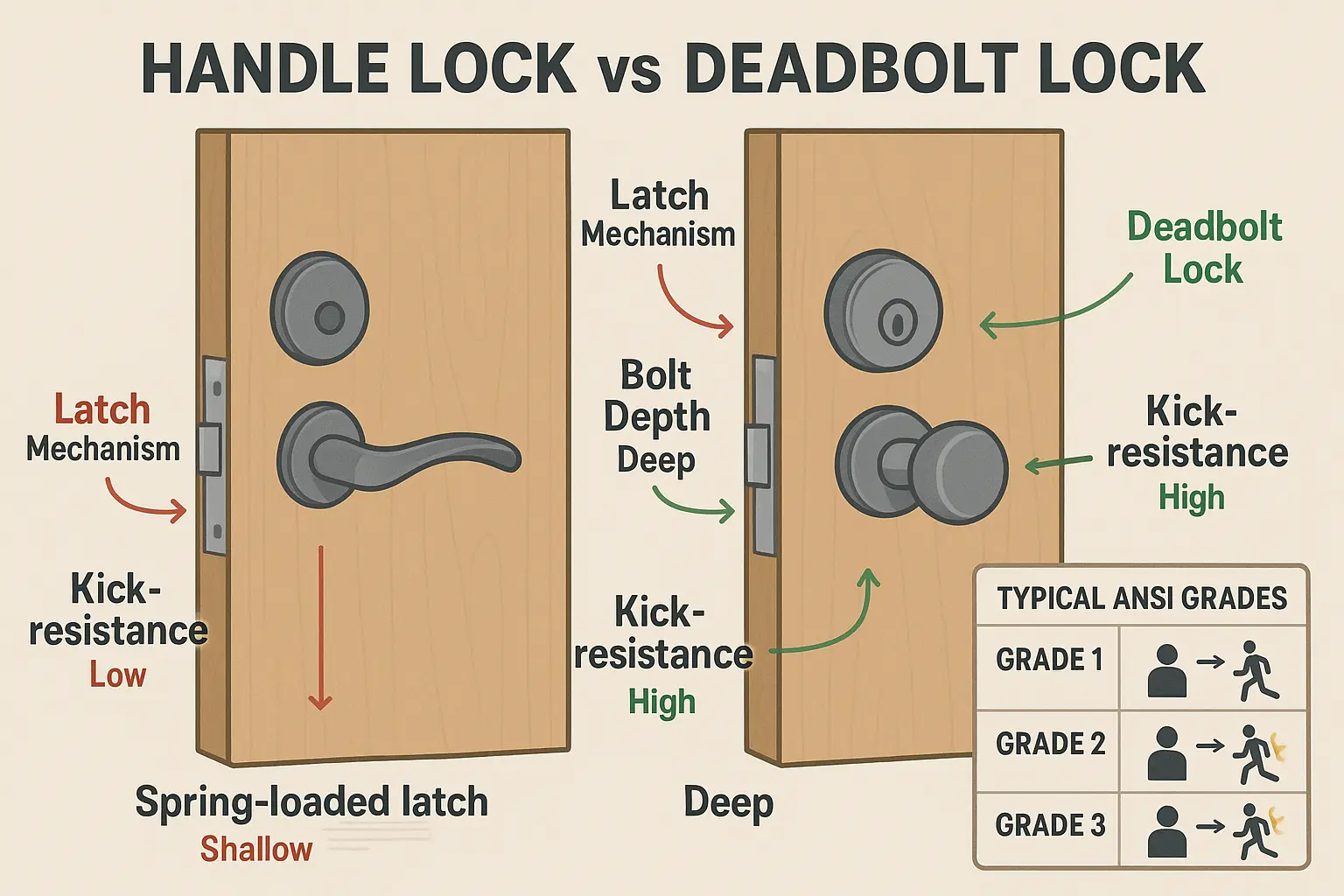
The classic security debate often centers on whether a standard handle lock is enough. Mechanically, they are worlds apart. A standard handle or knob lock relies on a spring-loaded beveled latch. While convenient, these can easily be bypassed using basic hand tools. A deadbolt, however, extends a solid one-inch steel or brass bolt into the door frame, requiring rotational force to retract.
When selecting a deadbolt, pay attention to the Builders Hardware Manufacturers Association (BHMA) and ANSI grading systems:
- Grade 1 (Commercial): Offers maximum strength, designed to withstand up to 10 heavy kick-ins.
- Grade 2 (Heavy Residential): The ideal baseline for residential back doors, offering high kick resistance.
- Grade 3 (Standard): Provides basic security but is highly vulnerable to forced entry.
Outswing Doors & The Hinge Pin Trap
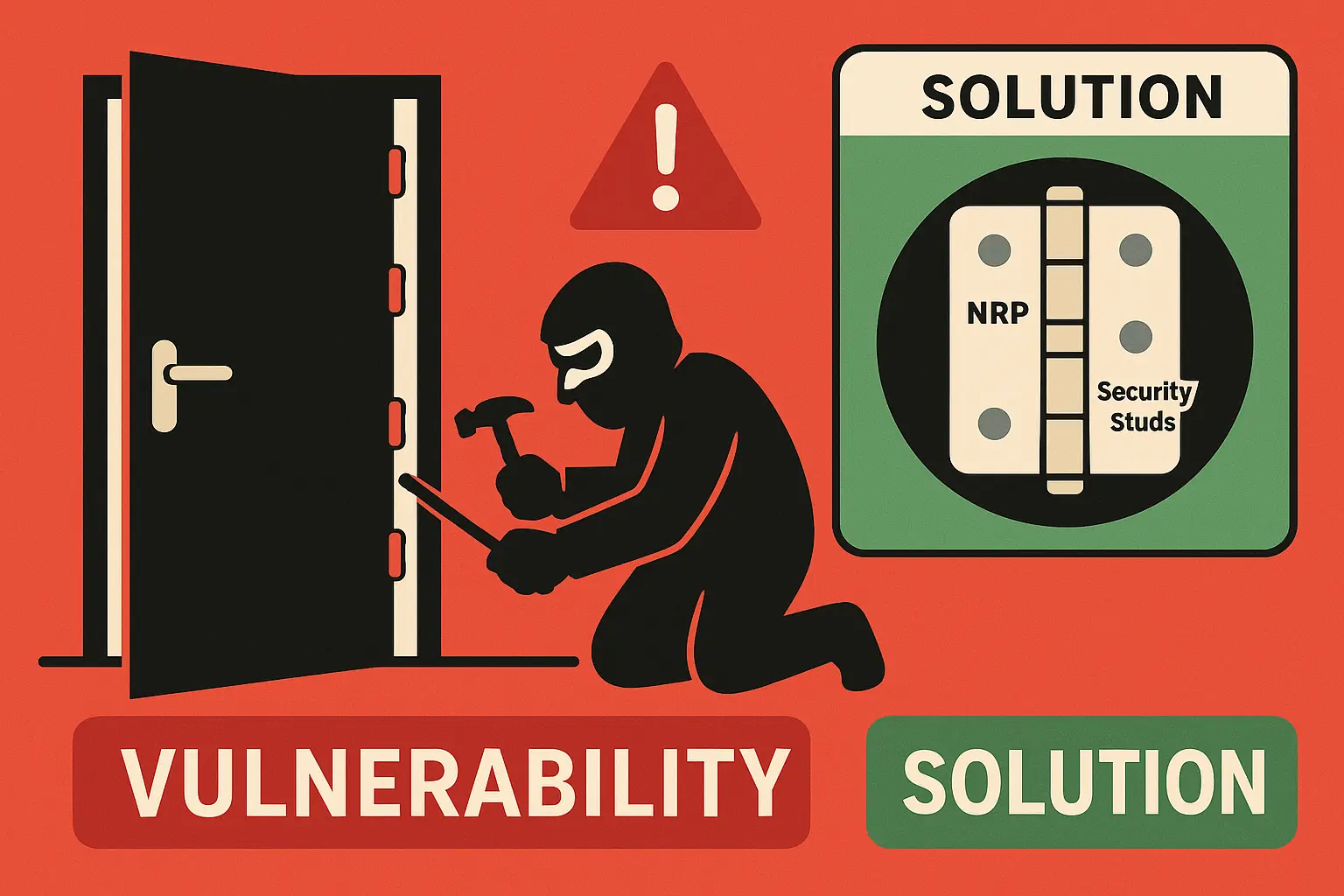
Many back doors, particularly patio or utility doors, swing outward to save interior floor space. This design presents a critical security flaw: the hinge pins are located on the outside of the home. An intruder can tap these pins out with a nail and hammer in seconds, lifting the door entirely out of its frame—even if you have a Grade 1 deadbolt engaged.
To secure an outswing door, you must install Non-Removable Pin (NRP) hinges or hinges with integrated security studs. NRP hinges feature a hidden set screw accessible only when the door is open, preventing pin removal. For older homes, retrofitting existing hinges with safety studs offers a durable, budget-friendly alternative.
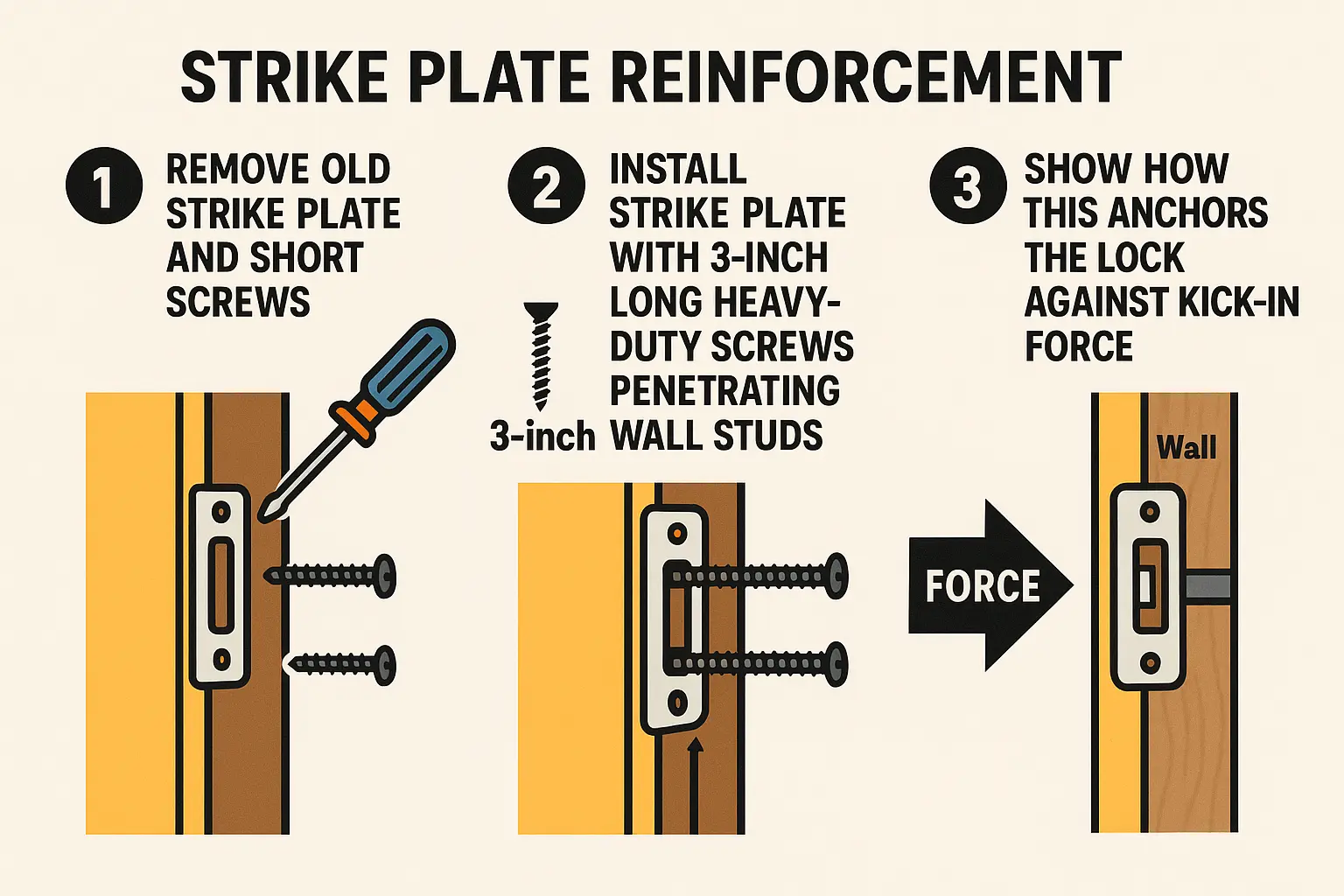
The 3-Step Strike Plate Reinforcement Hack
Over 70% of forced entries are executed via brute-force kick-ins. When a door frame fails during a kick-in, the deadbolt itself rarely breaks. Instead, the wood of the door frame splits because standard strike plates are installed using short, 3/4-inch screws that only anchor into the fragile decorative door trim.
The ultimate reinforcement hack is simple: replace those stock screws with 3-inch heavy-duty wood screws. These longer screws pass through the door casing and anchor deep into the structural 2×4 wall framing behind it. This single change increases the kick resistance of your door by over 300%.
The Glass Pane Dilemma: Security vs. Life Safety
Back doors often feature glass panels, which present a unique security challenge. If a burglar breaks the glass, they can simply reach inside and turn the deadbolt thumbturn. While a double-cylinder deadbolt (which requires a key on both sides) solves this issue, it presents a life safety risk. National Fire Protection Association (NFPA 101) life safety codes prohibit double-cylinder locks on primary emergency exit routes because they can trap occupants during a fire.
A safer, compliant solution is to keep a single-cylinder deadbolt but apply heavy-duty security window film to the glass panels. This film holds shattered glass together, preventing quick hand access. For high-security commercial setups, property managers frequently invest in automatic door upgrades as a way to integrate robust electronic fail-safes with smart building management systems.
Securing Your Home with Confidence
A high-quality lock is only as strong as the door frame and hinges supporting it. If you are dealing with weathered door frames, misaligned strikes, or want an expert assessment of your home’s entry points, partnering with professional door services is the best way to ensure proper protection. Connecticut homeowners and businesses seeking reliable door installation hartford ct options can count on our licensed, fully trained technicians to secure every entrance with expert craftsmanship and transparent, affordable pricing.
Frequently Asked Questions
What is the most secure lock setup for a back door?
The most secure mechanical setup is a solid brass or steel Grade 1 deadbolt with a 1-inch throw, paired with heavy-duty strike plates secured by 3-inch screws. For maximum defense, combine this with non-removable pin hinges to eliminate hinge-related vulnerabilities.
Are double-cylinder deadbolts safe to use?
While highly secure against break-ins, double-cylinder deadbolts require a key to open from the inside. This violates life safety fire codes in many regions, as they can prevent rapid evacuation during a fire or emergency. It is generally safer to use a single-cylinder lock paired with reinforced security film on any nearby glass.
How do I know if my door frame needs replacement before upgrading hardware?
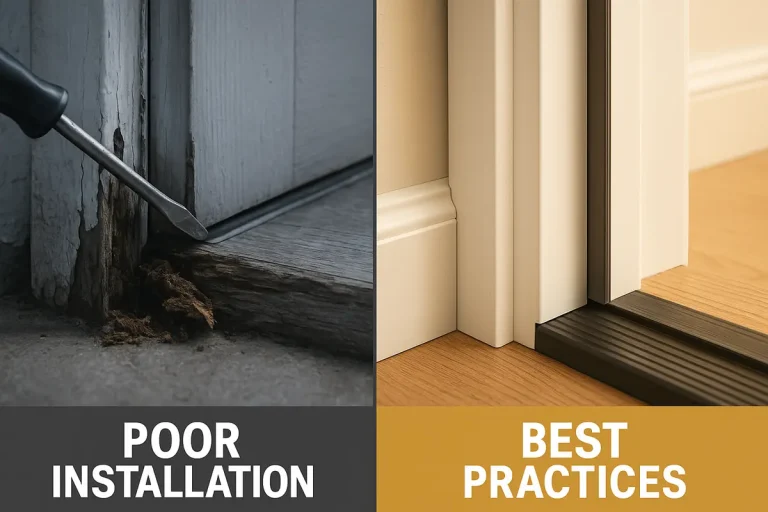
If you notice visible wood rot, deep cracks near the strike plate, or if the door rubs against the frame when closing, your frame’s structural integrity is compromised. Installing high-grade hardware on a soft, damaged frame is ineffective, as the frame will fail under pressure regardless of the lock’s quality.