(855) 676-0881

Fire Door Annual Inspection: What NFPA 80 Checks


Published: Oct 2, 2026

If you manage a commercial facility, few regulatory hurdles carry as much operational weight—and liability—as fire safety audits. When the Authority Having Jurisdiction (AHJ) or a CMS auditor walks through your doors, passive fire protection systems are their primary target.

Industry data shows that up to 80% of fire doors fail their initial annual inspection. These failures are rarely due to catastrophic structural damage. Instead, they are triggered by minor, everyday wear-and-tear: sagging hinges, painted-over labels, or clearance gaps that exceed strict regulatory limits. Understanding what NFPA 80 requires during an annual inspection is not just about avoiding costly compliance fines—it is about securing your building and protecting its occupants.
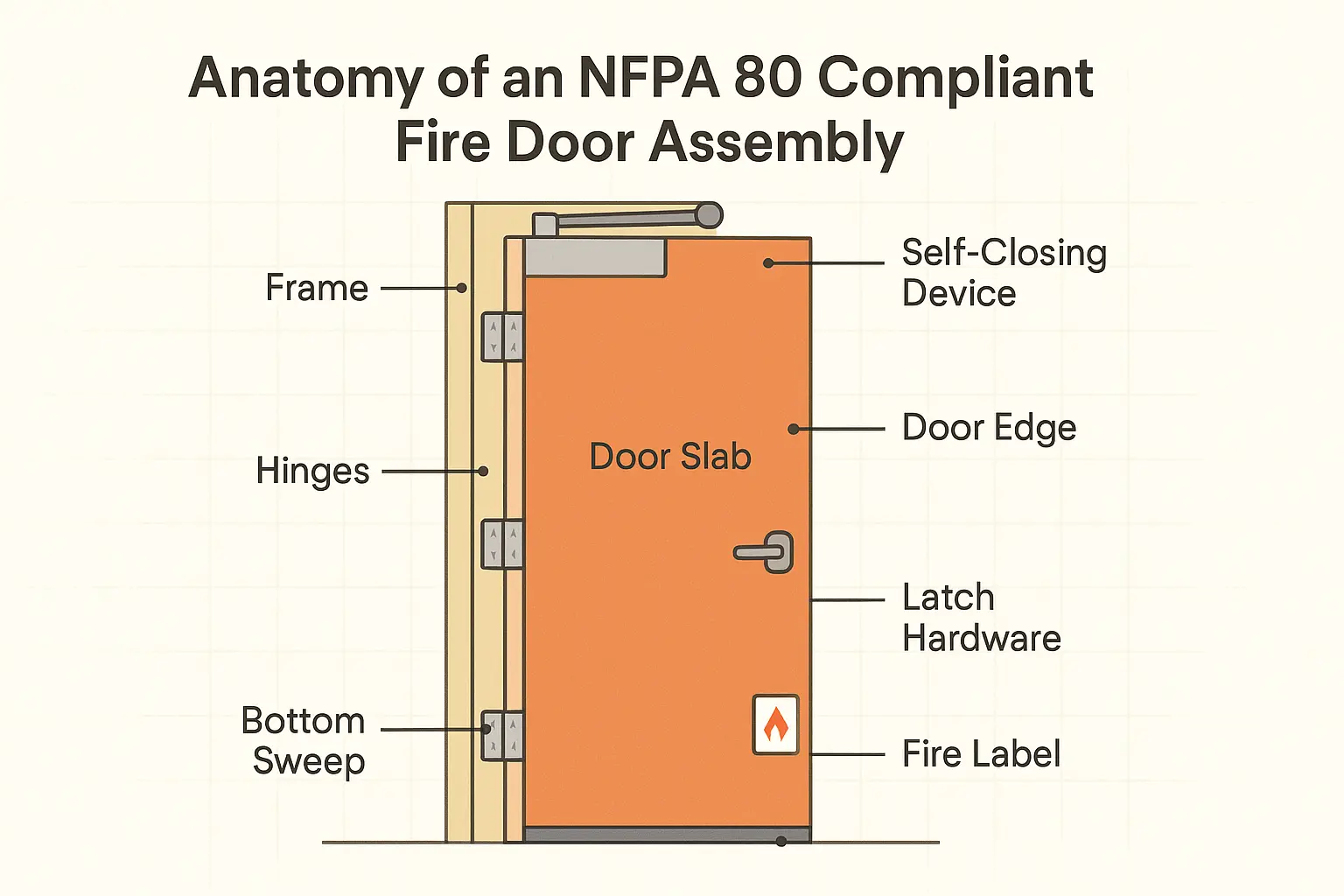
The Anatomy of an NFPA 80 Compliant Fire Door Assembly


A common mistake facility managers make is viewing a fire door as an isolated piece of wood or steel. Under NFPA 80, a fire door is classified as an entire assembly. This means the door, frame, hinges, locksets, latching hardware, gasketing, and closing devices must work in perfect unison to contain heat, smoke, and flames.

Anatomy of a Fire Door AssemblyThis diagram clarifies the essential parts of a fire door assembly inspected under NFPA 80, helping facility managers visualize what constitutes a compliant fire door beyond just the door itself.
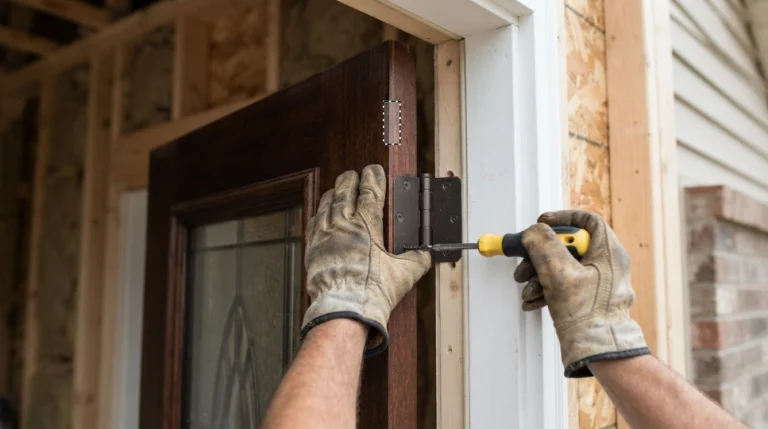
If a single component is damaged, unlisted, or poorly adjusted, the entire assembly fails compliance. For instance, an unlisted hinge or a non-compliant door closer compromises the integrity of the barrier, making proactive commercial door inspection protocols essential.

Who Can Legally Perform and Document a Fire Door Inspection?


NFPA 80 states that fire door inspections must be performed by a “qualified person” who has developed a deep understanding of the operating components of the door types being inspected. While some facilities attempt to manage this in-house, navigating complex commercial door inspection requirements requires specialized training.

In high-stakes environments like healthcare, utilizing certified experts is vital to protecting federal funding under CMS K-Tag 363. Partnering with fully trained, licensed technicians ensures that inspections are legally defensible and remediation is handled correctly on the first visit.

Deep Dive: The 13-Point NFPA 80 Inspection Checklist


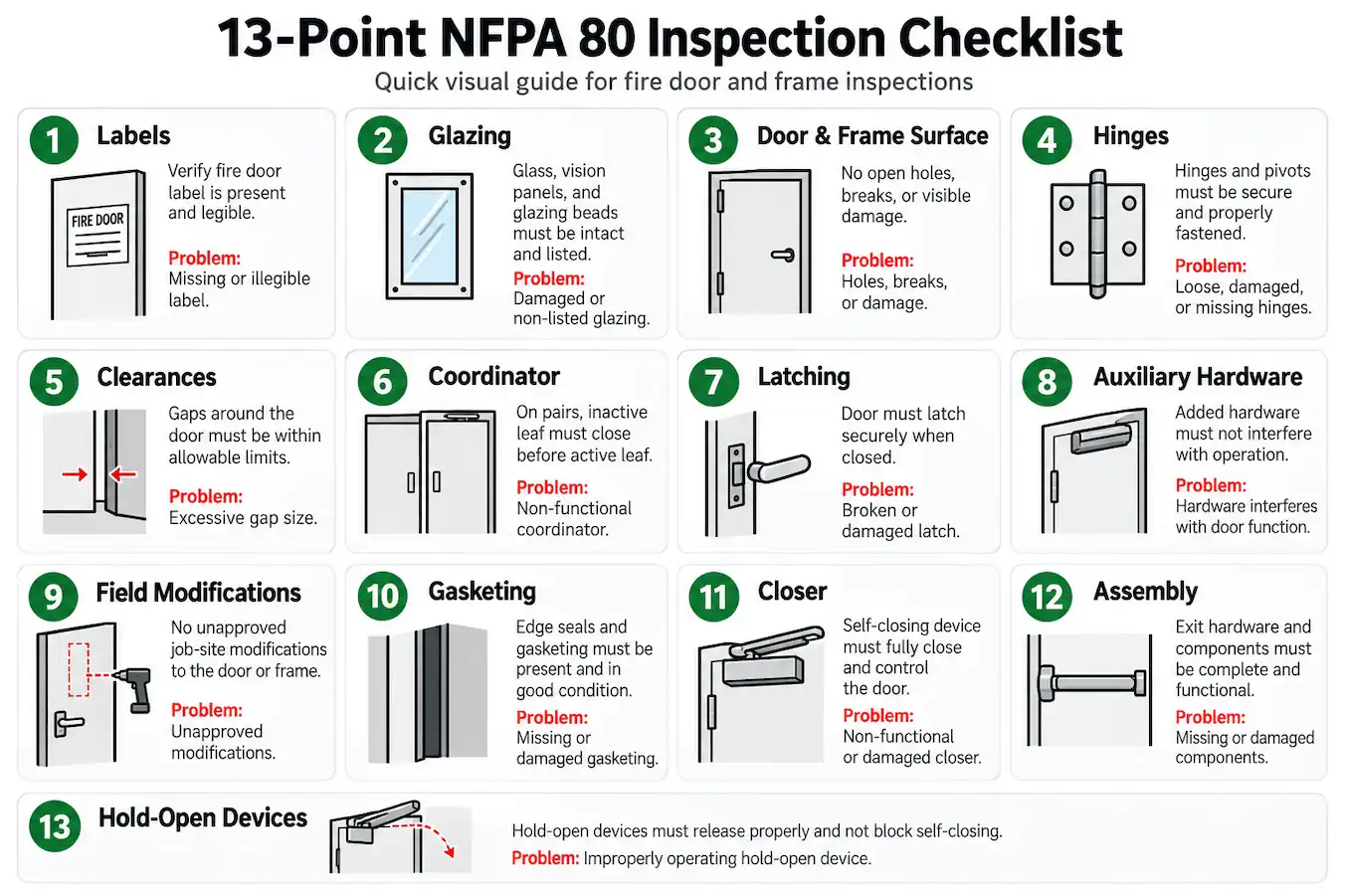
NFPA 80 outlines a strict 13-point inspection protocol for swinging fire doors. To help you prepare for your next audit, we have broken down the three most common failure vectors and how to address them.

13-Point NFPA 80 Inspection Checklist

This infographic educates users on the stepwise NFPA 80 inspection process, clearly distinguishing pass/fail criteria and practical remediation hints to build inspection confidence.

1. Clearance Gaps (Account for ~35% of Failures)

  • The Rule: For hollow metal doors, clearance gaps between the door and the frame (at the head and jambs) and meeting stiles on double doors must not exceed 1/8 inch. The gap at the bottom of the door must not exceed 3/4 inch.
  • The Remediation: Doors naturally sag over time. If a door fails due to oversized gaps, you do not necessarily need a new door. Technicians can often resolve this by installing listed steel shims behind the hinges or utilizing approved, fire-rated gap-filling materials.

2. Missing or Painted-Over Labels (~25% of Failures)

  • The Rule: Both the door and the frame must have legible, metal fire-rated labels.
  • The Remediation: If routine maintenance crews have painted over these labels, they are technically non-compliant. They must be carefully cleaned without damaging the embossed information, or field-re-labeled by an accredited listing agency.

3. Self-Closing and Latching Failures (~20% of Failures)

  • The Rule: The door must close and latch automatically from its fully open position.
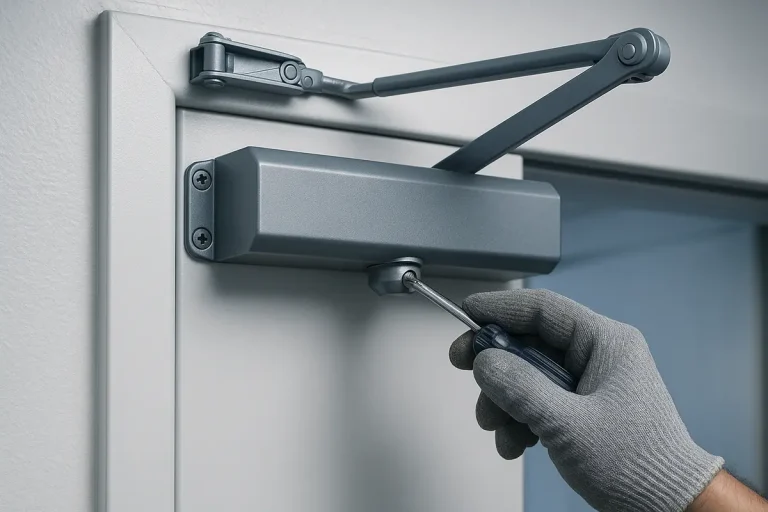
  • The Remediation: If you have a commercial door not closing all the way, it is often caused by a loss of fluid tension in the door closer or misaligned latch bolts. Adjusting the spring tension, replacing worn-out hardware, or correcting frame alignment can quickly restore compliant operation.

The Silent Failure: Swinging Doors vs. Rolling Steel Drop-Testing


While swinging doors are standard throughout offices and corridors, rolling steel fire doors and coiling shutters require a completely different inspection workflow.

NFPA 80 mandates a physical, two-stage drop test annually. The first drop test confirms that the door will close completely in an emergency. The door is then fully reset, and a second drop test is performed to prove that the automatic-closing mechanism operates reliably after being activated. This specialized procedure prevents mechanical failures that standard visual inspections might miss.

Complex Compliance Flowchart: Labeled Doors in Non-Rated Walls


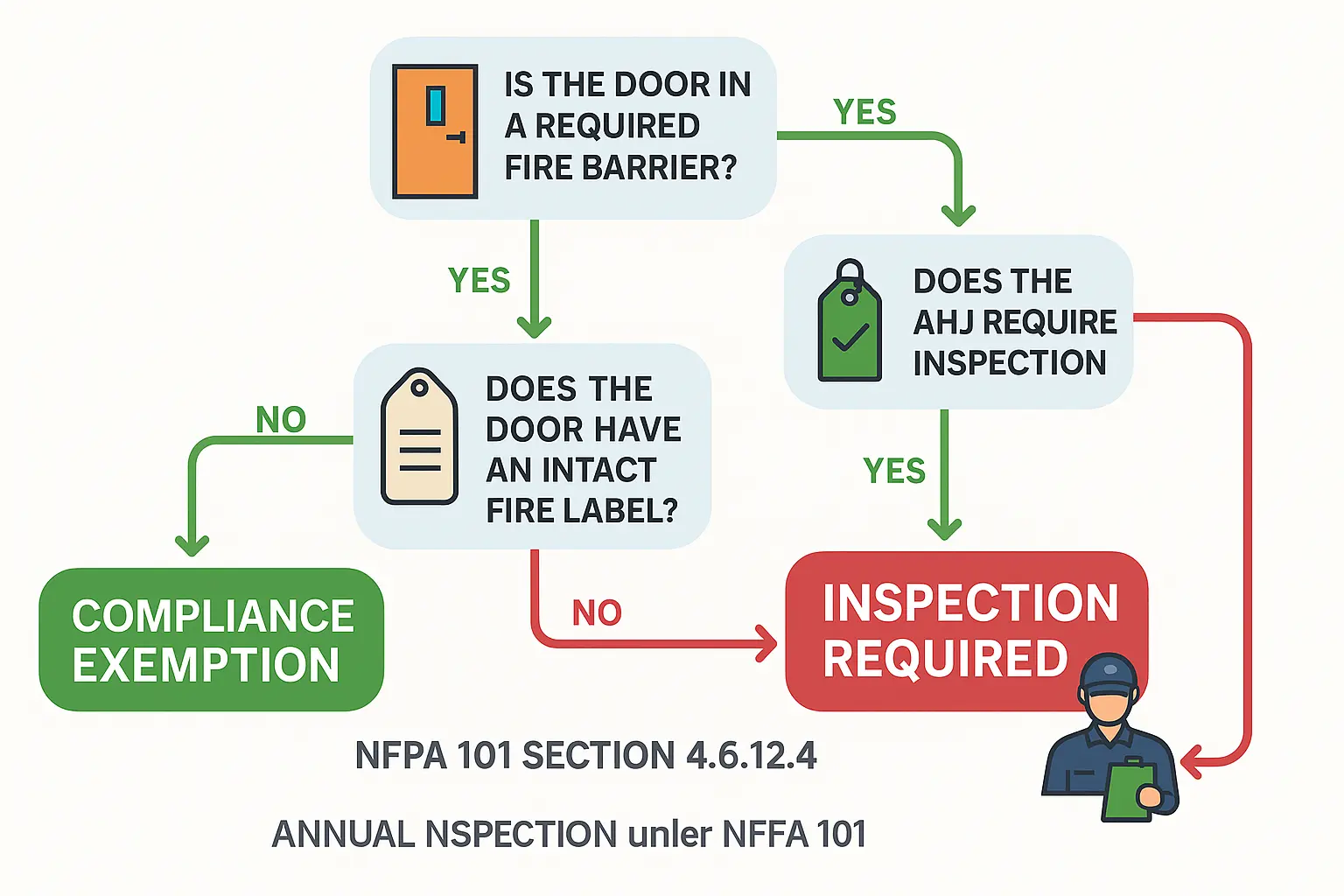
Many facility managers waste thousands of dollars inspecting labeled fire doors located in non-rated corridors.

NFPA 101 FlowchartThis flowchart visually simplifies the complex NFPA 101 regulation on labeled fire doors in non-rated walls, helping users quickly determine inspection requirements to avoid unnecessary costs.
Under NFPA 101 (Section 4.6.12.4), if a fire door is installed in a wall where a fire rating is not legally required, the door assembly does not require annual inspection—provided its fire label is covered or removed. Navigating this nuance can save your maintenance team significant administrative overhead.

What Must Be in Your Fire Door Inspection Report?


To satisfy an AHJ or CMS auditor, your paperwork must be flawless. Your documented inspection report must include:

  • A unique identifier and location for every door assembly.
  • The date of the inspection and signature of the qualified inspector.
  • Verification of all 13 physical checkmarks.
  • Detailed documentation of any deficiencies and the corresponding remediation work.

These records must be retained for at least three years, while acceptance testing reports should be kept for the life of the assembly. For complex environments, working with specialists who understand hospital and healthcare door service compliance ensures your records remain audit-ready year-round.

Frequently Asked Questions


Do we need to inspect fire doors that are rarely used?

Yes. NFPA 80 makes no distinction based on usage frequency. Doors in low-traffic mechanical rooms or emergency stairwells must still undergo the same rigorous facility entry door inspections annually, as mechanical components can seize or accumulate debris over time.

What happens if our fire door labels are painted over?

Painted-over labels are considered non-compliant because the fire rating cannot be verified. Do not try to scrape the paint off with abrasive tools, as this can destroy the underlying metal text. A licensed door technician can use approved chemical solvents to safely clean the label or arrange for a certified field-re-labeling service.

Can our in-house maintenance staff perform these inspections?

While NFPA 80 allows any “qualified person” to perform inspections, in-house staff often lack the specialized diagnostic tools and training required to identify subtle mechanical failures. Utilizing professional technicians eliminates liability, guarantees code-compliant documentation, and ensures repairs are handled on-site immediately.