(855) 676-0881

Door Sticking After the First Cold Snap? Swelling vs. Frame Movement


Published: Nov 5, 2026

You wake up after the autumn’s first sudden 20°F–30°F temperature drop to find your front entry door jammed tightly against its frame. When a door suddenly refuses to latch or drags heavily across the threshold, homeowners often fear the worst. Search results frequently force a false choice between extreme panic and careless DIY quick-fixes: foundation repair companies often attribute any sticking door to structural failure to pitch $5,000–$14,000 piering jobs, while basic home tips advise immediately sanding down the wood.

The reality comes down to seasonal building physics. A professional hinge adjustment or latch realignment typically costs between $75 and $250. Misdiagnosing seasonal thermal shifts, however, leads to ruined door slabs or unneeded structural repairs. Before calling an expensive specialist, use this diagnostic framework to determine whether your sticking door stems from simple moisture dynamics, hardware sag, or genuine frame movement.
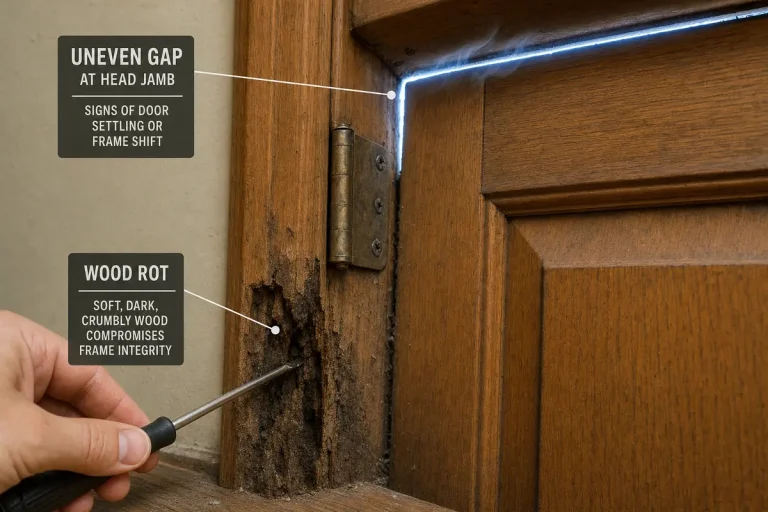
The 60-Second Self-Test


Before grabbing any tools, execute three fast checks:

  • Examine the Reveal Margin: Look at the gap between the door slab edge and the jamb. Is it narrow but even on all sides, or is it wedge-shaped?
  • Inspect Surrounding Drywall: Are there diagonal cracks radiating from the top corners of the door trim?
  • Touch the Unsealed Rails: Run your hand along the top and bottom edges of the door. Are those raw, unsealed wood surfaces absorbing room condensation?

The Physics of the First Cold Snap (Why Today?)


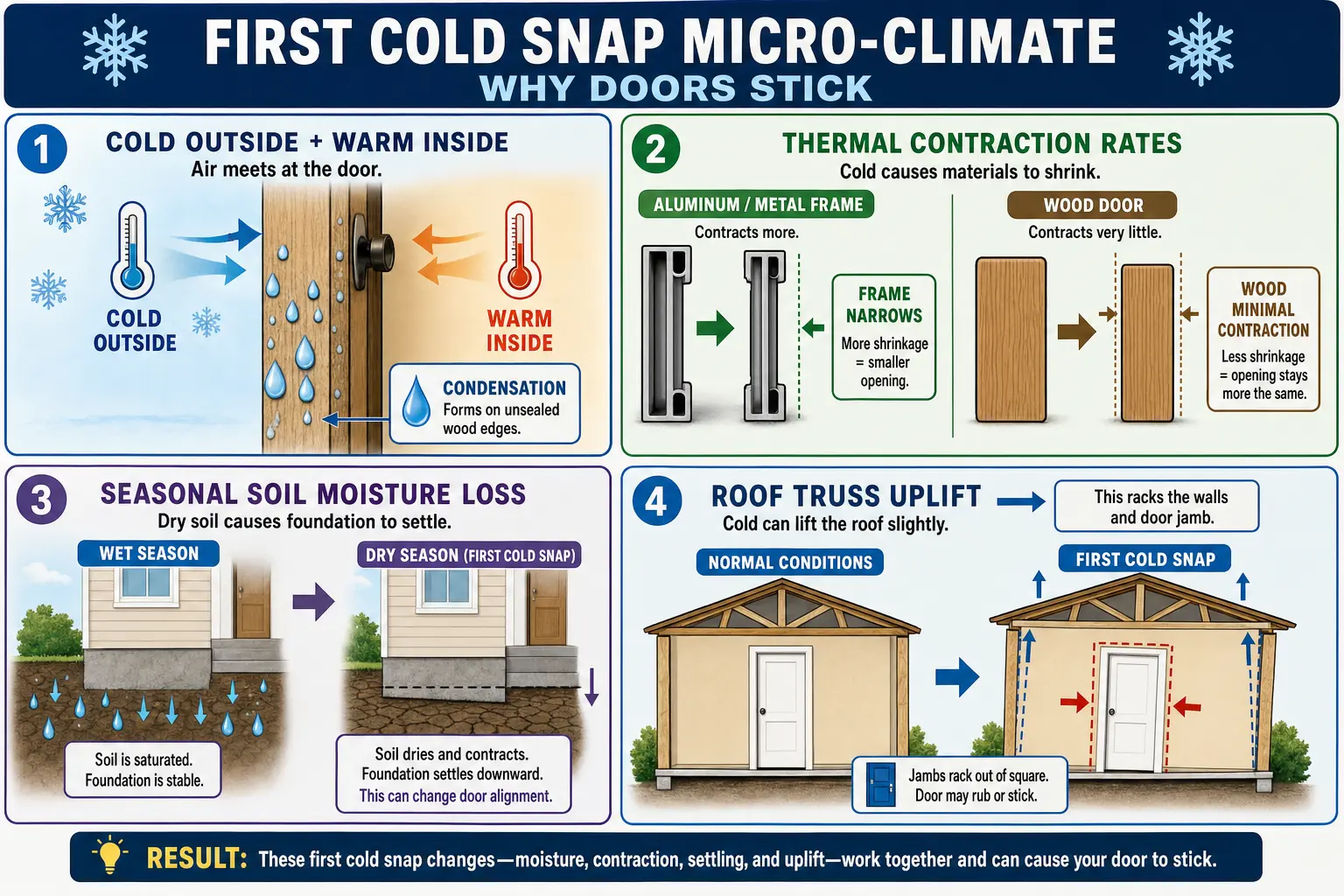
Visualizing why doors stick after the first freeze: condensation swelling, frame material contraction, foundation shifts, and roof truss uplift all play distinct roles.

When the first hard freeze hits, several environmental forces act on your door opening at the same time:

  1. Vapor Pressure & Wood Anisotropy: Wood moves up to 10 times more across its grain (tangentially and radially) than along its length. Unsealed top and bottom rails absorb localized condensation created when warm interior furnace air hits cold glass or metal surfaces up to 200% faster than sealed side stiles.
  2. Thermal Contraction Multipliers: Exterior materials react differently to cold. Metal and aluminum jambs contract roughly 2.5 times faster than natural wood during a cold freeze, shrinking the frame opening tightly around the door slab.
  3. Roof Truss Uplift: In freezing weather, cold attic air chills the top chords of roof trusses while the bottom chords remain buried in warm ceiling insulation. This thermal contrast causes the trusses to arch upward, pulling interior partition wall headers and door frames up with them independently of the ground.
  4. Soil Moisture Shifts: In regions with expansive clay soils, the first dry winter cold front can reduce perimeter soil moisture by 15–20%, causing brief foundation perimeter drops of up to 1/2 inch in just 48 hours.

Diagnostic Deep-Dive: Swelling vs. Frame Movement vs. Hinge Sag


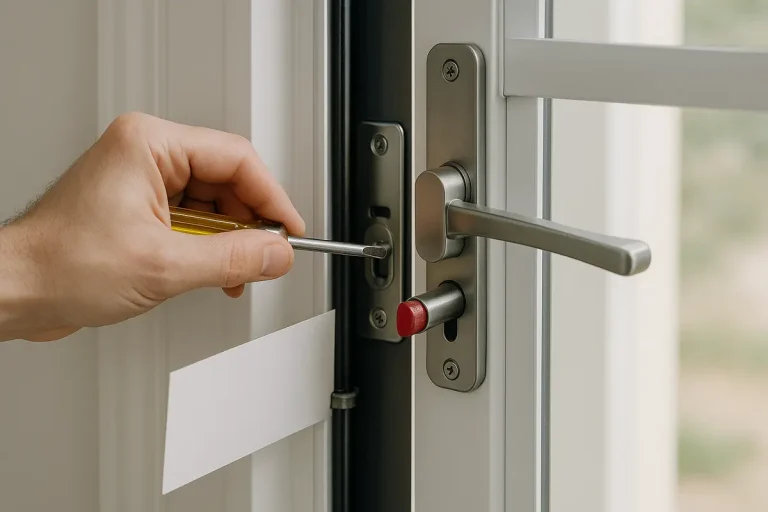
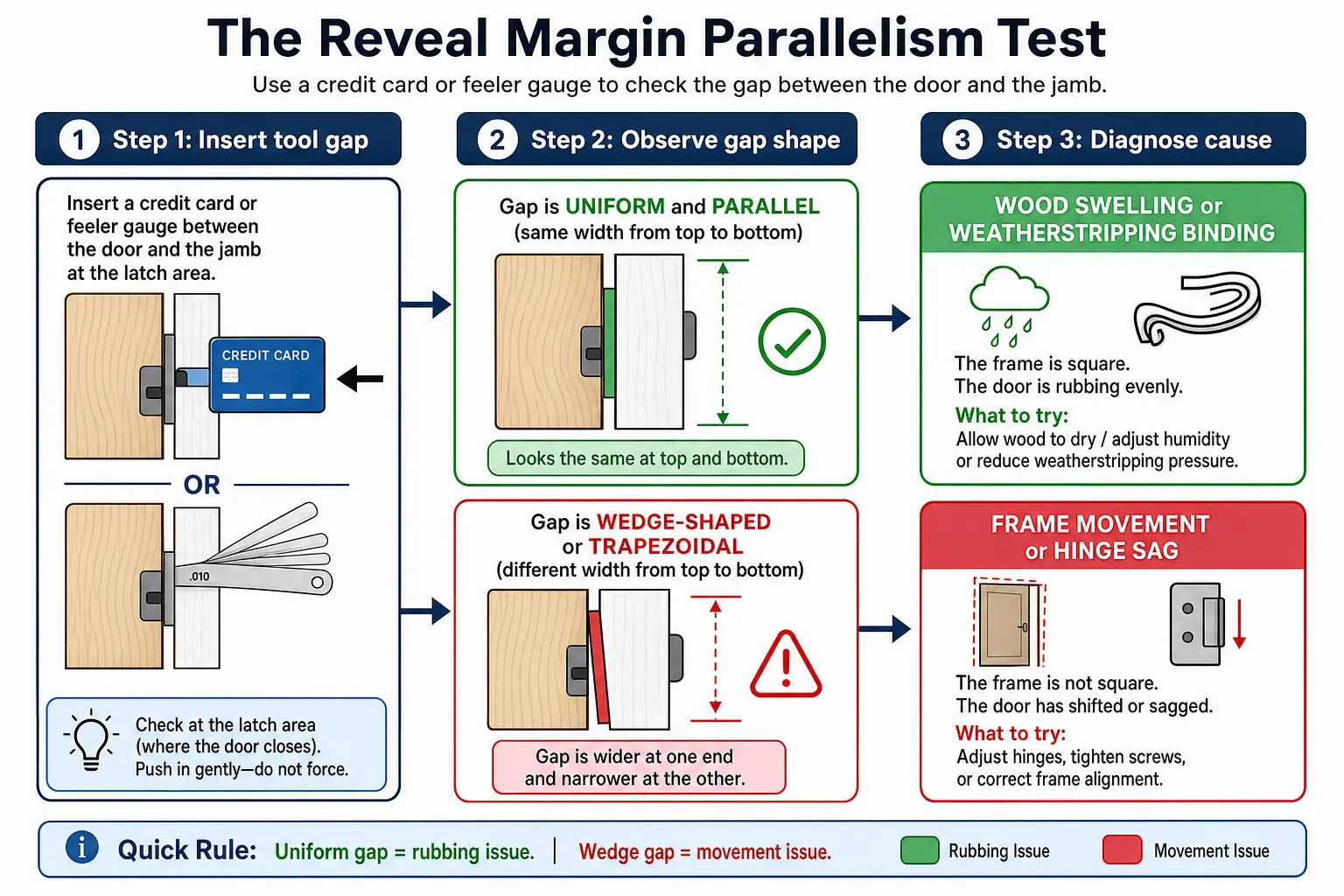
Use the Reveal Margin Parallelism Test to visually diagnose if your stuck door is due to wood swelling or a structural frame problem—no expert tools needed.

To pinpoint the root cause, carry out these systematic evaluations:

  • The Reveal Margin Parallelism Test: Slide a standard credit card along the gap between the door edge and the jamb frame. A uniform, tight gap along the entire height indicates wood swelling or frame thermal contraction. A wedge-shaped gap—where the door pinches at the top latch side while sagging at the bottom—signals hinge wear or header movement.
  • The Drywall & Trim Audit: Check the wall area above the door casing. Small, vertical surface cracks in paint usually point to normal humidity cycles. Structural settlement creates distinct 45-degree diagonal shear cracks running outward from header corners toward the ceiling.
  • Unsealed Edge Inspection: Over 85% of residential door installations leave the top and bottom end-grain edges completely unpainted. Inspecting your entry door performance and understanding how door u factor impacts indoor condensation will clarify whether atmospheric humidity is driving the expansion.

Dangerous Mistakes to Avoid During a Cold Snap


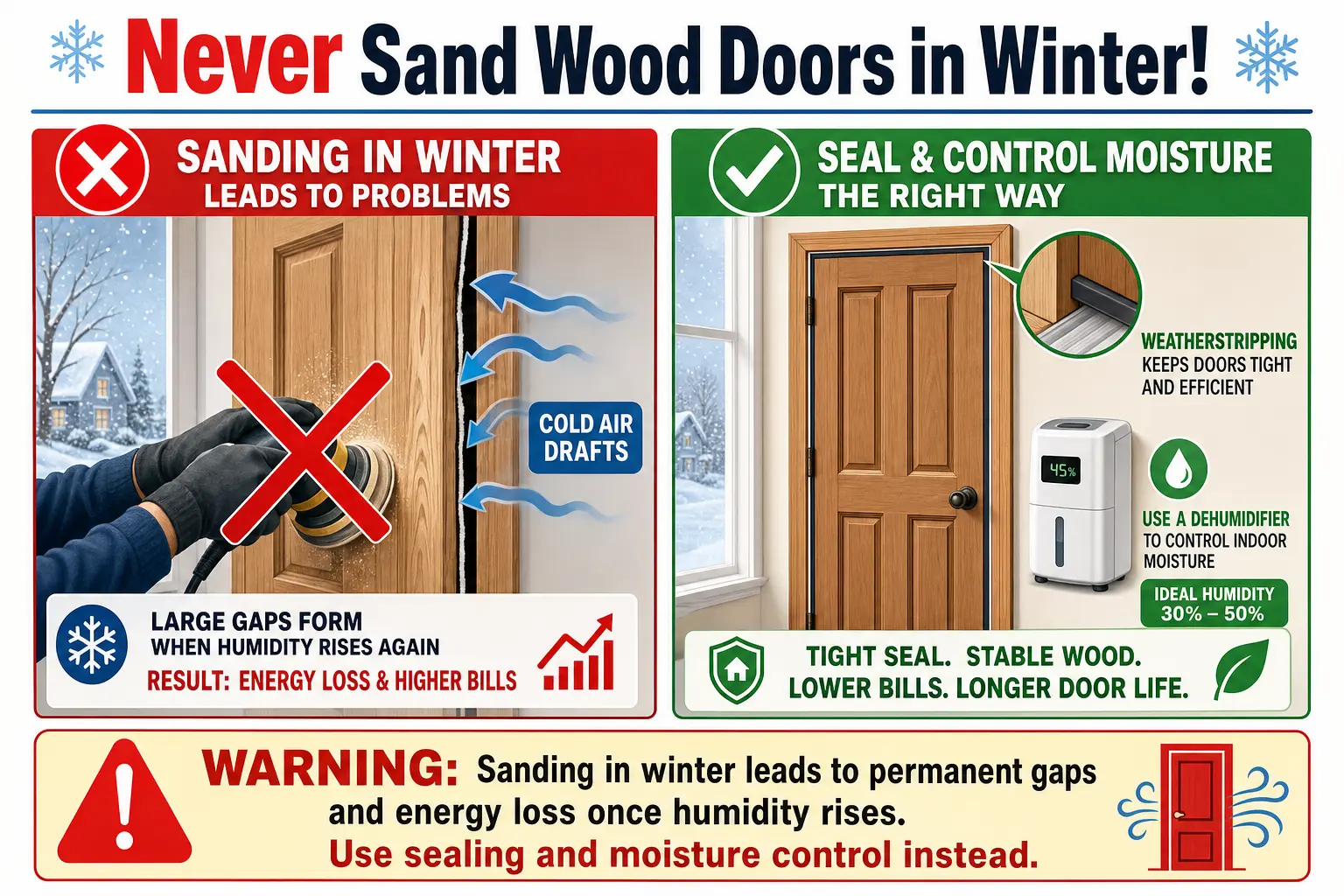
Avoid the costly mistake of sanding your wooden door in winter! This visual shows how sanding harms seasonal door alignment and how to protect your door properly.

The most costly error a homeowner can make during a winter freeze is shaving or sanding down a swollen wooden door edge. When warm spring weather returns and relative indoor humidity normalizes, the shaved wood shrinks back. This leaves permanent 1/4-inch draft gaps, ruins weatherstripping seals, and forces the latch out of alignment.

Step-by-Step Resolution Protocols


  • Protocol 1: The Hinge Anchor Technique: Remove the center screw from the top jamb hinge leaf. Replace it with a 3-inch structural screw driven straight through the jamb into the wall framing studs. This pulls the top jamb tight to the wall, corrects 70% of sagging frame issues, and helps reinforce door frame strength.
  • Protocol 2: End-Grain Sealing: If moisture absorption is the culprit, remove the door slab and apply clear sealant or exterior paint to raw top and bottom edges to stop vapor absorption.
  • Protocol 3: Professional Hardware Realignment: When framing shifts alter opening geometries or latch alignment fails, professional intervention restores full function. Whether you are addressing commercial entryway binding needing commercial door closer repair, researching how to fix a kicked in door frame, or looking for a full high-efficiency replacement front door, qualified technicians resolve core mechanical causes safely. For reliable local assistance, search for certified technicians providing expert door repair near me.

Frequently Asked Questions


Why did my door start sticking overnight when it worked fine yesterday?

A sharp drop in exterior temperature creates a sudden vapor pressure differential between warm interior air and freezing outdoor air. Unsealed wood end-grain absorbing localized condensation, combined with metal frame thermal contraction, can narrow door clearance margins within hours.

Should I sand down my wooden door so it closes easily this winter?

No. Sanding a swollen door in winter creates permanent draft gaps when spring weather returns and humidity normalizes. Instead, tighten hinge hardware, anchor the jamb, or seal unsealed wood edges.

How do I know if sticking doors signal a foundation issue?

Foundation movement is typically accompanied by 45-degree diagonal drywall cracks extending from header corners, sloping floors, and multiple interior doors sticking simultaneously. An isolated sticking door with an even gap margin is almost always a localized thermal or moisture issue.