(855) 676-0881

Why Is Your Door Closer Leaking Oil? (The Real Costs & How to Fix It)


Published: Oct 7, 2026

Finding a dark, oily puddle on your floor or noticing fluid dripping down your door frame is a critical warning sign. For property managers and business owners, this is more than an aesthetic nuisance—it represents a complete hydraulic system failure.

If your door closer is leaking oil, its internal seals have permanently failed. Field repairs are dangerous, violate local safety codes, and are not supported by hardware manufacturers. To restore security, safety, and compliance, the unit must be replaced immediately. Rather than risking liability with DIY patches, contacting professionals for commercial door closer services is the most reliable path to a permanent fix.
Anatomy of a Blowout: Why Door Closers Leak Oil


To understand why a leaking closer cannot be saved, it helps to look inside the hydraulic chamber. Most modern closers use a rack-and-pinion piston setup submerged in hydraulic oil. The oil controls the door’s speed by passing through precise regulating valves during the opening and closing cycles.

There are three fatal failure modes that trigger leaks:

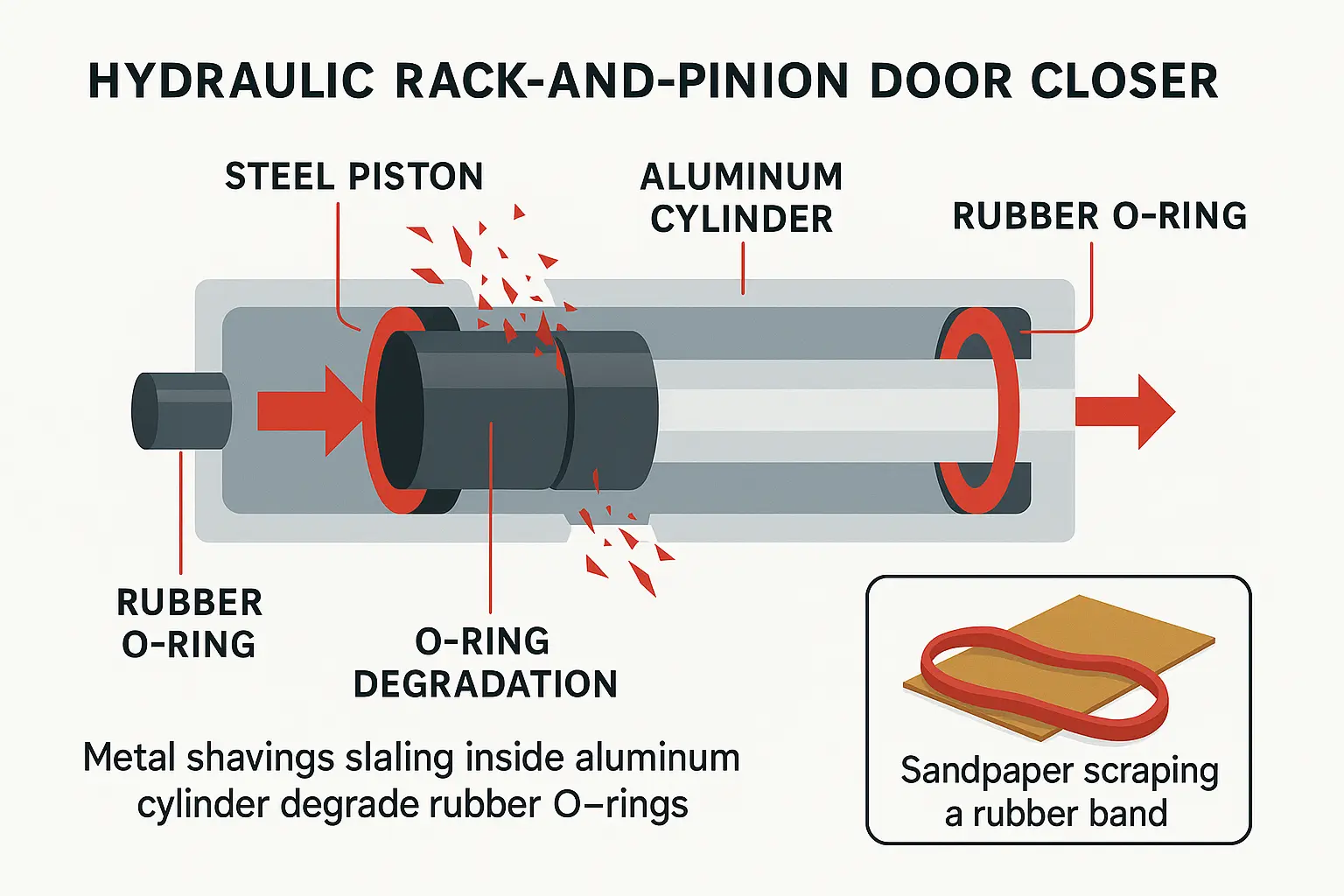
  1. The Steel-on-Aluminum Shrapnel Factor: In standard aluminum-body closers, the rigid steel piston grinds against the softer aluminum cylinder wall. This creates microscopic metal fragments that contaminate the hydraulic oil, acting like liquid sandpaper that rapidly slices through rubber O-rings.
  2. Casing Micro-Cracks: When users pull doors shut quickly against backcheck resistance, internal hydraulic pressure spikes drastically. This pressure creates microscopic cracks in the housing, causing silent, permanent seeping.
  3. Valve Over-Adjustment: Attempting a manual commercial door adjustment by unscrewing the sweep (“S”) or latch (“L”) valves past their safety limits can unseat internal seals entirely.

This exploded view reveals how steel pistons rubbing inside softer aluminum cylinders produce microscopic metal shavings that slice rubber O-rings, causing hydraulic fluid leaks.

Why a Field Repair is a Dangerous and Costly Illusion


While searching for a replacement gasket online seems like a budget-friendly fix, field rebuilds are functionally impossible for several reasons:

  • Pre-Loaded Spring Hazards: Heavy-duty commercial closers contain internal springs compressed under hundreds of pounds of pressure. Unscrewing the cylinder end caps without specialized industrial presses can cause the spring to violently shoot out, risking catastrophic bodily injury.
  • The Air Bubble Trap: Once hydraulic fluid escapes, air takes its place. Even if you manage to patch a seal, trapped air creates internal voids, leading to a gurgling sound and a door that fails to latch.
  • No OEM Parts: Top manufacturers like LCN, Norton, or Sargent do not sell field-rebuild kits or replacement seals because of the intense liabilities involved.

The Silent Liabilities: Slips, Slams, and Safety Codes


Neglecting a leaking closer exposes your property to serious liabilities:

  • Fire Code Violations: Under NFPA 80 standards, fire-rated doors must be completely self-closing and positive-latching to stop smoke and fire from spreading. A leaking closer loses the pressure required to latch. Failing an nfpa 80 fire door inspection can lead to heavy municipal fines.
  • ADA Compliance Issues: ADA regulations require interior non-fire doors to open with no more than 5 pounds of force and take at least 5 seconds to close. A compromised closer cannot regulate these speeds, making you non-compliant. If you suspect issues, scheduling professional ada door operator installation and closer assessments is crucial.
  • Physical Injuries: Pooling hydraulic oil on thresholds creates high-liability slip-and-fall hazards for employees and guests.

Interactive Fault Diagnostics


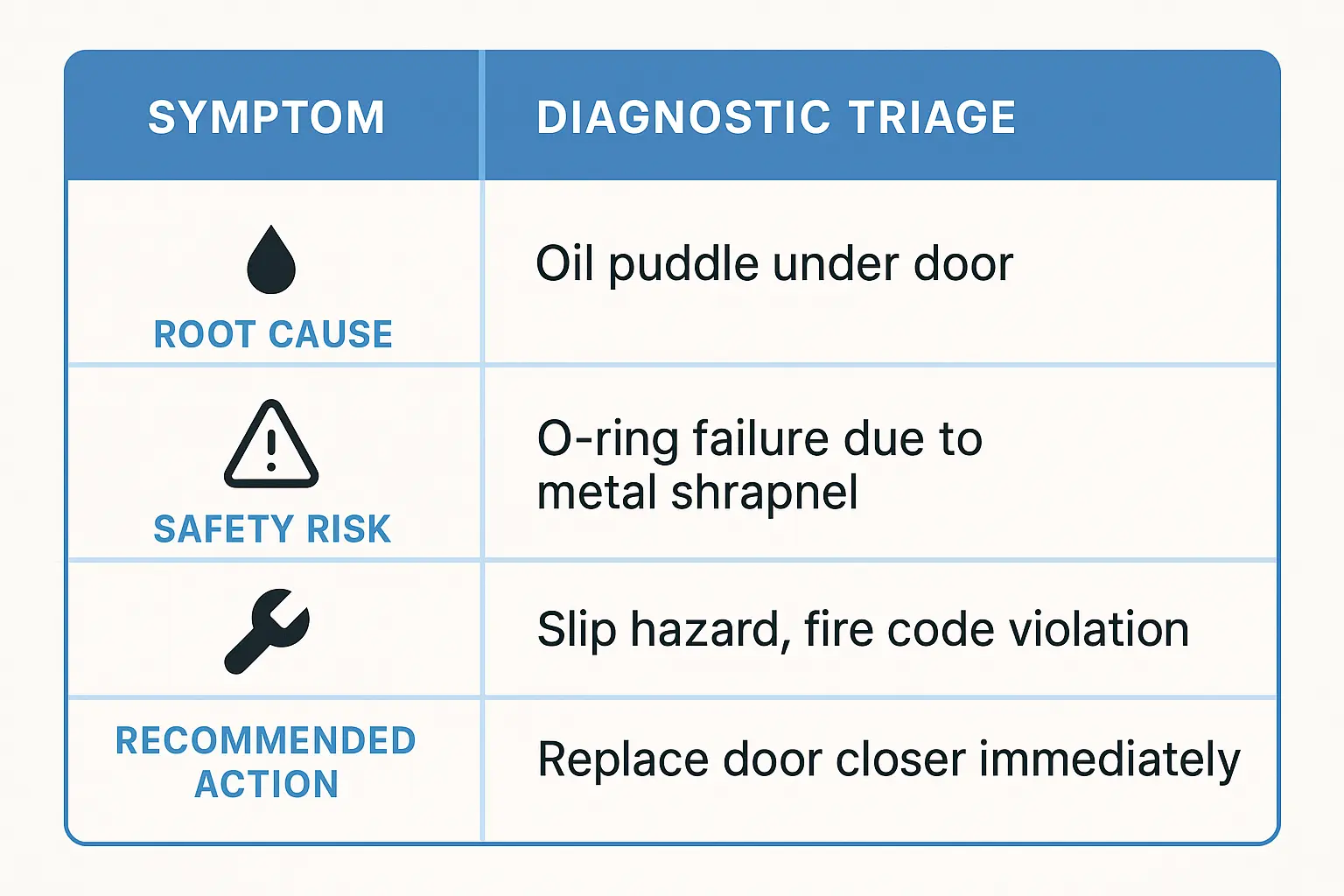
If you are assessing the state of your commercial facility door, use this diagnostic matrix to match your physical symptoms with the correct operational steps.

This diagnostic triage table guides facility managers to rapidly identify leaking door closer symptoms, understand risks, and know when replacement is necessary.

The Perfect Fit: How to Choose a Drop-In Replacement


Replacing a closer doesn’t have to mean drilling new holes into your commercial door—which can void its fire-rating certification.

To perform a seamless retrofit:

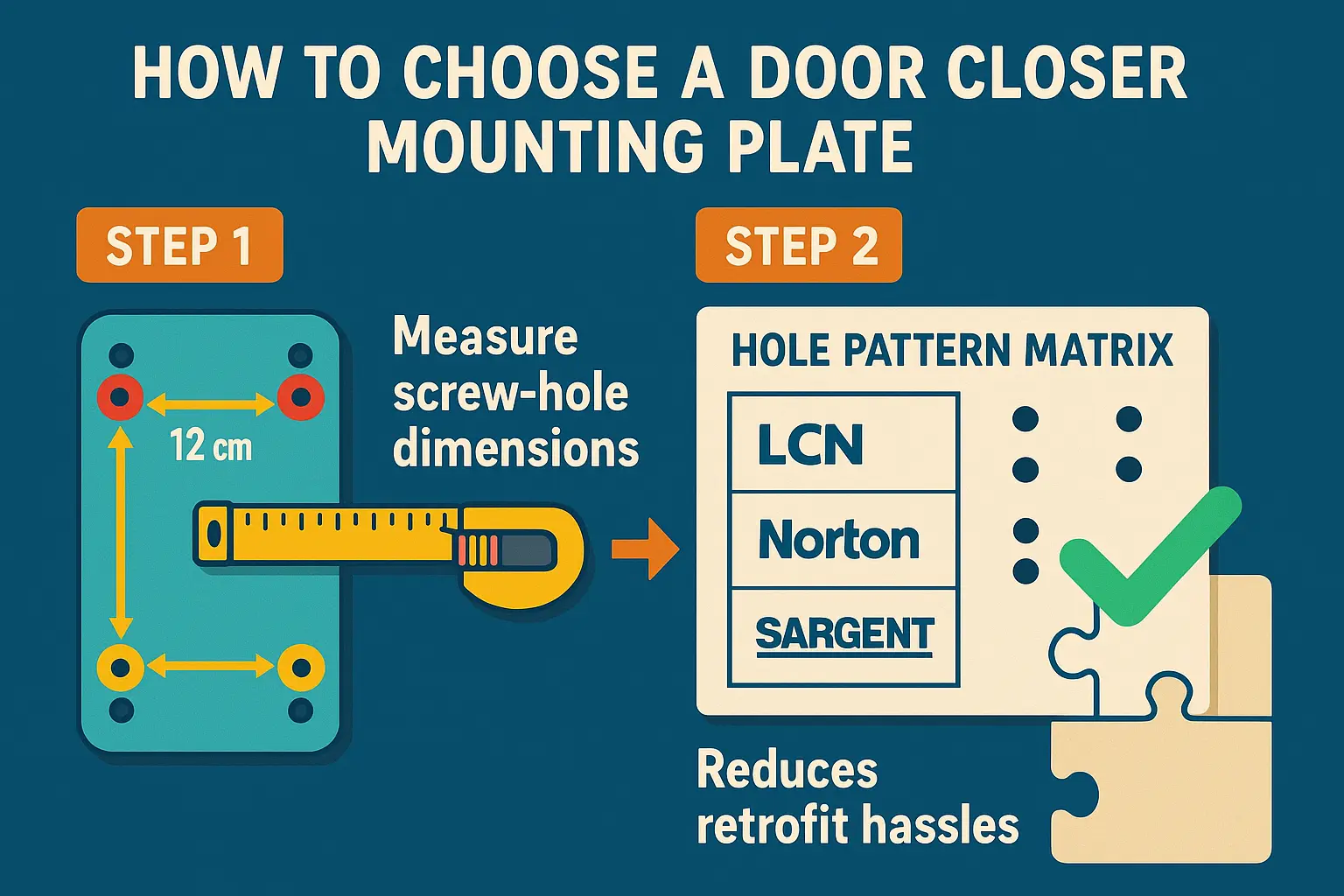
  1. Measure Existing Templates: Map out the horizontal and vertical distances between your existing mounting holes.
  2. Look Up the Footprint: Compare these measurements to drop-in standards (like LCN 4040XP or Norton 1600 footprints) to ensure your new closer matches perfectly.
  3. Upgrade Materials: Opt for heavy-duty cast iron body closers instead of cheap aluminum models. Cast iron prevents the steel-on-aluminum wear factor, dramatically extending the lifespan of your commercial hardware.

This infographic simplifies measuring and matching door closer mounting holes, helping avoid costly drilling and ensuring the perfect retrofit fit.

If you are unsure of the specifications or need same-day assistance, our family-owned team at A1 Doors Services is ready to help. With licensed technicians and transparent pricing across Connecticut, we can provide immediate, worry-free 24 hour door repair solutions to keep your building secure and code-compliant.

Frequently Asked Questions


Can I just refill the hydraulic oil in my door closer?

No. Simply refilling the fluid will not fix the issue because the underlying seals are torn. The new oil will leak out just as quickly, and trapped air inside the cylinder will continue to prevent the closer from operating safely.

Will a leaking door closer fail a fire inspection?

Yes. Under NFPA 80 fire codes, fire-rated doors must reliably self-close and positive-latch to maintain fire containment. Because a leaking hydraulic closer cannot control these cycles, it constitutes an immediate inspection failure.

Why shouldn't I try to disassemble a closer myself?

The internal springs in commercial closers are highly compressed. Disassembling the casing without factory-grade compression tools can release the spring instantly with explosive force, causing severe personal injury.