Phone(855) 676-0881

Front Door Repair Before Holiday Guests: Sticking, Drafts, and Rattles


Published: Nov 27, 2026

To resolve a sticking, rattling, or drafty front door before holiday guests arrive, start by securing loose hinge screws, realigning the strike plate, and installing fresh weatherstripping or a new door sweep. If your entryway suffers from severe frame rot or warping, apply temporary weatherproofing and hardware adjustments now, then schedule a full door replacement after the hosting season ends.

An uncooperative front door doesn’t just create a poor first impression—it directly impacts your home’s thermal comfort. According to the U.S. Department of Energy, unsealed exterior doors and windows cause up to 25% of residential heat loss, driving winter heating bills up by 5% to 30%. You can eliminate drafts, noise, and jamming fast with four targeted pre-hosting fixes:

  • Eliminate sagging and sticking: Support the door’s weight, tighten loose hinge screws (using wooden toothpicks and glue to reinforce stripped holes), and lubricate squeaky pins.

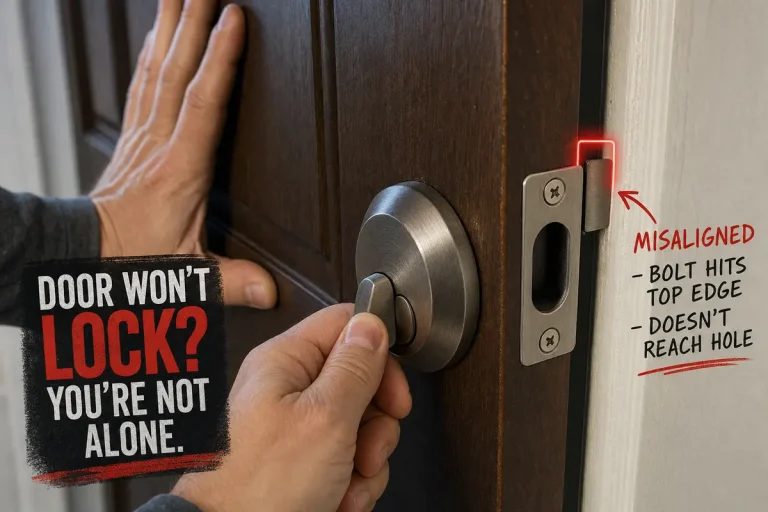
  • Stop rattles and latch binding: Check latch alignment and reposition the strike plate if the bolt catches low or fails to seat snugly.

  • Block cold foyer drafts: Inspect the perimeter for visible daylight, replace torn weatherstripping or worn door sweeps, and caulk minor frame gaps with exterior-grade sealant.

  • Secure loose hardware: Tighten handles, deadbolts, and lock cylinders so mechanisms turn smoothly without wobbling.
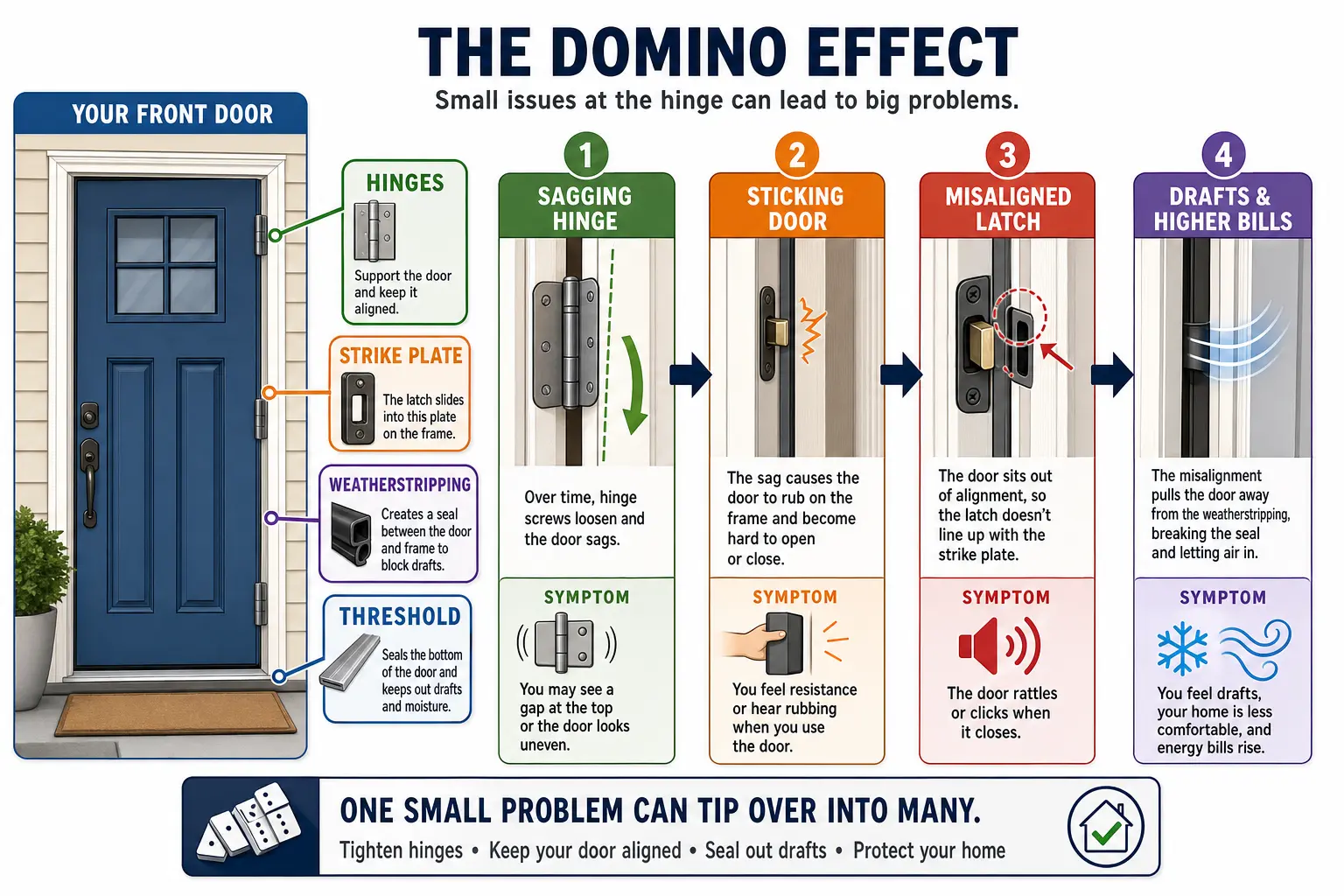
The Domino Effect: Why Your Door Sticks, Rattles, and Lets Cold Air In


Homeowners often view sticking, drafts, and rattling as isolated problems, but they are almost always linked in a chain reaction.

When upper hinge screws loosen from years of daily use, the door sags downward. This misalignment causes the top corner of the door to rub against the jamb. As the door shifts off-center, the latch bolt no longer sits snugly inside the strike plate, creating loose play that allows the door to rattle in heavy winds. Finally, this physical displacement pulls the door perimeter away from its seal, breaking airtight contact and letting freezing drafts sweep into your foyer.

Visualizing the domino effect reveals how one door issue triggers another — understanding these links helps homeowners target the root cause for quick and effective repairs.

Understanding this domino effect prevents unnecessary repairs. If you ask yourself, how can i tell if an exterior door is causing drafts or energy loss?, looking for hinge sag and latch play is often the best place to start.

Need a Quick Fix?

Tell us what’s wrong with your door — we’ll get it sorted.

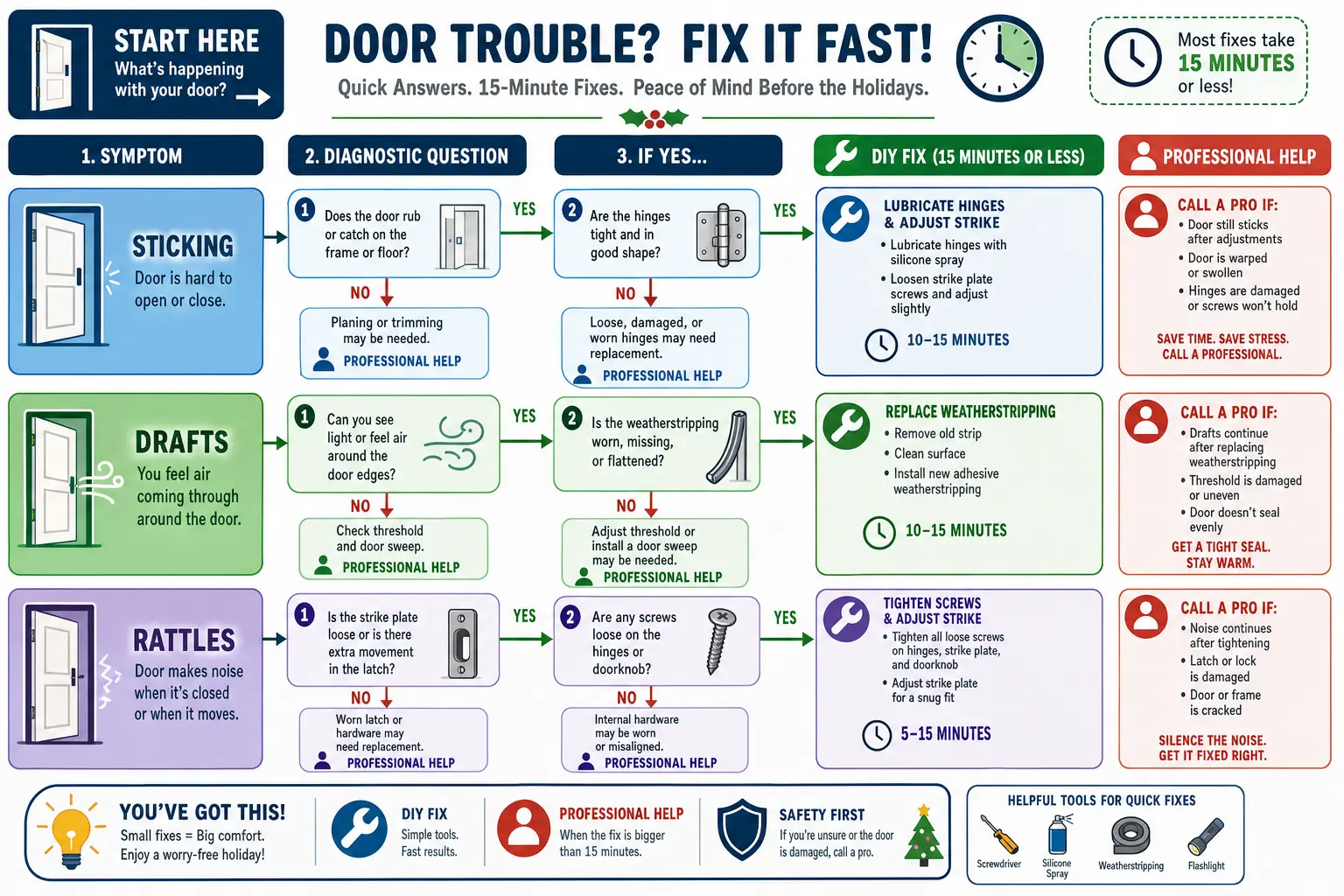
Diagnostic Flowchart: Symptom-to-Solution Matrix


Before taking tools to your front door, determine the exact failure pattern to choose the fastest, safest fix.

Step-by-step diagnostic flowchart empowers homeowners to quickly identify front door problems and choose the right fix under time pressure, streamlining urgent holiday preparation.

  • Symptom A: Door sticks at top latch corner + cold air at bottom hinge.
    • Cause: Top hinge sag pulling door frame off-square.
    • Fix: Drive a 3-inch wood screw into the top hinge jamb hole to pull the frame back inline.
  • Symptom B: Door latches but rattles during wind + subtle draft along edge.
    • Cause: Strike plate tab sits too far inward, leaving space between door edge and jamb seal.
    • Fix: Bend the internal strike plate tab outward or adjust deadbolt alignment.
  • Symptom C: Door drags along threshold + noticeable floor draft.
    • Cause: Worn bottom sweep or frame settling.
    • Fix: Adjust bottom threshold screws upward or replace worn sweep seals.

Step-by-Step Playbook: 3 Non-Destructive Emergency Fixes


Before reaching for a plane or sander, remember our cardinal rule: Don’t plane your door yet! Planing permanently destroys factory finishes and cannot be undone—and it won’t work on steel, fiberglass, or composite doors.

Fix 1: The 3-Inch Screw Trick for Sagging Hinges

Remove the center screw from the top hinge on the jamb side. Drive a 3-inch hardened wood screw directly through the hinge leaf into the underlying wall framing. This pulls the top jamb inward by 1/16 to 1/8 inch, lifting the sagging door leaf, restoring the standard 1/8-inch reveal gap, and clearing top-corner sticking instantly.

Fix 2: Strike Plate Tab Bending to Stop Rattles

If your door rattles when closed, remove the strike plate from the jamb. Locate the small metal tab inside the latch opening. Using pliers, bend this tab slightly toward the door stop. When reinstalled, this tab forces the latch bolt tighter against the weatherstripping, stopping vibration and sealing air gaps. This simple tweak helps reinforce door frame stability while eliminating noise.

Fix 3: Quick Weatherstrip Calibration

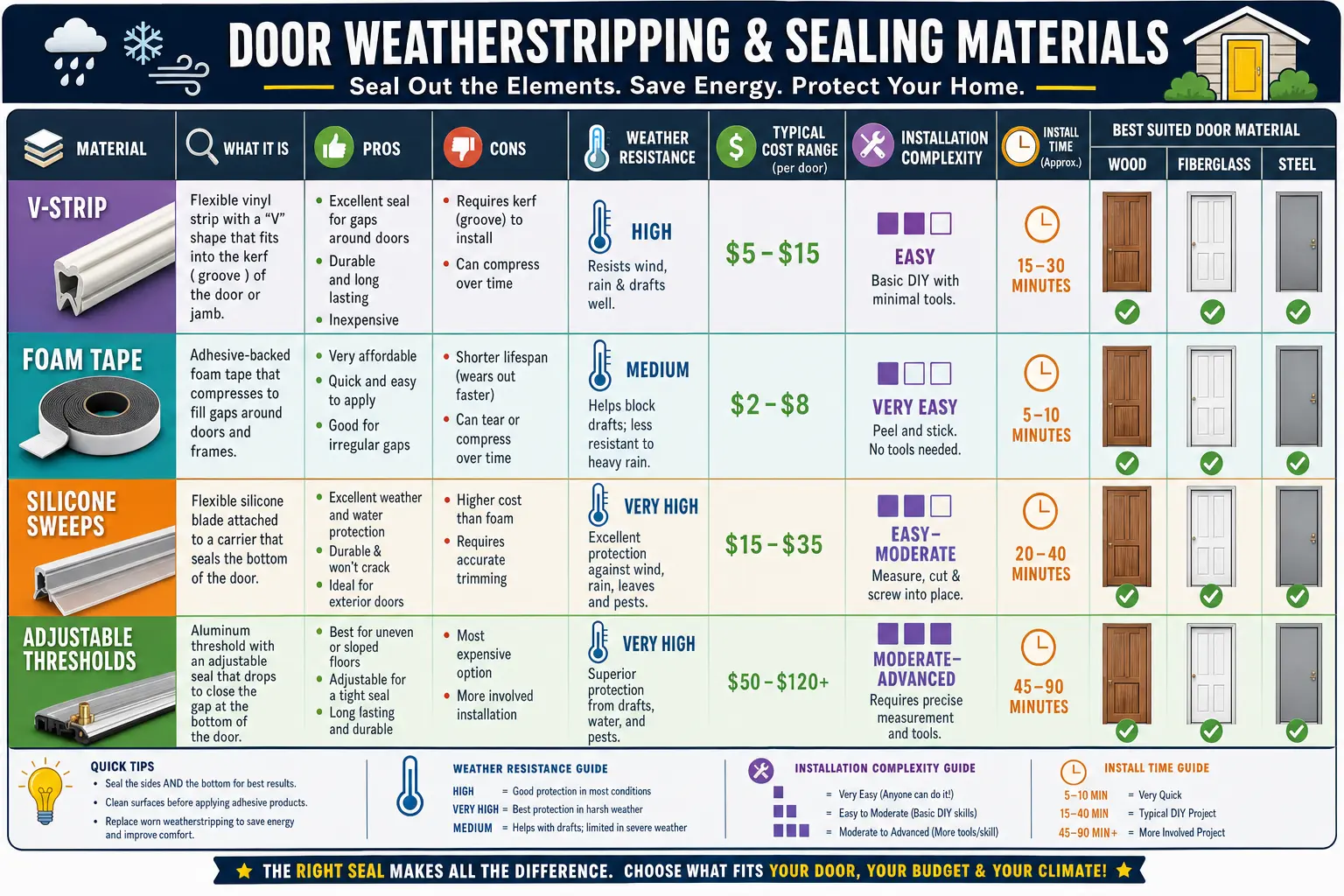
Inspect your frame perimeter. If your foam or V-strip weatherstripping is flattened, cracked, or missing, replace it with proper seals. Learning about different types of kerf weatherstripping helps you select durable silicone or bulb seals that maintain tension down to sub-zero temperatures.

Materials and Weatherproofing Methods Comparison


Selecting the right sealing material ensures your quick fix lasts through winter while protecting your home’s thermal barrier.

A side-by-side comparison chart that helps homeowners remember key characteristics of weatherstripping options, supporting smart material choices for door drafts and energy savings.

Weatherstripping Type Durability Installation Time Best For Cost
Adhesive Foam Tape 1–2 Seasons 10 Minutes Emergency pre-party draft stop $5 – $10
V-Strip (Tension Seal) 3–5 Years 20 Minutes Narrow side-jamb gaps $10 – $15
Silicone / Kerf Bulb 5–10+ Years 15 Minutes Permanent entry door sealing $15 – $30
Adjustable Threshold 10+ Years 30 Minutes Bottom gap draft elimination $25 – $60

If water or cold air sneaks in under the bottom edge despite adjustments, you may need to look into replacing exterior door jamb and threshold components to prevent long-term wood rot.

Seasonal Swell vs. Professional Repair: Making the Right Call


Solid wood doors naturally expand when indoor or outdoor relative humidity exceeds 70%, expanding the wood panel by up to 1/8 inch. While minor expansion can be solved with hinge adjustments, severe sticking across multiple seasons usually signals structural jamb alignment issues, broken hinges, or foundation movement.

Here is a breakdown of evaluation trade-offs:

  • DIY Quick-Fix ($0 – $25): Ideal for immediate pre-holiday needs, minor hinge sag, loose strike plates, and temporary foam sealing.
  • Professional Handyman/Door Service ($150 – $350): Necessary for door re-mortising, structural frame square alignment, threshold rebuilding, and professional weatherstrip retrofits adhering to best practices for exterior door installation in residential properties.
  • Full Door Replacement ($1,200 – $3,500+): Recommended when composite skin delaminates, structural wood core rots, or draft leaks cause extreme energy losses that hardware adjustments cannot fix. Upgrading to a new, insulated replacement front door yields long-term energy savings and curb appeal.

Prepare Your Entryway for Holiday Hosting


A welcoming home starts at the front door. By addressing hinge sag, strike plate alignment, and weatherstripping, you can eliminate cold drafts and annoying sticking before your holiday guests step inside. If quick adjustments don’t solve the issue or you’re dealing with structural frame rot, professional technicians can quickly restore your entry door to smooth, energy-efficient operation.

Frequently Asked Questions


Why does my front door stick only during humid or wet weather?

Solid wood doors absorb ambient moisture when relative humidity climbs above 70%, causing the wood fibers to expand up to 1/8 inch. This closes the clearance gap between the door edge and frame. Tightening top hinge screws or installing a dehumidifier indoors often alleviates seasonal binding without needing permanent wood removal.

How do I stop cold air from coming under the front door without replacing it?

Inspect your adjustable door threshold for recessed screws. Turning these screws counter-clockwise raises the aluminum threshold cap to meet the bottom sweep tightly. If the seal remains broken, replacing your bottom sweep with a flexible silicone weatherstrip will block drafts effectively.

Can I fix a door rattle without calling a professional carpenter?

Yes. Most door rattles are caused by a misaligned strike plate. Remove the plate, use pliers to bend the center tab slightly toward the door stop, and screw it back into the jamb. This pulls the door snug against the weatherstripping when latched, eliminating both rattles and air leaks in minutes.