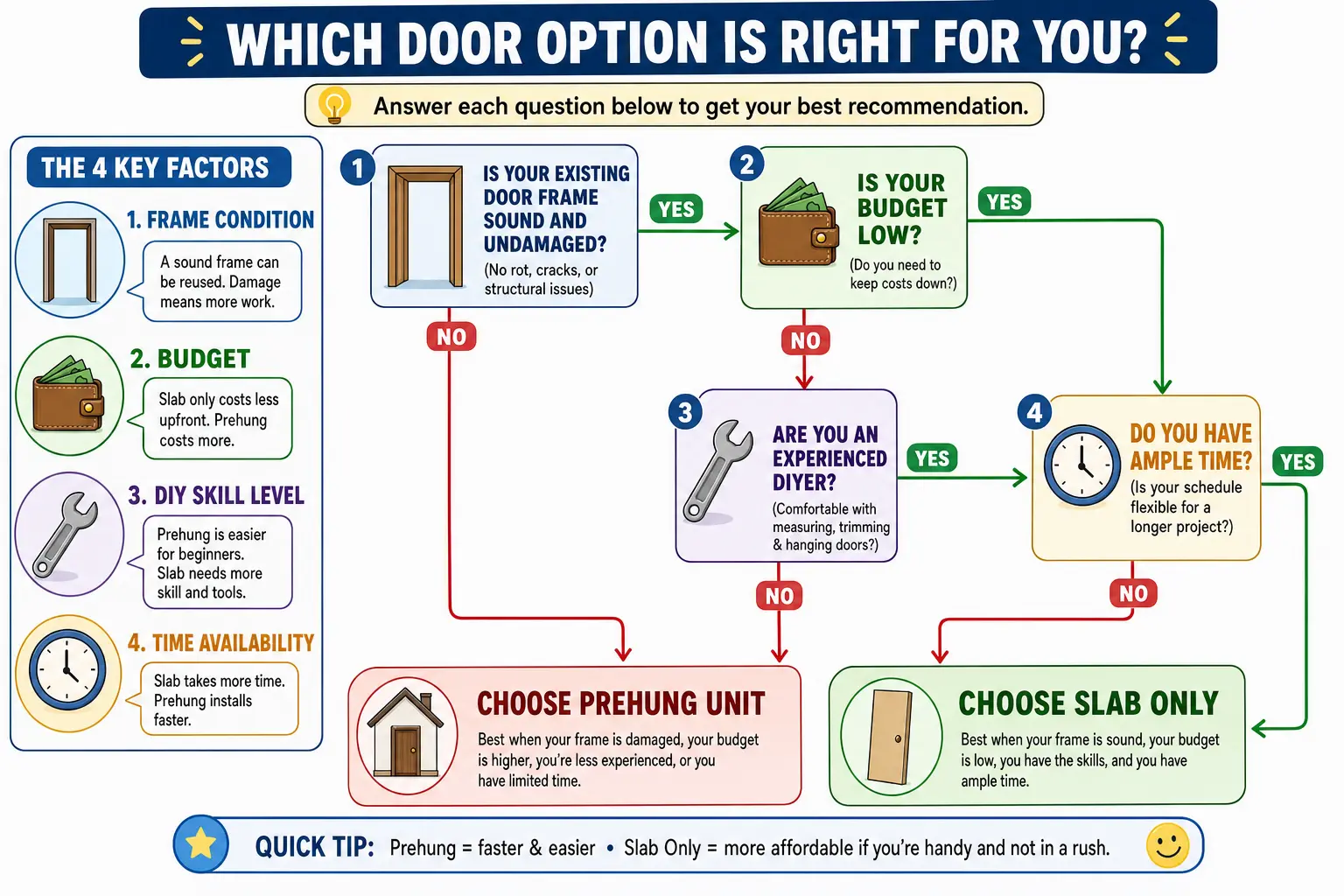
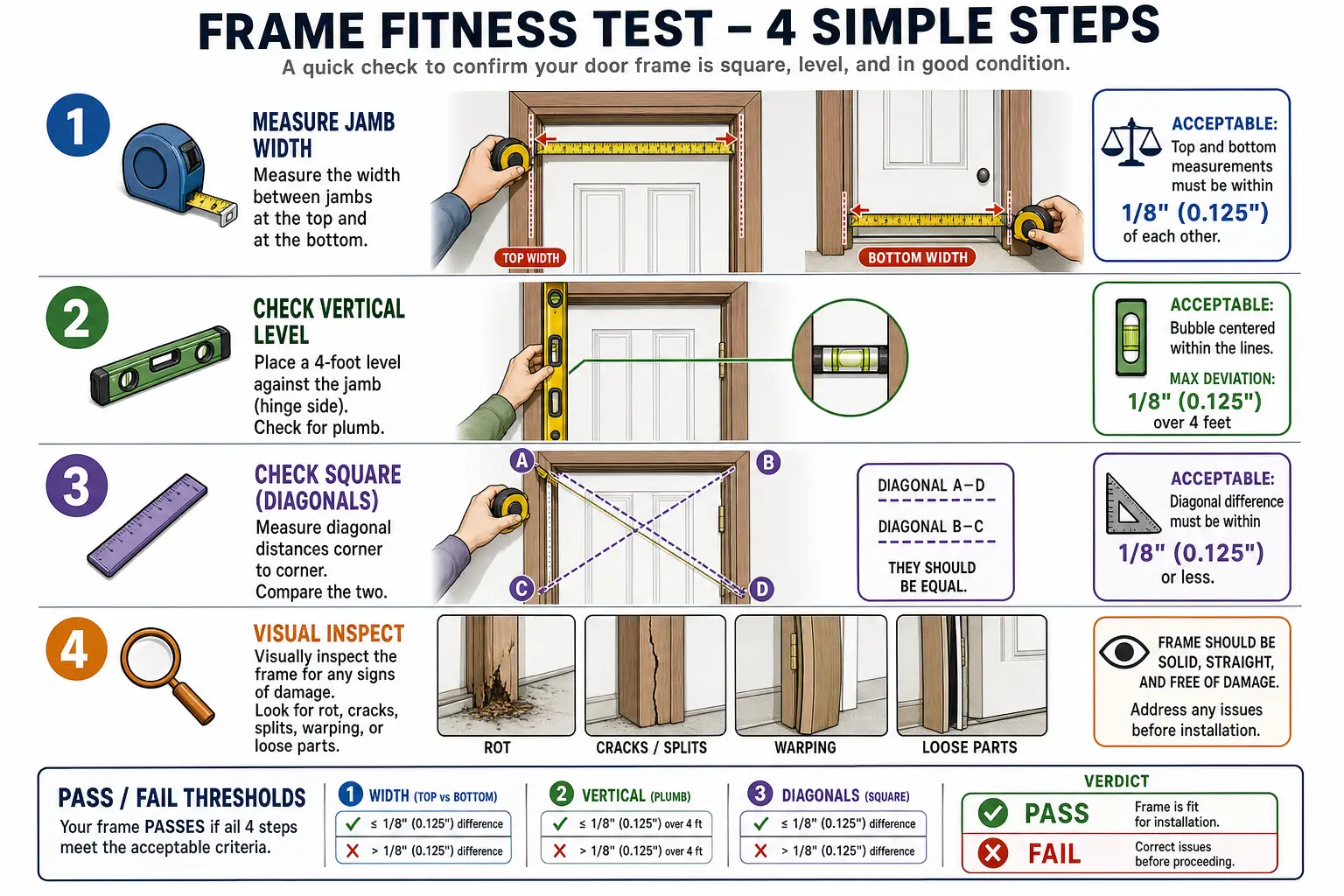
Deciding between a prehung door unit and a slab-only replacement comes down to the structural health of your current opening: opt for a prehung unit if your existing jambs are crooked, rotted, or you are installing an exterior entry door that requires factory-sealed weatherstripping and a threshold, whereas a slab door is the right call when your current frame and casing are plumb, solid, and intact. A slab consists strictly of the bare panel—meaning you must plane edges, chisel hinge mortises, and bore lockset holes yourself—while a prehung system arrives factory-mounted inside its own frame. Choosing the wrong format often turns a straightforward swap into days of fighting binding edges, uneven reveal gaps, and damaged wall trim.
-
When a Prehung Unit Makes Sense: Best suited for exterior entrances, new rough openings, switching door swing directions, or compensating for settled, out-of-square walls where hanging a bare panel cleanly is nearly impossible.
-
When a Slab Door Makes Sense: Ideal for interior rooms (bedrooms, closets, or bathrooms) with straight, sturdy jambs where you want lower upfront material costs and prefer to leave existing wall trim undisturbed.
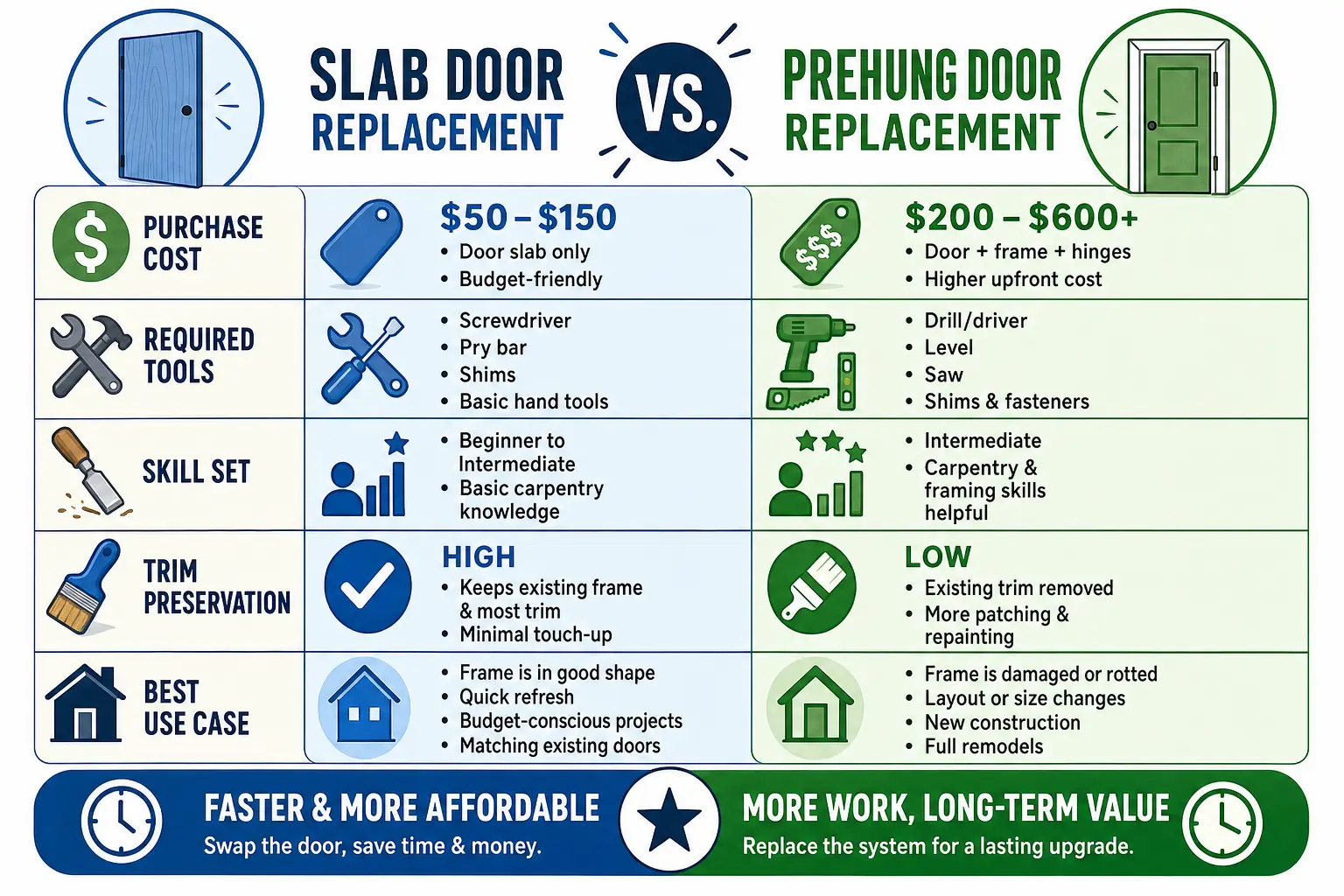
| Decision Factor | Prehung Door Unit | Slab Door Only |
| Package Contents | Door panel pre-mounted in a frame with hinges (plus threshold/weatherstripping on exterior models) | Bare door panel only; requires separate hinges, frame, and hardware prep |
| Impact on Existing Trim | Requires tearing out the old jamb and removing/reinstalling interior casing | Leaves existing frame and decorative wall trim untouched |
| Installation Scope | Remove old frame, shim and plumb the new assembly, and re-trim the opening | Trim panel edges to fit, mortise hinges, and bore handle/latch holes |
| Ideal Use Case | Exterior doors, warped/damaged frames, or changing door size and handing |
Sound interior frames and quick cosmetic panel upgrades |