Phone(855) 676-0881

How to Fix a Sticky Door Latch That Won’t Retract Fully


Published: Nov 27, 2026

To resolve a stubborn door latch that fails to pull back into the housing, start by testing the bolt’s movement while the door stands open, clear away built-up residue before applying a dry PTFE or silicone spray, and swap out the internal assembly if any springs or metal components are damaged. Never slam a jammed door shut, as the impact can bend the bolt or crack the strike plate.

Before purchasing new hardware or calling a locksmith, pinpointing the exact cause takes less than 30 seconds. Industry diagnostic data shows that residential latch failures break down into four primary culprits:

  • Mechanical binding (45%): Caused by overtightened faceplate screws or an improper backset fit (typically 2-3/8″ or 2-3/4″).

  • Debris and dried grease (30%): Solved by wiping the mechanism clean, working a dust-repelling dry lubricant through the tongue, or removing the faceplate for a deep clean.

  • Door frame misalignment (15%): Identified when the bolt retracts smoothly with the door open but snags against the strike plate upon closing due to sagging hinges.

  • Torsion spring fatigue or fracture (10%): Requires replacing the tubular latch or handle assembly.
Interactive Diagnostic: Why Is Your Latch Sticking? (30-Second Test)


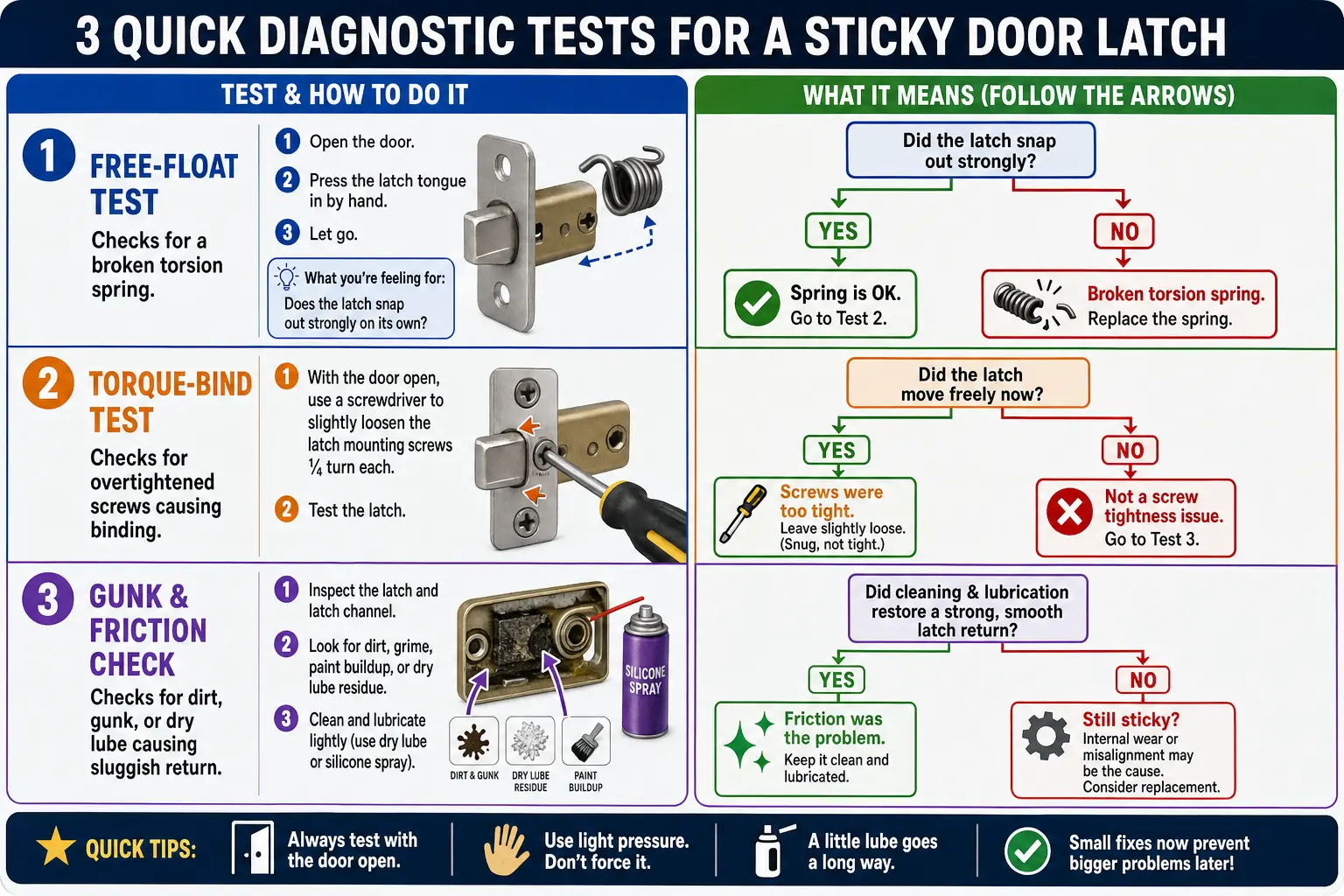
This interactive diagnostic flowchart helps you quickly identify why your door latch won’t retract fully by guiding you through three simple tests in under 30 seconds.

Run through these three rapid tests to pinpoint what is happening inside your tubular latch assembly:

  • Test A: The Free-Float Check (Broken Spring): Press the latch tongue inward manually with your thumb and let go. If it moves with zero resistance and stays flush inside the housing without spring recoil, the internal torsion spring has snapped.
  • Test B: The Torque-Bind Check (Overtightened Screws): Open the door completely and turn the handle. If the latch retracts smoothly while the door is open, or if loosening the mounting screws slightly restores instant spring action, structural compression is binding the slide.
  • Test C: The Friction & Gunk Check: If the tongue retracts slowly, catches halfway, or requires manual force to pull back out, dried factory grease and airborne dust are creating internal drag on the retractor slide.

Need a Quick Fix?

Tell us what’s wrong with your door — we’ll get it sorted.

The Lubricant Comparison: What to Use (and What NEVERS to Spray)


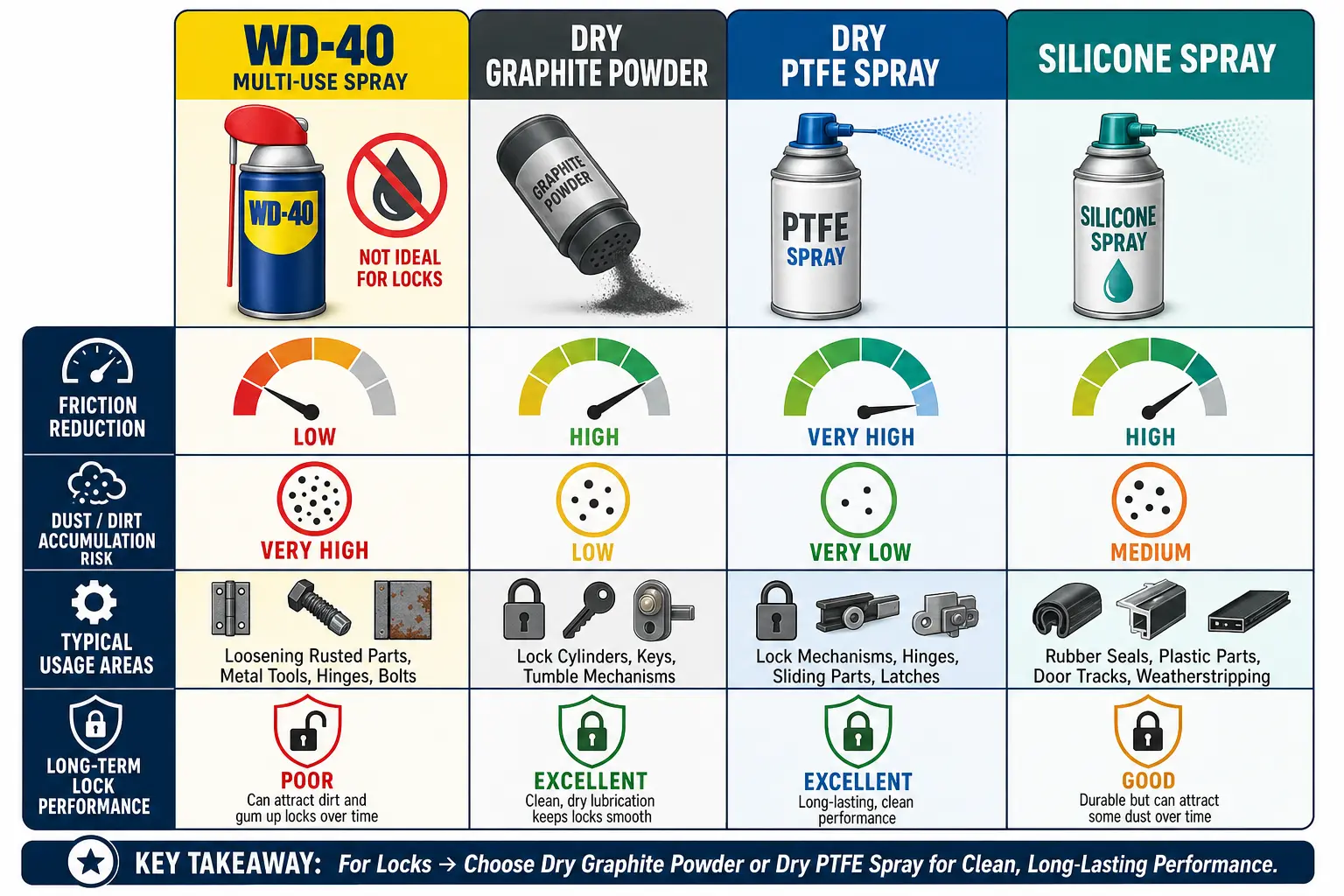
This lubricant comparison chart clarifies which products prolong your door latch’s life and which accelerate gunk buildup, helping you make smart maintenance choices.

One of the most common mistakes is spraying multi-purpose standard WD-40 directly into a sticky latch. Locksmith standards (ANSI/BHMA) strongly warn against using solvent-based wet oils in lock mechanisms. Standard penetrants evaporate quickly, leaving a tacky film that attracts sawdust, pet hair, and household lint—causing severe secondary lock seizure within 3 to 6 months.

  • Dry PTFE (Teflon) Spray (Best Overall): Dries in seconds, creating a ultra-slick coating that rejects dust, dirt, and moisture.
  • Dry Powdered Graphite: Excellent for low-friction lock cylinders, though excess powder can smudge decorative door plates.
  • Silicone Spray: Effective for exterior entryways, providing solid moisture protection with low gunk accumulation.
  • Standard WD-40 Solvent Spray (Avoid): Acts as a short-term solvent flush, but carries a very high risk of long-term grease degradation and debris buildup.

3 Proven Step-by-Step Fixes for Sluggish Latches


Fix 1: The Half-Turn Screw Reset (Torque-Bind)

Overtightening the mounting screws on decorative handles or faceplates pinches the tubular latch barrel against the interior cut-out of the door.

  1. Take a manual Phillips screwdriver and loosen both mounting screws on the interior handle by 1/4 to 1/2 turn.
  2. Test the handle movement. If the latch tongue springs back out instantly, the bind is resolved.
  3. Snug the screws down just until firm, ensuring you do not bow the metal plate against the door surface.

Fix 2: Flush Cleaning and Dry PTFE Application

If age and old factory grease have gummed up the sliding channel, clean the mechanism thoroughly.

  1. Unscrew the handle assembly and extract the central tubular latch insert from the door edge.
  2. Hold the unit over a towel and spray electrical contact cleaner into the spindle hole and tongue slot to flush out hardened grease and wood particulate.
  3. Once clean and dry, spray Dry PTFE lubricant directly into the internal return spring channel.
  4. Work the spindle drive back and forth 10 times to distribute the dry film evenly before reinstalling.

Fix 3: Strike Plate and Frame Realignment

When seasonal temperature shifts cause wood framing to sag or swell, the latch tongue scrapes hard against the strike plate lip. If your entryway exhibits a storm door won’t latch issue or is failing to latch completely, apply lipstick or dry chalk to the tip of the latch tongue. Close the door to mark where contact occurs. File down any high metal spots on the strike plate opening. Additionally, inspecting your entry door seal and evaluating the proper types of kerf weatherstripping will ensure the door rests flush against the stop without pushing lateral pressure onto the latch bolt.

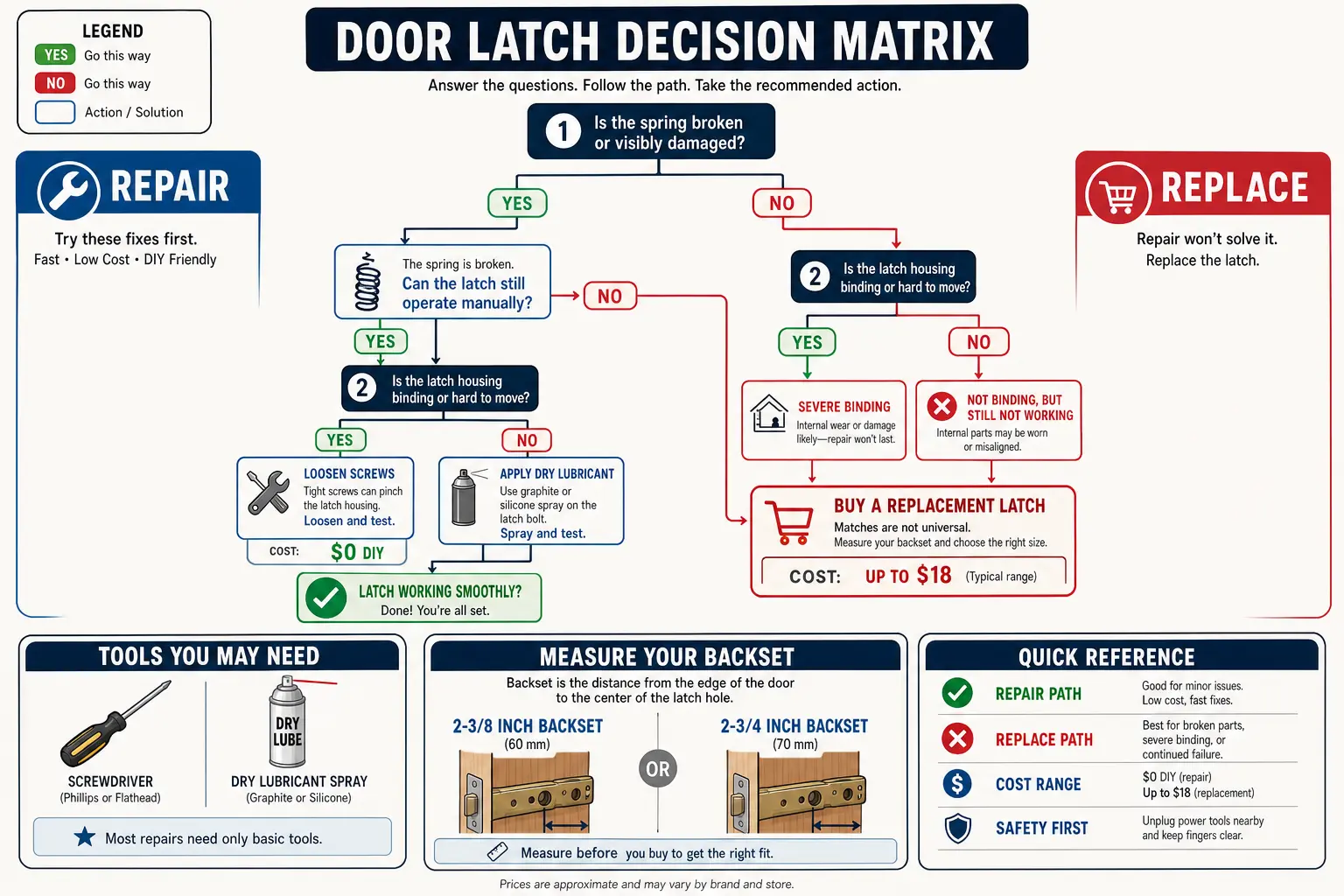
Decision Matrix: Repair Internal Spring vs. Replace Tubular Latch


Use this decision matrix to confidently choose between repairing your door latch or replacing it, simplifying complex decisions into clear, actionable steps.

When choosing between adjusting, repairing, or replacing your lock assembly, evaluate the cost and mechanical investment:

  • Minor Friction / Binding ($0 – $8): Unbinding hardware or applying dry PTFE spray solves approximately 75% of sluggish latches without replacing parts.
  • Replacing the Tubular Latch Insert ($8 – $18): If the internal torsion spring has snapped, buying a stand-alone replacement tubular latch (available in standard 2-3/8″ or 2-3/4″ backset sizes) takes under 10 minutes to swap into your existing handle hardware.
  • Complete Lockset Upgrade ($25 – $80+): Recommended if handles are worn, loose, or fail ANSI Grade 2 structural standards.

For complex commercial doors, electronic access entryways, or stubborn frame alignment issues, searching for trusted door repair near me brings experienced technicians who can restore smooth, secure operation to your home or business.

Frequently Asked Questions


Why does my door latch stick only during cold or humid weather?

Seasonal temperature fluctuations cause wood door frames to expand or shift on their hinges. This movement forces the strike plate out of alignment, causing lateral friction on the latch tongue that overpowers the internal spring.

Can I replace just the internal spring inside a tubular door latch?

Most modern residential tubular latches feature sealed rivet housings. Replacing the individual internal torsion spring is difficult and unreliable compared to replacing the entire $10–$18 tubular latch insert.

Is standard WD-40 safe for quick door latch lubrication?

No, standard WD-40 contains petroleum solvents that evaporate and leave behind a sticky layer. This residue collects dust and grit over time, leading to recurring mechanical binding. Always use a Dry PTFE lubricant or dry graphite spray.