(855) 676-0881

Commercial Cold-Weather Egress Door Repair & Inspection Checklist


Published: Nov 6, 2026

When sub-zero winter temperatures arrive, commercial facility managers face a unique life-safety challenge: keeping egress doors fully operational and code-compliant. While standard maintenance routines work well in spring, cold weather introduces mechanical stress that compromises fire integrity, accessibility, and perimeter security. Industry research indicates that scheduled hardware tuning and preventative care avert up to 85% of commercial entryway failures.

With panic exit devices driving 61.3% of commercial exit hardware market revenue, panic hardware reliability represents the single highest priority for commercial building compliance. Neglecting cold-weather adjustments risks serious safety violations, severe draught energy losses, and costly emergency service calls during severe freeze events.
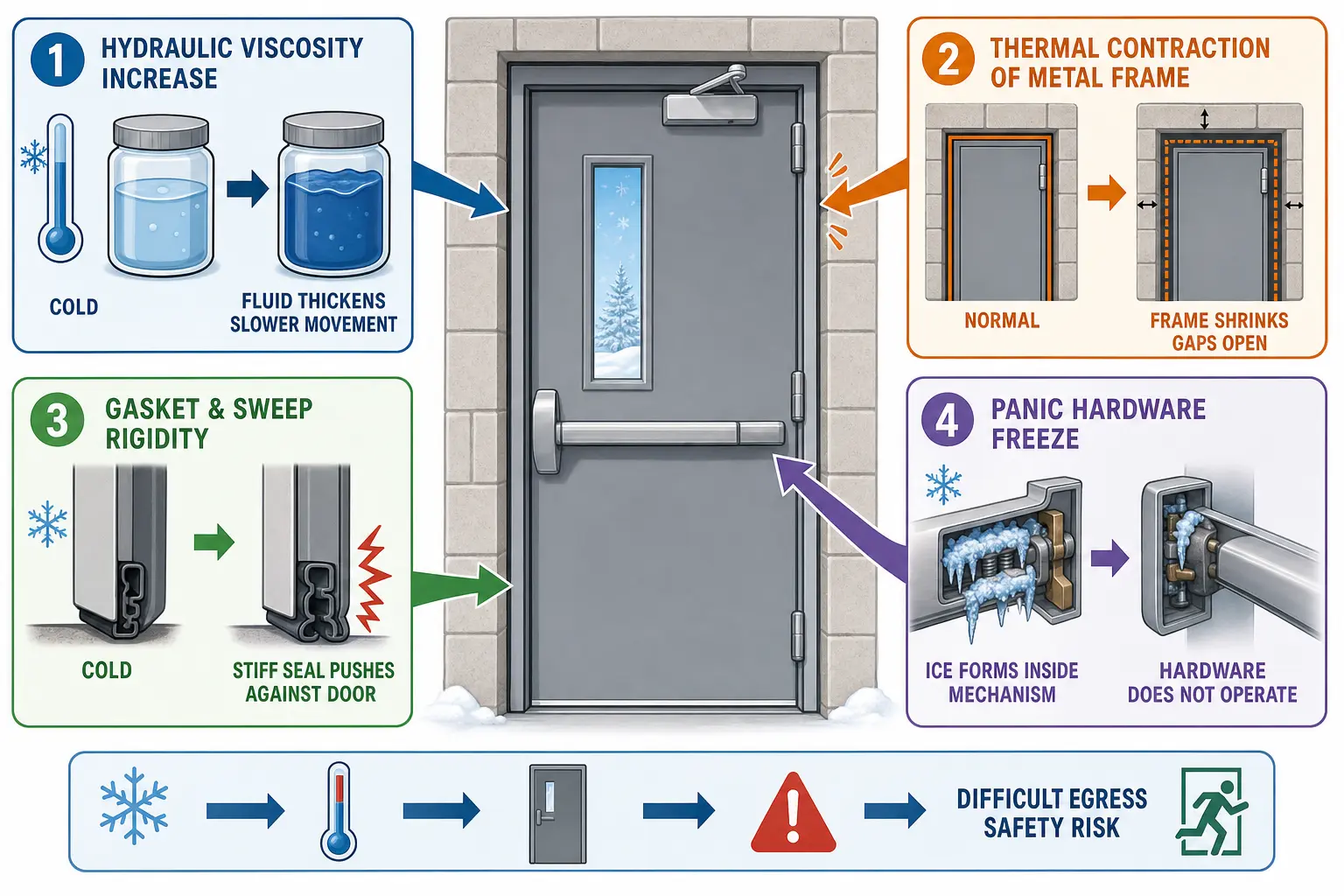
Mechanics of Cold-Weather Egress Door Failures


Sub-freezing temperatures physically alter door assemblies across four primary vectors:

  • Hydraulic Viscosity Shift: Standard hydraulic door closer oil experiences up to a 300% increase in kinematic viscosity as ambient temperatures plummet from 70°F down to 0°F. This drastic thickening slows closing sweep times by 5 to 15 seconds, frequently causing failure-to-latch conditions.
  • Thermal Contraction: Hollow metal doors and steel frames shrink at different thermal expansion rates than surrounding masonry. This differential movement leads to frame binding, latch misalignment, and hinge binding.
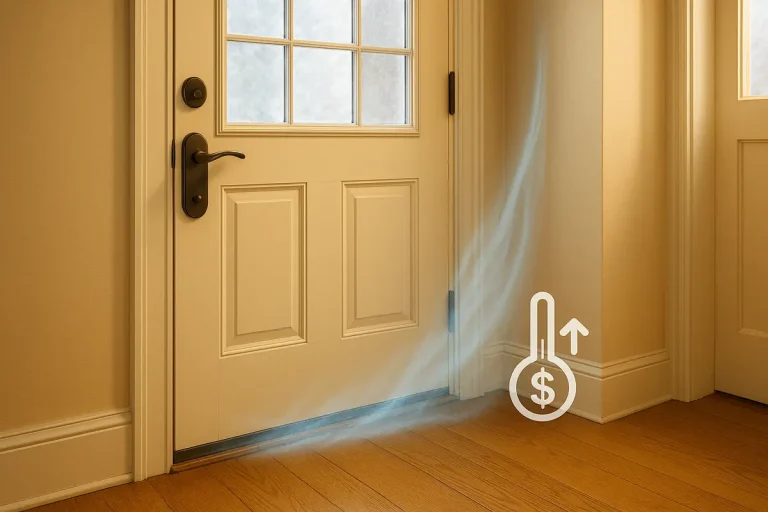
  • Gasket & Sweep Rigidity: Sub-zero cold hardens neoprene, vinyl, and silicone weatherstrips. Stiff gaskets create excessive seal drag against the door stile, stopping doors from latching shut unless closer spring tension is adjusted correctly.
  • Panic Hardware Freeze: Ambient moisture and condensation collect inside panic crash bars, vertical latch rods, and strike pockets, freezing solid and jamming internal mechanism springs.

Understanding how cold weather physically affects egress door operation is the first step to effective winter maintenance and safety compliance.

Winter Egress Door Field Inspection & Diagnostic Checklist


Evaluating commercial egress paths during freezing weather requires systematic component testing against mandatory safety standards.

Frame, Clearance & Threshold Inspection

  • Door-to-Frame Clearance: Verify a nominal 1/8-inch gap at the jambs and head. Inspect for frame binding caused by thermal movement or shift in the wall opening.
  • Threshold Alignment: Inspect exterior thresholds for frost heave, ice buildup beneath sweeps, and structural movement that causes lower edge binding.
  • Hinge Wear & Drag: Check continuous or heavy-duty butt hinges for alignment issues. If a door sags or rubs along the threshold, perform a targeted commercial door adjustment before adjusting hydraulic speed settings.

Hydraulic Door Closer Diagnostics & Winter Tuning

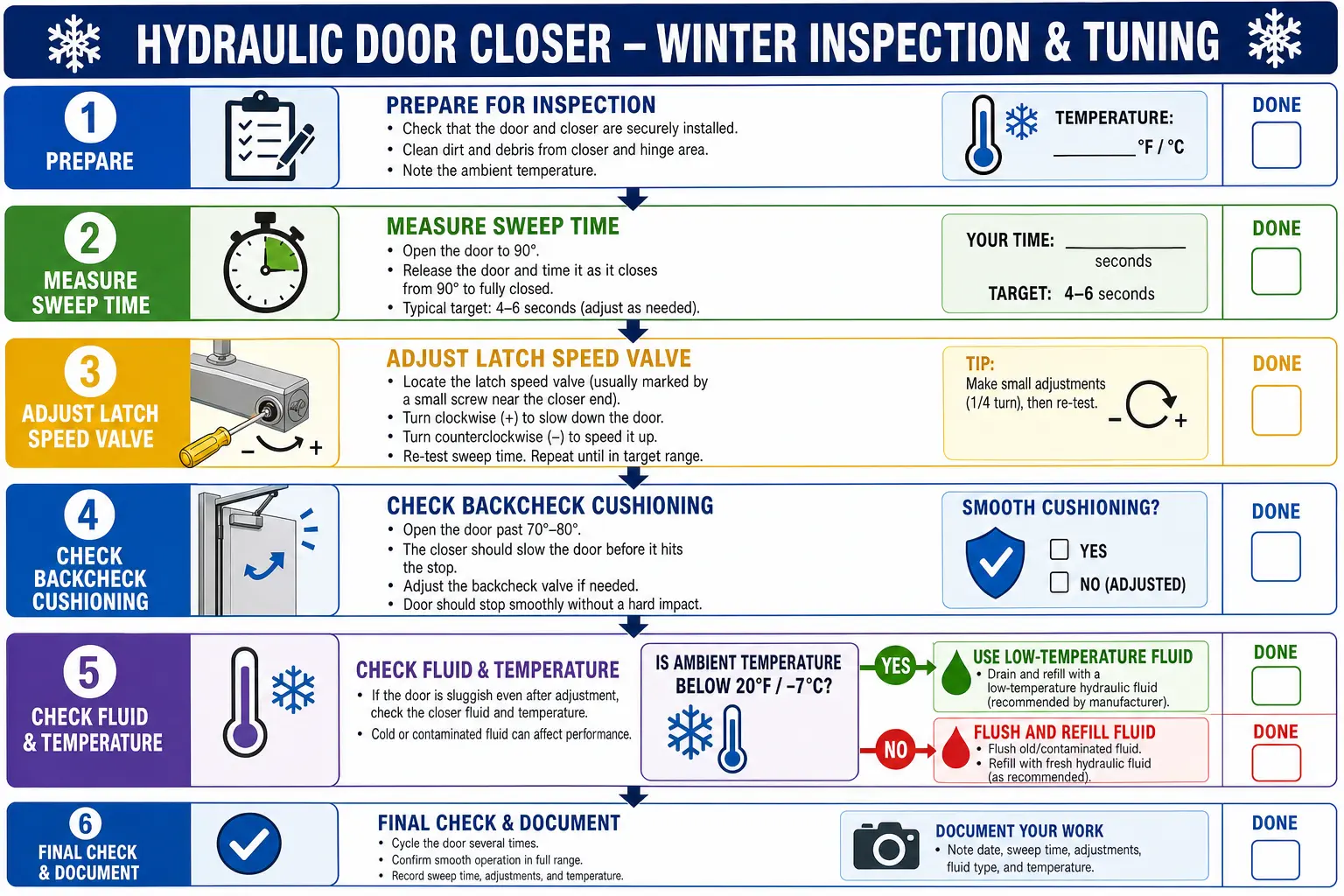
  • Sweep Speed Calibration: Time the closing sweep from 90° to 12°. If thickened oil slows this phase past 5 seconds, perform a precise commercial door closer adjustment using the main regulating valve.
  • Latch Valve Tuning: Adjust the latch speed valve (“L”) to ensure positive latch engagement from 12° to 0° without violently slamming the frame.
  • Backcheck Verification: Test the backcheck valve (“BC”) to cushion opening momentum before 85°, protecting the frame against heavy winter wind gusts.
  • Fluid Leakage Checks: Inspect closer bodies for fluid drops or wet residue. If a unit is door closer leaking oil, low internal fluid levels will cause uncontrolled swinging, requiring complete unit replacement.

Follow this clear diagnostic and tuning flow to maintain reliable hydraulic door closer performance during cold weather and avoid slow closures or security failures.

Panic Hardware & Exit Device Servicing

  • Push-Bar Release Force: Ensure panic hardware releases the latch bolt when applying 15 lbf or less of force, satisfying NFPA 101 Life Safety Code mandates.
  • Lubrication & De-Icing: Clean internal mechanisms and apply synthetic graphite or dry PTFE spray. Never use heavy liquid grease, which congeals and locks up moving parts below 32°F.
  • Vertical Rod Alignment: On double-door assemblies, verify top and bottom latch bolts retract fully without dragging, confirming adherence to commercial door panic bar code requirements.

Weather Envelope & Energy Seal Integrity

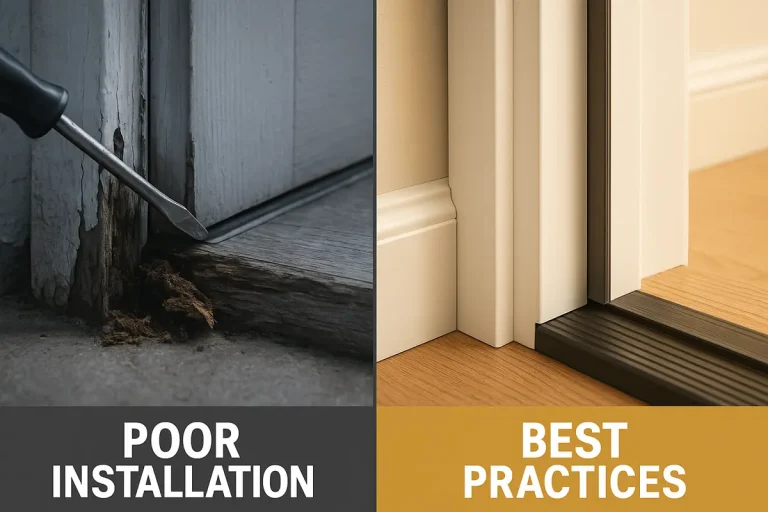
  • Perimeter Gasket Audit: Check perimeter seals for cracking, permanent compression set, or ice damage.
  • Light & Compression Test: Pass a standard card between the seal and door stile to verify uniform contact around the full door perimeter.

Resolving the Seal Friction vs. Latching Force Paradox


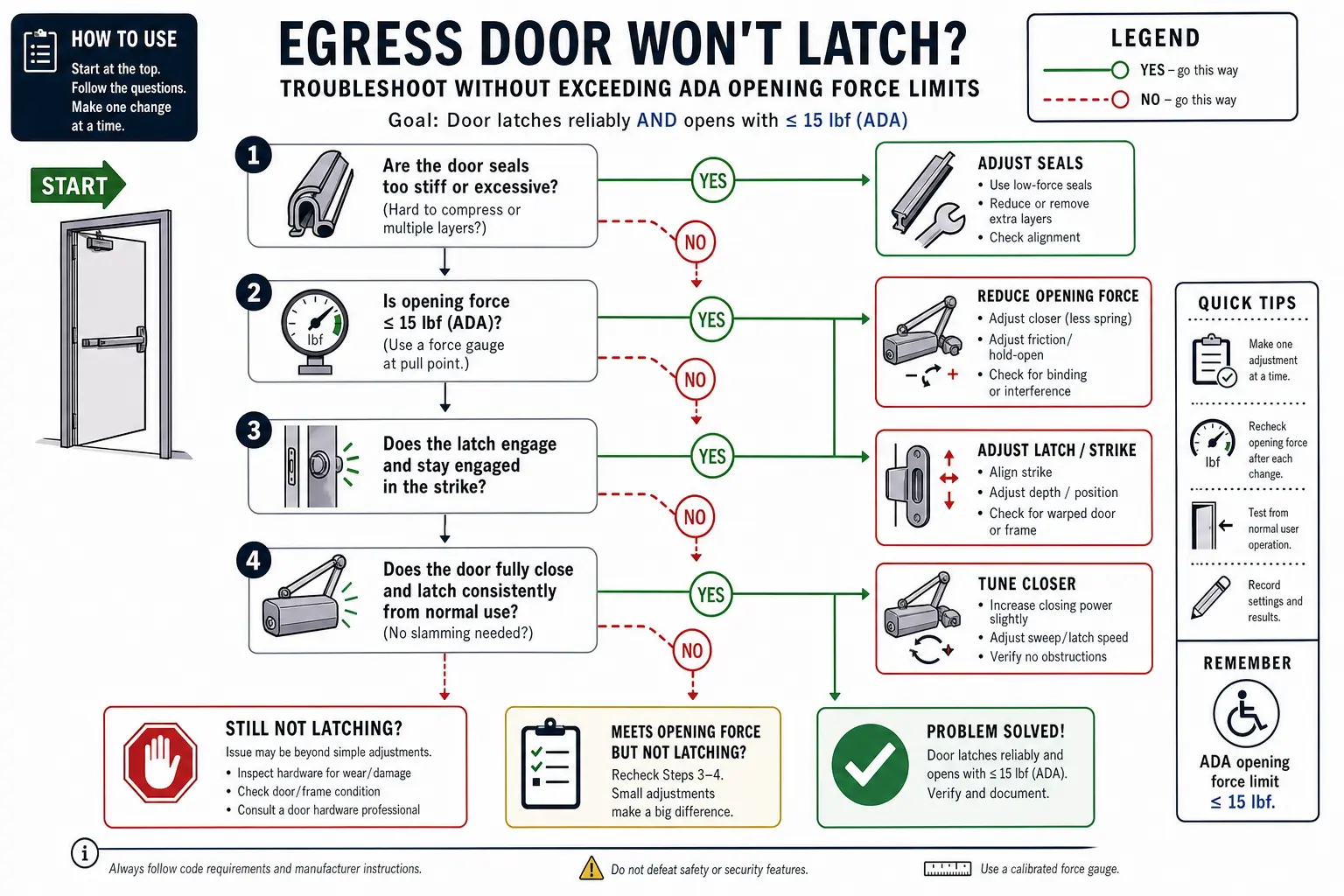
Facility managers frequently run into a compliance dilemma during winter: stiff perimeter seals require higher door closer spring tension to achieve positive latching, yet increasing tension often violates the strict ada door opening force limit of 5 lbf maximum push force for interior doors (and 15 lbf for exterior doors).

Use this step-by-step troubleshooting decision tree to resolve winter door latching issues while maintaining code-compliant opening forces.

To resolve this paradox without creating non-compliant conditions:

  1. Isolate the Drag: Temporarily remove perimeter weatherstripping to confirm whether failure to latch stems from seal resistance or mechanical hinge binding.
  2. Upgrade Seal Material: Replace hardened vinyl or neoprene perimeter seals with silicone bulb gaskets, which maintain flexible elasticity down to -40°F.
  3. Install Temperature-Compensated Closers: Upgrade legacy door closers to Grade 1 liquid-compensated units (such as the LCN 4040XP series) that automatically adjust fluid flow across shifting seasonal temperatures.
  4. Verify NFPA 80 Latching: Ensure fire-rated doors latch reliably under all conditions. Under NFPA 80 Section 5.2, conducting an annual fire door inspection requires verifying positive latching across all seasonal temperature swings.

In-House Maintenance vs. Professional Technician Intervention


Knowing when to delegate tasks to internal staff versus engaging certified door specialists protects building safety and operational budgets.

Safe In-House Tasks

  • Cleaning panic hardware pathways and applying dry synthetic lubricants.
  • Executing minor quarter-turn hydraulic valve speed adjustments.
  • Replacing surface-mounted weatherstripping, sweeps, and perimeter bulb gaskets.
  • Tightening exposed surface-mounting hardware and hinge screws.

Required Professional Services

  • Frame Re-Squaring: Adjusting or setting anchored steel frames that have shifted due to structural frost heave.
  • Fire-Rated Assembly Modification: Executing any physical repair or component retrofitting on labeled fire doors requiring certified documentation.
  • Severe Spring & Internal Hardware Failures: Resolving major mechanical failures or undertaking full commercial door installation services.
  • Complex Latching Failures: Diagnosing persistent alignment issues that require professional commercial door closer repair.

Frequently Asked Questions


Why does my commercial door slam violently when temperatures drop?

Cold weather hardens internal rubber seals inside low-grade door closers, allowing hydraulic fluid to bypass internal control chambers. If hydraulic fluid has fully leaked out, air pockets form inside the cylinder, eliminating damping control and causing the door to slam shut under spring force.

Can we loosen hydraulic closer spring tension in winter to meet ADA force standards?

While lowering spring tension reduces opening effort to meet ADA mandates, reducing force too much can prevent the door lock bolt from latching into the strike plate, creating a fire-code violation under NFPA 80. Upgrading to low-friction silicone weather seals or fluid-compensated Grade 1 closers resolves opening force issues without compromising latching security.

How often must commercial cold-weather egress doors be inspected?

NFPA 80 and NFPA 101 require formal annual inspections of all egress and fire door assemblies. However, facility managers in cold climates should perform informal functional audits at the start of winter to catch hydraulic fluid degradation, gasket stiffening, and threshold movement before severe weather hits.