(855) 676-0881

Storm Door Repair: Replacing a Torn Sweep and Bent Bottom Expander


Published: Nov 24, 2026

Storm door repair involves resolving threshold dragging, worn bottom weatherstripping, air drafts, and water leaks—without the expense of replacing the entire unit. For Connecticut homeowners dealing with harsh winter winds, fixing a damaged bottom expander channel or sweep insert restores a tight seal and saves 92% to 97% compared to installing a new mid-tier storm door.

Common Storm Door Bottom Fixes:

  • Scraping or dragging across the threshold: Raise the adjustable bottom expander channel, tighten loose hinge screws, or trim excess sweep material for clean clearance.

  • Cold drafts and air leaks: Slide out cracked, brittle rubber fins and install a fresh replacement vinyl sweep insert.

  • Rainwater pooling inside the entry: Re-align the bottom drip cap and ensure the sweep sits flush against the sill to deflect moisture outward.

  • Bent or dented bottom expander: Remove the damaged U-shaped aluminum channel, reshape minor bends, or swap in a new expander assembly.
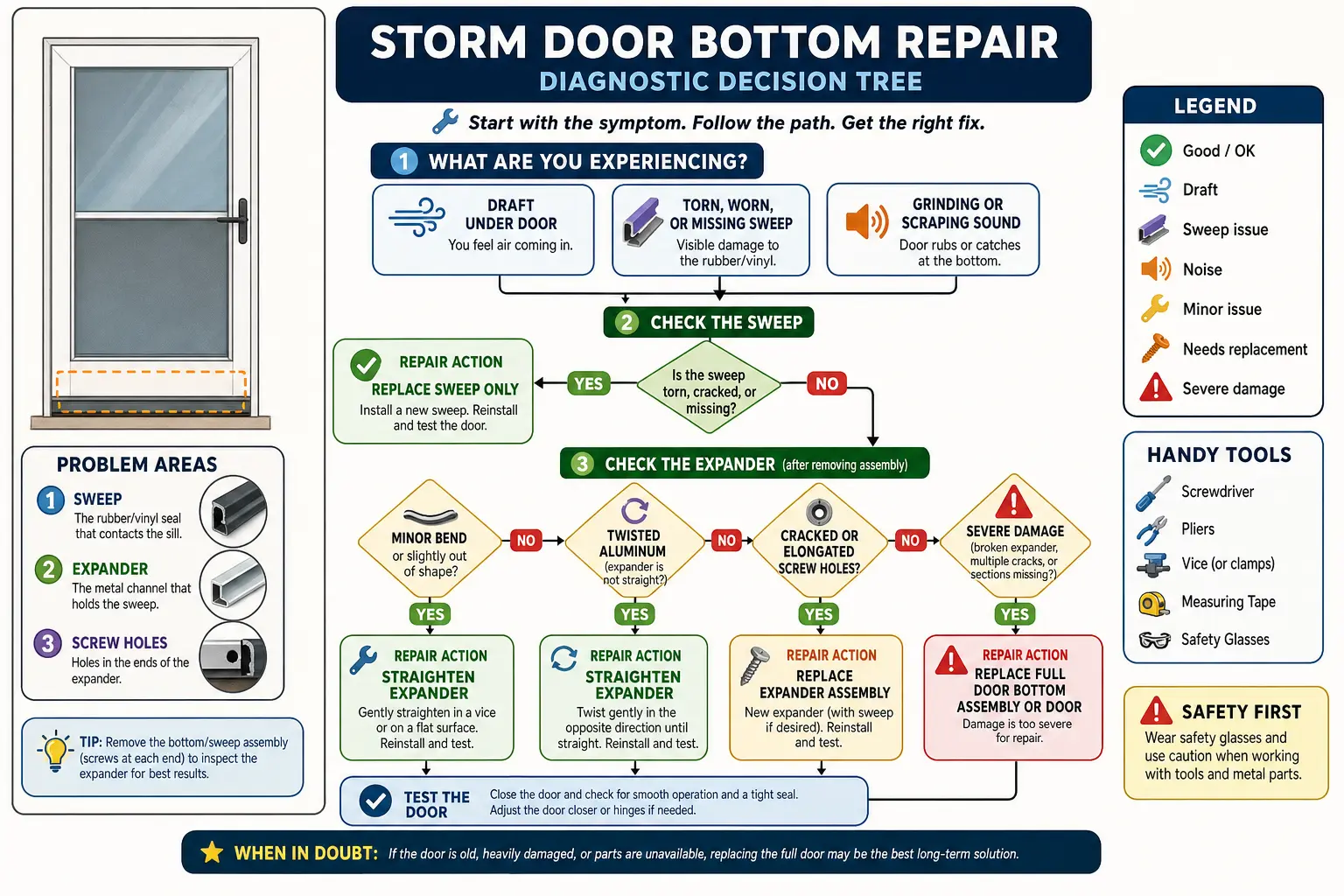
Diagnostic Matrix: Repair vs. Replace Decision Tree


Step-by-step diagnostic guide to help homeowners decide whether to replace a storm door sweep, straighten a bent bottom expander, or replace the entire assembly, using clear symptom inspection and condition checks.

Before buying parts, inspect your storm door’s bottom expander—the adjustable aluminum channel mounted at the door base.

  • Minor Track Distortion: If the expander has a localized bend or a pinched T-slot channel from striking an uneven threshold, it is fully repairable using basic tools.
  • Severe Structural Damage: If the aluminum is twisted, cracked, or has torn mounting screw slots, replace the entire expander kit.
  • Rubber Tear Only: If the metal frame remains square and straight, replacing the sweep insert alone restores your front door energy efficiency.

Need a Quick Fix?

Tell us what’s wrong with your door — we’ll get it sorted.

Identifying Your Storm Door Sweep Profile & Dimensions


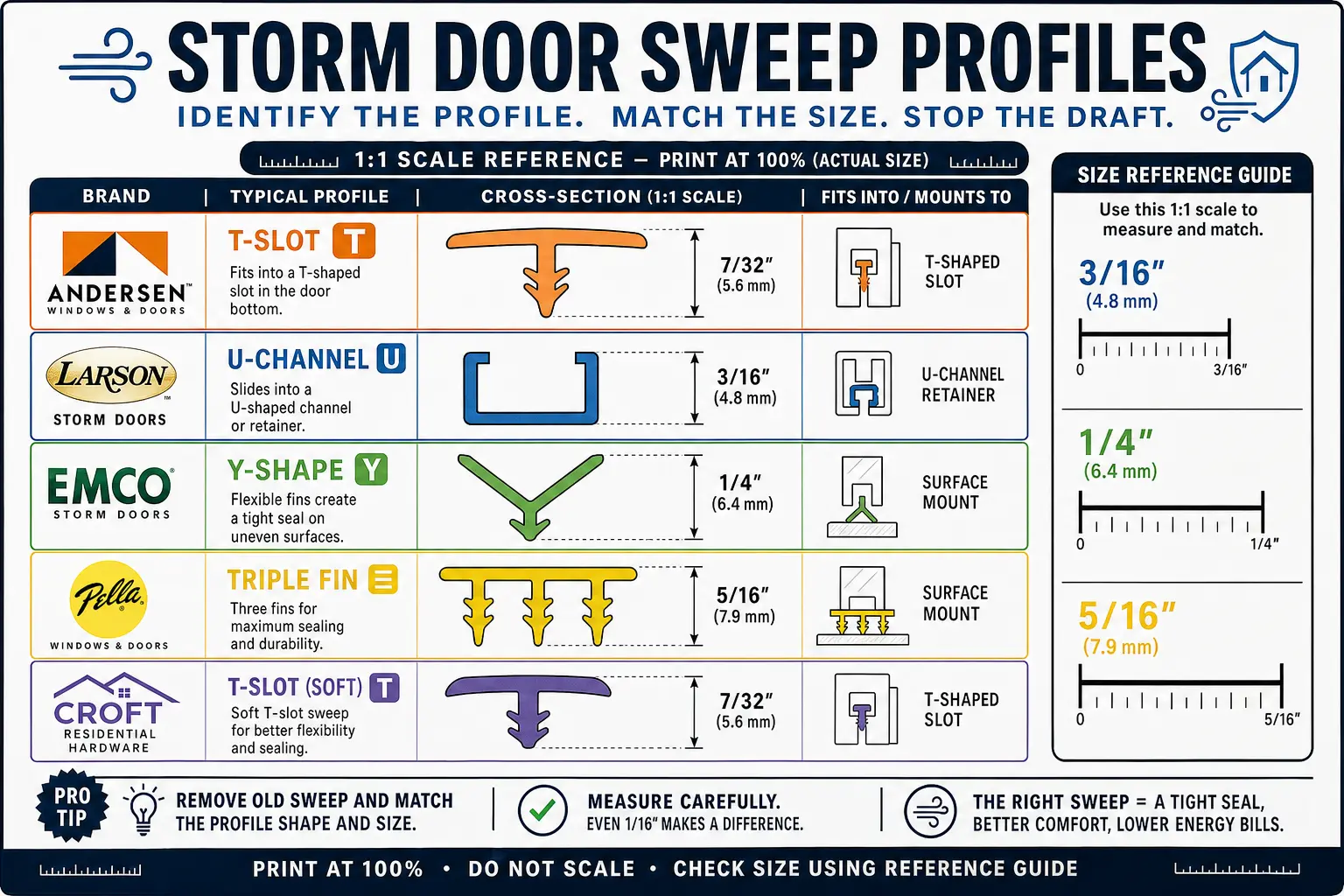
A handy visual reference chart to quickly identify, measure, and match common storm door sweep profiles with major brand compatibility, enabling accurate DIY replacement part selection.

Not all sweeps fit all doors. Major brands like Andersen, EMCO, Larson, and Pella utilize specific track geometries. Slide out a small section of your old sweep to measure the top bead (the part that slides inside the metal channel).

Standard T-bead widths measure 3/16 in (4.8 mm), 1/4 in (6.3 mm), or 5/16 in (8 mm).

Material Selection Matters

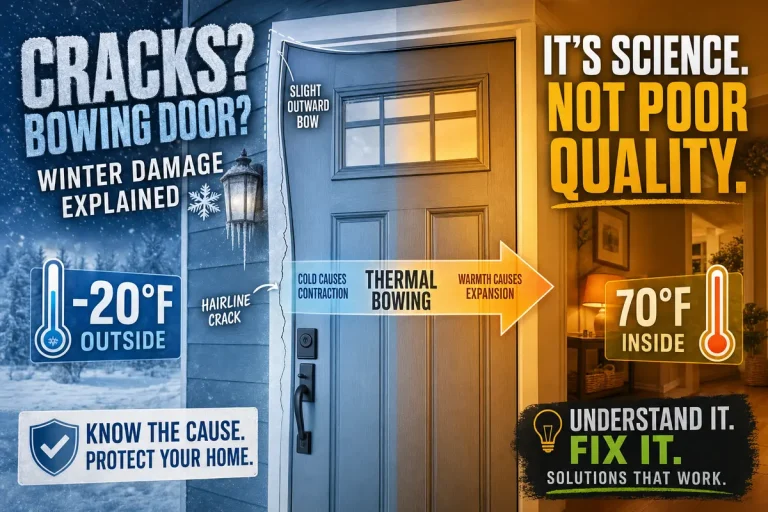
Standard PVC/Vinyl sweeps stiffen and crack at 32°F (0°C), causing fins to tear when dragged across icy thresholds. Upgrading to EPDM rubber or silicone sweeps ensures flexibility down to -40°F (-40°C), increasing seal lifespan by 3x to 5x. For severe New England weather, choosing high-performance rubber prevents recurring issues when a door is not latching in winter.

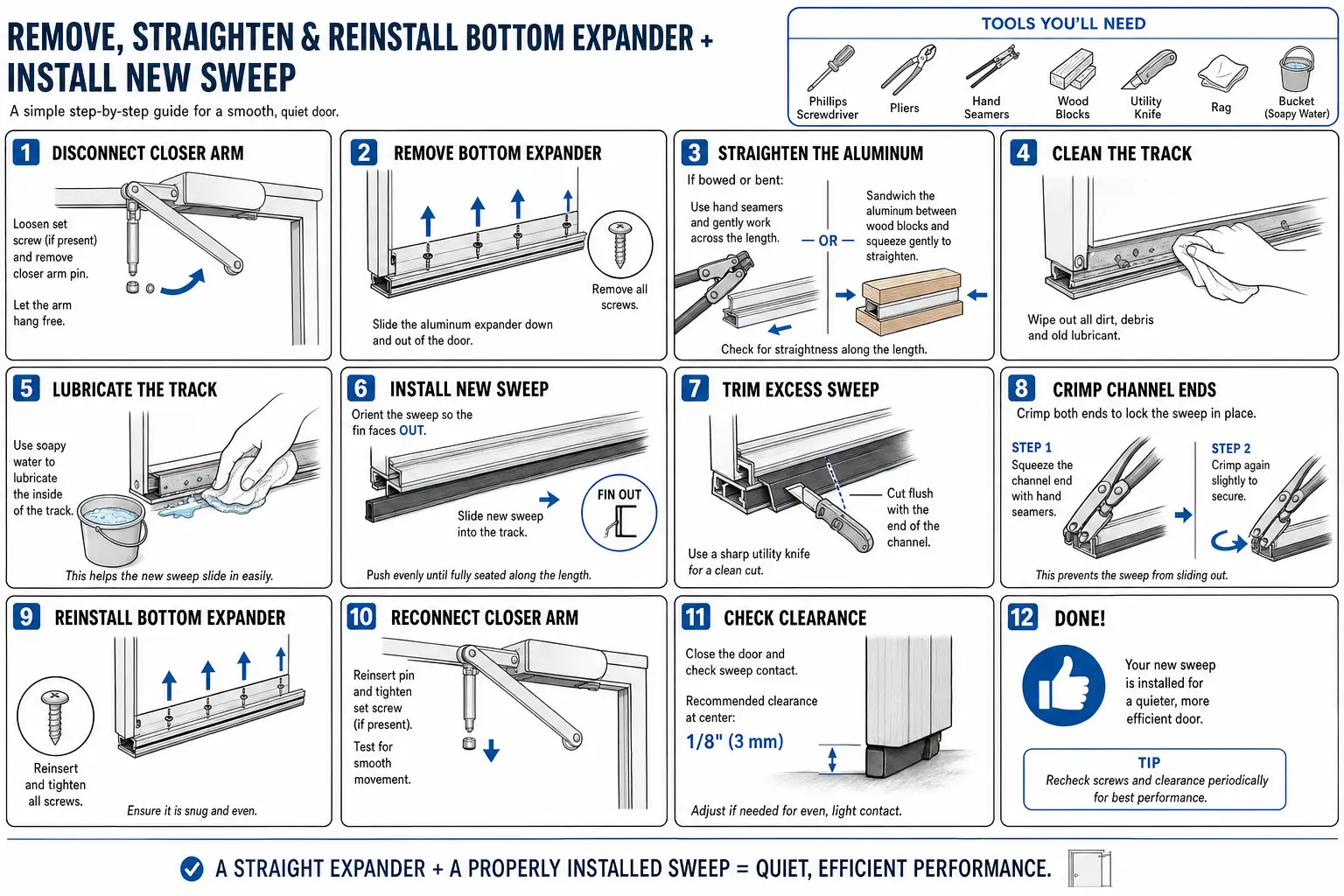
Step-by-Step Repair Protocol


Comprehensive visual tutorial breaking down storm door bottom repair and sweep insertion into manageable steps to help DIYers complete effective repairs smoothly and correctly.

Phase A: Expander Removal and Straightening

  1. Disconnect the lower pneumatic closer arm attached to the expander.
  2. Back out the 2 to 4 mounting screws on the interior face of the expander.
  3. Remove the expander from the door.
  4. To fix bent aluminum without cracking it, clamp the metal between two scrap wood blocks in a bench vise, or use hand seamers. Re-open crushed T-slots by carefully running a flathead screwdriver along the inner track.

Phase B: Inserting the New Sweep

  1. Clean built-up debris and oxide from the track using isopropyl alcohol and a small wire brush.
  2. Cut the new sweep 1 inch longer than the door width.
  3. The Lubrication Trick: Spray the T-slot with soapy water or 100% pure silicone spray. Never use petroleum-based lubricants like standard WD-40, which degrade synthetic rubber.
  4. Slide the sweep into the channel and trim it flush with the aluminum ends.
  5. Crimp the Ends: Crimp both aluminum channel ends slightly (1/16 in) using needle-nose pliers. This prevents the rubber sweep from migrating horizontally out of the track over time.

Phase C: Reinstallation and Alignment

  1. Place the expander back onto the door bottom.
  2. Perform a 3-Point Clearance Measurement across the hinge side, center, and latch side using 3/16 in spacer blocks. You want a uniform gap of 3/16 in (4.8 mm) to 5/16 in (7.9 mm) above the sill.
  3. Fasten the mounting screws securely.

Addressing Root Causes: Preventing Secondary Failures


Over 68% of storm door sweep tears stem from underlying mechanical issues rather than simple wear.

  • Door Sag (42% of cases): Loose top hinges cause the latch side of the door to drop, dragging the expander against the threshold. If your frame has rotted wood or loose anchors, a proper door jamb replacement or specialized aluminum door repair is required.
  • Closer Misadjustment (26% of cases): A misadjusted pneumatic closer slams the door onto frost or snow accumulation. Tuning your door closer or seeking professional door closer services resolves force issues when a storm door won’t close smoothly.

If unbending the aluminum channel or matching hard-to-find part profiles proves challenging, contacting a qualified technician ensures your entry system remains draft-free and weatherproof year-round.

Frequently Asked Questions


Should I replace my entire storm door if the bottom expander is bent?

No, a bent bottom expander rarely justifies replacing the entire storm door. Soft extruded aluminum expanders can usually be straightened using hand seamers or clamped wood blocks. Even if the aluminum is cracked beyond repair, standalone expander replacement kits are available for $25 to $45, saving hundreds compared to full door replacement.

What type of lubricant should I use when sliding a new sweep into the channel?

Always use soapy water or 100% silicone spray. Petroleum-based lubricants (such as standard WD-40 or grease) cause vinyl and EPDM rubber weatherstripping to swell, soften, and break down prematurely. Silicone spray facilitates smooth sliding without damaging the synthetic material.

Why does my storm door sweep tear again after just one winter?

Repeated tearing is usually caused by secondary mechanical issues like door sag (from loose hinge screws) or a misadjusted pneumatic closer. When the door sags on the latch side, the sweep drags unevenly against the threshold. Sub-zero temperatures also make cheap vinyl brittle; upgrading to temperature-resistant EPDM rubber prevents seasonal cracking.