(855) 676-0881

Storm Door Installation Before Winter: Full-View vs. Ventilating Styles


Published: Oct 7, 2026

As Connecticut winter approaches, homeowners face the annual challenge of defending their entryways against freezing drafts, heavy wind loads, and wet snow. Installing a high-quality storm door is one of the most effective ways to protect your main entry door and add an extra layer of insulation.

However, when choosing between a Full-View and a Ventilating (self-storing or retractable) style, the decision involves more than just curb appeal. Homeowners must weigh thermodynamic performance, the physical demands of seasonal maintenance, and critical manufacturer warranty terms.
Thermal Performance: The Physics of Winter Insulation


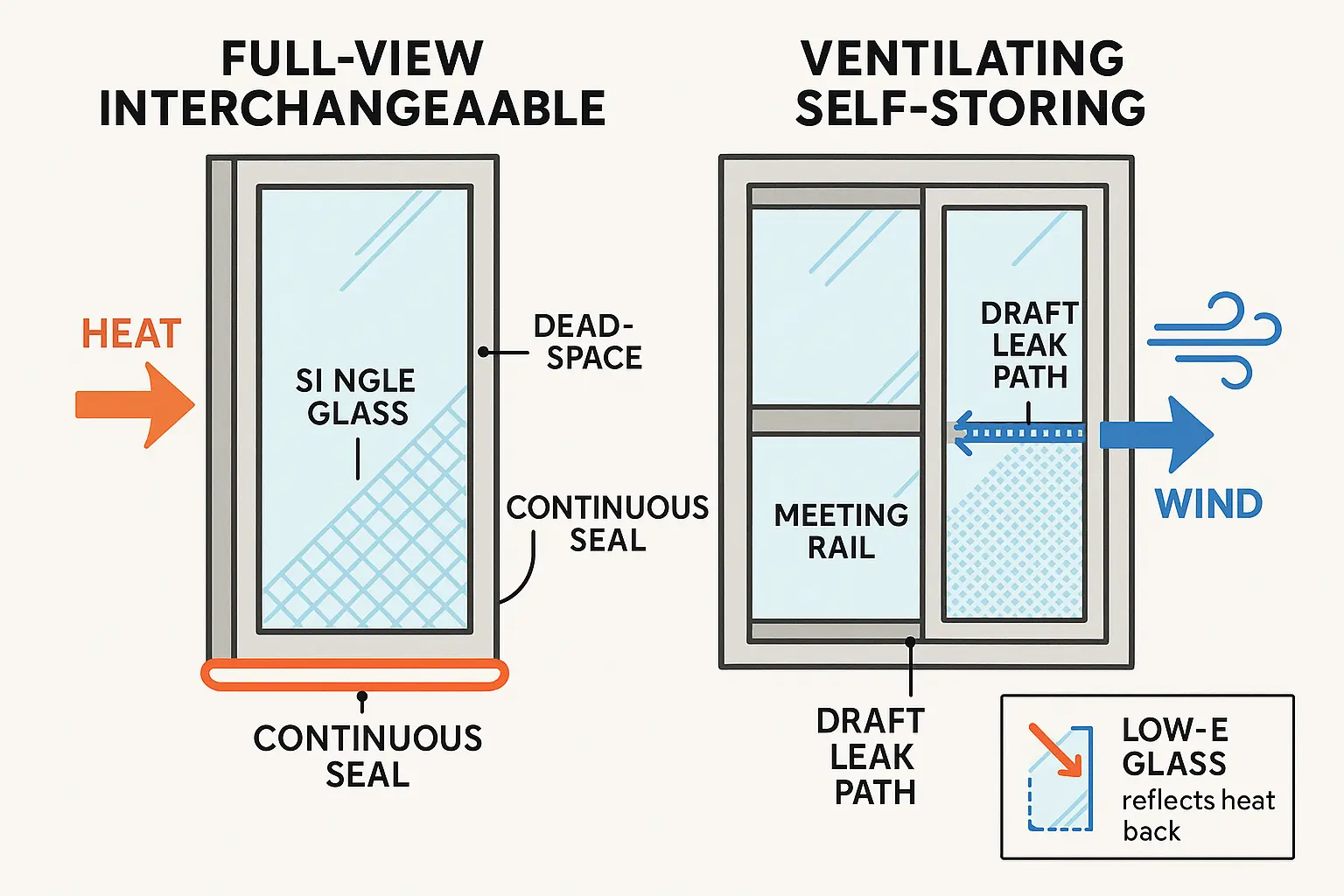
A storm door works by trapping a stabilizing pocket of air—a “dead-air space”—between itself and your main entry door, reducing convective heat loss. However, the integrity of this thermal buffer depends entirely on how the door is constructed.

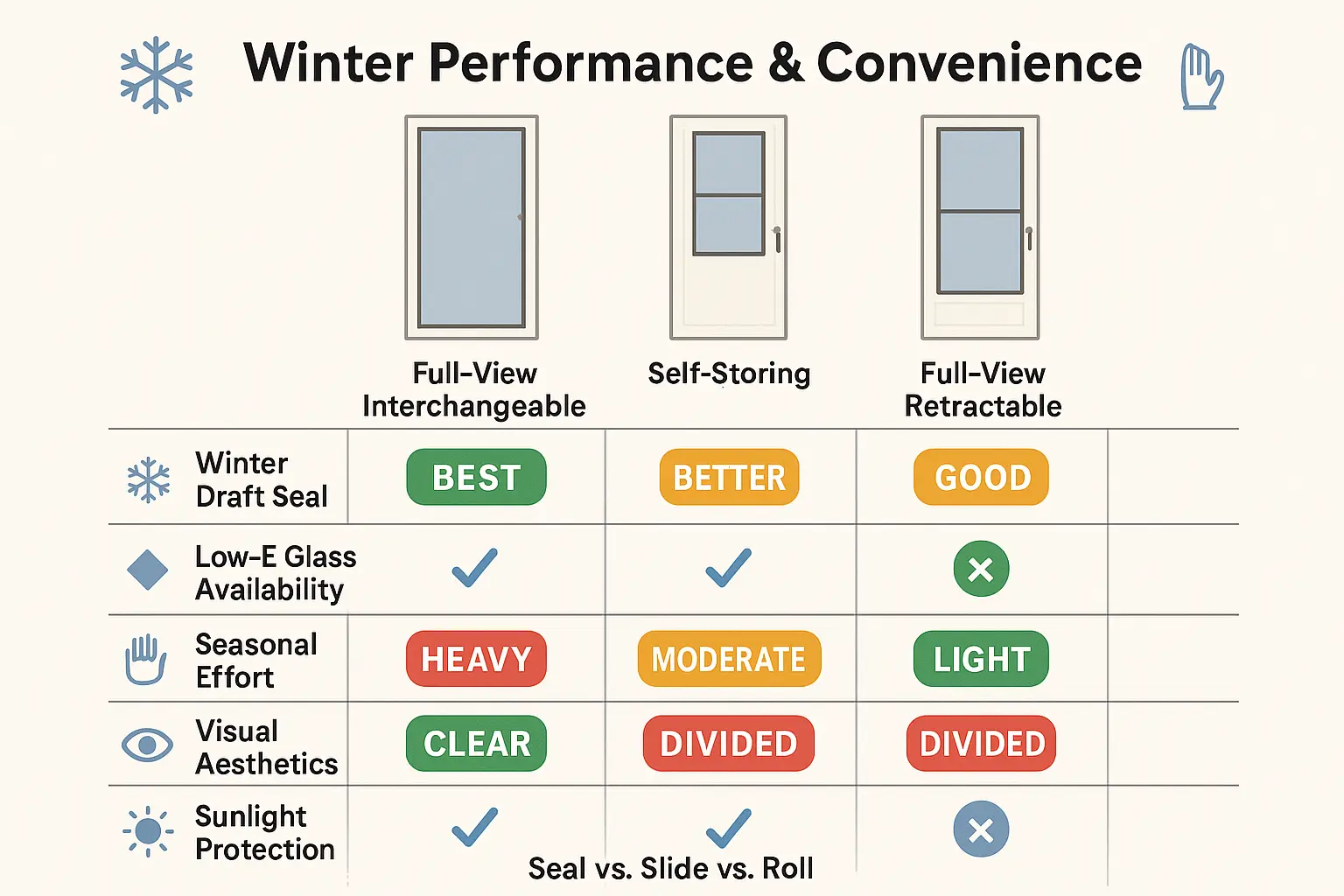
Full-View storm doors feature a single, continuous sheet of tempered glass sealed tightly within a heavy-duty frame. Because there are no sliding sashes or horizontal split joints, they maintain an exceptionally low air infiltration rate.

Conversely, Ventilating styles feature multi-pane sliding tracks. The primary vulnerability of a ventilating model is the middle meeting rail. While convenient for spring airflow, the felt pile or brush weatherstripping along these sliding tracks can wear out over time, turning the meeting rail into a direct entry path for winter winds.

For maximum cold-weather protection, investing in a Full-View door with Low-Emissivity (Low-E) glass is highly effective. Low-E coatings act as thermal mirrors, bouncing radiant interior heat back into your home and improving the overall door u factor by up to 30%.

Airtight thermal barrier comparison


The Direct Sunlight Hazard: Protecting Your Entry Door Warranty


A major risk of choosing a Full-View storm door is thermal trapping. If your front entry door receives more than two hours of direct daily sunlight—particularly on south- or west-facing entries—a solid glass panel acts like a greenhouse.

Temperatures inside that narrow two-inch air gap can easily exceed 200°F. This intense heat build-up can warp wood and fiberglass cores, melt synthetic weatherstripping, and cause paint or protective stains to bubble and peel.

Because of this hazard, major entry door manufacturers often void their lifetime warranties if a non-vented storm door is installed over certain types of door materials without proper overhangs.

If your entryway lacks shade, a ventilating door or a Full-View model with a retractable screen is highly recommended. Leaving the glass sash slightly open during sunny winter days acts as a pressure and heat relief valve, preserving both your door’s finish and your front door energy efficiency safeguards.


The Convenience Factor: The Physical Labor of the 'Seasonal Swap'


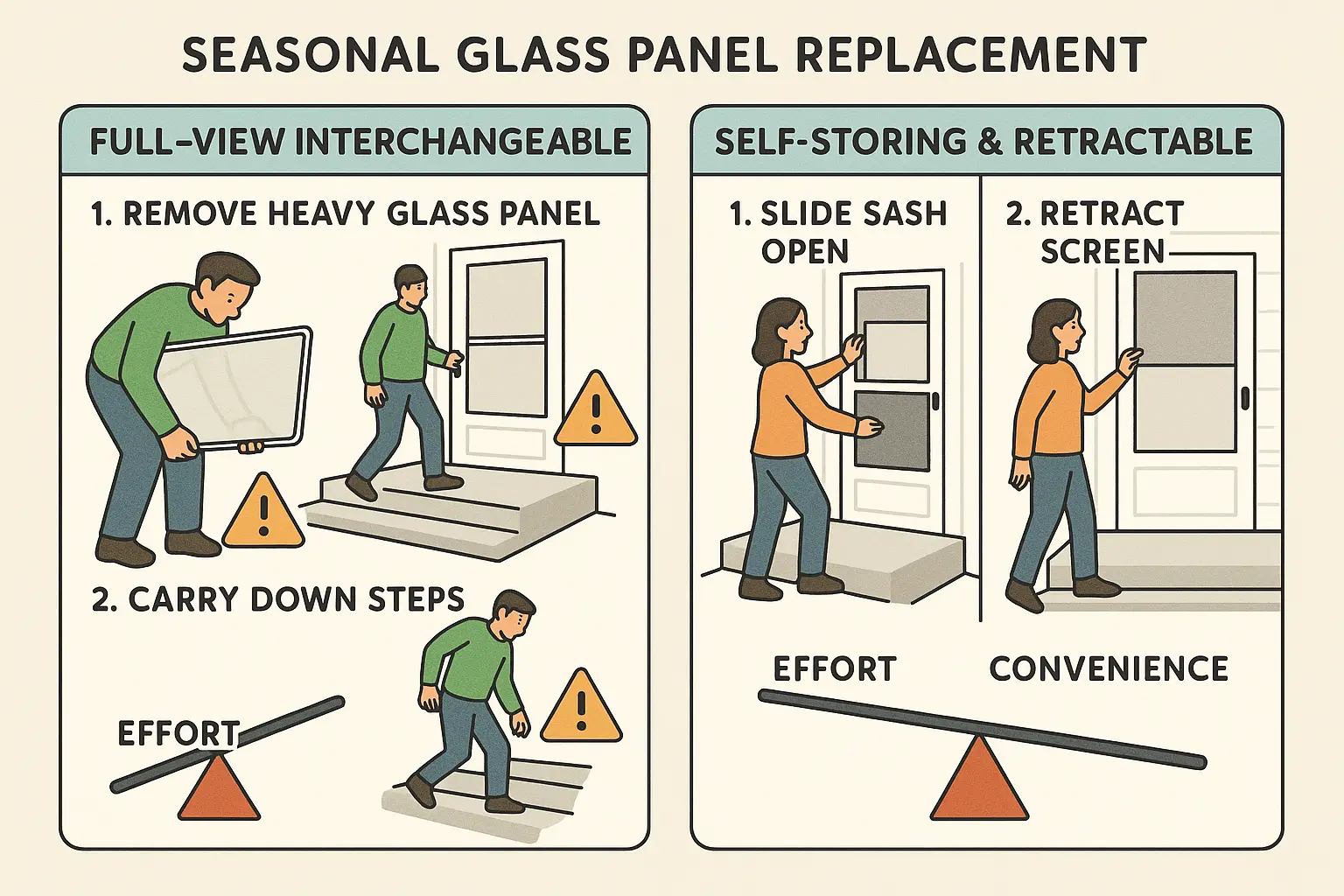
Before choosing an interchangeable Full-View model, consider the practical physical demands of maintaining it. Converting an interchangeable door for the seasons requires manually lifting and swapping a heavy, fragile 25-pound glass panel for a screen mesh twice a year.

Doing this on a windy day or a slippery stoop carries safety risks, including glass breakage and storage scratches in your basement or garage.

Swapping heavy glass panels safety considerations

For those who prioritize ease of use, self-storing or retractable options require zero heavy lifting. The glass simply slides down or the screen retracts into the top frame, allowing you to transition your entryway in seconds.


Specifications Comparison Matrix


To determine which style fits your home’s orientation, architectural needs, and physical preferences, review the core comparison metrics below before booking a storm door replacement service.

Comparison matrix of storm door styles


Brand Battle: Larson vs. Andersen Winter Performance


Top manufacturers approach seasonal design with distinct mechanisms:

  • Andersen (4000 & 3000 Series): Andersen’s interchangeable doors utilize a user-friendly Snap-In retainer system, which simplifies locking the glass sheet into place compared to older metal clips. Their retractable options feature a smooth, single-hand roll-down design.
  • Larson (Platinum & Tradewinds): Larson is known for its Quick-Release interchangeable glass system, making manual swaps safer and more manageable. When reviewing the functional parts of a screen door, Larson’s Tradewinds series stands out for its split-frame self-storing design, which provides balanced ventilation while keeping the operating mechanisms securely tensioned against winter drafts.

Installation Diagnostics: Out-of-Square Frames and Draft Sweeps


A premium storm door is only as good as its installation. In older homes, natural structural settling often leaves door frames out-of-square. If a storm door is forced into an uneven frame, gaps will form, allowing cold air to bypass the seals entirely.

Correcting these alignment issues requires careful inspection and may involve evaluating your door jamb repair cost to ensure a plumb, square foundation.

Additionally, a proper winter setup requires:

  1. An adjustable bottom expander fitted with a durable, triple-seal rubber sweep to block drafts at the threshold.
  2. Dual pneumatic wind-closers calibrated correctly to prevent strong winter gusts from catching the door, ensuring you never face a frustrating storm door won’t close issue during a freeze.

For homeowners across Connecticut, A1 Doors Services provides professional, family-oriented service backed by 15 years of local hands-on expertise. Our fully licensed technicians can assess your home’s sun exposure, frame squareness, and insulation needs to help you choose and install the perfect storm door before the winter weather sets in.


Frequently Asked Questions


Can installing a full-view storm door void my front door's warranty?

Yes. If your front entry door faces south or west and is subjected to more than two hours of direct sunlight daily, a full-view storm door can trap heat and raise temperatures in the air gap above 200°F. This intense thermal trapping can warp fiberglass, split wood, or melt weatherstripping, which voids many primary door manufacturer warranties.

Does adding a storm door significantly lower my heating bills?

If you have an older, single-pane wood door, adding a storm door can substantially reduce draftiness and lower heating bills. However, if your home already features a modern, insulated, double-weatherstripped fiberglass or steel entry door, adding a storm door provides negligible energy savings, as the primary barrier is already highly thermally optimized.

How do I prevent cold drafts from leaking through a ventilating storm door?

The primary leak point on ventilating doors is the horizontal meeting rail where the glass panels slide past each other. Ensuring this rail has clean, intact brush pile weatherstripping and that the sashes are fully locked in their closed positions before freezing temperatures arrive will minimize draft leakage.