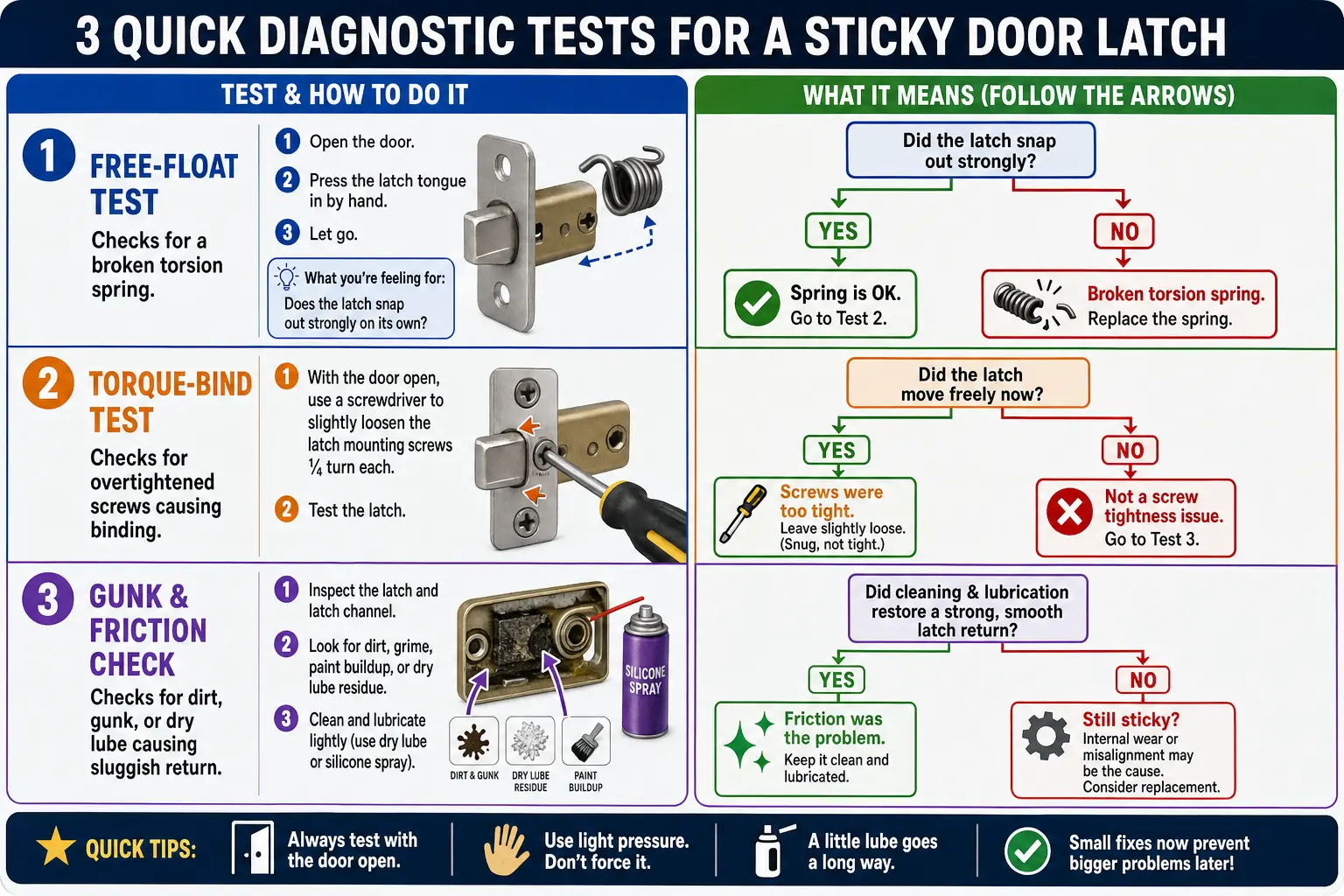
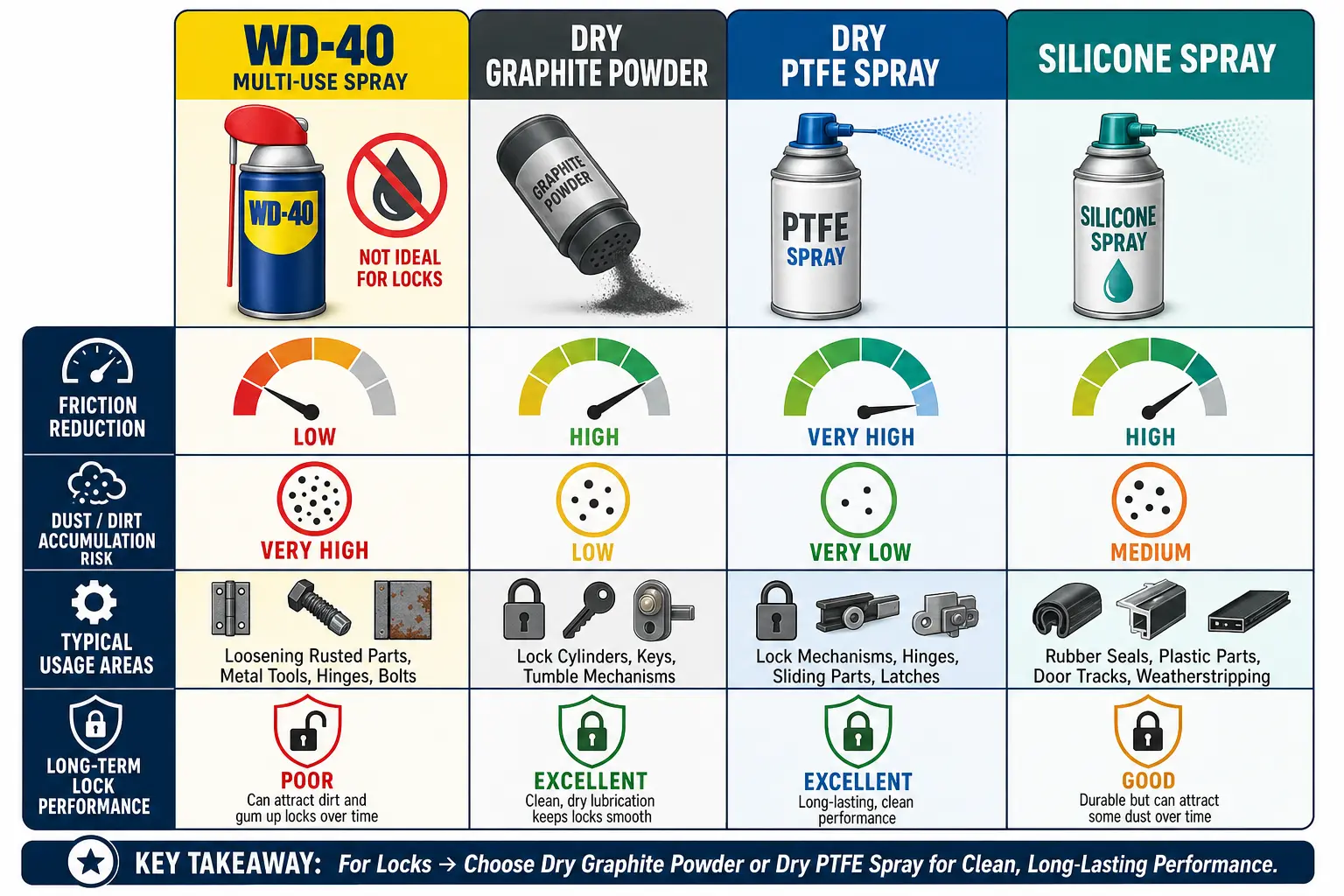
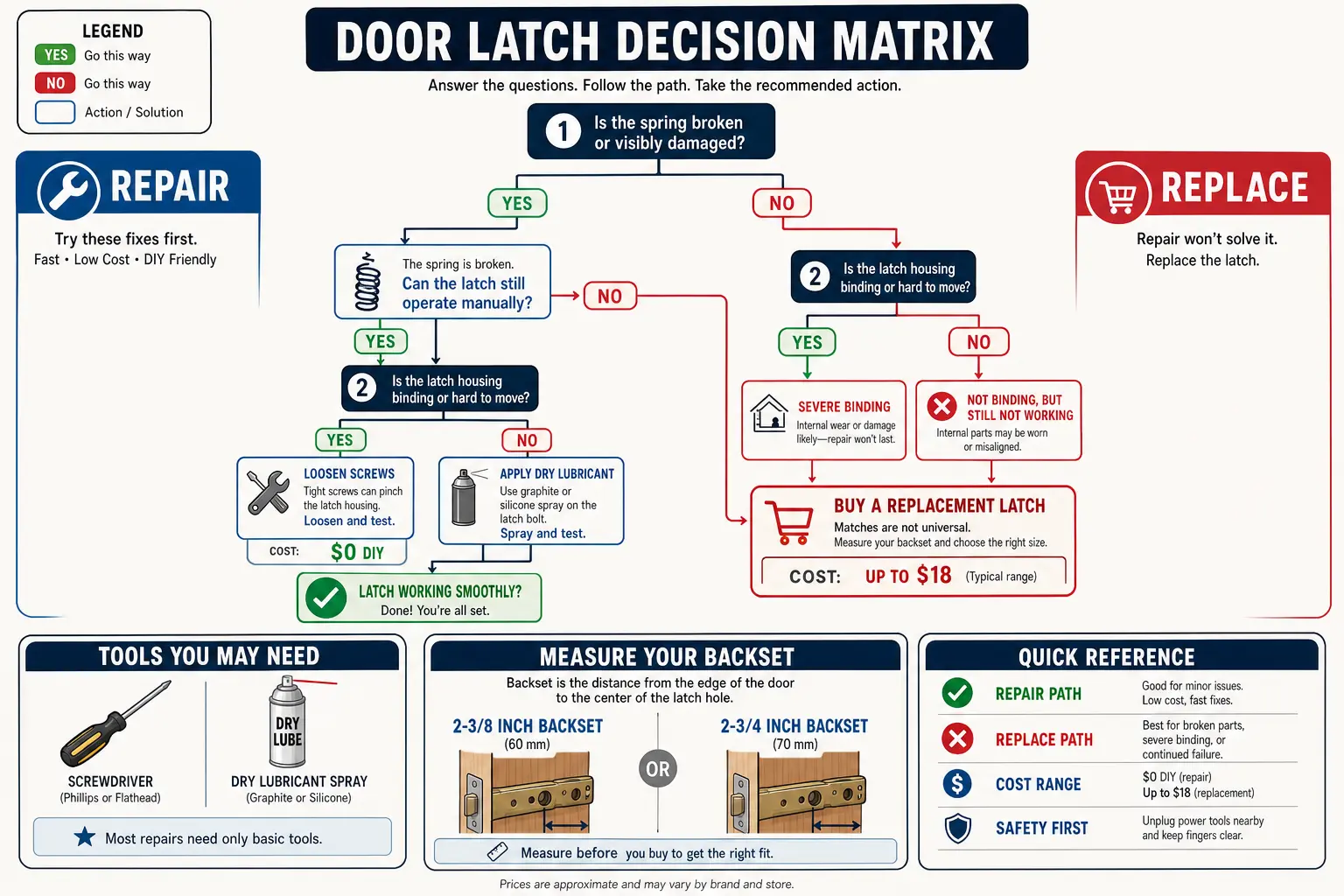
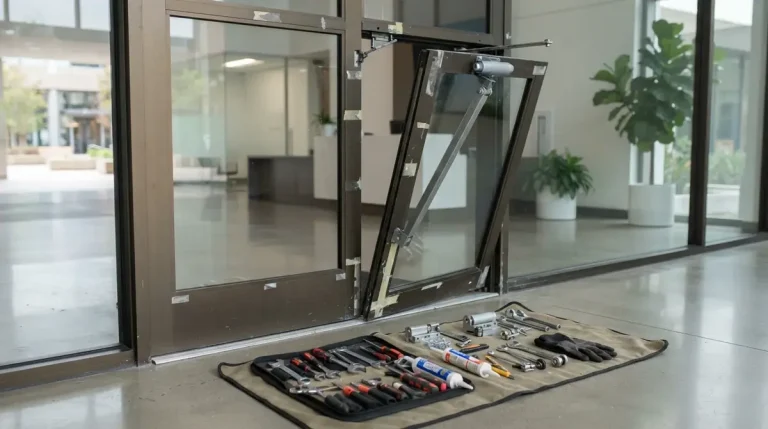
To resolve a stubborn door latch that fails to pull back into the housing, start by testing the bolt’s movement while the door stands open, clear away built-up residue before applying a dry PTFE or silicone spray, and swap out the internal assembly if any springs or metal components are damaged. Never slam a jammed door shut, as the impact can bend the bolt or crack the strike plate.
Before purchasing new hardware or calling a locksmith, pinpointing the exact cause takes less than 30 seconds. Industry diagnostic data shows that residential latch failures break down into four primary culprits:
-
Mechanical binding (45%): Caused by overtightened faceplate screws or an improper backset fit (typically 2-3/8″ or 2-3/4″).
-
Debris and dried grease (30%): Solved by wiping the mechanism clean, working a dust-repelling dry lubricant through the tongue, or removing the faceplate for a deep clean.
-
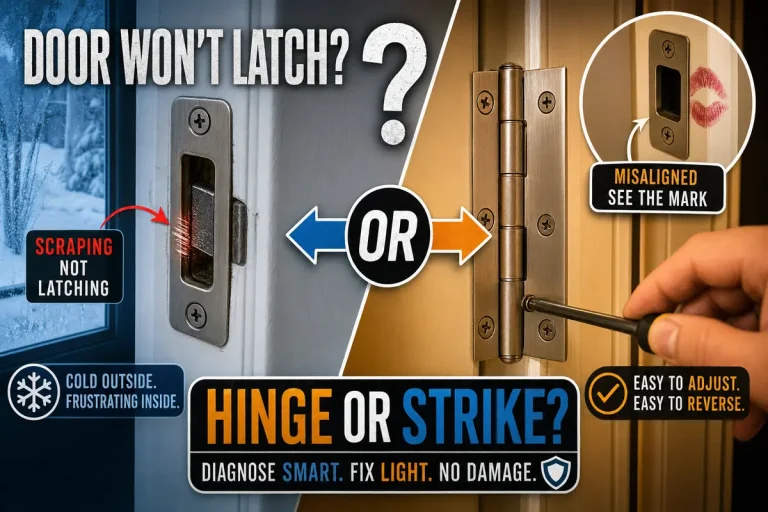
Door frame misalignment (15%): Identified when the bolt retracts smoothly with the door open but snags against the strike plate upon closing due to sagging hinges.
-
Torsion spring fatigue or fracture (10%): Requires replacing the tubular latch or handle assembly.