(855) 676-0881

Door Realignment After Foundation Settling: Shims, Hinges, or Reframing?


Published: Nov 13, 2026

When a home’s foundation shifts, doors are often the first structural component to show distress. Homeowners and property managers face a confusing choice: Is a binding door a quick $10 hardware fix, a frame reset, or an early warning sign of severe foundation failure? Taking the wrong approach—such as shaving down a door slab—can permanently destroy a high-value door without resolving the underlying frame rack.

Evaluating your options requires understanding how structural movement alters openings and selecting the least invasive, most effective repair tier.
The Mechanics of Structural Racking


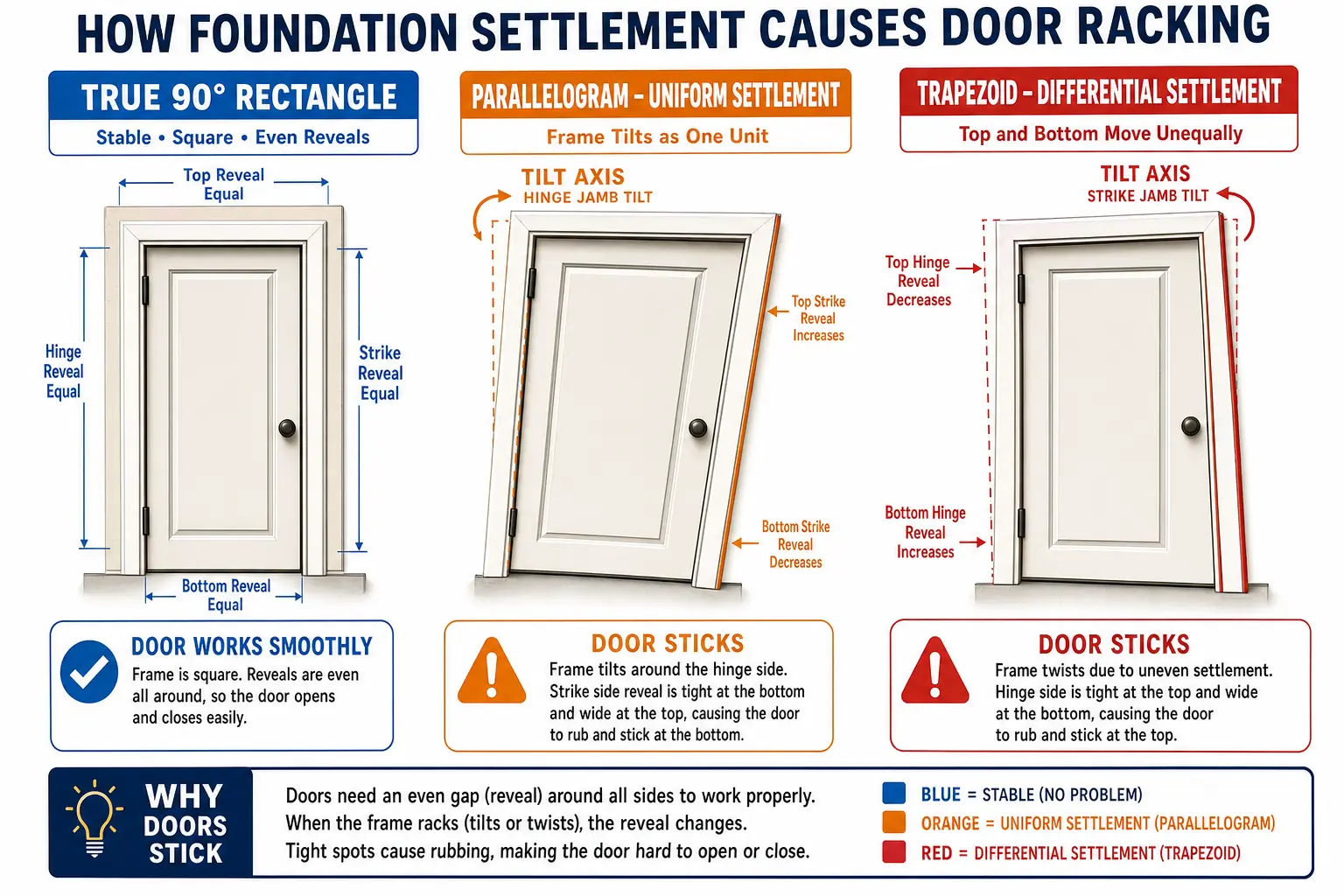
A standard 80-inch door frame relies on precise right angles to operate properly. When differential foundation settlement occurs—even as little as 1/4 inch to 1/2 inch across a 10-foot span—it creates up to 3/8 inch of diagonal rack within the opening. This movement skews the rectangular frame into a parallelogram or trapezoid.

Structural racking from foundation settling distorts door frames from perfect rectangles into skewed parallelograms or trapezoids, causing latch misalignment and door sticking.

As the jamb skews, the narrow gaps around the door lose alignment. Standard industry tolerances require a 3/32″ gap on the hinge jamb and a 1/8″ gap along the head and strike jambs. When racking exceeds these margins, the top strike corner rubs, the latch fails to catch, or the door drags along the threshold.

Diagnosing Frame Distortion vs. Environmental Swelling


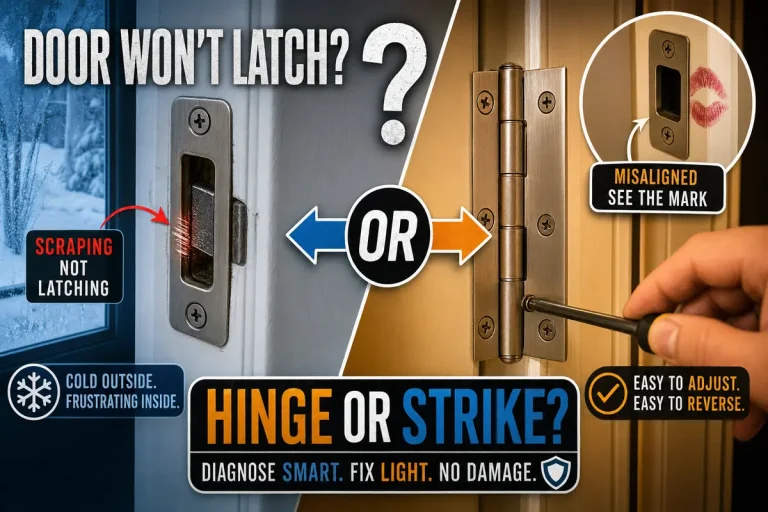
Before executing hardware or framing adjustments, you must confirm whether frame movement is driven by soil settlement or seasonal humidity. If you are wondering why does my door get stuck when it’s cold, thermal expansion rather than structural racking may be the primary culprit.

To isolate structural rack, perform a simple diagnostic using a 4-foot spirit level:

  1. Plumb Check: Place the level against the interior edge of both vertical jambs. Out-of-plumb reading points to frame movement.
  2. Diagonal Measurement: Measure diagonally from top-left to bottom-right, then top-right to bottom-left. A discrepancy over 1/8 inch confirms frame racking.
  3. Drywall & Header Inspection: Look for 45-degree diagonal cracks extending from the top corners of the door casing. Cracks wider than 1/16 inch suggest foundation movement.

If you observe multiple binding doors across adjacent rooms alongside sloping floors, conduct comprehensive door frame testing before attempting mechanical adjustments.

Comparing Your Realignment Options


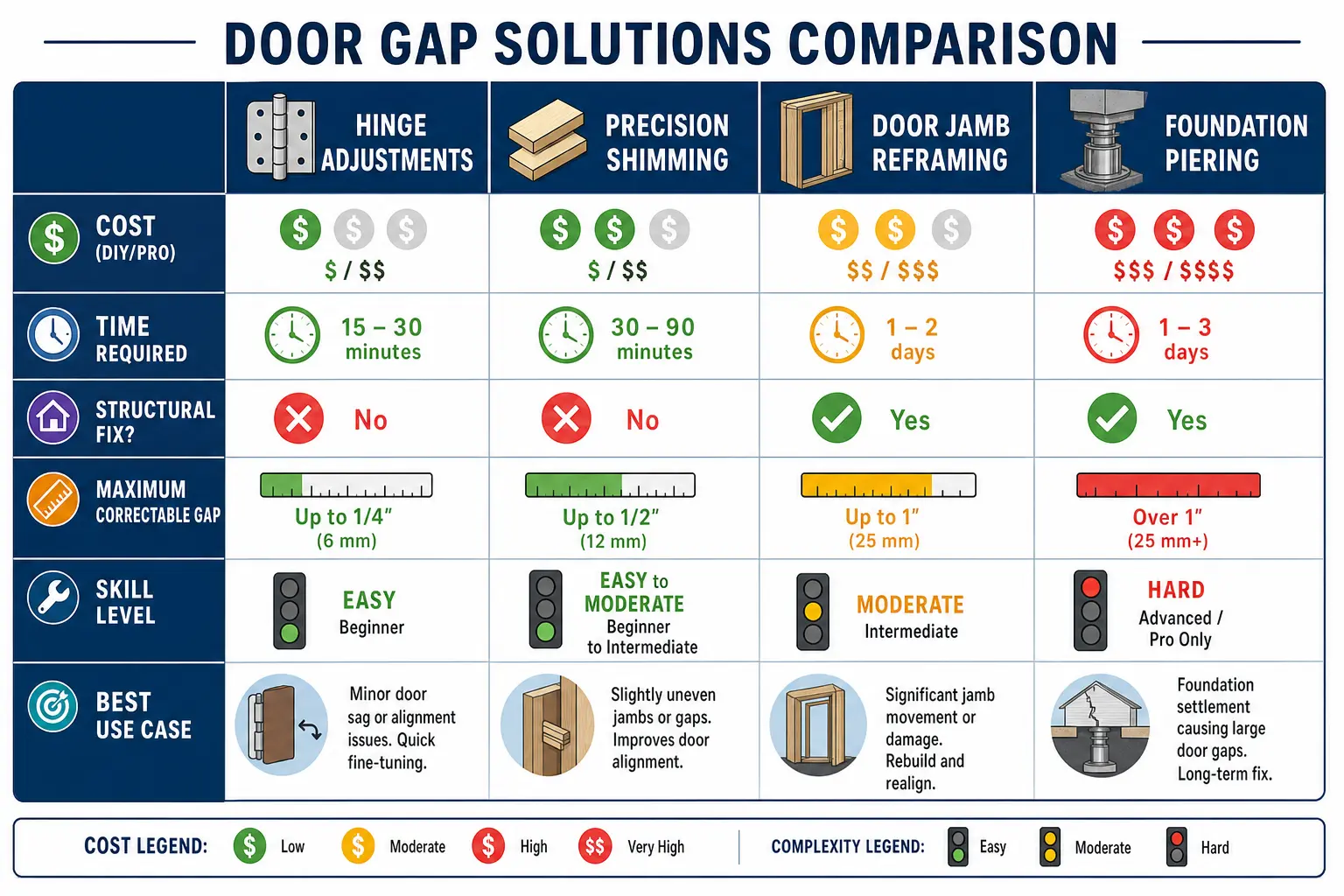
Selecting the right repair tier depends on distortion severity, budget, and long-term performance expectations.

This comprehensive comparison matrix helps homeowners quickly evaluate repair options for stuck doors—from quick DIY hinge tweaks to costly foundation piering—based on cost, skill, and expected lifespan.

Step-by-Step Escalation: Hinge Tuning and Precision Shimming


For minor to moderate distortions, start with non-invasive mechanical adjustments before taking down interior casing.

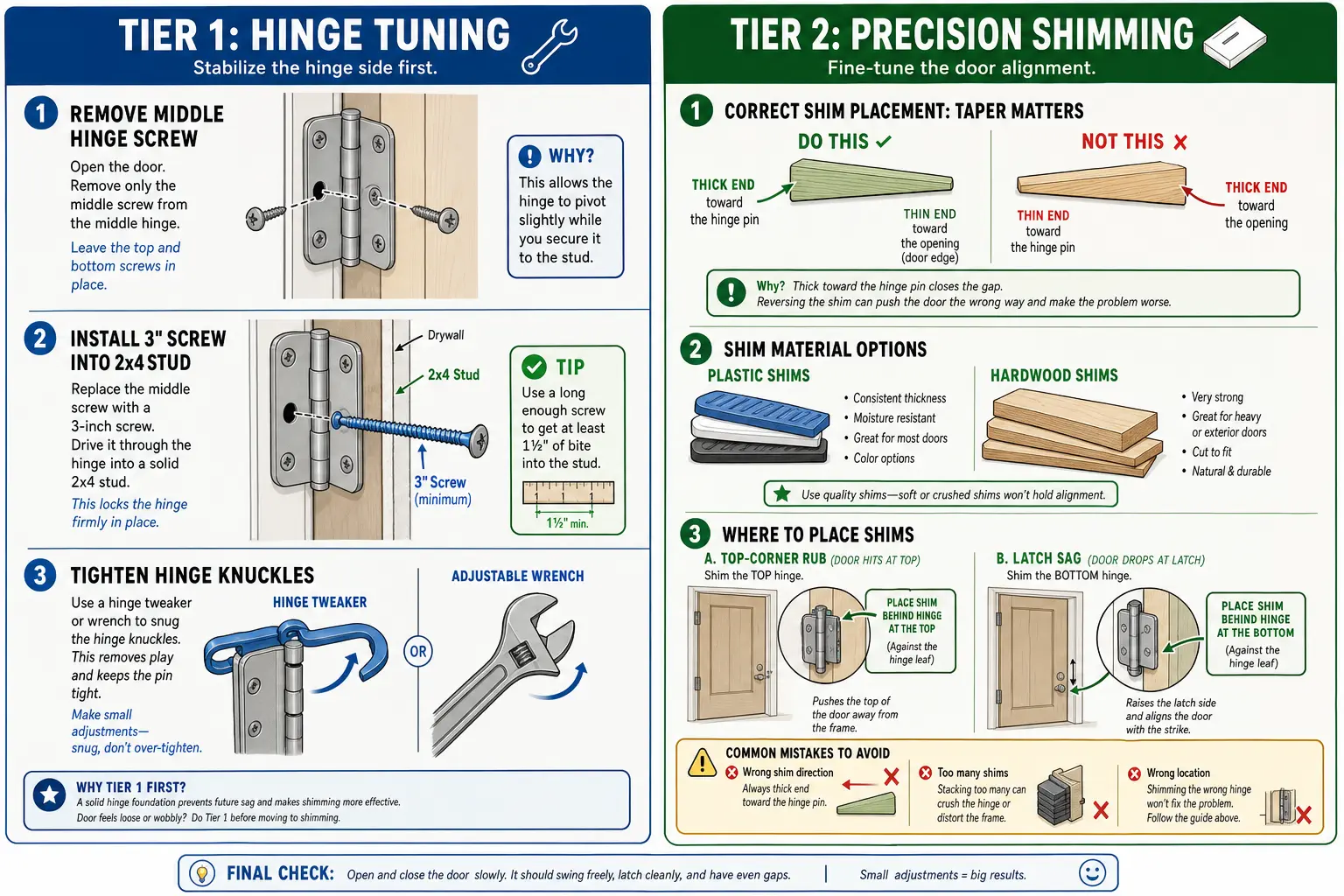
Stepwise execution of Tier 1 hinge tuning and Tier 2 precision shimming fixes, showing how correct screw anchoring and shim taper direction restore door function without major framing.

Tier 1: Hinge Tuning & Screw Anchoring

Standard hinge factory screws measure only 3/4 inch to 1 inch long, anchoring strictly into the hollow jamb. Replacing the central screw on the top hinge leaf with a 3-inch #9 or #10 wood screw penetrates 1.5 inches directly into the structural 2×4 framing stud. Tightening this screw draws the jamb back by up to 3/16 inch, lifting a sagging top latch corner instantly.

Tier 2: Precision Shimming Mechanics

When screw adjustments are insufficient, insert tapered shims behind hinge leaf pockets to realign the door slab within the racked opening.

  • The Shim Pitch Rule: Always position the thick end of the shim facing the hinge pin. Placing the thin end toward the pin creates a fulcrum that causes hinge binding and speeds up pin wear.
  • Correcting Top-Corner Rub: Insert a shim behind the bottom hinge leaf to push the lower portion of the door outward, swinging the top corner away from the upper strike jamb.

Advanced Realignment: Jamb Reframing vs. Piering


When frame distortion exceeds 3/8 inch, hardware tweaks no longer provide adequate clearance. At this point, deciding between jamb reset and structural underpinning is essential.

If the foundation has settled and stabilized, perform a complete jamb reset:

  1. Score paint and caulk lines, then carefully remove casing trim.
  2. Cut the existing nails between the jamb and rough opening using a reciprocating saw.
  3. Use air wedges to bring the jamb back to square, install rot-proof composite shims, and secure the frame with long finish nails.

When structural damage is severe, full door jamb replacement or specialized front door frame repair ensures long-term operational performance. For persistent operational issues, consult professional interior door installers or specialists in exterior door installation to restore energy efficiency and seal integrity.

If you suspect seal degradation, check how can i tell if an exterior door is causing drafts or energy loss? to pinpoint thermal gaps. Promptly addressing hardware fatigue helps avoid common tubular latch problems explained in heavily binding openings, making it much easier to properly repair front door hardware.

Frequently Asked Questions


Should I plane my door if it sticks after foundation settling?

No. Planing or shaving a door slab removes factory edge seals and permanently alters the door dimensions. If the foundation is later stabilized or leveled, a planed door will have wide, unsightly gaps and fail to latch properly. Always realign the frame or hinges instead of cutting the door.

How do I know if I need foundation piering instead of frame repair?

If binding recurs within a few months of frame adjustment, doors stick across multiple adjacent rooms, or you notice expanding 45-degree drywall cracks and sloping floors exceeding 1 inch across 10 feet, consult a structural engineer for underpinning options.

What screw size should I use to pull a sagging hinge back into the stud?

Use a 3-inch #9 or #10 wood screw driven through the center hole of the top hinge leaf. Ensure it penetrates at least 1.5 inches into the solid 2×4 framing stud behind the door jamb to safely draw the frame back into alignment.