(855) 676-0881

The Connecticut Homeowner’s Guide to Door Thermal Performance


Published: Sep 25, 2026

Connecticut winters are notoriously unforgiving. When the temperature plunges, a drafty front door transforms from a minor annoyance into a continuous thermal drain on your home. Homeowners evaluating their options often find themselves in a difficult position: trying to preserve the architectural beauty of a premium entryway while combatting rising energy bills.

To make an informed investment, you must look past basic DIY quick-fixes and understand the building science behind door thermal performance. Selecting the right materials and sealing systems is the key to maintaining a comfortable, energy-efficient home year-round.
The Anatomy of a Thermal Barrier: U-Values vs. R-Values


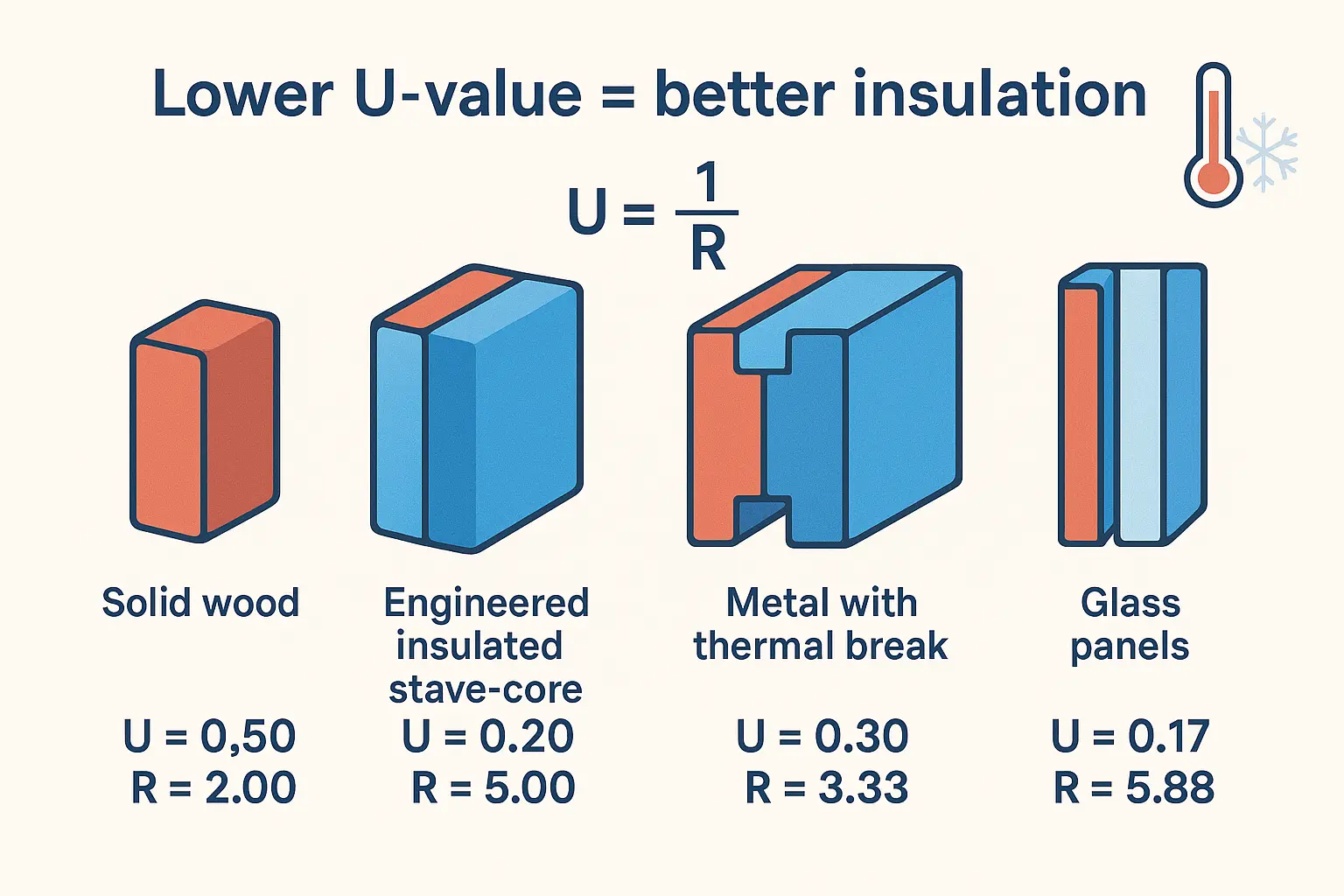
To evaluate any door’s insulation capacity, you must understand two key metrics: R-value (resistance to heat flow) and U-value (the rate of heat transfer). While we look for high R-values in attic insulation, door performance is primarily measured by its door u value—where a lower number represents superior thermal resistance ($U = 1/R$).

Failing to meet these standards means your home will lose radiant heat directly through the entryway surface, forcing your heating system to work overtime.

Understanding how U-values and R-values determine an exterior door's thermal performance

Where is Your Energy Escaping? (The 4-Step Entryway Audit)


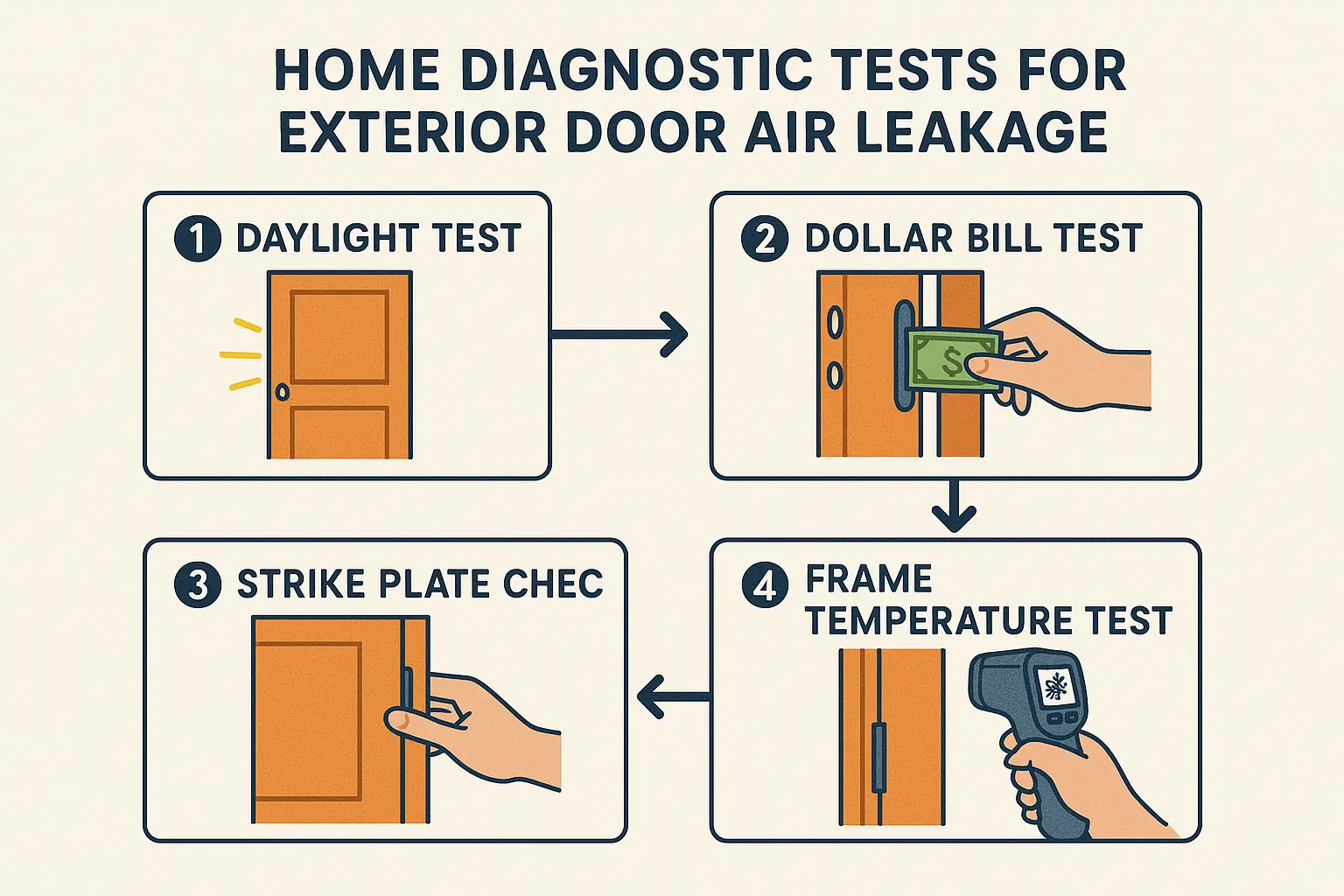
Before jumping into a replacement, it is vital to diagnose where the thermal failure lies. Often, a phenomenon called the “Stack Effect” pulls cold air through the bottom and sides of your door as warm air escapes through your attic. Regular door maintenance for weather control keeps drafts at bay. You can perform a quick, professional-grade diagnostic audit using these four steps:

  1. The Daylight Test: Look closely at the door margins during midday. If you see streams of natural light leaking through the sides or top, your frame has shifted or warped.
  2. The Dollar Bill Test: Insert a dollar bill between the door and the weatherstripping, close the door, and pull. If it slides out without resistance, your compression seals are failing.
  3. The Strike Plate Check: Ensure the latch mechanism pulls the door completely flush against the stop when closed. A loose latch prevents the door from compressing the weatherstripping.
  4. The Frame Temperature Test: Run your hand along the frame on a freezing day. Excessive cold spots point to a lack of thermal breaks or missing insulation behind the jamb.

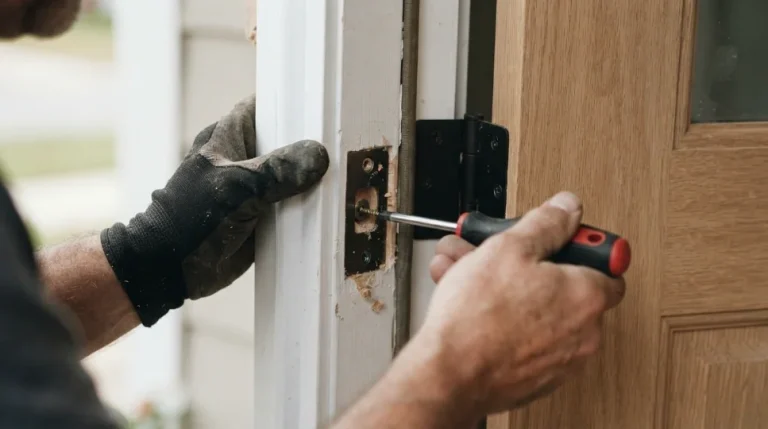
A practical four-step guide to diagnose common sources of heat loss and drafts around exterior doors

Advanced Air Sealing: Insulated Door Stops and Perimeter Seals


Up to 30% to 40% of a home’s heating energy is lost due to air infiltration around exterior openings. Relying on cheap, adhesive foam tape from big-box stores only offers a temporary fix.

Professional retrofits replace standard, plain wood stops with premium, integrated weatherstripped insulated door stops, which feature kerfed Q-Lon compression seals. These durable, vinyl-clad polyurethane foam gaskets flex and maintain their seal even when the door frame expands and contracts during seasonal shifts. If structural frame movement has warped your entryway, addressing the underlying door jamb repair cost to restore squareness is essential for achieving a reliable airtight seal.

The Physics of Glass: Low-E Insulated Glass Units (IGUs)


If your entryway features glass inserts, they can be a major source of thermal bridging. Standard single-pane glass provides virtually no insulation. High-performance entryways rely on Insulated Glass Units (IGUs) featuring double- or triple-pane glass configurations.

These units seal argon or krypton gas between the panes to dramatically slow down heat transfer. Additionally, microscopic Low-Emissivity (Low-E) coatings reflect radiant indoor heat back into your living space during the winter, while preventing harmful UV rays from fading your interior hardwood floors in the summer.

Selecting Your Next Exterior Door: Materials and Performance


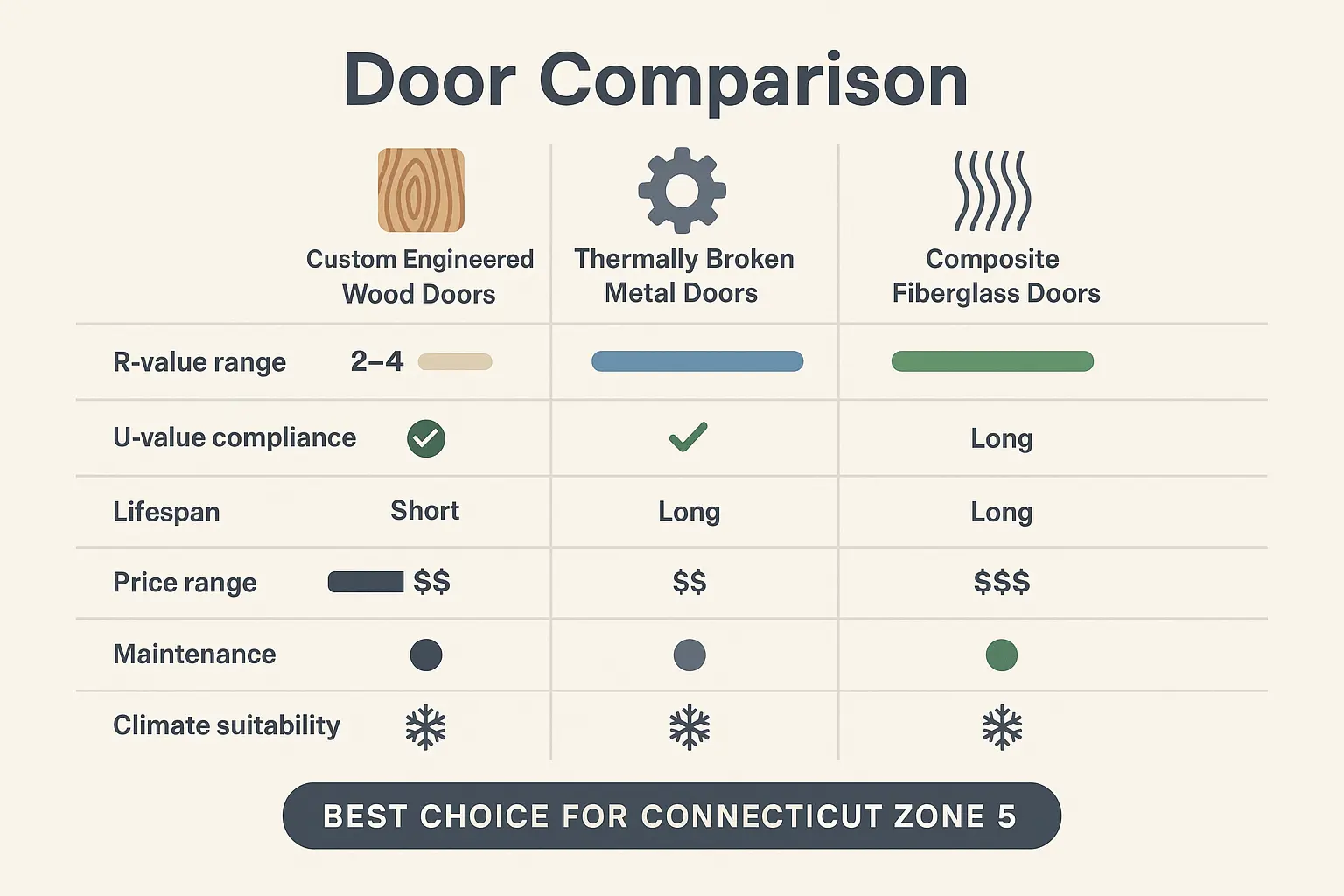
If your existing entry door needs replacement, material selection is critical. Traditional solid wood has an average R-value of only R-1.0 to R-1.5 per inch, failing ENERGY STAR standards on its own. Premium wood entry doors solve this by using engineered stave-cores—sandwiching high-density polyurethane foam between beautiful natural wood veneers.

Alternatively, fiberglass offers incredible structural insulation, while modern steel entry systems feature integrated thermal breaks (non-conductive barriers inside the door skin) that reduce heat loss by up to 50% and stop interior condensation. To maximize your home’s thermal defense, pairing an energy-efficient entry door with a high-quality storm door replacement adds an extra dead-air space that buffers against Connecticut’s harsh winter winds.

A quick-reference visual guide comparing popular exterior door materials and designs

Frequently Asked Questions


Why does my metal door sweat during Connecticut winters?

Condensation occurs when warm, humid indoor air hits a cold metal surface that lacks a thermal break. Without a continuous, non-conductive barrier between the exterior and interior steel skins, the metal acts as a thermal bridge, conducting freezing outdoor temperatures inside and causing moisture to collect.

Can a solid wood front door meet ENERGY STAR standards?

A standard, solid-block wood door cannot meet ENERGY STAR Version 7.0 standards on its own because natural wood only offers an R-value of about R-1.0 to R-1.5 per inch. To meet strict Zone 5 standards, premium wood doors must feature an engineered insulated stave-core with a polyurethane foam center or be fitted with high-efficiency insulated door stops.

How much heating energy is lost through a drafty door?

Air infiltration around poorly sealed doors and windows accounts for 30% to 40% of a home’s total heating and cooling losses. Upgrading to professional-grade compression seals like kerfed Q-Lon stops can reduce entryway air leakage by over 85%, significantly lowering utility costs.