Your Definitive Guide to Coastal Automatic Door Installation in Connecticut


Published: Aug 31, 2026

Imagine a beautiful shoreline property in Greenwich or Stamford. The views of the Long Island Sound are breathtaking, but so is the relentless sea breeze. That salty air, while invigorating, is a silent corrosive force, working tirelessly against every exterior surface—especially your doors. For homes and businesses along Connecticut’s coast, installing an automatic door isn’t just about convenience; it’s about engineering a defense against nature.

A standard automatic door installation might last years in an inland town, but on the coast, it’s a recipe for rust, malfunction, and failure within months. The combination of salt spray, high humidity, and the brute force of a Nor’easter demands a completely different approach. This isn’t just about picking a “weatherproof” door; it’s about understanding the entire system required to protect your property and investment.

This guide will walk you through the essentials of coastal automatic door installation, transforming you from a casual browser into an informed property owner.
Choosing Your Shield Against the Elements


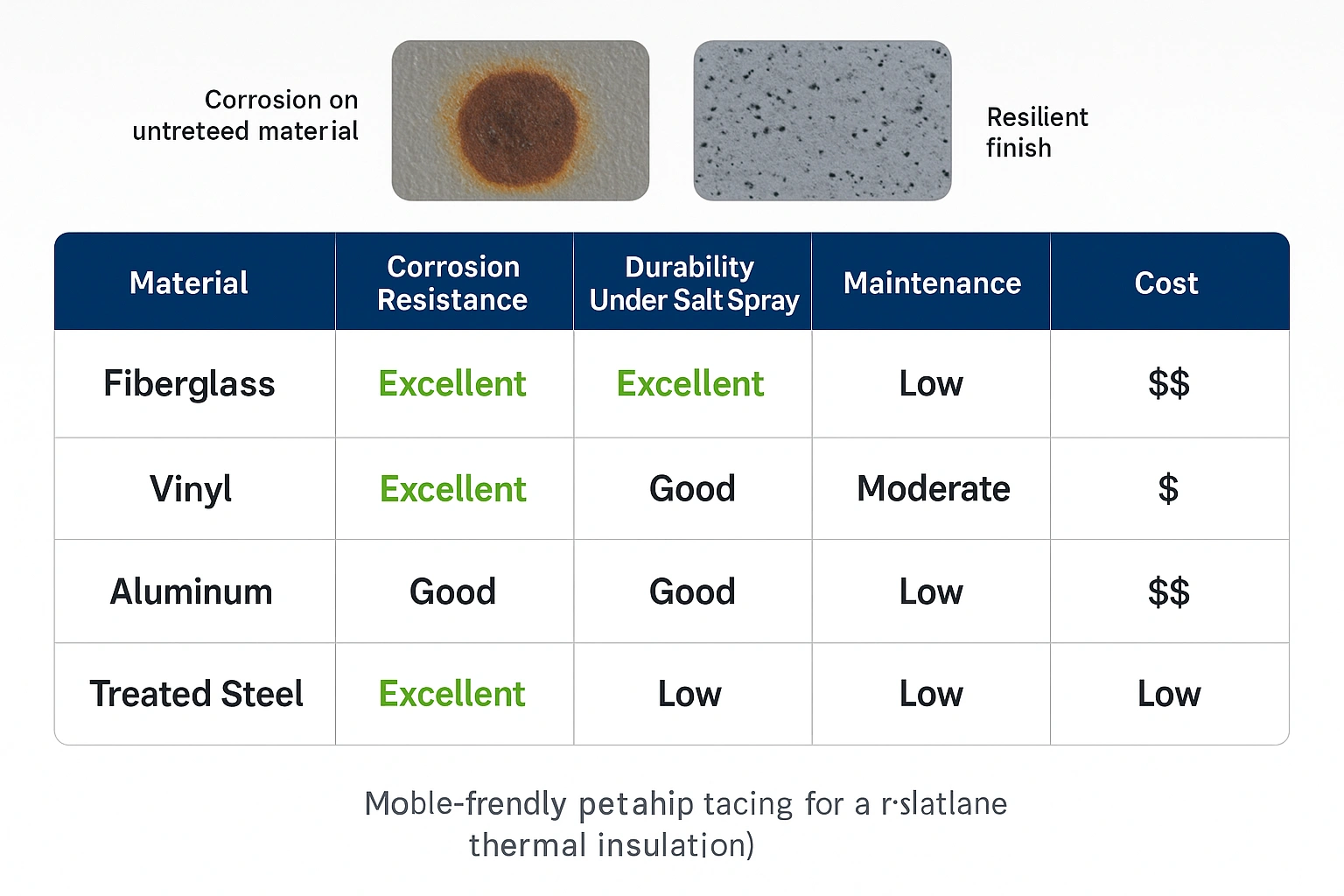
A comparison chart of coastal automatic door materials showing ratings for fiberglass, vinyl, aluminum, and treated steel based on durability, cost, and maintenance.

The first line of defense is the door slab itself. Choosing the right material isn’t about aesthetics alone—it’s a critical decision for longevity and performance in a salt-rich environment. Standard steel doors, a common choice for commercial properties, will quickly corrode. Here’s how the coastal-ready materials stack up.

Fiberglass: The Resilient Champion

Fiberglass composite doors are arguably the top contender for coastal applications. They are engineered to resist the most common coastal threats.

  • Corrosion-Proof: Fiberglass will not rust, rot, or warp when exposed to salt and moisture.
  • Durable: It resists dents and scratches far better than steel or aluminum.
  • Insulation: Offers excellent thermal insulation, which can help manage energy costs in buildings exposed to high winds.

Vinyl: The Practical Protector

Vinyl is another excellent synthetic option that provides robust protection without the high-end price tag of premium fiberglass.

  • Moisture Impervious: Like fiberglass, vinyl is completely waterproof and will not swell or degrade from humidity.
  • Low Maintenance: It never needs painting and can be cleaned easily, a huge plus when dealing with salt residue.
  • Cost-Effective: Typically more affordable than fiberglass, making it a popular choice for both residential and commercial projects.

Aluminum: The Lightweight Contender

While metal might seem counterintuitive, modern aluminum doors are specially treated for coastal use.

  • Naturally Rust-Resistant: Aluminum creates its own protective oxide layer. For coastal use, look for anodized or powder-coated finishes for maximum durability.
  • Lightweight Strength: Ideal for large automatic sliding doors where weight can be a concern for the opening mechanism.

A Note on Hardware: Your choice of material is meaningless if the hardware fails. Insist on Grade 316 stainless steel for all hinges, handles, screws, and track components. It has superior corrosion resistance compared to other grades and is considered the marine-grade standard. This is a non-negotiable for any coastal installation.

The Science of a Perfect Seal


Here’s the “aha moment” for many property owners: a billion-dollar, corrosion-proof door is useless if it’s installed with gaps that let in wind-driven rain and salty air. The installation technique is more critical than the door itself. A proper coastal installation creates an impenetrable envelope.

Anchoring for Wind Load

Connecticut’s coastal building codes have specific requirements for wind resistance. A proper installation ensures the door and its frame are anchored securely to the building’s structure, capable of withstanding hurricane-force gusts without being compromised. This involves using longer, specialized fasteners and ensuring they are driven into solid structural members, not just the sheathing.

The Unsung Heroes: Flashing, Weatherstripping, and Sealants

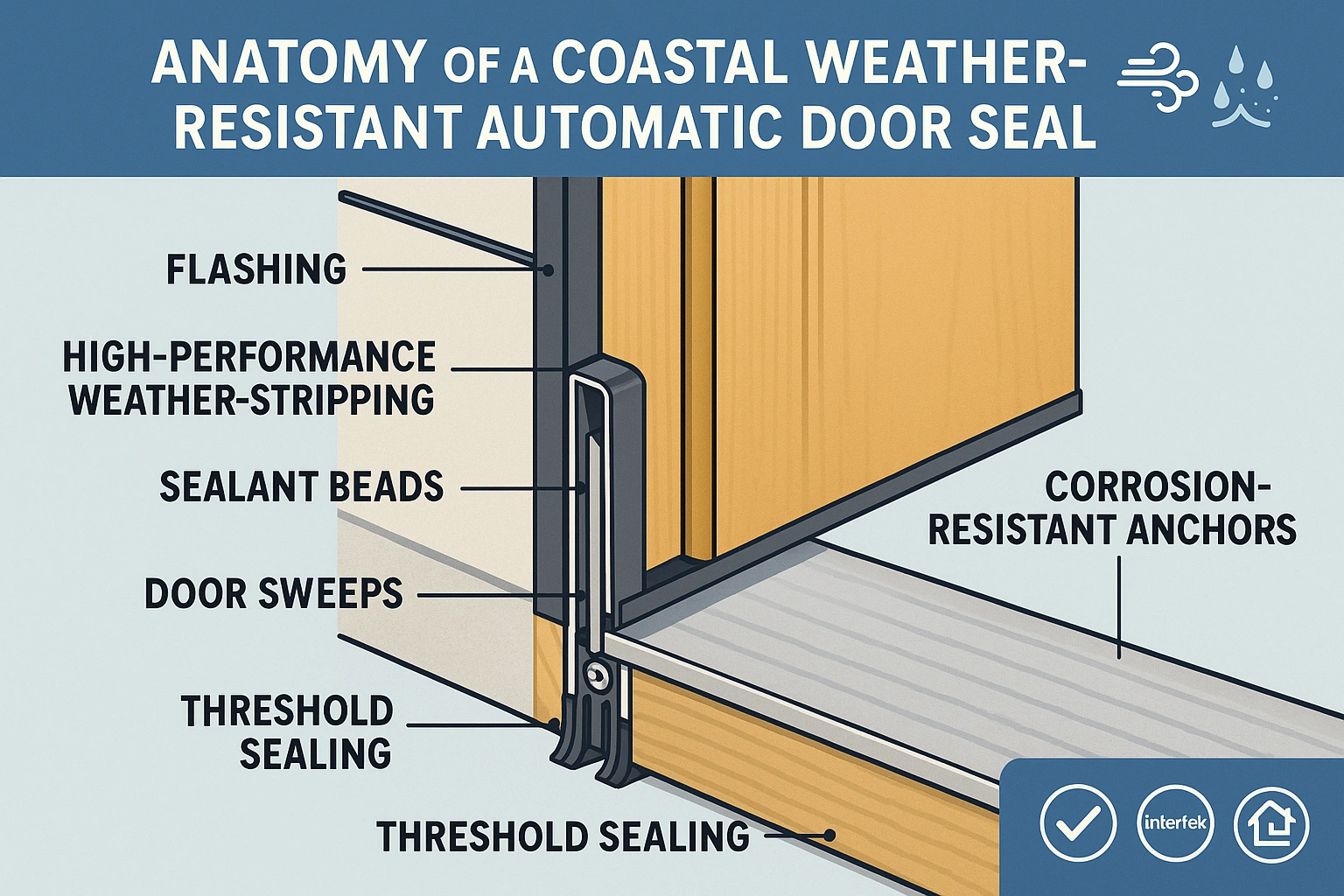
This is where expertise truly shows. A weather-tight seal is a multi-layered system:

  • Flashing: Properly integrated flashing above and around the door frame is critical to direct water away from the opening, preventing it from seeping into the walls.
  • Weatherstripping: High-quality, interlocking weatherstripping creates a compression seal that blocks air and water. For automatic doors, brush seals are often used, and they must be dense and properly fitted.
  • Sealants: Using a high-performance, salt-resistant polyurethane or silicone caulk is essential. It must be applied correctly to create a continuous, flexible, and waterproof barrier between the door frame and the building.

A detailed diagram showing the layers of a perfectly sealed automatic door, highlighting the flashing, weatherstripping, sealant, and threshold.

Understand why a perfectly sealed automatic door is your best defense against wind-driven rain and salt spray—key to long-term coastal durability.

Protecting the “Auto” in Automatic

The electronic components of an automatic door are its most vulnerable point in a humid, salty environment.

  • Sealed Housings: The motor and control box should be housed in NEMA-rated enclosures designed to keep out moisture.
  • Corrosion-Resistant Wiring: All electrical connections should be properly sealed to prevent salt-induced corrosion, which can lead to sensor failure and motor burnout.
  • Sensor Placement: Motion sensors and safety beams must be durable and positioned to minimize direct exposure to rain and spray where possible. Even the most robust automatic door opener commercial systems require these protective measures to function reliably on the coast.

Long-Term Care & Maintenance


Your investment doesn’t end with installation. The coastal environment demands proactive maintenance to ensure decades of smooth operation. Regular door maintenance is not optional; it’s essential.

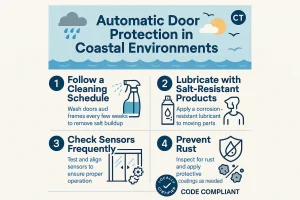
Keep your coastal automatic door performing like new—follow this expert maintenance checklist tailored for salt, humidity, and wind exposure.

An illustrated checklist for coastal automatic door maintenance, including tasks like cleaning tracks, checking seals, testing sensors, and lubricating hardware.

Quarterly Coastal Checklist:

  1. Rinse and Clean: Gently rinse the door and frame with fresh water to remove salt deposits. Clean with a mild, non-abrasive soap.
  2. Inspect Seals: Check all weatherstripping and caulking for signs of drying, cracking, or peeling.
  3. Clear the Tracks: For sliding doors, ensure tracks are free of sand, salt, and debris.
  4. Test Safety Features: Regularly test motion sensors and safety beams to ensure they are functioning correctly.
  5. Listen for Issues: Pay attention to any new grinding, scraping, or straining sounds from the motor. These can be early signs that a component is failing or in need of service. An issue caught early can prevent a costly automatic sliding door repair down the road.

Making the Right Choice


Now that you understand the stakes, you can confidently engage with a professional. Don’t be afraid to ask detailed questions. A true expert will welcome the opportunity to demonstrate their knowledge. Whether you need a full installation or are looking into a storm door replacement, finding a qualified local installer is key.

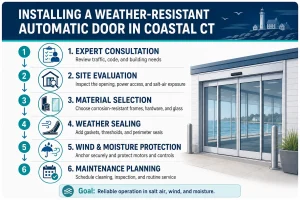
A flowchart illustrating the steps to a successful coastal automatic door installation, from material selection and code compliance to professional installation and final inspection.Follow this proven roadmap to confidently install a weather-resistant automatic door—ensuring performance, compliance, and long-term protection in coastal CT.

Questions to Ask Your Installer:

  • What specific materials and hardware do you recommend for our proximity to the water?
  • How do you ensure your installation meets local coastal wind load codes?
  • Can you describe your process for flashing and sealing the door frame?
  • What grade of stainless steel do you use for your fasteners and components?
  • How do you protect the electronic operator from salt and moisture damage?
  • Do you offer ongoing maintenance plans specifically for coastal properties?

Finding a company that provides expert guidance, like the Old Greenwich door installation services residents trust, is crucial for a successful outcome.

Frequently Asked Questions


What's the best material for a door on the CT shoreline?

For most applications, fiberglass is the top choice due to its complete resistance to corrosion, warping, and its high durability. High-quality vinyl is a close second and a more budget-friendly option.

What does a "hurricane rating" or "wind load rating" actually mean?

This rating indicates that a door has been tested to withstand specific levels of wind pressure and impact from windborne debris. It’s a crucial certification for properties in hurricane-prone areas, ensuring the door won’t fail during a severe storm.

How is a coastal installation different from a standard one?

A coastal installation focuses on three key areas: using corrosion-proof materials (fiberglass, stainless steel), creating a completely waterproof seal with advanced techniques, and anchoring the door system to withstand high wind loads. A standard installation rarely prioritizes these to the same degree.

Can my existing automatic door be "weatherproofed"?

It depends. While you can upgrade hardware to stainless steel and improve seals, you can’t change the base material of the door. If you have a standard steel door, it will eventually rust. A full replacement is often the more cost-effective long-term solution over a series of commercial door repair calls.

How often should I have my coastal automatic door professionally serviced?

For commercial properties with high traffic or residential properties with direct oceanfront exposure, a bi-annual professional service check is recommended. This allows a technician to lubricate parts, adjust sensors, and catch potential issues before they become major problems.