(855) 676-0881

Comprehensive Diagnostic & Repair Guide: Fixing Hard-to-Open Doors


Published: Nov 13, 2026

When a residential or commercial door develops heavy resistance, homeowners and facility managers face a frustrating diagnostic dilemma. Is the issue a failing latch mechanism, an misaligned frame, or an over-tightened lever?

Field data indicates that door operation failures break down into three primary structural categories: 45% stem from frame movement or hinge sag, 35% result from strike plate misalignment (a bound latch), and 20% are caused by internal hardware binding (a stiff lever).

To resolve the issue efficiently without wasting money on unneeded parts or causing structural damage, you must isolate the root cause before taking hardware apart or trimming wood.
The 60-Second Isolation Diagnostic


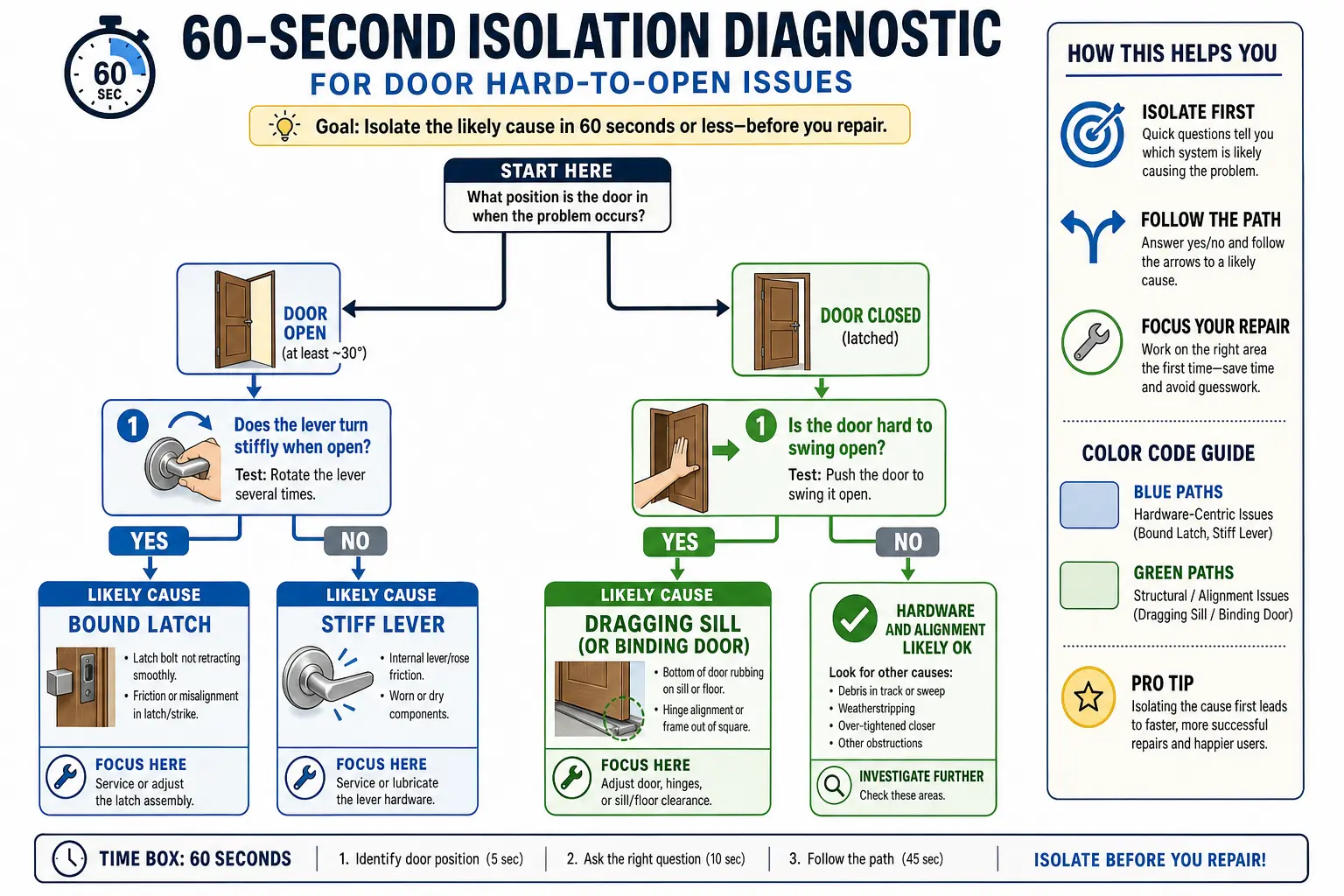
Before grabbing a screwdriver or sanding block, perform this two-step test to isolate hardware failures from alignment issues:

  1. Test A (Door OPEN): Stand with the door swinging freely in the open position. Rotate the handle fully down and release it. Does the handle move smoothly and spring back instantly? Next, push the latch bolt in manually. Does it retract without grinding?
  • Result: If resistance occurs while the door is open, your issue is Internal Hardware Binding (Stiff Lever).
  1. Test B (Door CLOSED): Turn the handle and push/pull the door through the frame pocket. Does the handle move smoothly, but the door refuses to disengage unless pulled hard? Or does the bottom edge scrape against the floor?
  • Result: If resistance occurs only when closing or opening within the jamb, your issue is Strike Misalignment (Bound Latch) or Hinge/Frame Sag (Dragging Sill).

This 60-Second Isolation Diagnostic flowchart helps users quickly determine whether their door binding issue stems from mechanical hardware (like a stiff lever or bound latch) or structural alignment (such as a dragging sill), empowering effective troubleshooting.

Failure Mode 1: Bound Latch Diagnosis & Fixes


A bound latch occurs when the latch bolt catches on the lip or pocket of the metal strike plate rather than sliding smoothly inside.

To locate the exact point of friction, use the Lipstick Trace Method: apply a thin coat of lipstick or chalk to the bevel of the latch bolt. Close the door and operate the handle. The transfer mark on the metal strike plate reveals precisely where the bolt hits.

  • Filing the Strike Plate: If the mark shows the bolt striking within 1/16th of an inch of the lip edge, remove the strike plate and use a small metal mill file to expand the opening.
  • Repositioning the Deadlatch Tab: If the door rattles or fails to catch completely, adjust the small internal tab inside the strike plate pocket using a flathead screwdriver to restore proper tension.

When underlying frame shift causes severe misalignment, reviewing structural options for a front door frame repair prevents long-term locking failure. You can also explore common tubular latch problems explained to determine if internal spring fatigue is compounding your alignment issues.

Failure Mode 2: Stiff Lever or Handle Mechanism


If your door handle feels heavy, sticky, or fails to return horizontally while the door is open, mechanical friction inside the lockset is the culprit.

The 1/4-Turn Screw Adjustment

Over-torquing escutcheon plate mounting screws pinches the interior tubular latch barrel, creating excessive friction on the square spindle. Back off the mounting screws on both sides of the handle by 1/4 turn. In many cases, this instantly relieves binding pressure.

Lubrication Chemistry Matters

Never use standard oil-based wet lubricants (such as multi-purpose spray oils) inside door locksets. Wet oils attract dust, metal dust, and lint, increasing internal friction by up to 40% over 12 months.

Instead, apply a dry PTFE or micro-fine graphite spray directly into the latch mechanism keyway and spindle opening to restore fluid movement without accumulating debris. If your lockset still resists after cleaning and lubrication, evaluating what hardware do i need for an internal door can help you select a compatible replacement mechanism.

Failure Mode 3: Dragging Sill & Sagging Frame Diagnosis & Fixes


A dragging door rubs against the bottom sill, threshold, or floor, leaving scuff marks on the flooring or upper jamb. This is caused by hinge wear, settling foundations, or seasonal wood movement. Understanding why does my door get stuck when it’s cold helps isolate seasonal humidity swelling from permanent structural sag.

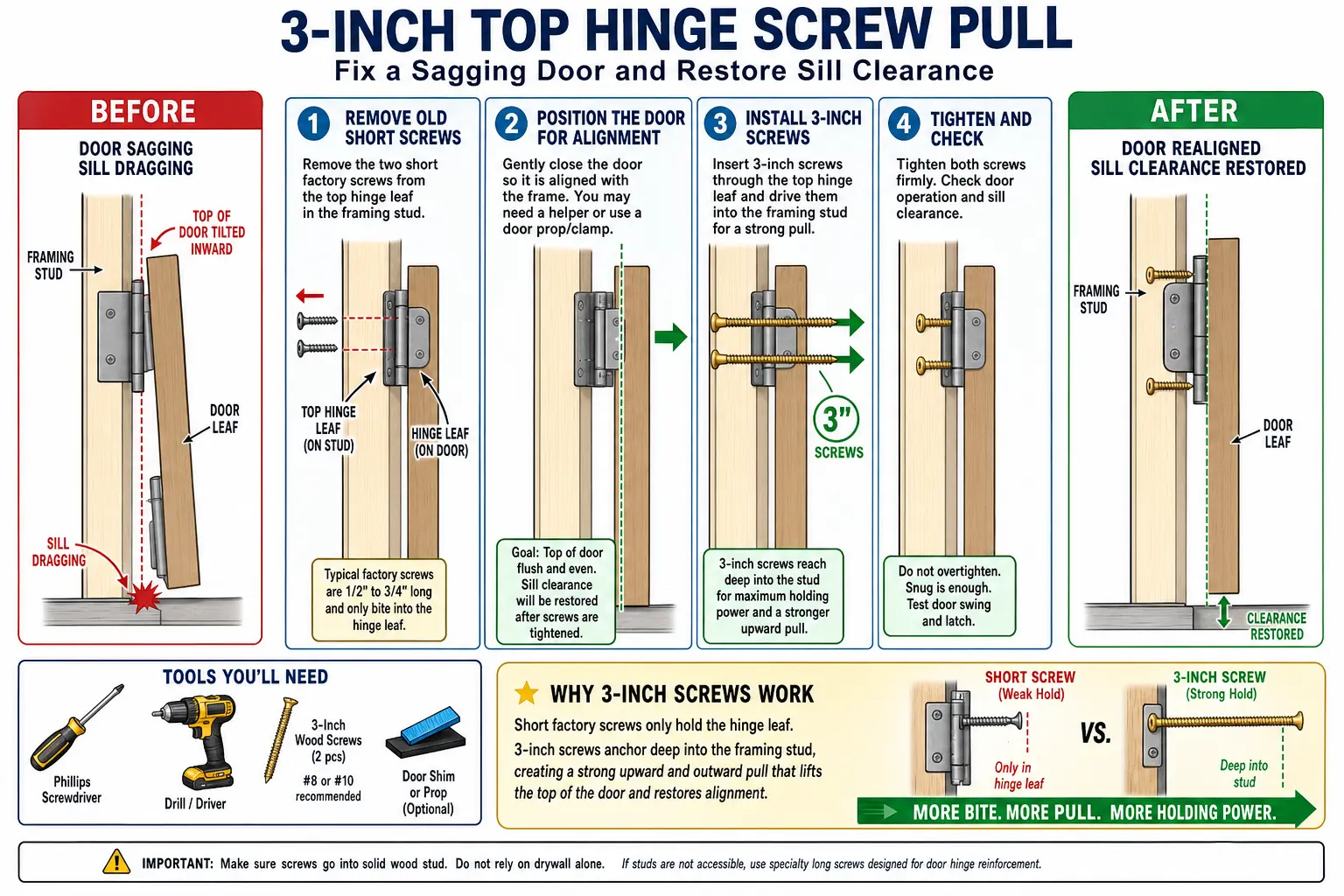
The 3-Inch Top Hinge Screw Pull Protocol

Factory door hinges are often secured with short 3/4-inch screws anchored only into the thin door trim. Over time, leverage causes the top hinge to pull away from the frame.

  1. Open the door and support the bottom edge with a wooden shim or wedge.
  2. Remove the middle screw from the top hinge leaf on the jamb side.
  3. Replace it with a 3-inch hardened wood screw, driving it through the jamb into the underlying solid wall framing stud.
  4. Tighten until the screw draws the top hinge leaf flush against the jamb. This action draws the entire door leaf up and inward, lifting a sagging bottom edge by up to 1/4 inch without requiring sanding or door removal.

This diagram breaks down the key steps of reinforcing the door's top hinge with long screws anchored into the wall stud, a proven method to reverse door sagging and eliminate sill dragging without sanding or trimming.

For severe exterior weatherstrip binding or sill clearance issues, steps for replacing exterior door jamb and threshold may be required. Commercial properties experiencing entryway resistance should consult expert guidelines on commercial glass door adjustment or professional commercial door closer repair to ensure compliance and entry safety.

Repair vs. Replace Decision Matrix


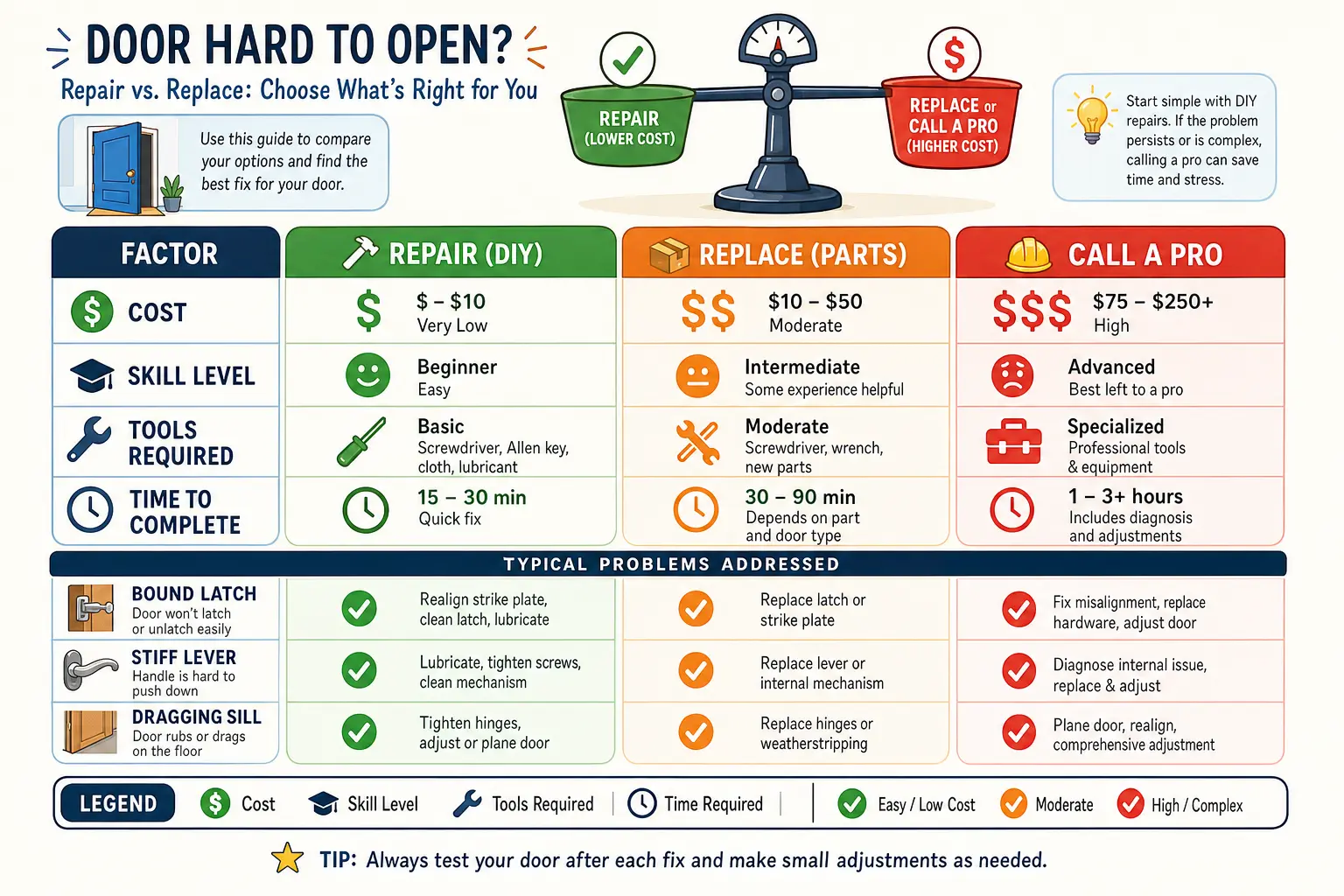
Evaluating cost, required tools, and time commitments helps determine whether to complete a DIY fix or call a professional to repair front door assemblies.

This Repair vs. Replace decision matrix visually summarizes the cost, skill, tool needs, and time investment for each solution path, helping users confidently choose the best approach for their door issue.

  • DIY Adjustment: Costs range from $0 to $15 for 3-inch screws, dry graphite lubricant, or metal files. Requires basic hand tools and 15–30 minutes of labor.
  • Component Replacement: Hardware replacement costs $18 to $60 for new tubular latches or lever sets. Requires mid-level mechanical ability and roughly 30–60 minutes.
  • Professional Service Call: Professional repair ranges from $120 to $250+ plus hardware costs. Recommended for structural frame shifts, rotted threshold replacements, or persistent commercial door binding.

Professional Door Solutions You Can Trust


When basic adjustments do not resolve severe dragging, binding, or frame misalignment, working with experienced specialists saves time and prevents unnecessary structural damage. A1 Doors Services brings over 15 years of dedicated door installation and repair experience to residential and commercial clients across Connecticut. Our licensed technicians provide honest pricing, a personal approach to every project, and reliable same-day service to restore proper function and security to your entryways. Reach out today for a consultation or targeted door service.

Frequently Asked Questions


Why does my door latch stick only when the door is fully closed?

When a door latch operates smoothly while open but sticks when closed, the root cause is physical misalignment between the latch bolt and the strike plate pocket. As structures settle or hinges shift, the bolt catches on the lip of the metal plate. Using the lipstick trace method will confirm the point of contact so you can file the plate or adjust top hinge tension.

Can using WD-40 fix a stiff door handle lever?

Standard oil spray lubricants should never be used inside door locksets. Oil leaves a wet residue that attracts dust, lint, and metallic filings, increasing internal binding friction by up to 40% within a year. Always use a dry PTFE lubricant or micro-fine graphite powder to clean and lubricate lock components safely.

How do I stop the bottom of my door from dragging on the floor without planing the wood?

In most cases, dragging is caused by hinge sag rather than expanded wood. Before trimming or sanding the door edge, replace the center factory screw on the top hinge jamb leaf with a 3-inch wood screw. Driving this long screw through the door jamb into the solid wall stud pulls the top hinge back into alignment, lifting the bottom edge up to 1/4 inch.