(855) 676-0881

Advanced Bilco Door Repair & Preventative Maintenance Guide


Published: Nov 4, 2026

When evaluating an aging basement bulkhead, property owners often face a difficult decision: is a simple component repair sufficient, or is a full replacement necessary? A heavy metal basement door that slams unexpectedly, leaks water during severe storms, or resists unlocking is more than a daily nuisance—it poses safety hazards and code compliance risks.

Understanding your door system helps you avoid spending thousands on unnecessary replacements when targeted hardware repairs will solve the issue, while ensuring you don’t waste time patching a structurally compromised door.
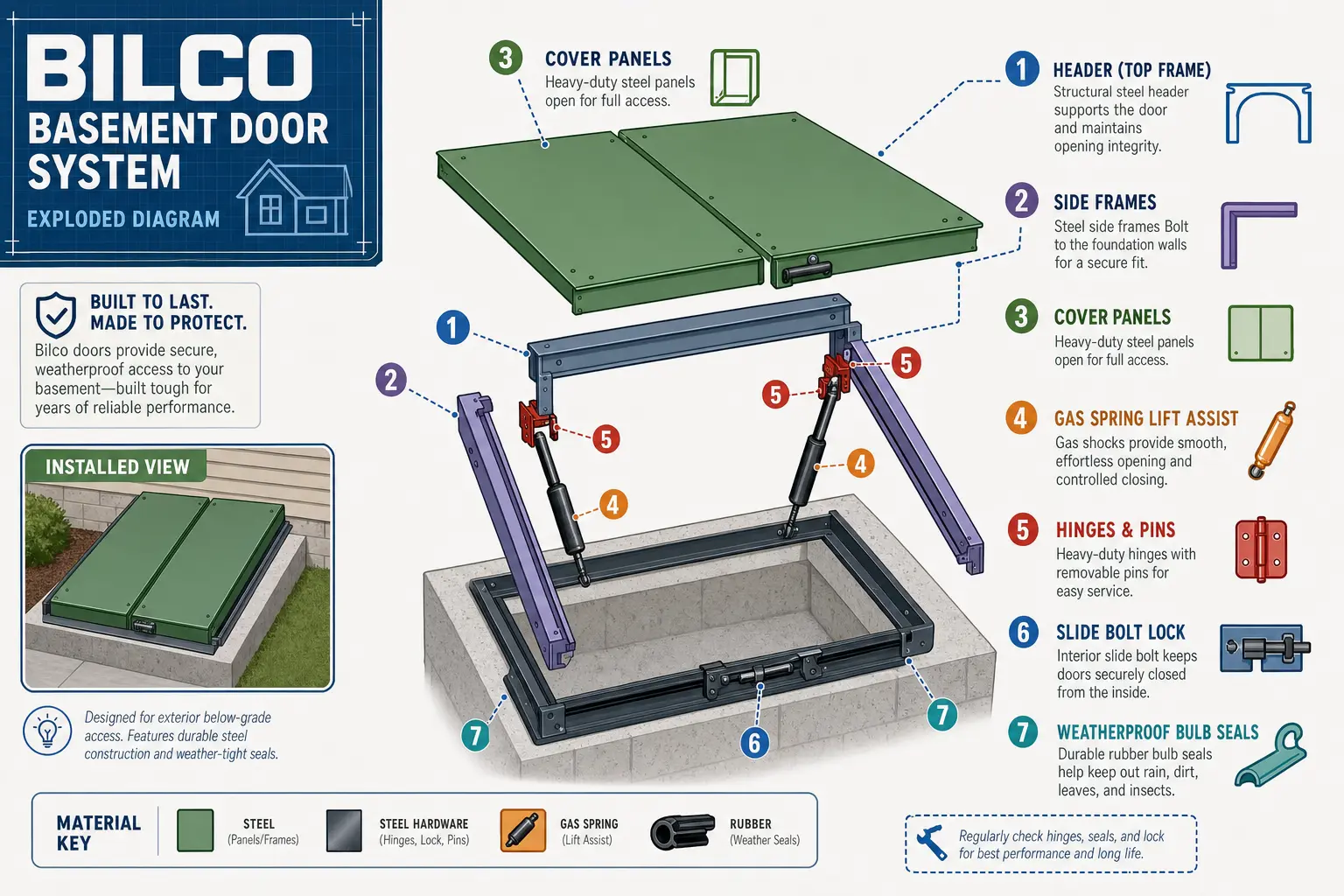
Introduction: The Anatomy of a Bilco Basement Door System


This diagram visually breaks down the anatomy of a Bilco basement door, making each part identifiable and clarifying their roles in the door's operation and safety.

Steel basement access systems rely on specialized components working in unison. The main elements include the header frame, side frames, overlapping door panels, slide bolt latches, and weather-sealing gaskets. Crucially, counter-balanced lift systems enable heavy steel leaves to open smoothly.

Legacy models use coiled torsion rod assemblies (such as RPSW22 T&K hardware), whereas modern designs utilize gas spring lift shocks. Identifying these underlying parts is the first step when evaluating bilco hatch doors for long-term reliability and safety.

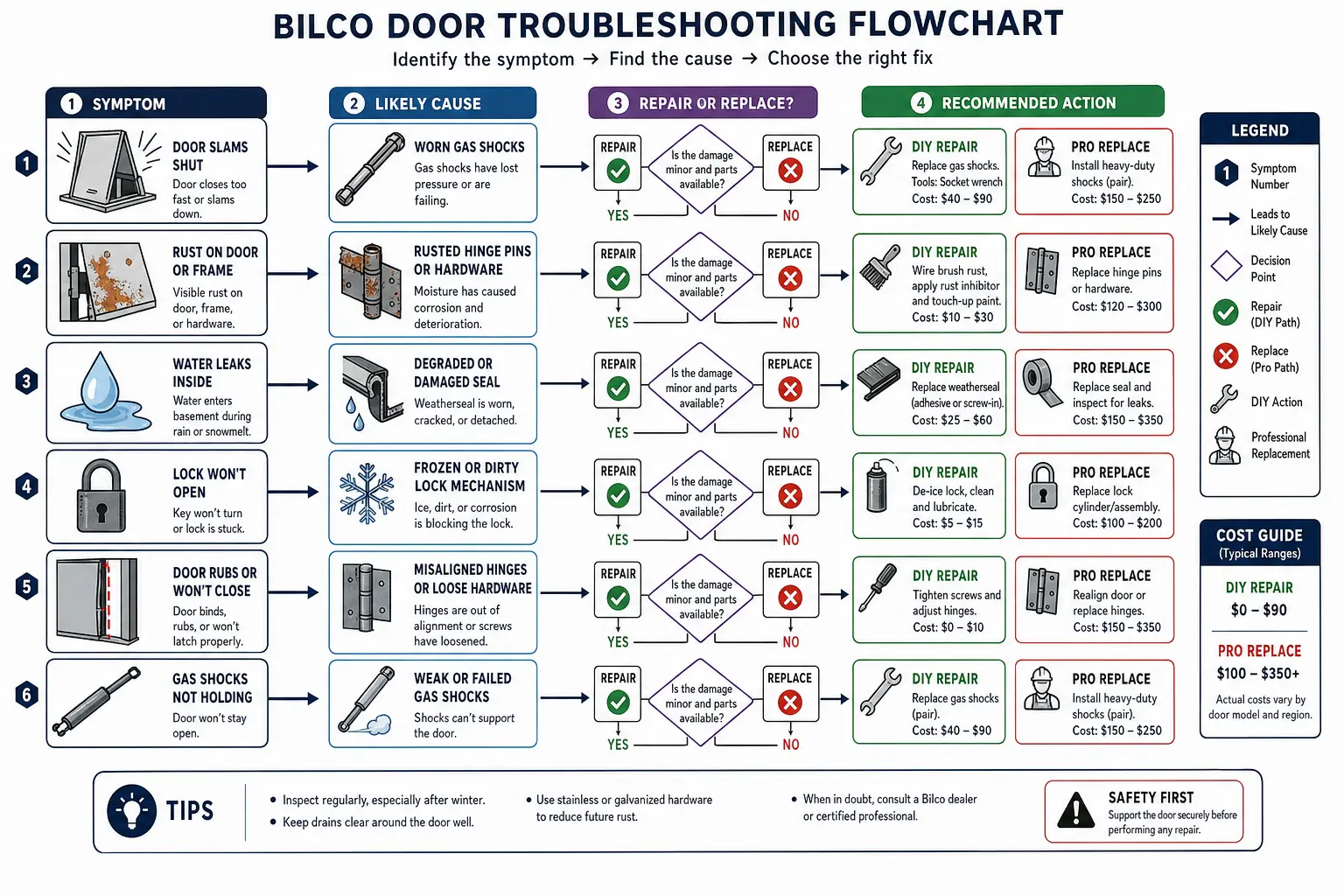
Symptom-Based Diagnostic Matrix & Troubleshooting Guide


A step-by-step diagnostic guide that helps identify Bilco door problems based on symptoms and directs users to appropriate repairs or replacements.

Diagnosing door failures accurately isolates mechanical issues from structural foundation problems. Standard Bilco gas spring lift struts naturally lose seal pressure after 5 to 7 years of weather exposure, causing heavy steel leaves to fall unexpectedly.

  • Door Slams Shut or Feels Heavy: Indicates depleted gas struts (e.g., 20-inch 300lb shocks) or a snapped legacy torsion bar.
  • Door Scrapes or Binds Against Frame: Caused by corroded RPSW22 hinge pins, frame settling, or rusted leaf corners.
  • Water Intrusion Along Basement Stairs: Points to deteriorated header bulb seals or cracked concrete foundation curbs. Choosing the proper basement door types ensures moisture protection.
  • Outside Lock Seized: Results from corroded slide bolts or frozen lock tumblers, which violate International Residential Code (IRC Section R310) egress standards requiring unassisted interior operation.

Step-by-Step Repair Tutorials


Gas Shock & Torsion Spring Replacement

Always secure the heavy steel door with a mechanical prop before servicing lift hardware. To replace worn gas struts, pry the metal retaining clips on the socket ends using a flathead screwdriver, pull the old shock off the ball studs, and snap the replacement unit into position. Legacy torsion bar systems can also be updated using OEM-compatible gas shock conversion kits.

Hinge Pin Realignment & Rust Abatement

Remove corroded cotter pins and extract rusted hinge pins. Scrape away surface scaling using a wire wheel, apply a rust-converting chemical primer, and insert replacement stainless steel pin assemblies.

Weatherstripping & Water Sealing Installation

Replace worn top-header bulb seals and install U-shaped rubber gaskets along lower door edges. Seal the exterior frame joint using high-grade polyurethane masonry sealant rather than standard silicone, ensuring a durable, watertight bond with concrete walls. Proper sealing techniques mirror standard exterior weatherproofing principles.

The "Repair vs. Replace" Decision Framework


Evaluating whether to repair or replace your entry system comes down to structural integrity and overall cost. Component repairs—including gas shocks, seal kits, and latch hardware—typically cost between $35 and $180 in parts. In contrast, full unit replacements involving structural masonry flashing range from $1,200 to $2,800.

Condition Factor Targeted Repair ($35 – $180) Full Replacement ($1,200 – $2,800)
Steel Structure Metal sound; light surface rust Flanges rusted through; metal buckled
Lift Mechanism Struts soft or unclipped Hinge mounting points torn or rotted
Foundation Curb Concrete solid; minor joint cracks Concrete foundation broken or crumbling
Egress Code Lock latches function smoothly Door frame warped; cannot open freely

If your property features a finished connecticut basement home office, upgrading to a modern powder-coated steel or high-density polyethylene unit provides improved thermal performance, security, and long-term convenience.

Annual Preventative Maintenance Checklist (Seasonal Care)


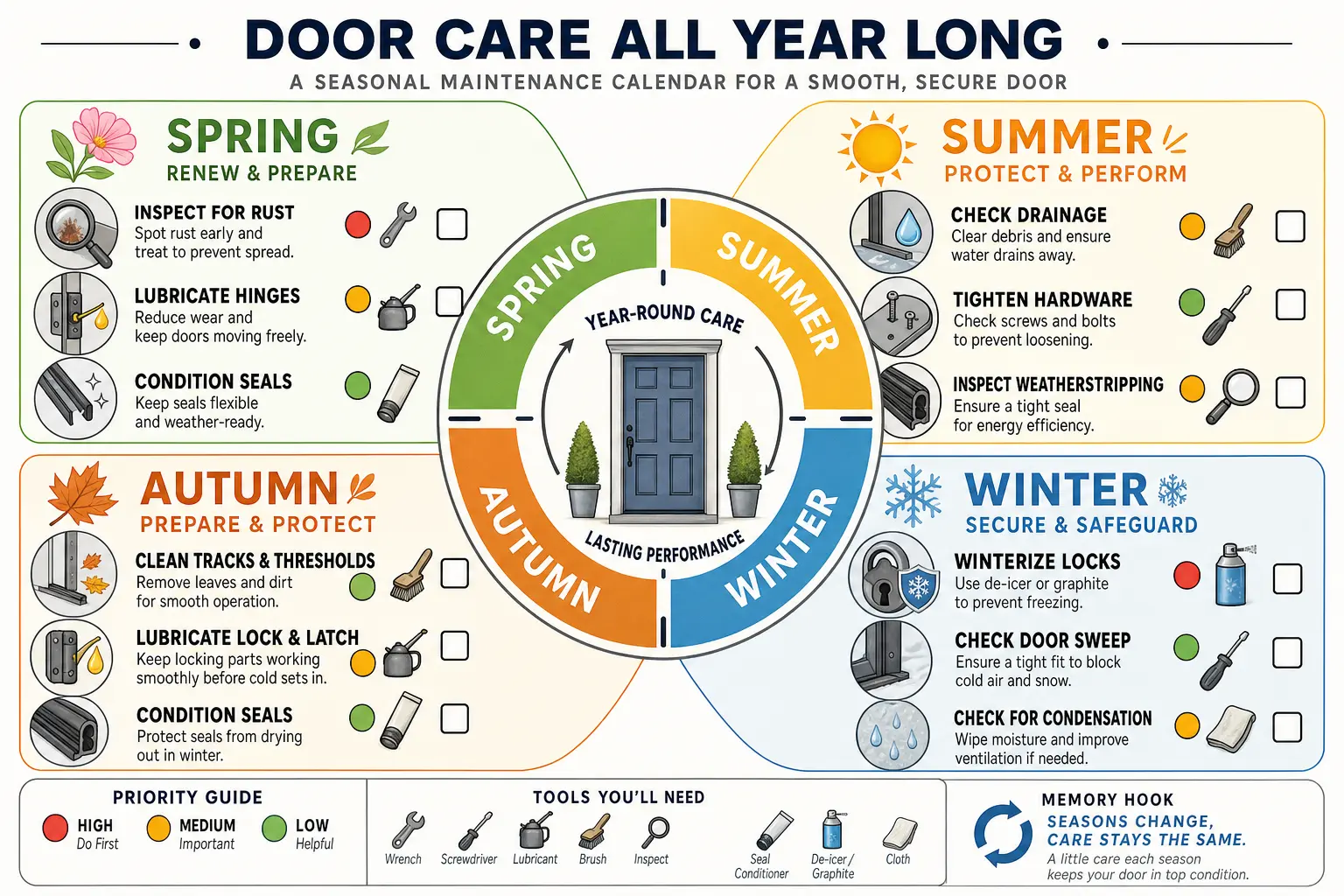
A visual checklist guiding Bilco door owners through essential seasonal maintenance tasks to extend door lifespan and prevent issues.

Routine maintenance prevents costly component failures and keeps your access doors operating smoothly year-round. Much like maintaining a home’s entry points or performing a quick fix back door repair, regular attention protects your investment:

  • Spring: Inspect frame flanges for winter salt damage, touch up chipped paint with rust-inhibiting enamel, and clean debris from bottom drainage channels.
  • Autumn: Clean rubber gaskets, apply silicone spray to seals, and test gas strut tension before cold weather sets in.
  • Winter: Treat lock cylinders with dry graphite lubricant to prevent freeze-ups and clear heavy snow accumulation off door leaves promptly.

Professional Solutions for Your Property


Managing door repairs—whether for residential bulkheads or heavy-duty commercial building door access—requires technical knowledge and precision. Contact A1 Doors Services to schedule a professional diagnostic consultation or bulkhead installation today.

Frequently Asked Questions


How do I know if my Bilco door needs new gas shocks?

If the door feels heavy to lift, falls shut unexpectedly, or fails to remain upright without manual support, the gas shocks have lost internal pressure and require replacement.

Can water leaks beneath the frame flange be fixed without replacing the door?

Yes. If the underlying concrete is intact, you can strip the old sealant along the outer frame edge and apply a bead of professional polyurethane masonry sealant to restore the watertight barrier.

Are stuck basement egress doors a code violation?

Yes. Under IRC Section R310 emergency egress regulations, basement exit doors must open smoothly from the inside without key operations or special tools.