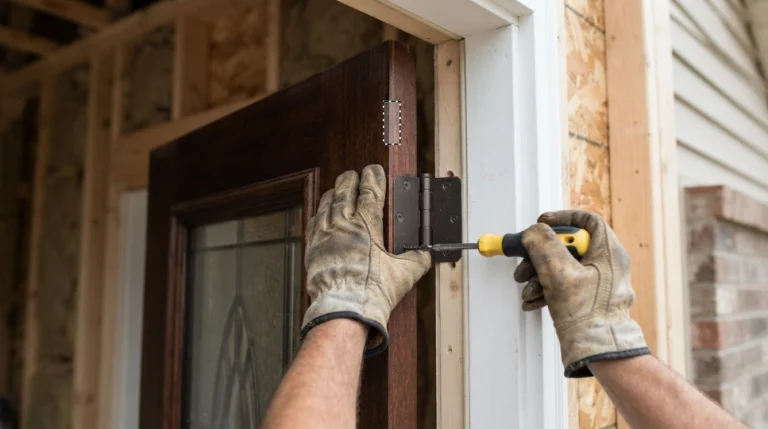
Selecting the right commercial overhead door requires balancing thermal efficiency, operational speed, security, and strict life-safety code compliance. Facility managers, general contractors, and plant engineers face complex choices that directly impact energy budgets, operational throughput, and legal liability.
Commercial & Industrial Overhead Door Systems: Specification, Compliance, and Lifecycle Value
Published: Oct 15, 2026
Executive Overhead Door Selection Matrix
When evaluating system architecture, comparing center-of-panel R-values alone can be misleading. Whole-assembly U-factors measure real-world thermal leakage across edges and perimeter seals. Choosing between rolling steel, insulated sectional, fire-rated, and high-speed doors depends on your facility’s primary operational drivers.
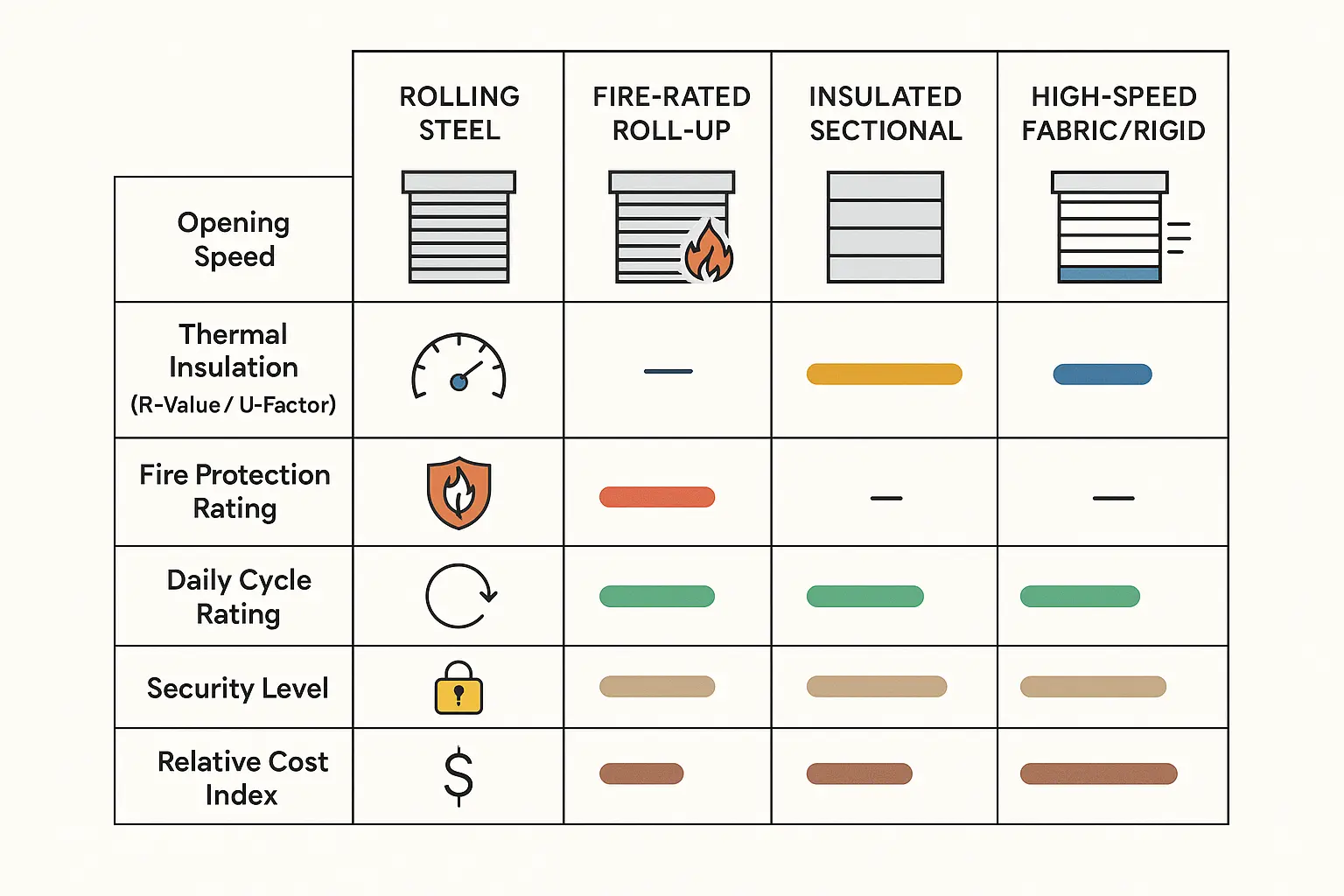
- Insulated Sectional Doors: Ideal for climate-controlled loading docks, offering superior thermal performance and custom track configurations.
- Rolling Steel Doors: Heavy-gauge interlocking steel slats provide maximum physical security and compact headroom utilization for tight overhead environments.
- High-Speed Fabric/Rigid Doors: Achieve operating speeds of 60 to 100 inches per second, reducing ambient air exchange by up to 70% in temperature-sensitive warehouses and cold storage spaces.
For an expert evaluation of your facility’s structural rough openings, header load calculations, and thermal needs, partnering with a licensed specialist for commercial door repair and full-system installation ensures long-term operational reliability.
Fire-Rated Overhead Doors & NFPA 80 Compliance Standards
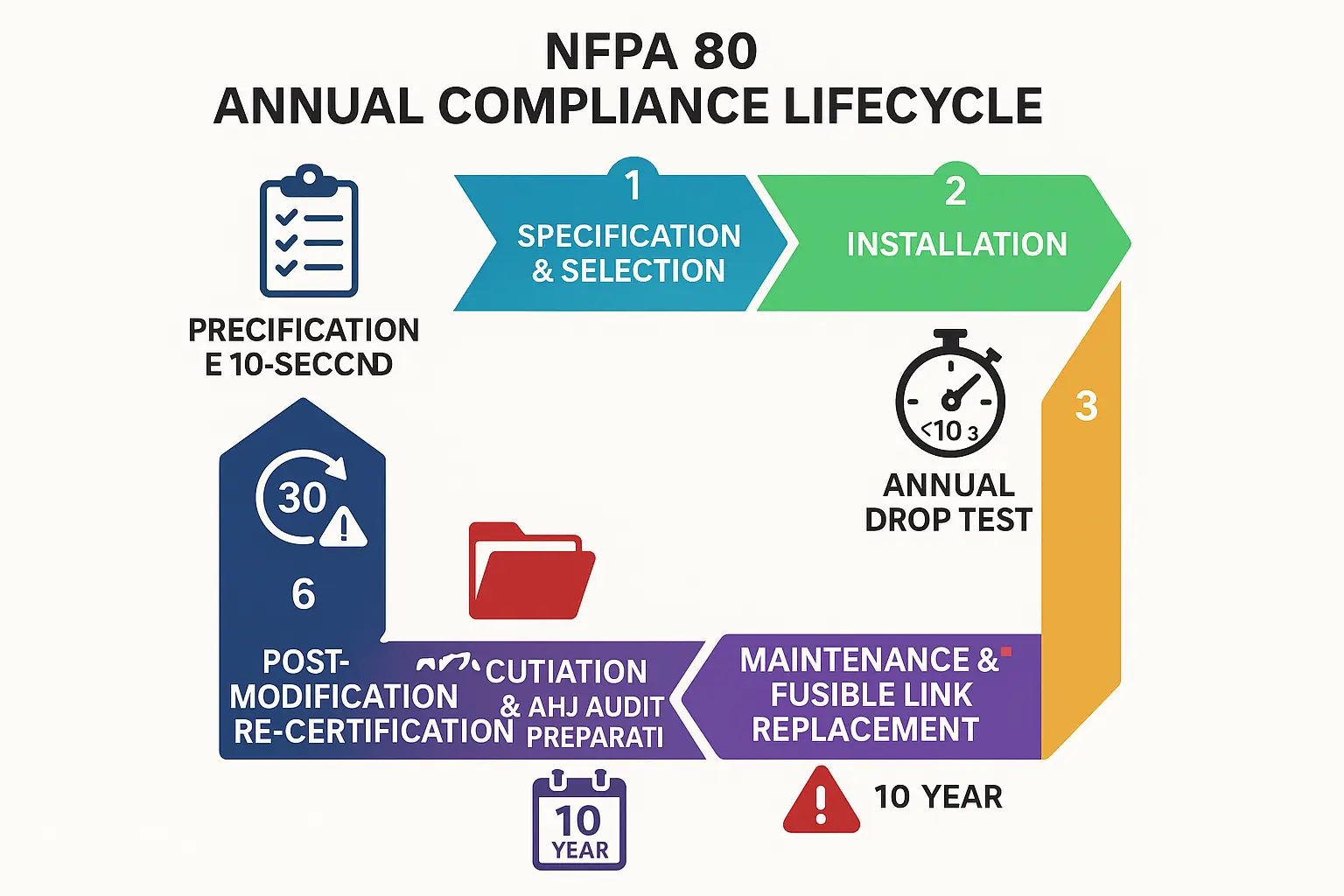
Life-safety compartmentation demands strict adherence to NFPA 80 standards. Fire-rated overhead doors must automatically close from a fully open position, achieving complete gravity shutdown in under 10 seconds at an average closing speed between 6 and 24 inches per second upon release.
Maintaining Code Compliance and Insurance Validity
Industry audits reveal that over 40% of commercial fire door inspection failures stem from illegible or painted-over UL labels, damaged perimeter smoke seals, or uncertified field modifications such as drilled mounting holes and welded brackets. Furthermore, standard 165°F fusible thermal links have an operational lifespan of 10 years before mandatory replacement.
Facility updates—including ceiling rework, new HVAC ducting, or fire sprinkler alterations within 30 days—start a compliance clock that invalidates existing certification until formal drop testing and re-certification occur under Authority Having Jurisdiction (AHJ) guidelines.
High-Speed Systems & Smart Building Integration
Modern high-speed industrial doors optimize logistics while integrating seamlessly into building management systems (BMS), Programmable Logic Controllers (PLCs), and facility access controls. Incorporating photo-eyes, vehicle induction loops, and optical safety edges prevents accidental contact and costly downtime.
Maintaining these automated entries requires precise sensor calibration. Timely automatic door sensor repair and proactive automatic door upgrades keep high-frequency traffic flowing safely while preserving climate protection across interior and exterior thresholds.
Preventive Maintenance & Long-Term Asset Protection
Preventive maintenance mitigates emergency downtime and extends operator spring cycle life. A structured inspection evaluates counterbalance spring tension, cable fatigue, roller alignment, brake mechanisms, and weather seal integrity.
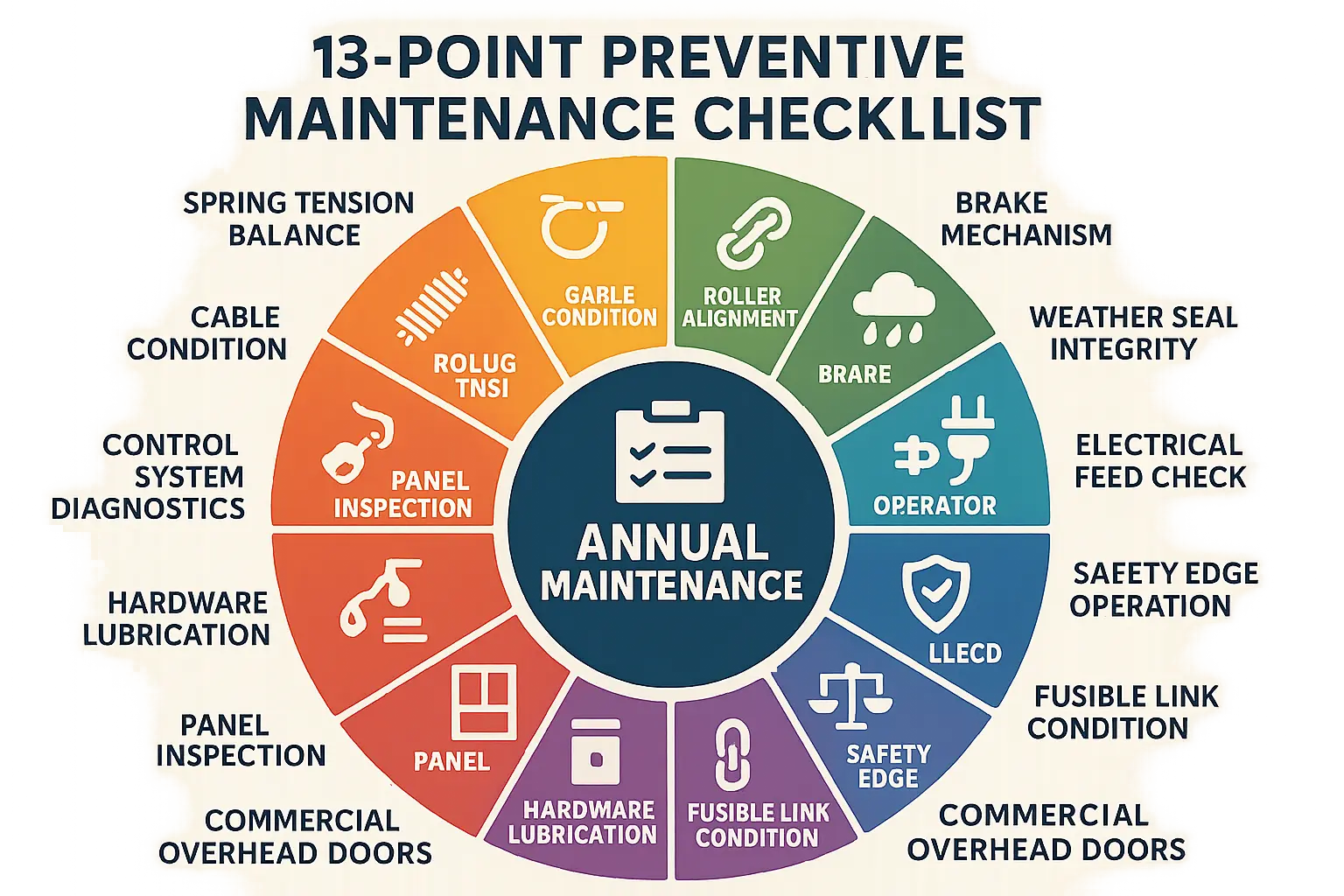
When components show signs of fatigue or structural misalignment, scheduling prompt automatic door repair ensures your facility remains secure, fully compliant, and energy efficient.
Frequently Asked Questions
How often do commercial fire doors require drop testing and functional inspection?
NFPA 80 mandates annual functional drop testing and visual inspections for all fire-rated door assemblies. Detailed documentation and inspection logs must be retained on site for direct review by local fire marshals and insurance underwriters.
What triggers a mandatory post-modification re-certification for fire doors?
Any uncertified structural modification or adjacent facility alteration—such as installing new HVAC ductwork, electrical conduit, or sprinkler pipework within 30 days—invalidates existing UL certification. Re-testing and drop testing must be conducted to restore legal compliance.
How do high-speed doors reduce energy costs in high-traffic facilities?
High-speed doors open and close at rates up to 100 inches per second, dramatically shortening open-door cycles. This rapid operation reduces facility air exchange by up to 70%, lowering HVAC loads and maintaining environmental control in cold storage and production areas.